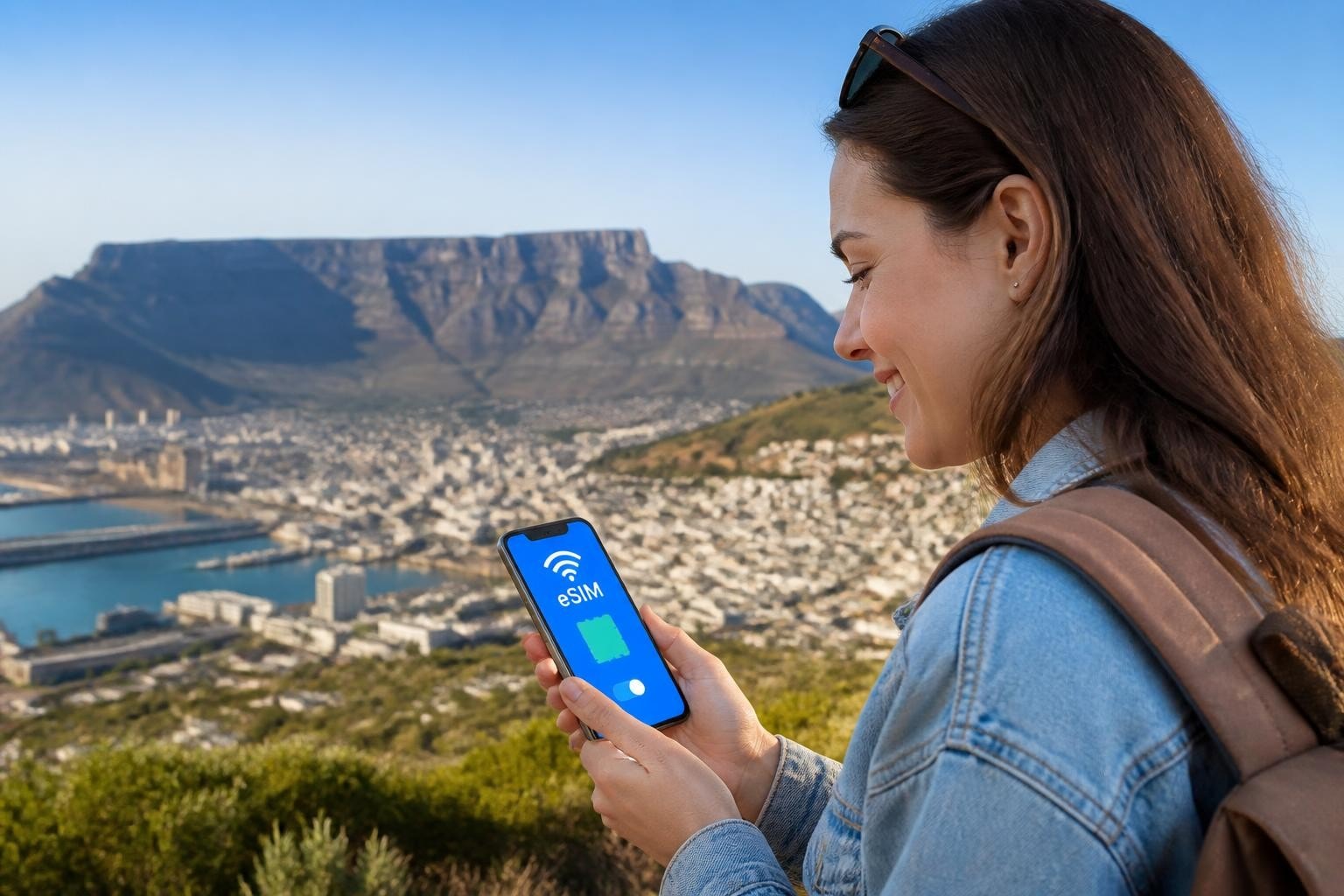
Planning a trip to South Africa? You've probably already got your safari bookings sorted, your Table Mountain tickets ready, and your itinerary packed with everything from Kruger National Park to the Cape Winelands. But have you thought about how you'll stay connected when you land? Traditional SIM cards mean queuing at airport kiosks, dealing with language barriers, and often paying extortionate roaming fees. That's where a South Africa e sim changes everything. Instead of fumbling with tiny plastic cards and paperwork, you can activate your data plan before you even board your flight. It's a game-changer for modern travellers, and honestly, once you've tried it, you'll wonder how you ever managed without it.
What Makes South Africa eSIM Technology Different
Let's start with the basics. An eSIM isn't a physical card you can lose down the back of your sofa. It's a digital SIM embedded directly into your device, and it's been transforming how we connect globally since its introduction. The technology has particularly strong implications for regions like South Africa, where eSIM integration within IoT architectures is advancing rapidly across various sectors.
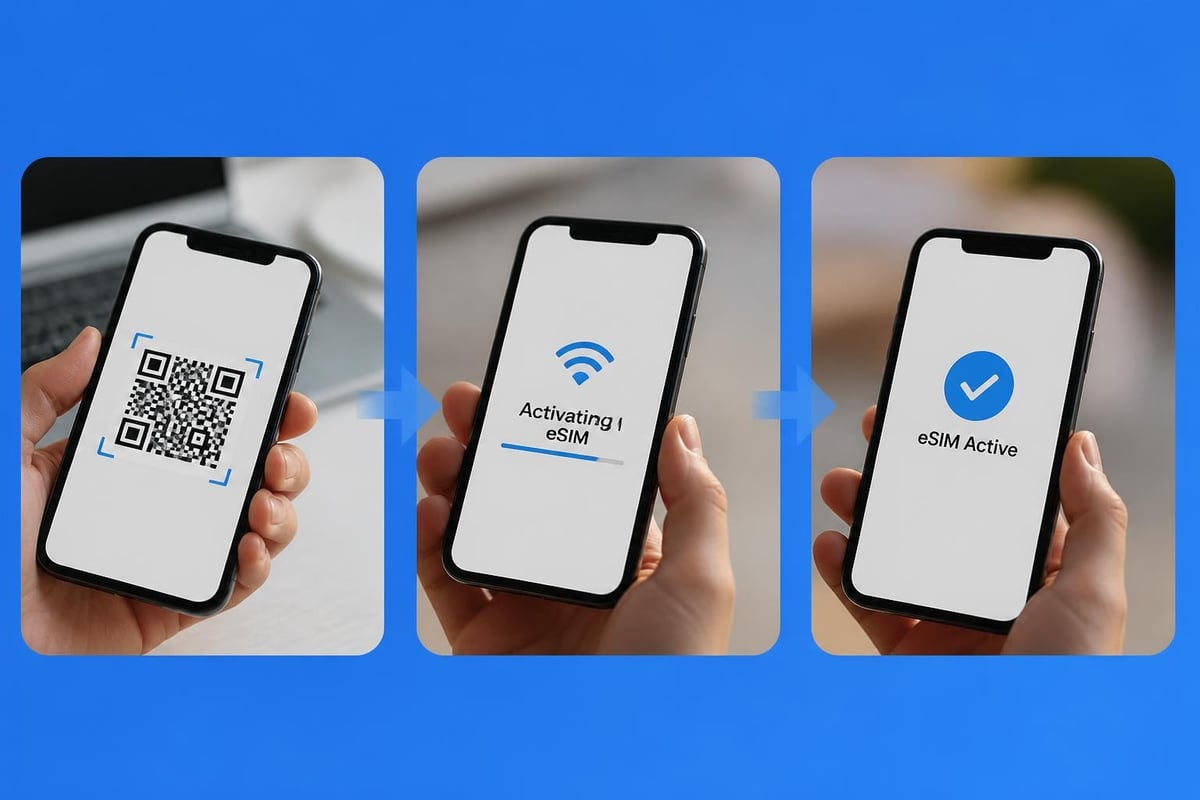
Think of it this way: your phone already has the hardware built in. You just need to download a profile, scan a QR code, and you're connected. No more hunting for a SIM ejector tool or worrying about losing your home SIM card whilst swapping it out.
The Technical Advantages
Here's what sets eSIMs apart from their traditional counterparts:
- Instant activation - Your connection goes live within minutes of purchase
- Multiple profiles - Store several eSIM profiles and switch between them
- Remote provisioning - Download your plan from anywhere with WiFi
- Enhanced security - Harder to remove or steal compared to physical SIMs
- Space efficiency - Manufacturers can use the saved space for bigger batteries or better cameras
The technological advancement in South Africa has created an environment where eSIM adoption is accelerating faster than in many other African nations. Major cities have excellent 4G and expanding 5G coverage, making eSIM technology particularly effective.
Why South Africa Is Perfect for eSIM Users
South Africa's mobile infrastructure makes it an ideal destination for eSIM technology. The country boasts some of Africa's most reliable networks, with extensive coverage across urban centres and improving connectivity in rural areas.
When you're travelling between Johannesburg's bustling streets and the Garden Route's scenic coastal drives, you need consistent coverage. A South Africa e sim delivers exactly that without the hassle of finding local providers in each region.
Network Coverage Across the Rainbow Nation
| Region | Coverage Quality | Best Networks | Key Considerations |
|---|---|---|---|
| Johannesburg & Gauteng | Excellent 4G/5G | Vodacom, MTN | Urban coverage nearly perfect |
| Cape Town & Western Cape | Excellent 4G/5G | All major carriers | Reliable in tourist areas |
| Durban & KwaZulu-Natal | Very good 4G | Vodacom, MTN | Strong coastal coverage |
| Kruger & Rural Areas | Good 3G/4G | Vodacom recommended | Some remote gaps exist |
Major carriers like Vodacom have embraced eSIM technology extensively, offering robust support for international travellers and locals alike. This infrastructure means your South Africa e sim will work reliably whether you're photographing penguins at Boulders Beach or video calling from the top of Lion's Head.
Choosing the Right South Africa eSIM Plan
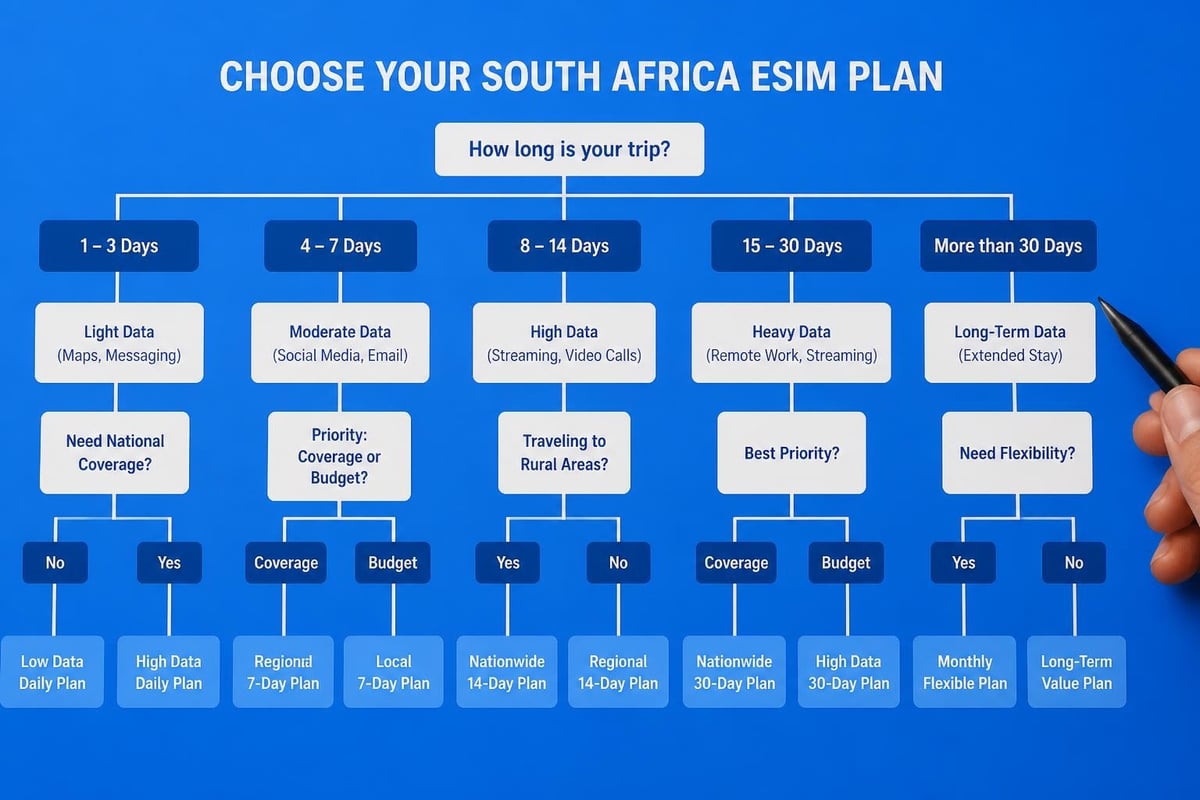
Not all eSIM plans are created equal, and selecting the right one depends entirely on your usage patterns. Are you a social media addict who'll be posting every sunset? A business traveller needing video conferences? Or someone who just wants occasional maps and messaging?
Let me share what I've learned from countless trips: data requirements vary wildly. That three-day Cape Town city break won't need as much data as a two-week road trip from Johannesburg to the Wild Coast.
Data Plan Comparison
When comparing providers, you'll find significant variation in pricing and features. Platforms comparing eSIM data plans can help you navigate the options, but here's what really matters:
- Coverage area - Does it include rural regions if you're safari-bound?
- Data allowance - Match this to your actual usage, not aspirations
- Validity period - Some plans last days, others months
- Speed restrictions - Check if unlimited plans throttle after certain usage
- Top-up options - Can you add more data if you run out?
For instance, South Africa eSIM options provide instant activation with flexible data allocations suited to different trip lengths, eliminating roaming fees entirely whilst maintaining secure payment systems.
Understanding Your Data Needs
Here's a rough guide to help you estimate:
- Light user (1-2GB): Messaging, occasional maps, light browsing
- Moderate user (3-5GB): Social media, regular maps, streaming music
- Heavy user (10GB+): Video calls, content uploads, streaming video
- Power user (20GB+): Remote work, constant hotspot use, heavy streaming
Remember, WiFi is readily available in most South African hotels, restaurants, and cafes. You might not need as much data as you think.
Setting Up Your South Africa eSIM
The activation process is refreshingly straightforward, but there are a few tricks to ensure it goes smoothly. I've watched people struggle unnecessarily, so let me walk you through it properly.
First things first: make sure your device actually supports eSIM technology. Most iPhones from the XS onwards do, as do many Samsung Galaxy models and Google Pixels. You can check your device compatibility through the compatible devices guide to avoid any surprises.
Step-by-Step Activation Process
- Purchase your plan before departure whilst connected to WiFi
- Receive your QR code via email (usually within minutes)
- Navigate to settings on your device's mobile/cellular menu
- Select "Add eSIM" or "Add Cellular Plan"
- Scan the QR code provided in your confirmation email
- Label your plan (e.g., "South Africa Travel")
- Choose data preferences - which SIM for data, which for calls
- Activate upon arrival or as specified in your plan terms
The installation guide provides device-specific instructions if you get stuck. The whole process typically takes less than five minutes once you've done it once.
Common Setup Mistakes to Avoid
Even though it's simple, people still stumble. Don't be that person:
- Installing while still in your home country and using up validity days
- Deleting the QR code email before activation completes
- Forgetting to enable data roaming for your eSIM
- Not labelling your eSIMs clearly when you have multiple profiles
- Attempting setup without stable WiFi connection
Practical Benefits for Different Types of Travellers
Your travel style completely dictates how valuable a South Africa e sim becomes. Let me break down the scenarios I've encountered most frequently.
Business Travellers
Need reliability above all else? Business travellers can't afford connection drops during client calls or when accessing cloud documents. An eSIM eliminates the uncertainty of airport SIM vendors and provides instant connectivity from wheels-down to wheels-up.
You'll appreciate features like:
- Immediate connectivity for urgent emails upon landing
- Stable hotspot capability for laptop work
- No downtime switching between countries if you're visiting multiple African nations
- Expense tracking with digital receipts
- Professional appearance (no fumbling with SIM cards in meetings)
Holiday Makers and Tourists
For leisure travel, a South Africa e sim means freedom. Share those Table Mountain sunset photos instantly. Navigate unfamiliar streets with confidence. Book last-minute restaurant reservations. Video call home to show off that elephant sighting.
The flexibility matters hugely when you're exploring. One day you might barely use any data whilst hiking in the Drakensberg, the next you're in Stellenbosch uploading wine-tasting videos and researching dinner options.
Digital Nomads and Remote Workers
Working remotely from South Africa? You need serious data and rock-solid reliability. The beauty of eSIM technology is the ability to have backup options. Many digital nomads run dual eSIMs - one primary, one backup - ensuring they're never offline.
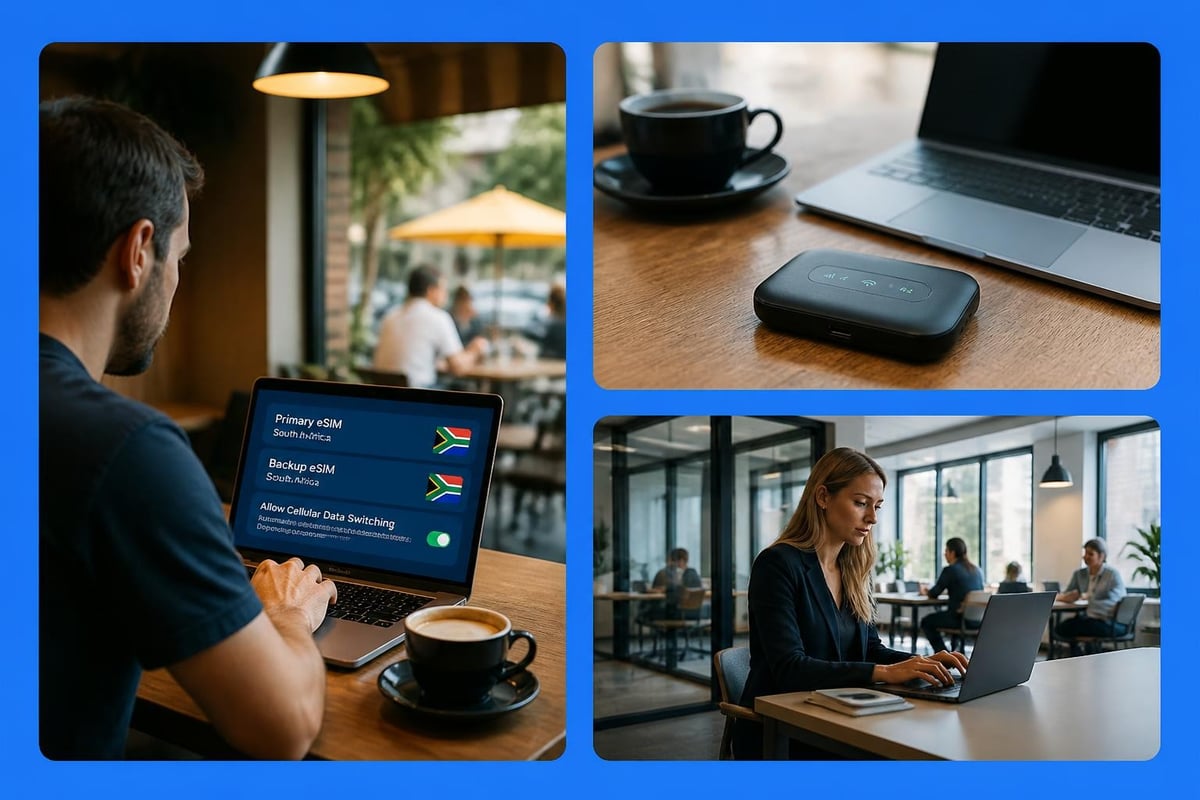
Consider these priorities:
| Requirement | Why It Matters | eSIM Advantage |
|---|---|---|
| High data caps | Video calls, file uploads | Flexible plan upgrades |
| Network redundancy | Can't afford downtime | Multi-profile capability |
| Cost efficiency | Long-term stay | Better value than roaming |
| Easy top-ups | Unpredictable usage | Instant digital recharge |
Cost Comparison: eSIM vs Traditional Options
Let's talk money. Everyone wants to know if eSIMs actually save cash or if they're just more convenient. The answer? Both, actually.
Traditional roaming charges from major UK carriers can hit £5-7 per day just for the privilege of using your phone abroad. Over a two-week South African adventure, that's £70-98 for basic access. Meanwhile, physical SIM cards from airport kiosks might seem cheaper at first glance, but factor in the time cost, potential language barriers, and inflated airport pricing.
Real-World Price Breakdown
Here's what you might actually pay:
- UK carrier roaming: £5-7/day (£70-98 for 14 days)
- Airport SIM card: £25-40 for 10GB (plus queue time and setup hassle)
- South Africa e sim: £15-30 for 10-20GB (instant activation, no queues)
- Local provider store: £15-25 for 10GB (requires finding a store, possible ID requirements)
The maths speaks for itself. Plus, with an eSIM, you're paying for actual data usage rather than daily access fees. If you use 2GB one day and 200MB the next, you're only consuming what you need.
Security and Privacy Considerations
Security might not be the first thing you think about when sorting travel connectivity, but it absolutely should be. South Africa, like anywhere, has public WiFi networks that aren't always trustworthy. Having your own secure data connection via a South Africa e sim means you're not desperately connecting to "Free_Airport_WiFi_Definitely_Not_Hackers" when you need to check your bank balance.
eSIM technology offers inherent security advantages:
- Physical theft protection - Can't be removed like traditional SIMs
- Remote management - Disable or switch profiles without physical access
- Encrypted provisioning - QR codes and digital downloads are more secure
- No SIM swapping attacks - Harder for criminals to port your number
When using eSIM providers, verify they use secure payment gateways and encrypted data transmission. Reputable services prioritise these features as standard.
Troubleshooting Common South Africa eSIM Issues
Even the smoothest technology occasionally hiccups. I've seen (and experienced) most of the common problems, so here's your troubleshooting cheat sheet.
No Service or Connection Problems
First, don't panic. Usually, it's something simple:
- Check if you've enabled data roaming for your eSIM specifically
- Verify you've selected the correct eSIM for cellular data
- Restart your device (the classic IT solution that actually works)
- Toggle airplane mode on and off
- Manually select a network rather than automatic selection
If you're in a remote area, weak signal might be environmental rather than a fault. Move to higher ground or wait until you're in a more populated area.
QR Code Won't Scan
This frustrates people unnecessarily. Try these fixes:
- Increase screen brightness on the device displaying the QR code
- Clean your camera lens (smudges affect scanning)
- Take a screenshot and display it full-screen
- Manually enter the activation code if provided as an alternative
For more specific issues, the iPhone eSIM activation guide covers device-specific quirks that might be causing problems.
Slower Speeds Than Expected
Network congestion, particularly in tourist hotspots during peak season, can affect speeds. South Africa's infrastructure, whilst good, isn't immune to capacity issues. If speeds are consistently slow:
- Check if your plan has speed restrictions after certain usage thresholds
- Verify you're connected to 4G/LTE, not 3G
- Test at different times of day
- Compare with other users on the same network to rule out device issues
Managing Multiple eSIM Profiles
Once you've experienced the convenience of eSIMs, you'll likely accumulate several profiles. Maybe you're keeping your South Africa e sim for future trips, whilst also maintaining eSIMs for Europe, Asia, and home. Modern devices can store multiple profiles, though only one or two can be active simultaneously.
Organisation becomes crucial. Here's my system:
Labelling and Organisation Tips
- Use descriptive names: "SA Work Trip 2026" rather than "eSIM 1"
- Include validity dates if your device allows notes
- Delete expired profiles to avoid confusion
- Take screenshots of QR codes as backup (store securely)
- Keep a spreadsheet of active eSIMs, data remaining, and expiry dates
You can switch between profiles without re-downloading, making it easy to reactivate a South Africa e sim for repeat visits. This is particularly valuable for frequent travellers who return to the same destinations regularly.
Future of eSIM Technology in South Africa
The trajectory is clear: eSIM adoption is accelerating globally, and South Africa sits at the forefront of this shift in Africa. The economic landscape supports digital innovation, whilst improved infrastructure continues reducing barriers to adoption.
What can we expect by 2027-2028?
- Broader device compatibility, including more budget smartphones
- Integration with wearables and IoT devices becoming standard
- More competitive pricing as adoption increases
- Enhanced features like automatic network switching
- Better rural coverage as infrastructure investment continues
Even as infrastructure challenges exist in some areas, the overall trend points toward improved connectivity and wider eSIM availability across all regions of South Africa.
eSIM Integration with Travel Planning
Smart travellers integrate their connectivity strategy into broader trip planning. Your South Africa e sim isn't just about staying online; it's about enhancing every aspect of your journey.
Consider these integration points:
- Pre-trip research - Download offline maps before activating to save data
- Accommodation booking - Verify WiFi availability to supplement eSIM data
- Transport apps - Download Uber, Bolt, and local transport apps before arrival
- Translation tools - Prepare offline language packs for remote areas
- Emergency contacts - Save local emergency numbers and embassy details
The beauty of modern eSIM technology is how seamlessly it fits into your existing travel ecosystem. Whether you're using apps like those compared to traditional solutions, the principle remains consistent: connectivity should be invisible infrastructure that just works.
Making the Most of Your Data Allowance
Even with generous data plans, smart usage extends your connectivity and saves money. After years of travel, I've developed some habits that maximise value without feeling restricted.
Data-Saving Strategies
Download content over WiFi before heading out:
- Offline maps for areas you'll visit
- Playlists for those long drives through Mpumalanga
- Guidebook content and restaurant reviews
- Translation dictionaries for local languages
Adjust settings to reduce background consumption:
- Disable automatic app updates over cellular
- Reduce video streaming quality
- Turn off background app refresh for non-essential apps
- Use lite versions of social media apps when available
These small adjustments can stretch a 5GB plan to last a fortnight of moderate use, whereas careless consumption might burn through 10GB in days.
Regional Considerations Within South Africa
South Africa is vast and varied. Your eSIM experience in Cape Town's cosmopolitan centre differs significantly from connectivity in the Eastern Cape's rural areas. Understanding these regional variations helps set realistic expectations.
Urban vs Rural Connectivity
Major cities offer excellent coverage from all carriers. In Johannesburg, Pretoria, Cape Town, and Durban, you'll enjoy 4G and increasingly 5G speeds comparable to European cities. Shopping centres, restaurants, and tourist attractions typically have strong signals.
Rural areas are improving but remain variable. The Garden Route generally maintains good coverage along the N2 highway, but venture into mountains or remote coastal areas and you might drop to 3G or lose signal entirely. The Kruger National Park has coverage in rest camps and main roads, but expect gaps in remote sections.
Staying connected in South Africa doesn't need to be complicated or expensive anymore. With eSIM technology, you get instant activation, flexible data options, and reliable coverage across one of Africa's most beautiful countries. Whether you're scaling mountains, photographing wildlife, or conducting business in Sandton, having dependable connectivity transforms your experience. Ready to simplify your South African adventure? gosimless.app offers instant eSIM activation across 200+ countries with no roaming fees, secure payments, and multi-device support that gets you connected before you even land.
gosimless Team
The gosimless editorial desk — testing eSIMs, carriers and travel connectivity so you don't have to. Updated continuously from the road.