
Planning a trip to Australia or looking for a smarter way to stay connected Down Under? You've probably heard about eSIMs, but what exactly makes them such a game-changer for Australian mobile connectivity? Whether you're a tourist exploring the Great Barrier Reef, a business traveller hopping between Sydney and Melbourne, or a local fed up with traditional SIM cards, understanding esims australia offerings can save you money and hassle. The Australian mobile market has embraced eSIM technology faster than many countries, with major carriers and innovative providers now offering instant activation and flexible plans. Let's dive into everything you need to know about getting connected in Australia the modern way.
What Makes eSIMs Perfect for Australian Travel
Australia's vast landscape presents unique connectivity challenges. You might find yourself in bustling Melbourne one day and the remote Outback the next. Traditional SIM cards mean queueing at airport kiosks, dealing with activation delays, and potentially running out of data in the middle of nowhere.
eSIMs change this entirely. They're embedded directly in your device, activated digitally, and ready to use within minutes. No physical card to insert, no fumbling with tiny trays, and no worrying about losing that minuscule piece of plastic.
The Technical Side Made Simple
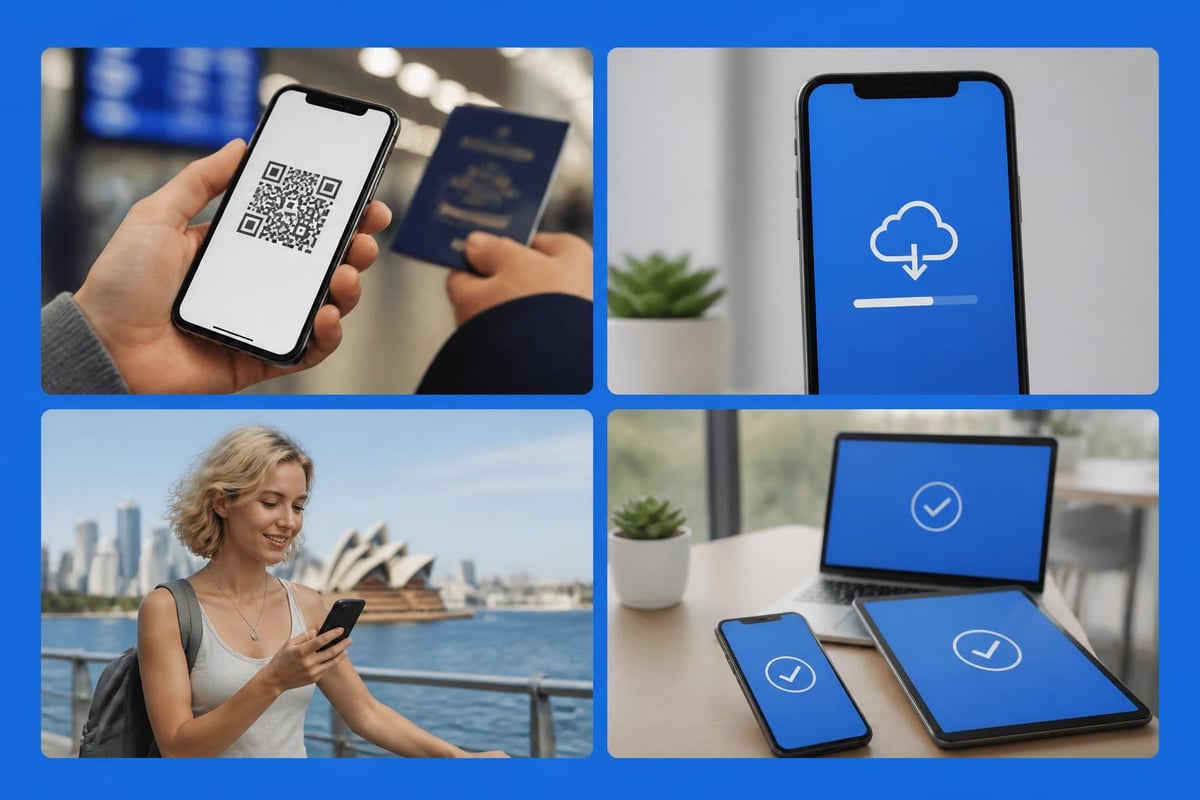
Here's what actually happens when you activate an eSIM. Your phone contains a programmable chip that can store multiple carrier profiles. When you purchase an eSIM plan, you receive a QR code or activation details. Scan it, and your phone downloads the carrier profile over the air.
Key advantages include:
- Instant activation without visiting a shop
- Multiple profiles on one device
- Easy switching between carriers
- No risk of physical damage or loss
- Environmental benefits (no plastic waste)
The beauty of esims australia services is that activation happens before you even board your flight. Land at Sydney Airport with full connectivity already sorted. Check those airport transfer directions immediately. Message your hotel about early check-in. Share that first kangaroo sighting on social media straight away.
Comparing Australian eSIM Providers and Plans
The Australian market offers diverse options, from traditional telcos embracing eSIM technology to specialised travel providers. Understanding what each type offers helps you choose wisely.
| Provider Type | Typical Cost Range | Best For | Coverage |
|---|---|---|---|
| Major Carriers | $30-80/month | Long-term stays | Nationwide + rural |
| Travel eSIMs | $5-50 one-time | Tourists (1-30 days) | Major cities + tourist areas |
| MVNOs | $15-40/month | Budget-conscious users | Variable (uses major networks) |
| Premium Services | $50-150/month | Business travellers | Premium nationwide |
Major Australian carriers like Telstra, Optus, and Vodafone now support eSIM technology across their networks. Australian mobile providers offering eSIM plans have expanded significantly throughout 2026, giving consumers unprecedented choice.
Tourist-Focused eSIM Options
If you're visiting Australia for a holiday, tourist-specific esims australia plans often provide better value than traditional carrier options. They're designed for short-term use, with data packages matching typical travel needs.
Consider what you actually need. Checking Google Maps occasionally? Sharing photos? Video calling family back home? Your usage patterns determine the right plan size.
Typical tourist data usage in Australia:
- Light user (1-3GB): Messaging, occasional maps, social media browsing
- Moderate user (5-10GB): Regular navigation, photo uploads, music streaming
- Heavy user (15-30GB): Video calls, constant social media, work emails, streaming
For travellers specifically visiting Australia, providers like gosimless.app offer instant activation for Australian coverage with no roaming fees and straightforward pricing. The activation process takes literally seconds, and you're paying only for the data you need.
Getting Set Up: Your Step-by-Step Guide
Right, you've decided esims australia makes sense for your situation. How do you actually get one working on your device?
First things first: check device compatibility. Not all phones support eSIM technology, though most newer models do. iPhones from the XS onwards, recent Samsung Galaxy devices, Google Pixels, and many others work perfectly. Need specifics? The compatible devices page lists supported models comprehensively.
The Activation Process Demystified
- Purchase your eSIM plan - Choose a provider and plan matching your needs
- Receive activation details - Usually via email containing a QR code
- Access eSIM settings - Location varies by device (typically Settings > Mobile/Cellular)
- Add cellular plan - Select "Add eSIM" or similar option
- Scan the QR code - Point your camera at the code provided
- Label your plan - Give it a recognizable name like "Australia Travel"
- Select when to use it - Choose whether to activate immediately or later
- Configure settings - Set as primary or secondary line, enable data roaming if needed
The whole process typically takes under five minutes. Seriously. I remember my first time setting up an eSIM before visiting Sydney in 2024, expecting complications. Instead, I was connected before my boarding announcement even started.
For detailed device-specific instructions, the installation guide walks through the process for different phone models.
Cost Analysis: What You'll Actually Pay
Let's talk money. Australian mobile plans can vary wildly in price, and understanding what represents good value requires comparing like with like.
Traditional Australian carrier plans for tourists often involve:
- High daily roaming fees (sometimes $10-15/day)
- Expensive short-term contracts
- Hidden activation costs
- Data caps that don't match tourist usage
Travel-focused esims australia services work differently. You pay upfront for a specific data allowance valid for a set period. No bill shock, no ongoing charges, no contract commitments.
Real-World Pricing Examples (May 2026)
| Data Amount | Validity Period | Typical Price | Cost per GB |
|---|---|---|---|
| 1GB | 7 days | $5-8 | $5-8 |
| 3GB | 15 days | $12-18 | $4-6 |
| 10GB | 30 days | $25-35 | $2.50-3.50 |
| 20GB | 30 days | $40-55 | $2-2.75 |
The cheapest eSIM plans in Australia constantly shift as providers compete, but these ranges give you a baseline for May 2026.
Want unlimited data? Some premium esims australia providers offer it, though "unlimited" often means high-speed data up to a threshold, then reduced speeds. Read the fine print carefully.
Coverage Considerations Across Australia
Australia is enormous. We're talking 7.7 million square kilometres with population concentrated in coastal cities. Coverage quality varies dramatically between urban and remote areas.
In major cities like Sydney, Melbourne, Brisbane, and Perth, you'll find excellent 4G and expanding 5G coverage from all providers. Step outside these metropolitan areas, and the picture changes quickly.
Coverage tiers in Australia:
- Tier 1 (Major cities): Excellent 5G and 4G from all carriers
- Tier 2 (Regional centres): Solid 4G, patchy 5G
- Tier 3 (Rural areas): 4G available but variable quality
- Tier 4 (Remote/Outback): Limited to specific carriers, often 3G or no coverage
Telstra traditionally offers the most extensive coverage, particularly in rural and remote areas. If you're planning Outback adventures, check which network your eSIM provider uses. Many travel esims australia services piggyback on Telstra's network for exactly this reason.
Planning to visit Uluru? Explore Tasmania's wilderness? Road trip the Great Ocean Road? Verify coverage for your specific destinations before committing to a plan. Nothing's more frustrating than having zero bars when you need directions to your accommodation.
Physical SIM vs eSIM: The Australian Perspective
Should you stick with traditional physical SIM cards or embrace eSIM technology? The answer depends on your specific situation, though esims australia options offer compelling advantages for most users.
Comparing eSIMs and physical SIM cards reveals distinct trade-offs worth considering.
When Physical SIMs Still Make Sense
- You're using an older device without eSIM support
- You frequently swap SIMs between devices
- You prefer having a tangible backup
- You're travelling to extremely remote areas where eSIM activation might be problematic
When eSIMs Win Hands Down
Most modern travel scenarios favour eSIMs. Arriving at the airport with connectivity already active beats queueing at a SIM card kiosk every single time. Managing multiple numbers for work and personal use becomes seamless. And environmental considerations matter too-millions of physical SIMs create significant plastic waste annually.
For Australian locals, dual SIM functionality lets you keep your regular number while adding a data-only eSIM for better rates or coverage. Travelling internationally? Add an eSIM for your destination without removing your Australian SIM.
The frequently asked questions page addresses common concerns about switching from physical to eSIMs, particularly around number portability and carrier switching.
International Travellers: Before You Arrive
If you're visiting Australia from overseas, sorting connectivity before departure eliminates stress upon arrival. Immigration queues, baggage collection, finding ground transport-you don't need connectivity headaches added to that list.
Best eSIM options for travellers to Australia reviewed in May 2026 highlight providers offering tourist-friendly plans with generous data allowances and straightforward activation.
Pre-departure checklist:
- Verify your device supports eSIM technology
- Research coverage for your specific destinations
- Calculate realistic data needs based on trip length
- Purchase and install eSIM before leaving home
- Test activation (can often be done before travel date)
- Keep activation details accessible offline
Some providers offer free trials for eSIM services, letting you test connectivity and speeds before committing to larger packages. This can be particularly valuable if you're unsure about data requirements.

Business Travellers and Remote Workers
Heading to Australia for work? Your connectivity needs differ significantly from leisure travellers. Video conferences, large file uploads, VPN access, and reliable speeds aren't optional-they're essential.
Many esims australia providers now offer business-focused plans with priority network access and enhanced customer support. Consider plans with larger data allowances than you think you'll need. Nothing derails a client presentation faster than "Sorry, my connection just dropped."
Business traveller priorities:
- Consistent speeds for video conferencing (minimum 5Mbps upload)
- Generous data allowances (15GB+ for week-long trips)
- Quick customer support response times
- Ability to top up data mid-trip
- Coverage in business districts and hotels
International eSIM options for business travel include Australia in multi-country packages, which can provide better value if you're visiting multiple destinations.
The comparison of different eSIM providers shows how services stack up on factors like speed, customer support, and business-friendly features.
Managing Multiple eSIM Profiles
One of the cleverest features of eSIM technology is storing multiple carrier profiles on a single device. Why does this matter for Australian users?
Imagine you're an Australian resident who travels frequently to Asia for work. Keep your primary Australian number active as eSIM 1. When visiting Thailand, Japan, or Singapore, add a local eSIM as your secondary profile without removing the Australian one. Both numbers remain accessible, and you control which one handles data.
Profile Management Best Practices
Your phone's settings let you designate which line handles calls, messages, and data. Set up sensibly to avoid accidentally using expensive roaming data when a local eSIM is available.
Typical dual-eSIM setup:
- Primary eSIM: Your regular Australian number (calls and messages)
- Secondary eSIM: Travel data plan (data only)
- Default data line: Travel eSIM (to avoid roaming charges)
- Default voice line: Australian number (to receive important calls)
Most smartphones support multiple eSIM profiles stored simultaneously (often 5-10), though typically only two can be active concurrently. This means you can preload eSIMs for future trips without removing current ones.
Planning trips to multiple countries? Consider exploring eSIM options for various destinations to understand how different regions handle eSIM connectivity.
Security and Privacy Considerations
Switching to esims australia raises questions about security. Is your data safe? Can eSIM profiles be hacked? What happens if your phone is stolen?
eSIMs are actually more secure than physical SIMs in several ways. They can't be physically removed and used in another device without authentication. Remote SIM swapping attacks, which plague traditional SIMs, become significantly harder.
Security advantages of eSIMs:
- Physical theft doesn't automatically compromise your number
- Encrypted activation and profile downloads
- Remote profile management and deletion
- No SIM swap attacks at retail locations
- PIN and biometric protection integrated with device security
That said, maintain good security hygiene. Enable device encryption, use strong passwords, and be cautious about where you scan QR codes. Only activate eSIMs from reputable providers using official purchase channels.
If your device is lost or stolen, contact your eSIM provider immediately to deactivate the profile remotely. This prevents unauthorized usage and protects your account from fraudulent charges.
Top-Up and Data Management Strategies
Running low on data mid-trip creates unnecessary stress. How can you monitor usage and top up efficiently with esims australia services?
Most providers offer apps showing real-time data consumption. Install these before travelling so you're not scrambling to download them over expensive hotel WiFi later.
| Monitoring Method | Accuracy | Convenience | Cost |
|---|---|---|---|
| Provider app | High | Very convenient | Free |
| Phone settings | Moderate | Always available | Free |
| Network notifications | High | Automatic alerts | Free |
| Third-party apps | Variable | Feature-rich | Often free |
Set up alerts at 50%, 75%, and 90% of your data allowance. This gives enough warning to top up or adjust usage before completely running out.
Smart Data Conservation
Travelling on a limited data plan? These strategies stretch your allowance further:
- Download maps for offline use before leaving WiFi
- Disable automatic app updates over cellular
- Use WiFi at accommodations and cafes whenever possible
- Download entertainment content rather than streaming
- Compress images before uploading to social media
- Disable background app refresh for non-essential apps
The blog section offers additional tips for maximizing data efficiency while travelling, including specific advice for different destinations and usage patterns.
Future of eSIM Technology in Australia
What's next for esims australia as we move through 2026 and beyond? The technology continues evolving rapidly, with several exciting developments on the horizon.
Major Australian carriers are expanding eSIM support across their entire product ranges. Devices launching in 2026 increasingly ship with eSIM as the primary option, with physical SIM trays becoming secondary or absent entirely.
Emerging trends:
- Standalone eSIM-only smartphone models
- Integration with smartwatches and IoT devices
- Improved rural coverage through network sharing
- More competitive pricing as adoption increases
- Enhanced security features and biometric integration
- Instant carrier switching without re-downloading profiles
5G network expansion continues across Australia, with eSIM users benefiting from faster speeds and lower latency in supported areas. This particularly advantages business travellers and content creators who need to upload large files from mobile devices.
Regulatory changes may also impact the market. Australian authorities are considering policies that would make eSIM switching even easier, potentially allowing instant carrier changes without new QR codes or profile downloads.
Troubleshooting Common Issues
Even with straightforward technology, occasional hiccups happen. What do you do when your eSIM isn't working as expected in Australia?
Most common problems and solutions:
- eSIM won't activate - Verify your device is unlocked and eSIM-compatible; restart device; check for carrier settings updates
- No data connection - Ensure data roaming is enabled; select correct eSIM for data; verify APN settings if manually configured
- Slow speeds - Check network congestion; confirm you haven't exceeded high-speed data allowance; test in different location
- Can't receive calls - Verify which line is set for voice; check call forwarding isn't accidentally enabled; ensure profile is active
- QR code won't scan - Adjust lighting; clean camera lens; manually enter activation code instead
The eSIM activation guide provides device-specific troubleshooting steps for common activation problems.
Still stuck? Most providers offer 24/7 customer support specifically for activation issues. Contact information should be saved before travelling, accessible even without data connection.
Making the Switch: Your Next Steps
Ready to embrace esims australia for your next trip or everyday connectivity? The transition is simpler than you might think.
Start by checking device compatibility-this determines everything else. Newer iPhones, Samsung Galaxy devices, Google Pixels, and many others work perfectly with eSIM technology. The complete compatibility list covers hundreds of device models.
Next, assess your needs honestly. Tourist visiting for two weeks? Business traveller making frequent short trips? Australian resident wanting better coverage or pricing? Each scenario points toward different providers and plans.
Research specific providers for your use case. Reviewing eSIM providers for Australia helps identify reputable options with solid coverage and fair pricing.
Finally, test before you need it. If possible, activate an eSIM for a short local trip before relying on it for important international travel. This builds confidence and helps you understand the management interface.
Getting connected in Australia doesn't need to involve airport queues, confusing retail stores, or overpriced roaming packages. With eSIM technology now widely available and increasingly affordable, staying online Down Under is simpler than ever. Whether you're exploring Sydney's harbour, road-tripping through the Outback, or conducting business in Melbourne, having reliable data at your fingertips makes every aspect of your journey smoother. Ready to simplify your Australian connectivity? gosimless.app delivers instant eSIM activation with affordable, flexible coverage across Australia and 200+ other countries, with no roaming fees and support across multiple devices.
gosimless Team
The gosimless editorial desk — testing eSIMs, carriers and travel connectivity so you don't have to. Updated continuously from the road.