
Planning a trip to Thailand in 2026? You're probably wondering how you'll stay connected whilst exploring Bangkok's bustling streets, relaxing on Phuket's beaches, or island-hopping in Krabi. Gone are the days of hunting for SIM card vendors at the airport or paying extortionate roaming fees. When you buy eSIM Thailand options, you're choosing convenience, affordability, and instant connectivity that works the moment you land.
Thailand's tourism is booming this year, and staying connected isn't just about posting holiday snaps anymore. You need reliable internet for booking taxis, translating menus, finding hidden gems, and staying in touch with loved ones back home. Let's walk through everything you need to know about getting an eSIM for your Thai adventure.
What Makes Thailand eSIMs Different in 2026
The eSIM landscape has evolved dramatically over the past few years. When you buy eSIM Thailand plans today, you're accessing technology that's light years ahead of what was available just a couple of years ago.
Thailand's major networks have embraced eSIM technology fully. AIS, TrueMove H, and dtac all support eSIM connections, which means you'll get the same excellent coverage locals enjoy. The beauty of this is that eSIM providers can partner with these established networks without maintaining physical infrastructure.
Network Coverage Across Thailand
Here's what you can expect from network coverage when you buy eSIM Thailand plans:
- Bangkok and major cities: Near-perfect 4G and 5G coverage
- Tourist islands (Phuket, Koh Samui, Koh Phi Phi): Excellent coverage in populated areas
- Northern regions (Chiang Mai, Chiang Rai): Strong coverage in cities, variable in mountains
- Southern beaches: Generally good, with occasional weak spots in remote areas
- Rural and mountainous regions: 3G/4G coverage, sometimes patchy
The practical reality? You'll have reliable internet in 95% of the places tourists actually visit. Those jungle treks or remote temple visits might mean a temporary digital detox, but that's probably no bad thing.

How to Choose the Right eSIM Provider for Thailand
Not all eSIM providers are created equal. I've tested several whilst travelling through Southeast Asia, and the differences can be substantial. Here's what actually matters when you buy eSIM Thailand plans.
Data Allowances and Validity Periods
Think carefully about how much data you'll actually use. Streaming Netflix on the beach? You'll chew through gigabytes. Just using maps and messaging? A few GB might last your entire trip.
| Usage Type | Data Needed (7 days) | Data Needed (14 days) |
|---|---|---|
| Light (messaging, maps) | 2-3 GB | 4-6 GB |
| Moderate (social media, browsing) | 5-7 GB | 10-14 GB |
| Heavy (video calls, streaming) | 15-20 GB | 30-40 GB |
| Very Heavy (constant streaming) | 30+ GB | 60+ GB |
Most providers offer validity periods ranging from 7 to 30 days. Match this to your trip duration, but remember that unused data typically expires when the plan ends.
Speed and Network Priority
Here's something many travellers don't consider: network priority. Some cheaper eSIM plans give you lower priority on congested networks. During peak hours in touristy areas, you might notice slower speeds.
When you buy eSIM Thailand plans from established providers, you're usually getting standard network priority. This means your connection performs the same as local SIM cards. It's worth paying slightly more for this assurance, especially if you'll be working remotely or need reliable video calls.
Step-by-Step: Buying Your Thailand eSIM
The process is remarkably straightforward, but let's walk through it properly to avoid any hiccups.
Before You Purchase
- Check device compatibility - Your phone needs to be eSIM-capable and carrier-unlocked
- Verify your destination - Ensure the plan covers Thailand specifically
- Choose your arrival date - Some plans activate immediately, others on first connection
- Have payment ready - Most providers accept major credit cards and PayPal
First things first: is your phone actually compatible? Most iPhones from the XR onwards support eSIM, as do many recent Android devices. You can check compatible devices to see if yours makes the cut.
The Purchase Process
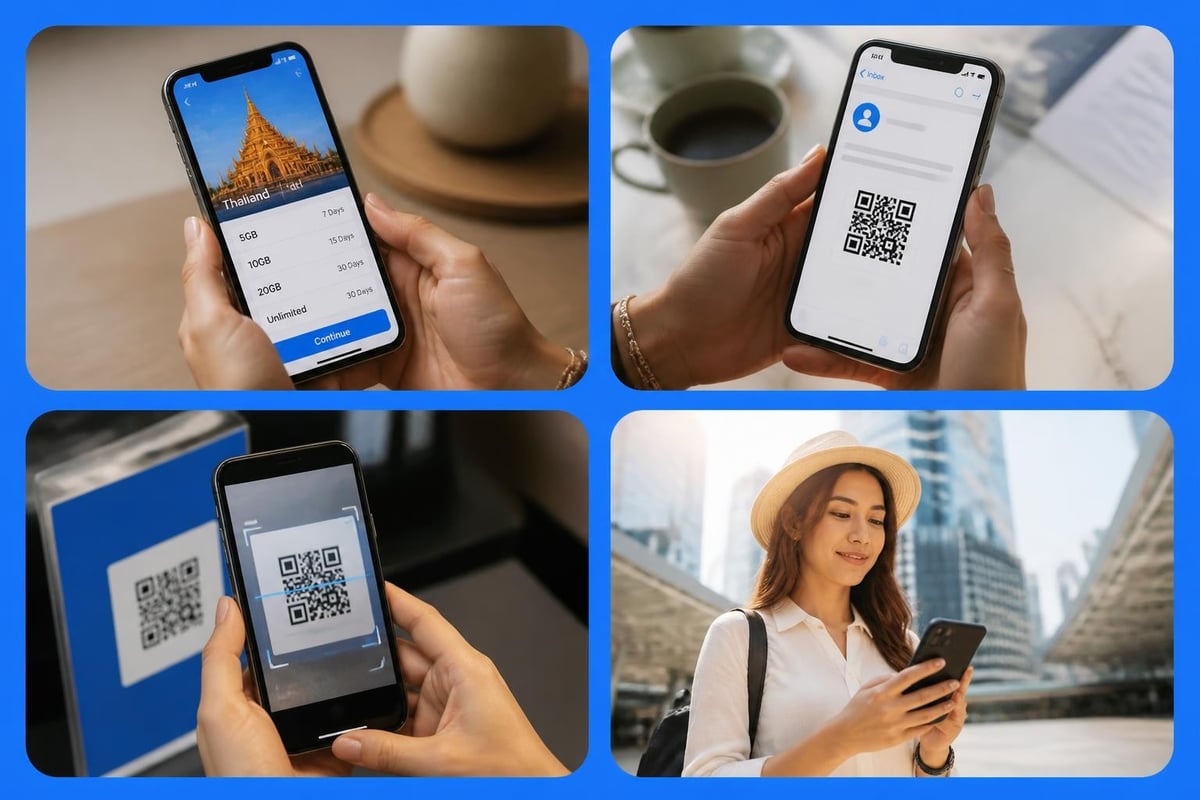
When you buy eSIM Thailand plans, the typical process takes about five minutes:
You'll select your plan based on data needs and duration. Enter your email address (double-check this - it's where your QR code goes). Complete payment through a secure gateway. Receive your eSIM QR code via email, usually within seconds.
The activation process varies slightly by device, but it's generally quite intuitive. If you're using an iPhone, the iPhone eSIM activating guide walks through the exact steps with screenshots.
Pricing: What You'll Actually Pay
Let's talk money. Thailand eSIM pricing has become incredibly competitive in 2026, which is brilliant news for travellers.
Typical Price Ranges
Expect to pay roughly these amounts when you buy eSIM Thailand plans:
- 3 GB / 7 days: £4-8
- 5 GB / 15 days: £8-14
- 10 GB / 30 days: £15-25
- 20 GB / 30 days: £25-40
- Unlimited / 7 days: £20-35
Compare this to international roaming from UK networks, which can charge £5-7 per day. A two-week holiday would cost £70-98 in roaming fees versus £8-14 for an eSIM. The savings are substantial.
Hidden Costs to Watch For
Some providers are transparent; others less so. Watch out for activation fees, top-up charges that don't match the original rate, and plans that throttle speeds after a certain threshold rather than offering true unlimited data.
Similar to how you might research eSIM options for other Asian destinations, it's worth comparing several Thailand-specific providers before committing. The cheapest isn't always the best value if speeds are unreliable or customer service is non-existent.
Popular Thailand eSIM Providers Compared
The market has expanded significantly, with both global players and Thailand-focused specialists competing for your business.
What Different Providers Offer
| Feature | Global Providers | Regional Specialists | Local-Focused |
|---|---|---|---|
| Coverage | Multi-country bundles | Asia-Pacific focus | Thailand optimized |
| Price Point | Mid to high | Competitive | Often cheapest |
| Customer Service | 24/7 multilingual | Business hours | Variable |
| Network Partners | Multiple options | Premium networks | Single network |
| Top-Up Ease | Very easy | Easy | Sometimes limited |
I've found that global providers excel at convenience, especially if you're visiting multiple countries. Just as you might get an Australia eSIM for a multi-stop trip through Asia-Pacific, many Thailand eSIMs are part of broader regional packages.
Real-World Performance
According to independent eSIM reviews, the key differentiators in 2026 aren't really about coverage anymore - most providers use the same local networks. Instead, it's about reliability of activation, customer support responsiveness, and transparency in pricing.
Setting Up Your eSIM: Avoiding Common Mistakes
You've bought your eSIM Thailand plan, and your QR code is sitting in your inbox. Here's how to get connected without the frustration I experienced on my first attempt.
Installation Timing
Here's a crucial tip: don't install your eSIM until you're ready to use it. Many plans activate the moment you scan the QR code or when you first connect to a network. Installing it three weeks before your trip might waste valuable validity days.
The ideal approach? Install the eSIM the day before departure, but don't enable it as your primary data line until you land in Thailand. This gives you time to troubleshoot any issues whilst you're still at home with WiFi.
Common Setup Problems
These are the issues I see travellers encounter most frequently:
- QR code won't scan: Try increasing screen brightness or zooming in
- eSIM installs but won't connect: Toggle airplane mode off and on
- Data works but calls don't: Check if your plan is data-only (most are)
- Slow speeds immediately: Restart your device after installation
The installation guide covers device-specific quirks in detail, which can save hours of airport frustration.
Using Your eSIM in Thailand: Practical Tips
You've landed in Bangkok, your eSIM has connected to a local network, and you're ready to navigate Thailand with reliable internet. Here are some practical insights to maximise your connectivity.
Data Management Strategies
Even with generous data allowances, being smart about usage extends your plan further:
Download offline maps before leaving WiFi - Google Maps lets you save entire cities. Switch to WiFi for large downloads - hotels, cafes, and malls offer free connections. Limit background app refresh - those constant updates drain data unnecessarily. Use messaging apps instead of SMS - WhatsApp, Line, and Telegram use minimal data.
Thailand has excellent WiFi infrastructure in tourist areas, so you can often conserve mobile data for when you're out exploring.
Dual SIM Benefits
If you buy eSIM Thailand plans whilst keeping your home SIM active, you get brilliant flexibility. You can use the eSIM for data and local calls whilst still receiving texts and calls on your primary number. This is especially useful for banking security codes or verification messages.
Just remember to set your eSIM as the primary data source in settings, otherwise you might rack up roaming charges on your home network by accident.

Special Considerations for Different Types of Travellers
Not everyone uses mobile data the same way in Thailand. Your needs might differ significantly from other travellers.
Digital Nomads and Remote Workers
Working from Thailand? You'll need robust connectivity for video conferences and file uploads. When you buy eSIM Thailand plans for work purposes, prioritise these factors:
- Higher data allowances (20+ GB minimum)
- Reliable speeds during business hours
- Ability to top up easily mid-stay
- Good coverage in your specific work location
Many co-working spaces in Chiang Mai and Bangkok have excellent WiFi, but you'll want mobile backup for coffee shops and accommodation. Some digital nomads buy eSIM Thailand plans with shorter validity but higher data allowances, topping up monthly.
Island Hoppers and Beach Lovers
Thailand's islands present unique connectivity challenges. Coverage on Koh Phi Phi, Koh Lanta, and smaller islands can be patchy, particularly in budget accommodation areas.
The main tourist islands like Phuket, Koh Samui, and Koh Phangan have good coverage from major networks. However, if you're heading somewhere properly remote, don't rely entirely on mobile data. Download entertainment, maps, and important documents before leaving the mainland.
Families and Groups
Travelling with kids or in a group? Consider these approaches when you buy eSIM Thailand options:
- Multiple smaller plans instead of one large one for flexibility
- A high-data plan on one device to create a mobile hotspot
- Plans with generous validity for extended stays
Creating a hotspot from one device works brilliantly but drains battery quickly. Bring a portable charger or consider getting individual eSIMs for each family member's device.
Troubleshooting and Support
Even with the best preparation, connectivity issues occasionally arise. Here's how to handle them.
When Things Go Wrong
Lost connection mid-trip? Before panicking, try these steps:
Turn airplane mode on for 30 seconds, then off again. Manually search for networks and select a different one. Remove and reinstall the eSIM profile. Check your data balance hasn't expired.
Most connection issues resolve with a simple network reset. If problems persist, you'll need to contact your provider's support team.
Getting Help Quickly
Response times vary dramatically between providers. Some offer 24/7 chat support; others only respond to emails during business hours. This matters when you're standing in a Thai street market trying to call your hotel.
When you buy eSIM Thailand plans, check the support options before purchasing. According to various international travel eSIM reviews, customer service quality is one of the biggest differentiators between providers in 2026.
Beyond Thailand: Multi-Country eSIM Options
Thailand is often part of a larger Southeast Asian adventure. If you're also visiting Vietnam, Cambodia, Laos, or Malaysia, multi-country eSIMs might offer better value.
Regional Plans vs Country-Specific
The mathematics of multi-country plans can be tricky. Sometimes buying individual country eSIMs works out cheaper; other times, a regional plan is more economical.
Regional plans work best when:
- You're visiting 3+ countries
- Your stays in each country are relatively short
- You want consistent coverage without switching eSIMs
Individual country plans work best when:
- Thailand is your primary destination
- You're staying 2+ weeks in one place
- You need higher data allowances
If your itinerary includes countries beyond Southeast Asia, you might explore broader Europe eSIM style regional options that cover multiple continents, though these are typically more expensive per gigabyte.
Looking Ahead: Thailand eSIM Trends for 2026
The eSIM market continues evolving rapidly. What's changing as we move through 2026?
Emerging Features
5G coverage expansion - Major Thai cities now have extensive 5G networks, and eSIM providers are increasingly offering 5G-compatible plans. Flexible validity periods - Some providers now let you pause and resume plans rather than losing unused days. Instant top-ups - Adding more data mid-trip has become seamless with most providers. Better regional bundles - Southeast Asia packages are getting more sophisticated and affordable.
As explored in recent eSIM research, the infrastructure supporting eSIM technology has matured significantly, leading to better reliability and coverage across developing markets like Thailand.
Pricing Predictions
Competition is driving prices down whilst data allowances increase. The trend suggests that by late 2026, you'll get roughly 30% more data for the same price compared to early 2024. That's excellent news for travellers.
When you buy eSIM Thailand plans now, you're getting some of the best value the market has seen. This trend should continue as more providers enter the market and technology costs decrease.
Making Your Final Decision
We've covered a lot of ground here. Let's bring it all together with some final decision-making guidance.
Your Thailand eSIM Checklist
Before you buy eSIM Thailand options, confirm:
- Your device is eSIM-compatible and unlocked
- You've calculated your realistic data needs
- The provider covers your specific Thailand destinations
- Activation timing matches your travel dates
- Customer support options meet your comfort level
- The price includes all fees (no hidden charges)
- You understand the top-up process if needed
The Realistic Bottom Line
Here's what actually matters: reliable connection to the networks tourists use most (AIS and TrueMove H), enough data for your usage pattern, and straightforward activation. Everything else is secondary.
The market has matured to the point where you're unlikely to have a terrible experience with any major provider. The differences are incremental rather than dramatic. Don't overthink it - choose a reputable provider with good reviews, appropriate data for your needs, and pricing that fits your budget.
Similar to researching any travel essential, reading up-to-date Thailand eSIM comparisons helps you make an informed choice, but ultimately you need to just commit and get on with planning the exciting parts of your trip.
Thailand's combination of incredible culture, stunning landscapes, and delicious food makes it an unforgettable destination - and staying connected enhances every moment of the journey. When you buy eSIM Thailand plans, you're investing in peace of mind, convenience, and the freedom to explore without connectivity stress. Ready to get sorted? gosimless.app offers instant eSIM activation with affordable data plans, secure payments, and coverage across 200+ countries including Thailand, so you can land in Bangkok already connected and ready for adventure.
gosimless Team
The gosimless editorial desk — testing eSIMs, carriers and travel connectivity so you don't have to. Updated continuously from the road.