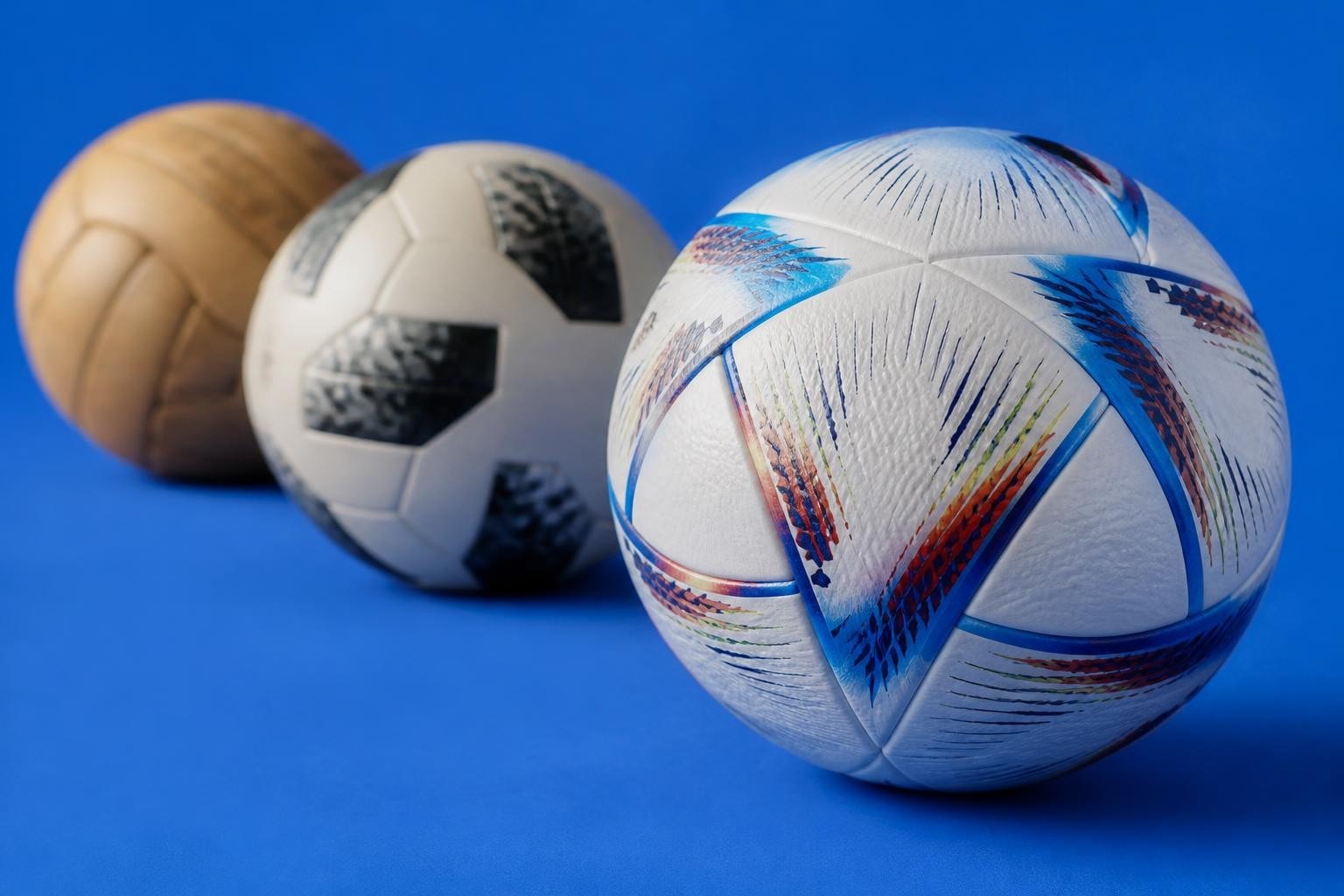
Every four years, the world turns its attention to a single object that weighs just 450 grams yet carries the hopes of billions. The world cup football ball isn't merely a piece of sporting equipment. It's engineering innovation, cultural symbolism, and technological advancement all stitched together. As we approach the 2026 FIFA World Cup hosted across Canada, Mexico, and the United States, the latest iteration promises to revolutionise how we experience the beautiful game. Have you ever wondered what makes these balls so special, or why they generate such passionate debate amongst players, coaches, and fans alike?
The Evolution of World Cup Match Balls
The journey of the world cup football ball mirrors football's transformation from a grassroots sport to a global phenomenon. Back in the early tournaments, players kicked around heavy leather balls that absorbed water like sponges, turning matches into endurance tests rather than displays of skill.
Fast forward to 2026, and we're looking at precision-engineered spheres packed with technology that would seem like science fiction to those early pioneers. The progression hasn't been linear, though. Each tournament brought its own innovations, controversies, and lessons learned.
From Leather to High-Tech Materials
The traditional world cup football ball was constructed from genuine leather panels, hand-stitched and prone to becoming waterlogged. These balls could double in weight during rainy matches, fundamentally changing how the game was played.
The shift to synthetic materials began in earnest during the 1980s and 1990s. Manufacturers experimented with:
- Polyurethane coatings for water resistance
- Synthetic leather exteriors for consistent performance
- Thermal bonding instead of stitching
- Textured surfaces for improved grip and control
This wasn't just about making balls lighter or more durable. The entire philosophy of ball design transformed from "good enough to kick" to "optimised for peak performance in every condition."
The Controversy Behind Design Changes
Remember the Jabulani from 2010? That world cup football ball became infamous amongst goalkeepers who complained about its unpredictable flight path. The ball's perfectly spherical design and reduced panel count made it incredibly light and responsive to even slight touches, but also difficult to control in flight.
Research into World Cup ball aerodynamics has shown that panel configuration dramatically affects how air flows around the ball. Fewer panels can mean less predictable movement, whilst too many panels might slow the ball down excessively.
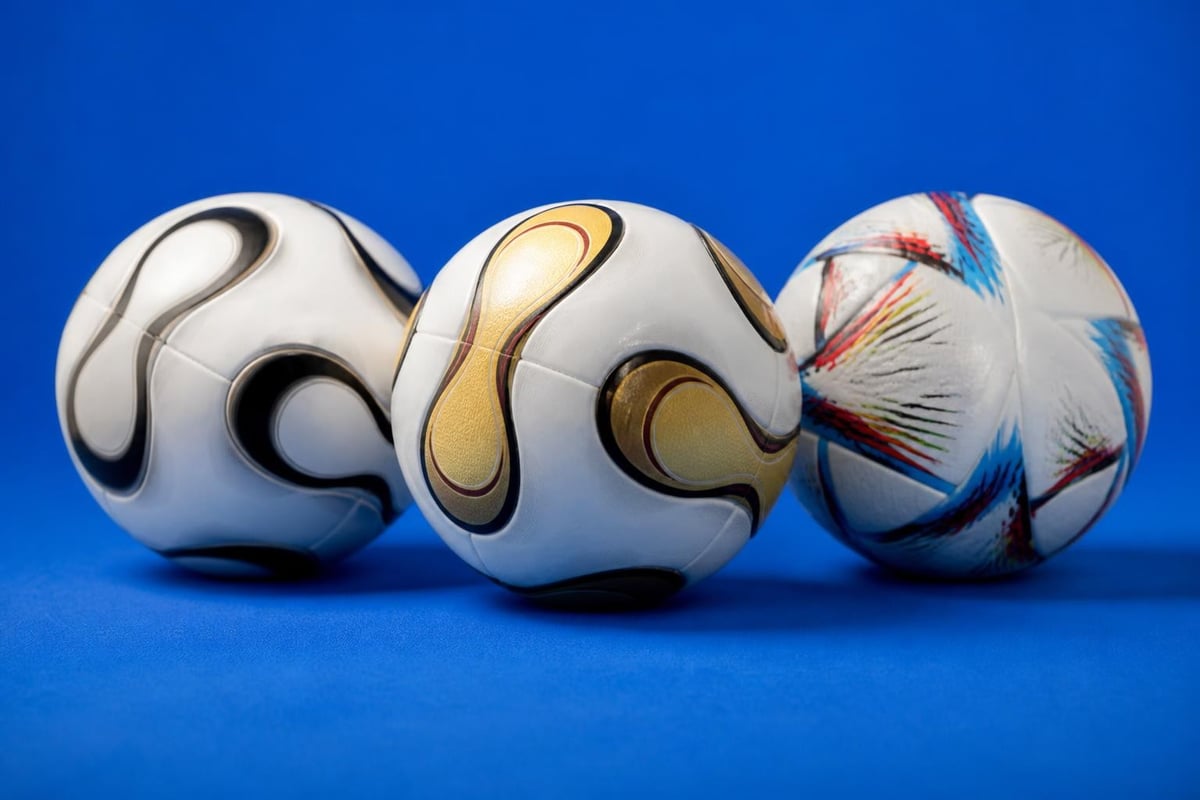
The debate surrounding each new design proves that even tiny modifications can influence match outcomes at the highest level. Players need time to adapt, and that adaptation period often coincides with major tournaments where there's no room for error.
Introducing the TRIONDA: 2026's Game Changer
The official match ball for the 2026 FIFA World Cup, named TRIONDA, represents the pinnacle of football technology. This world cup football ball doesn't just look different. It thinks differently.
Design Philosophy and Cultural Significance
TRIONDA's design celebrates the unique partnership of three host nations. The ball features geometric patterns and colour schemes that honour Canada, Mexico, and the United States, creating a visual identity that's immediately recognisable yet respectful of each country's football heritage.
But aesthetics tell only part of the story. The detailed design elements incorporate advanced aerodynamic features developed through countless hours of wind tunnel testing and player feedback sessions.
| Feature | Specification | Benefit |
|---|---|---|
| Weight | 420-450 grams | FIFA regulation compliance |
| Circumference | 68-70 cm | Optimal for professional play |
| Panel Configuration | 20 panels (thermally bonded) | Enhanced stability in flight |
| Surface Texture | Micro-textured polyurethane | Superior grip in all conditions |
Connected Ball Technology Explained
Here's where the world cup football ball enters the future. TRIONDA incorporates connected ball technology that tracks every touch, pass, and shot with unprecedented precision.
An internal sensor system captures data at 500 frames per second, recording:
- Ball position in three-dimensional space
- Speed and rotation metrics
- Impact force and contact points
- Exact timing of touches
This information feeds directly to match officials through a secure network, enabling split-second decisions on offside calls, goal-line technology, and other critical moments. The system proved its worth during testing phases, reducing controversial decisions by significant margins.
Travelling to see the World Cup matches in person? Staying connected across multiple venues and countries becomes crucial. That's where services like instant eSIM activation make following the tournament seamless, whether you're watching in Toronto, Mexico City, or Los Angeles.
Manufacturing Process and Quality Control
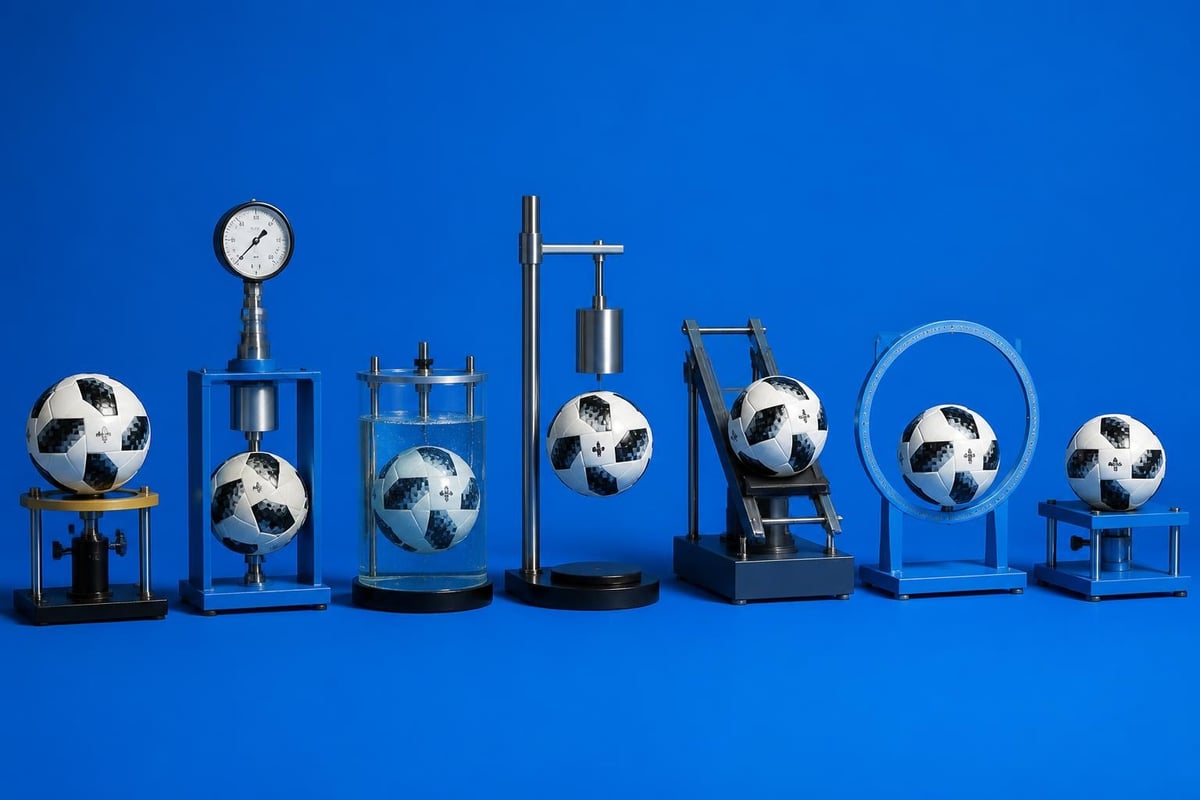
Creating a world cup football ball that meets FIFA's exacting standards requires manufacturing precision that would impress any aerospace engineer. Every single ball undergoes rigorous testing before it's deemed worthy of tournament play.
Testing Standards That Define Excellence
FIFA's quality programme puts each world cup football ball through gruelling examinations:
- Sphericity testing: Measured at 16 different points to ensure perfect roundness
- Weight verification: Multiple measurements at different temperatures and humidity levels
- Water absorption tests: Balls are submerged and weighed to confirm minimal moisture uptake
- Rebound testing: Dropped from 2 metres onto steel plates with strict bounce height requirements
- Circumference checks: Measured under specified pressure conditions
Only balls passing every single test earn FIFA Quality Pro certification. The rejection rate during manufacturing can reach 15-20%, demonstrating how seriously standards are enforced.
Sustainability in Modern Ball Production
The environmental impact of producing thousands of world cup football balls hasn't gone unnoticed. Manufacturers now prioritise sustainable practices throughout the supply chain.
Recent innovations include recycled polyester in panel construction, water-based adhesives replacing chemical solvents, and packaging made from biodegradable materials. The 2026 TRIONDA incorporates recycled materials without compromising performance, setting new benchmarks for environmentally conscious sports equipment.
How Players Adapt to New Ball Designs
Professional footballers are creatures of habit. Introduce a new world cup football ball, and you're asking them to recalibrate skills honed over decades of practice.
The adaptation period typically spans several weeks:
- Week 1-2: Initial contact and feel assessment
- Week 3-4: Adjusting technique for passing and shooting
- Week 5-6: Fine-tuning set pieces and long-range efforts
- Week 7+: Full integration into match conditions
Goalkeepers face particular challenges. The ball's flight characteristics, how it moves through air after being struck, and its behaviour when wet all influence positioning and reaction times.
Professional Insights on Ball Performance
Players who've tested TRIONDA report excellent consistency across different weather conditions. The micro-textured surface maintains grip whether it's 35°C in Mexico or raining in Vancouver. This reliability matters enormously when split-second decisions determine match outcomes.
Strikers appreciate the responsive nature of the world cup football ball when striking from distance. The panel configuration allows for controlled swerve without the unpredictability that plagued earlier designs. Defenders and midfielders note improved accuracy on long diagonal passes, crucial for modern tactical systems.
The Role of Technology in Match Officiating
Connected ball technology transforms how matches are officiated, removing guesswork from critical decisions that previously relied on human judgment alone.
Real-Time Data Integration
When a world cup football ball equipped with sensors crosses the goal line, officials receive confirmation within fractions of a second. The system's accuracy eliminates the controversial "did it cross the line?" moments that once dominated post-match discussions.
The technology extends beyond goal decisions:
- Offside determinations using precise ball position data
- Foul assessment through impact force measurements
- Possession statistics calculated automatically
- Pass completion tracked across entire matches
This wealth of information enhances not just officiating but also tactical analysis, player development, and fan engagement through enhanced broadcasting graphics.
Balancing Technology with Football's Human Element
Despite technological advances, football remains beautifully human. The world cup football ball's sensors assist officials rather than replacing them. Referees still interpret the game's spirit, manage player behaviour, and make judgment calls on matters technology can't measure.
Finding this balance proves essential. Fans want fairness and accuracy, but they also cherish football's unpredictability and emotional intensity. The 2026 tournament aims to deliver both through thoughtful technology integration.
Collecting and Commemorating World Cup Balls
For many fans, owning an official world cup football ball represents a tangible connection to football's greatest moments. The collectible market for these balls has grown substantially, with vintage examples commanding impressive prices.
What Makes a Ball Valuable?
Several factors influence a world cup football ball's collectible worth:
| Factor | Impact on Value | Examples |
|---|---|---|
| Tournament significance | High | Winning final match balls |
| Player signatures | Very high | Balls signed by winning teams |
| Historical importance | High | First of new technology type |
| Condition | Critical | Mint vs. match-used |
| Provenance | Essential | Verified authenticity documentation |
Match-used balls from significant games, especially finals or record-breaking matches, become treasured artefacts. The ball from Diego Maradona's "Hand of God" match sold for over £2 million, illustrating how football memorabilia transcends sporting equipment to become cultural history.
Replica Balls and Accessibility
Not everyone can afford match-quality world cup football balls, which typically retail between £100-150. Manufacturers produce replica versions at various price points, making the tournament experience accessible to grassroots players and casual fans.
These replicas capture the aesthetic design whilst using different materials and construction methods. They're perfect for park kickabouts or display purposes, though they won't match professional-grade performance specifications.
Preparing for the 2026 Tournament Experience
Whether you're planning to attend matches in person or follow from home, the 2026 World Cup promises unprecedented access and engagement. The world cup football ball itself becomes part of the narrative through enhanced broadcasting technology.
Fan Engagement Through Ball Technology
Connected ball data feeds into augmented reality experiences, mobile apps, and broadcast overlays. Fans watching on television or streaming services can access real-time statistics about ball speed, trajectory, and player touches that were previously invisible.
This transforms passive viewing into interactive experiences. Imagine seeing the exact velocity and spin of a spectacular goal moments after it's scored, or understanding precisely how a goalkeeper managed to save a seemingly unstoppable shot.
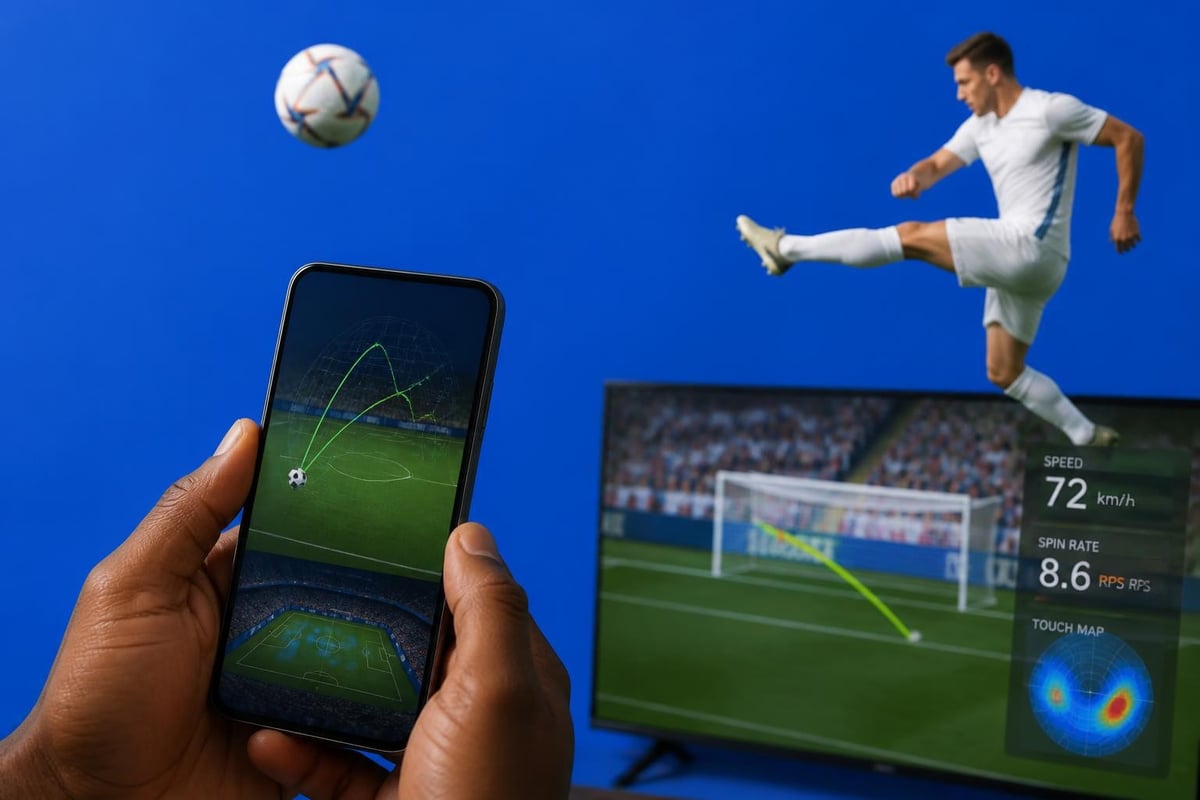
If you're travelling between host cities to catch multiple matches, maintaining reliable mobile connectivity becomes essential for accessing these enhanced features. Modern solutions like eSIM technology for USA, eSIM for Mexico, and eSIM for Canada ensure you're never disconnected from the action, regardless of which venue you're attending.
Training and Practice Considerations
Aspiring footballers worldwide will want to practice with equipment matching what professionals use. Investing in a quality world cup football ball helps develop proper technique and familiarity with how modern balls behave.
Practice considerations include:
- Surface compatibility (grass, artificial turf, indoor courts)
- Weather conditions affecting ball performance
- Proper inflation and maintenance
- Storage to preserve ball integrity
- Rotation between training and match balls
Young players particularly benefit from experiencing professional-grade equipment, as it teaches them to control balls that respond consistently to technique rather than behaving unpredictably.
The Science Behind Perfect Flight
Understanding what makes a world cup football ball fly true requires delving into fluid dynamics, material science, and aerodynamic engineering. The panel configuration isn't arbitrary. It's the result of extensive computational modelling and physical testing.
Panel Count and Flight Stability
Traditional balls featured 32 panels (20 hexagons and 12 pentagons). Modern designs reduce panel count through thermal bonding technology, creating smoother surfaces with fewer seams.
Fewer panels mean:
- Reduced air resistance during flight
- More consistent surface for contact points
- Enhanced stability at high velocities
- Potential for unpredictable movement at slower speeds
The TRIONDA's 20-panel configuration represents a sweet spot, balancing stability with responsiveness. Insights into the ball's design reveal how engineers optimised this configuration through thousands of test kicks and wind tunnel sessions.
Surface Texture and Ball Control
The micro-textured surface of modern world cup football balls serves multiple purposes. These tiny raised patterns create friction points that enhance player control without significantly affecting aerodynamics.
In wet conditions, the texture channels water away from contact points, maintaining grip that traditional smooth balls couldn't achieve. This consistency across conditions levels the playing field, ensuring matches are decided by skill rather than weather luck.
Global Impact and Legacy
The world cup football ball represents more than tournament equipment. It influences football development worldwide, inspiring innovations that trickle down to grassroots levels.
Democratising Technology
Features pioneered in world cup football balls eventually appear in recreational equipment. The thermal bonding that makes professional balls water-resistant now features in affordable training balls. Improved materials and construction techniques benefit players at every level.
This democratisation matters enormously for football's growth. Young players in developing nations gain access to equipment that performs reliably, helping them develop skills that might one day take them to professional careers.
Environmental and Social Responsibility
Modern world cup football ball production increasingly considers broader impacts. Manufacturers partner with fair labour organisations, ensure safe working conditions, and invest in communities where balls are produced.
The shift towards sustainable materials reflects football's global reach and responsibility. When millions of balls are produced annually, even small improvements in environmental impact multiply into significant positive change.
The world cup football ball embodies football's past, present, and future, combining tradition with cutting-edge innovation. From the TRIONDA's connected sensors to its sustainable materials, every element reflects decades of refinement and a commitment to excellence. Whether you're planning to experience the 2026 tournament across North America or following from afar, staying connected enhances every moment of the beautiful game. GoSimless provides instant eSIM activation across all three host countries, ensuring you never miss a goal, update, or unforgettable World Cup memory, no matter where the tournament takes you.
gosimless Team
The gosimless editorial desk — testing eSIMs, carriers and travel connectivity so you don't have to. Updated continuously from the road.