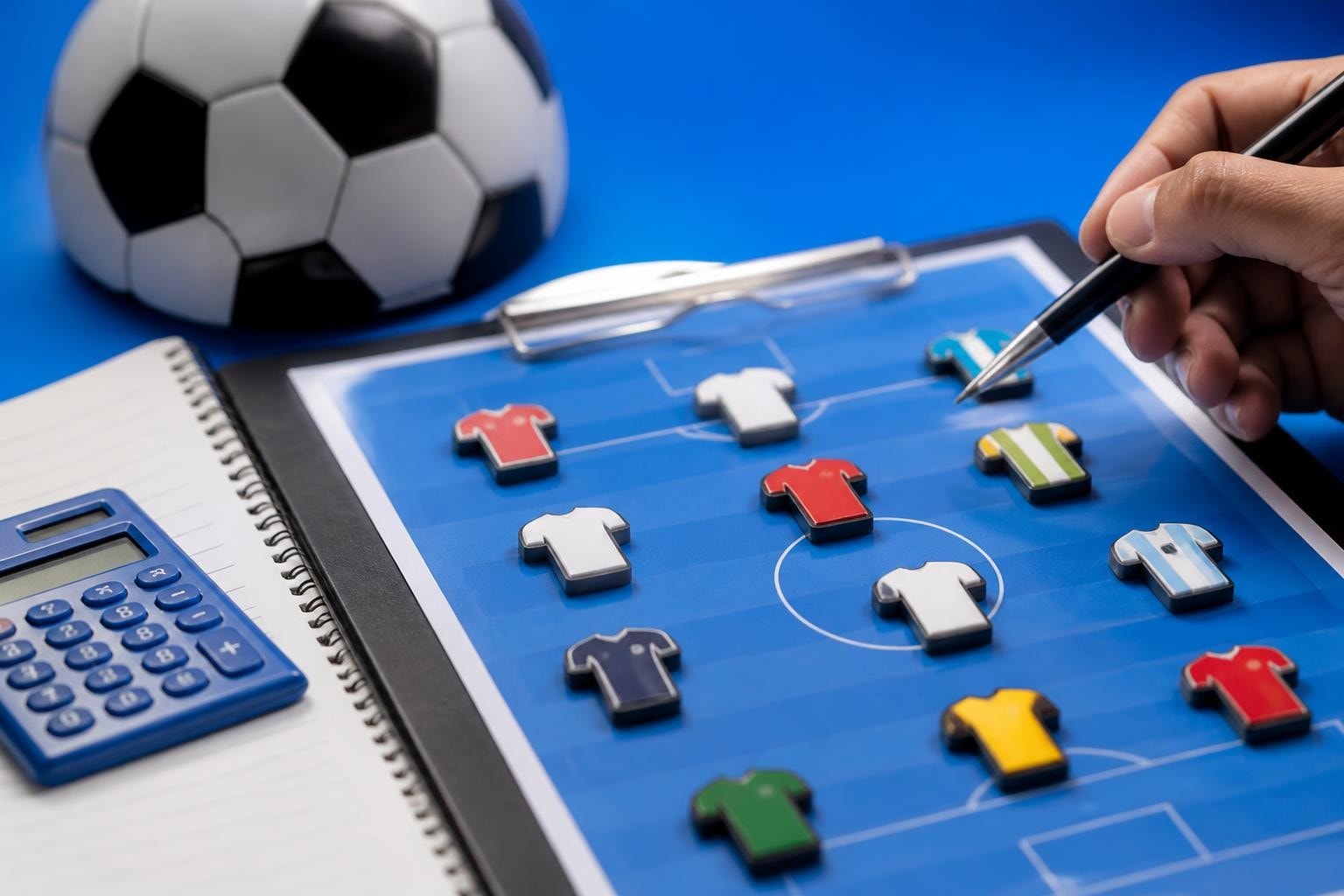
You've been waiting four years for this. The 2026 FIFA World Cup is finally here, and with it comes the return of world cup fantasy football. Whether you're a seasoned veteran who's been playing fantasy leagues for years or someone who's just discovered the thrill of building your perfect squad, this summer presents a unique opportunity. With matches spread across the United States, Canada, and Mexico, the tournament has expanded to 48 teams, meaning more fixtures, more tactical decisions, and more chances to climb those global leaderboards. But are you ready to make the most of it?
Understanding the World Cup Fantasy Format
Let's start with the basics. The world cup fantasy game operates differently from your traditional Premier League fantasy setup, and understanding these distinctions will give you a significant advantage from the opening whistle.
You're working with a $100 million budget to select 15 players. That might sound generous, but when you're eyeing up Kylian Mbappé, Erling Haaland, and Lionel Messi, you'll quickly realise how tight things can get. Your squad needs to include two goalkeepers, five defenders, five midfielders, and three forwards.
Squad Composition and Budget Management
Here's where strategy meets reality. Unlike season-long fantasy games, the FIFA World Cup Fantasy 2026 game keeps player prices fixed throughout the tournament. No price rises, no value gains. This fundamentally changes how you approach team selection.
Key budget considerations:
- Premium players from tournament favourites will command top prices
- Mid-priced options from second-tier nations can offer excellent value
- Budget enablers allow you to stack your midfield and attack
- Balance is crucial – you can't afford all the superstars
Think about it this way: would you rather have two premium players and fill the gaps with budget options, or spread your money more evenly across your squad? There's no single right answer, but your decision will shape your entire tournament strategy.

Strategic Player Selection for 2026
Choosing the right players goes beyond simply picking the biggest names. You need to consider fixture schedules, group stage matchups, and which teams are likely to progress deep into the knockout rounds.
Targeting Strong Group Stage Fixtures
This is where many managers gain or lose ground early. Ingenuity Fantasy Football recommends focusing on players from nations with favourable opening fixtures. Teams expected to dominate their groups will rack up goals, clean sheets, and assist points while others are still finding their rhythm.
| Team Type | Investment Strategy | Example Approach |
|---|---|---|
| Tournament Favourites | 3-4 premium players | Double up on attack from Brazil, France |
| Dark Horses | 2-3 mid-priced gems | Target Argentina, Portugal value |
| Group Winners | 1-2 differential picks | Find underpriced players from Netherlands, Spain |
Your opening squad should heavily feature players from teams with comfortable group opponents. England facing Iran and Panama? Load up. Germany drawn with Costa Rica? Get their attackers in. These fixtures are essentially guaranteed points if you've done your homework.
The Knockout Stage Conundrum
Here's something that catches out newcomers every single time: you need to plan beyond the groups. What happens when your heavily-invested team gets knocked out in the Round of 16?
I learned this the hard way in 2022. I'd stacked my team with Netherlands players after a brilliant group stage, only to watch them exit on penalties. Suddenly, three of my premium slots were occupied by players who'd stopped earning points.
Planning for tournament progression:
- Reserve transfers for teams you expect in the semi-finals
- Don't overcommit to one nation early
- Track performance trends as groups conclude
- Have contingency plans for shock eliminations
Mastering Transfers and Wildcards
You're given unlimited transfers, but there's a catch. You can only make transfers during specific windows between matchdays, and you're limited to how many changes you can make at once.
The wildcard is your reset button. You get one to use during the entire tournament, allowing you to completely rebuild your squad. Timing this correctly separates the champions from the also-rans.
When to Play Your Wildcard
Should you use it after the group stages? Before the quarter-finals? The answer depends on your team's performance and tournament developments.
- Early wildcard (post-groups): Ideal if your team selection went badly wrong or if major upsets have occurred
- Late wildcard (pre-semis): Perfect for those who got the groups right and want to maximise knockout stage points
- Never used: Only viable if you absolutely nailed your initial selection
World Cup Trackers suggests that most successful managers use their wildcard after the Round of 16, when they have maximum information about which teams are peaking and which are limping through.

Captaincy Decisions That Win Leagues
Every matchday, you select a captain who scores double points. Sounds simple, right? But with matches happening simultaneously and varying fixture difficulties, this becomes a daily tactical puzzle.
Fixture-Based Captaincy
Don't just captain the best player. Captain the best player in the best fixture. There's a world of difference between those two approaches.
Captaincy factors to consider:
- Opponent defensive strength
- Player's recent form and confidence
- Team's attacking patterns
- Historical matchup data
- Whether your captain is a differential
If you're travelling to watch the World Cup live, staying connected becomes crucial for making these time-sensitive decisions. Whether you're heading to matches in Los Angeles, Toronto, or Mexico City, you'll need reliable data to track your team and make last-minute captaincy swaps. That's where instant eSIM activation becomes invaluable – no hunting for Wi-Fi, no expensive roaming charges, just seamless connectivity when you need it most.
Differential Picks and Risk Management
Want to win your mini-league or climb the global rankings? You can't just pick the same players as everyone else. You need differentials – lower-owned players who can deliver big hauls.
Finding Value in Unexpected Places
The 48-team format means there are more potential value picks than ever before. Nations like Morocco, Senegal, or Japan could spring surprises with attacking players owned by less than 5% of managers.
| Risk Level | Ownership % | Potential Reward | When to Use |
|---|---|---|---|
| Safe | 30%+ | Steady points | Captain choices, team core |
| Moderate | 10-30% | Good returns | Squad depth, flexibility |
| Differential | Under 10% | League-winning | Strategic gambles |
| Punt | Under 3% | Massive or nothing | Desperate situations |
But here's the thing about differentials: they're differentials for a reason. That underpriced Colombian midfielder might be 5% owned because Colombia has a nightmare fixture run. Do your research, understand the match dynamics, and only take calculated risks.
Defensive Assets and Clean Sheet Potential
Everyone loves talking about attackers, but world cup fantasy leagues are often won at the back. A premium goalkeeper or defender from a defensively solid team can outscore expensive forwards over the tournament.
The Goalkeeper Dilemma
With two goalkeeper slots and limited chances to transfer, your shot-stopper selection matters more than you might think. The official FIFA rules award four points for a clean sheet and points for saves, making goalkeepers from moderate teams who face lots of shots surprisingly valuable.
Goalkeeper selection strategy:
- One premium option from a tournament favourite
- One value pick from a team likely to face high shot volumes
- Consider save points versus clean sheet probability
- Don't waste transfers on goalkeepers unless absolutely necessary
Using Data and AI for Informed Decisions
We're living in 2026, and the tools available to fantasy managers have evolved dramatically. You can now leverage artificial intelligence and advanced analytics to inform your selections.
Using AI platforms like ChatGPT can help you create detailed player comparison sheets, analyse fixture difficulty, and even predict potential lineup changes based on historical data. The technology isn't perfect, but it's another tool in your arsenal.

Advanced Metrics Worth Tracking
Look beyond goals and assists. Expected goals (xG), expected assists (xA), and shot involvement statistics tell you which players are getting into dangerous positions even if the final ball isn't falling.
Key statistics for world cup fantasy:
- Minutes played and rotation risk
- Penalty and set-piece takers
- Shot accuracy and conversion rates
- Defensive actions for defenders and midfielders
Some players consistently underperform their xG, while others exceed it. Knowing these patterns helps you identify value before the masses catch on.
Mini-League Strategy vs Global Rankings
Are you playing to beat your mates or chase a top 10,000 global finish? Your approach should differ dramatically based on your objectives.
Mini-League Tactics
If you're focused on winning your private league, you need to understand what your rivals are doing. Taking the same safe picks as your competitors means you're relying on captaincy and bench decisions to create separation.
Instead, consider these approaches:
- Mirror the leader: Copy their template, add one or two differentials
- Full differential: Go completely against the grain (high risk, high reward)
- Strategic counters: Fade their heavy investments, back their blind spots
Chasing Global Rankings
For global success, you need a balanced approach. Too safe, and you'll plateau in mediocrity. Too risky, and one bad week sends you tumbling down the rankings.
The sweet spot? A core of template players (50-60% of your squad) combined with carefully selected differentials that you genuinely believe will outperform their ownership percentage.
Learning from Fantasy Premier League Insights
While world cup fantasy differs from season-long competitions, there's valuable crossover knowledge. Research into predictive modeling for Fantasy Premier League shows that even sophisticated forecasting methods achieve only modest accuracy improvements over simpler approaches.
What does this mean for you? Don't overcomplicate things. Trust your judgment, follow the fixtures, and remember that variance plays a huge role in short tournaments. The best player on paper won't always deliver.
Common Mistakes to Avoid
Let me save you from the pitfalls that catch thousands of managers every tournament.
The Sentimental Selection
We all want our national heroes in our team, but if you're English and you're forcing three Three Lions players into your squad despite difficult fixtures, you're managing with your heart instead of your head. Be ruthless. This is about points, not patriotism.
Ignoring The Bench
Your bench matters more in world cup fantasy than you might expect. With rotation, surprise injuries, and tactical changes happening rapidly, those final three outfield slots need to be players who actually play, not just the cheapest possible options.
Transfer Panic
Don't use transfers just because you can. Every transfer should serve a clear purpose: upgrading a non-performer, switching to better fixtures, or preparing for the next knockout round. Sideways moves waste precious flexibility.
Transfer timing mistakes:
- Making changes too early before team news
- Reacting to one bad performance
- Following the crowd without independent analysis
- Forgetting about price points and value retention
Staying Connected Throughout the Tournament
Whether you're at home or travelling across North America following your team, keeping on top of team news, lineup leaks, and last-minute fitness updates can make the difference between a successful gameweek and a disaster.
Modern fantasy football demands real-time information. Press conferences happen hours before matches. Starting XIs are announced 60 minutes before kick-off. If you're exploring stadiums across the USA, soaking up the atmosphere in Canada, or experiencing Mexico's passionate football culture, reliable mobile connectivity becomes essential, not optional.
The Mental Game of Fantasy Football
Here's something rarely discussed: managing your own expectations and emotions throughout the tournament. World cup fantasy is intense, condensed, and unforgiving. A single wrong captaincy choice can cost you thousands of places in your mini-league.
Dealing with Red Arrows
You will have bad gameweeks. Everyone does. The tournament favourites might blank. Your differential captain might get benched. Your wildcard might immediately backfire. How you respond determines whether you recover or spiral.
Mental resilience strategies:
- Accept variance as part of the game
- Don't make emotional transfers after bad results
- Focus on process, not just outcomes
- Remember it's meant to be fun
The managers who succeed aren't always the ones who make perfect decisions. They're the ones who make good decisions consistently and don't let temporary setbacks derail their long-term strategy.
Community Resources and Tools
You don't have to navigate world cup fantasy alone. The community around fantasy football has grown exponentially, offering podcasts, detailed statistical breakdowns, and helpful tools.
Platform recommendations and community insights can guide you toward the best resources for team building, but ultimately, developing your own analytical approach yields better results than blindly following someone else's template.
Join Twitter spaces, participate in Discord communities, and read expert analysis. But filter everything through your own judgment. The best managers absorb information widely and synthesise it into their unique strategy.
Making Your World Cup Fantasy Count
The 2026 World Cup represents a once-in-a-lifetime opportunity with the expanded format. You've got more teams, more fixtures, more tactical decisions, and more chances to prove your fantasy football expertise.
Start planning now. Study the groups. Identify fixture swings. Consider which teams have kind opening schedules and brutal knockout paths. Build multiple team templates and stress-test them against different scenarios. When that first match kicks off, you want to be confident in your selections, not scrambling to fix obvious mistakes.
This isn't just about bragging rights (although those are sweet). It's about testing your football knowledge, your analytical skills, and your ability to make calculated decisions under pressure. The best fantasy managers aren't lucky – they're prepared, adaptable, and strategic.
World cup fantasy offers a thrilling way to engage with the 2026 tournament, combining football knowledge with strategic planning and a bit of calculated risk-taking. Whether you're watching from home or following your team across North America, staying connected to the latest team news and making timely decisions separates the champions from the rest. If you're heading to the tournament, gosimless.app ensures you'll never miss a crucial lineup announcement or last-minute transfer opportunity with instant eSIM activation across all three host nations.
gosimless Team
The gosimless editorial desk — testing eSIMs, carriers and travel connectivity so you don't have to. Updated continuously from the road.