Planning a trip to the Land of Smiles? Whether you're heading to Bangkok's bustling streets, Phuket's stunning beaches, or Chiang Mai's cultural treasures, staying connected is essential. A Thailand eSIM offers the perfect solution for travellers who want instant connectivity without the hassle of physical SIM cards or extortionate roaming fees. You'll get reliable data coverage from the moment you land at Suvarnabhumi Airport, and the setup takes mere minutes rather than hunting for SIM card vendors in arrivals halls. Let me walk you through everything you need to know about getting online in Thailand in 2026.
What Makes Thailand eSIM Different from Traditional SIM Cards
Remember the days of queuing at airport kiosks, fumbling with tiny SIM cards, and hoping your phone would work? Those days are becoming ancient history. A Thailand eSIM is a digital SIM card embedded directly into your phone, meaning no physical swapping required.
The technology works through a QR code or app installation. Once activated, your phone connects to Thai mobile networks just like it would with a traditional SIM, but the entire process happens digitally. You purchase your plan, receive activation details via email, scan a QR code, and you're connected.
Key Advantages Over Physical SIM Cards
- Instant activation before you even board your flight
- No physical handling means nothing to lose or damage
- Keep your primary number active whilst using Thai data
- Switch between plans without swapping cards
- Multiple eSIM profiles on supported devices
The environmental benefit shouldn't be overlooked either. No plastic packaging, no wasted SIM cards ending up in landfills, and no courier deliveries required. It's a genuinely greener way to travel.
Understanding Thailand's Mobile Network Landscape
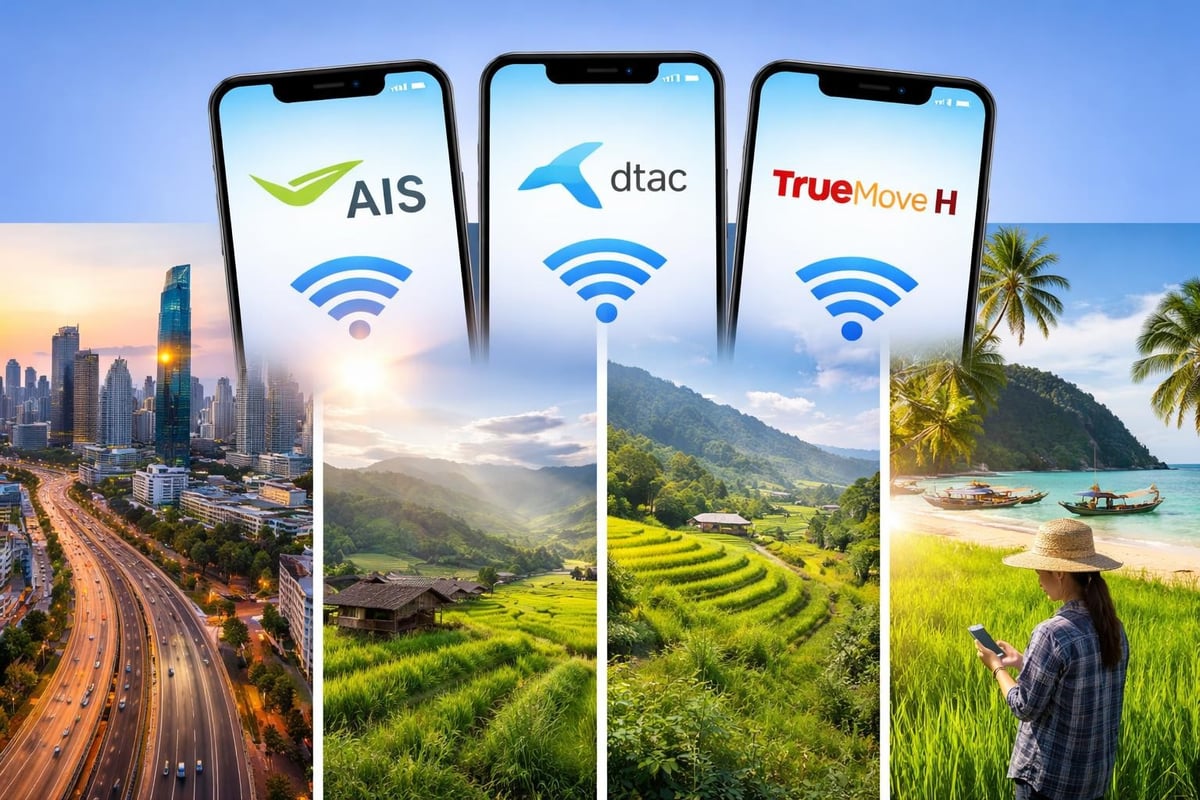
Thailand has three major mobile network operators, and understanding which one your Thailand eSIM connects to matters significantly. Each network has different coverage strengths, particularly when you venture beyond major tourist areas.
AIS (Advanced Info Service) dominates the market with approximately 46% market share. They offer the most extensive coverage across rural areas and islands. If you're planning to explore lesser-known destinations or remote beaches, AIS-backed eSIMs generally provide the most reliable connection.
DTAC (Total Access Communication) holds around 26% of the market and excels in urban coverage. Bangkok, Pattaya, and major cities receive excellent service, though some travellers report weaker signals in mountainous regions like Mae Hong Son.
TrueMove H rounds out the big three with strong 5G deployment in major cities. They've invested heavily in high-speed infrastructure, making them ideal for data-intensive activities like video calls or streaming.
| Network | Market Share | Best For | 5G Availability |
|---|---|---|---|
| AIS | 46% | Rural & island coverage | Major cities + expanding |
| DTAC | 26% | Urban centres | Bangkok, Phuket, Chiang Mai |
| TrueMove H | 20% | High-speed data | 77 provinces |
Many eSIM providers partner with multiple networks or allow you to choose your preferred carrier. Comparing Thailand's major mobile networks helps you make an informed decision based on your specific itinerary.
Choosing the Right Thailand eSIM Plan for Your Trip
How much data do you actually need? This question stumps most travellers. A week-long holiday with moderate usage (maps, messaging, social media, occasional photo uploads) typically requires 3-5GB. Heavy users streaming videos or working remotely might burn through 1-2GB daily.
Typical Data Consumption Patterns
- Light users (1-2GB/week): Messaging apps, email checking, occasional maps
- Moderate users (3-5GB/week): Regular social media, navigation, photo sharing, some video calls
- Heavy users (7-15GB/week): Video streaming, cloud backups, constant hotspot usage, remote work
Duration matters just as much as data volume. Short trips under 7 days often fare better with smaller, fixed-duration plans. Extended stays spanning weeks or months benefit from longer validity periods or top-up options. Some Thailand eSIM providers offer plans valid for 30, 60, or even 90 days.
If you're exploring other Southeast Asian destinations, consider regional plans. Similar to how Europe eSIM options cover multiple countries, some Asia-Pacific eSIMs work across Thailand, Vietnam, Singapore, and Malaysia with a single plan.
Price comparison reveals significant variation. Budget options start around £3-5 for 1GB over 7 days, whilst premium unlimited plans can reach £30-40 monthly. Multiple provider reviews show pricing differences of 200-300% for similar data allocations.
How to Activate Your Thailand eSIM in 5 Simple Steps
The activation process intimidates first-time eSIM users, but it's genuinely straightforward. I've activated dozens of eSIMs across different countries, and Thailand ranks among the easiest.
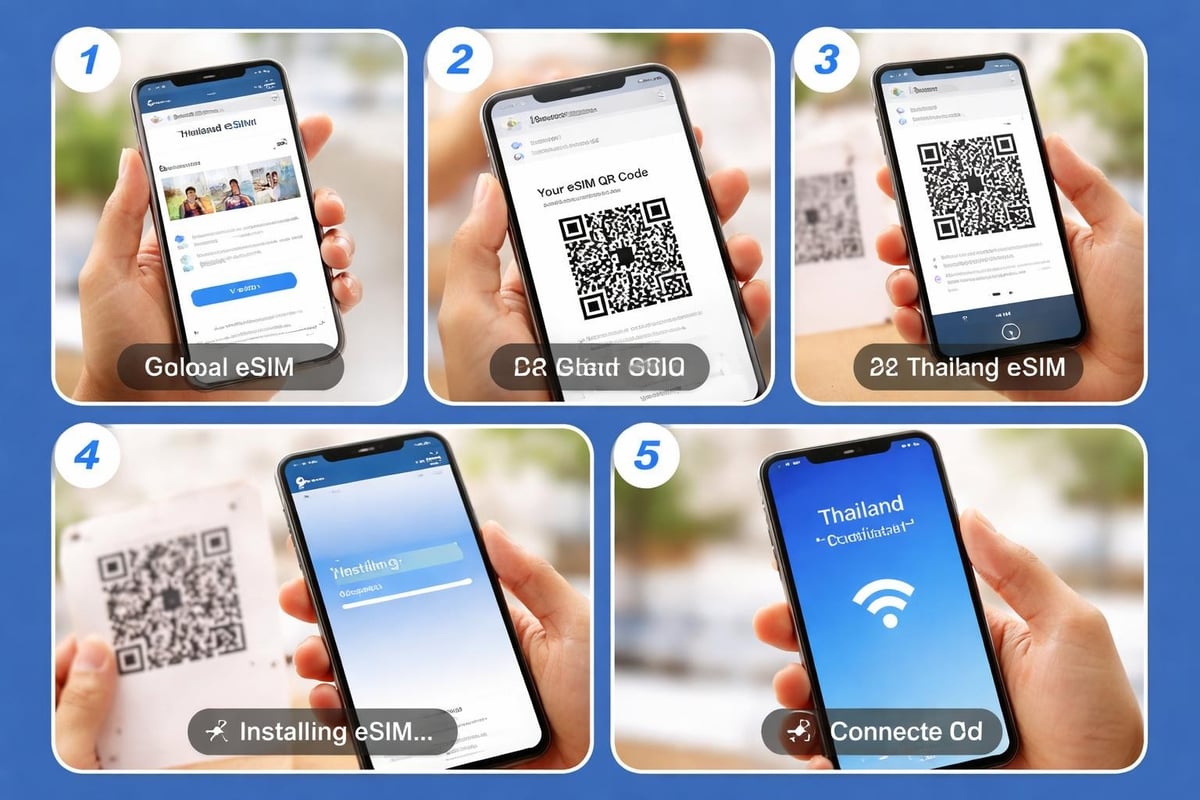
Step 1: Verify device compatibility before purchasing anything. Most iPhones from XR onwards support eSIM, as do recent Samsung Galaxy, Google Pixel, and other flagship devices. Check your phone's compatible devices list to confirm.
Step 2: Purchase your plan from a reputable provider. You'll receive a QR code and activation instructions via email, usually within minutes. Some providers offer instant delivery, whilst others may take up to an hour during peak times.
Step 3: Add the eSIM profile to your device. On iPhones, navigate to Settings > Cellular > Add eSIM > Use QR Code. Android devices follow similar paths through Settings > Network & Internet > Mobile Network > Advanced > Carrier. Detailed installation guides walk you through device-specific steps.
Step 4: Label your eSIM as "Thailand Travel" or similar to distinguish it from your primary SIM. This prevents confusion when selecting which line to use for data or calls.
Step 5: Enable data roaming on your Thailand eSIM line specifically. This sounds counterintuitive (isn't the point avoiding roaming charges?), but eSIMs require this setting enabled to function. You won't incur traditional roaming fees because you're using a local Thai data plan.
Common Activation Troubleshooting
Sometimes things don't work immediately. Don't panic. The most common issues have simple fixes:
- QR code won't scan: Manually enter the SM-DP+ address and activation code provided in your email
- No network connection: Toggle airplane mode on/off, or restart your device
- Wrong network selected: Manually select your preferred carrier in network settings
- Data not working: Confirm data roaming is enabled specifically for your eSIM line
Most providers offer 24/7 support through chat or email. Response times vary, but reputable companies typically reply within 30 minutes.
Pricing and Value: What You Should Actually Pay
The Thailand eSIM market has matured significantly, bringing prices down whilst quality has improved. In 2026, you're looking at highly competitive rates if you know where to look.
Budget tier (£3-8): Basic plans offering 1-3GB over 7-15 days. Perfect for short trips where you'll primarily use Wi-Fi but need occasional connectivity. These typically operate on single networks with standard 4G speeds.
Mid-range tier (£10-20): Most popular category offering 5-10GB over 15-30 days. These plans usually include network flexibility and decent 4G/5G speeds. Ideal for typical tourists spending 1-2 weeks exploring Thailand.
Premium tier (£25-45): Unlimited or high-volume plans (20GB+) with extended validity up to 90 days. Often include perks like faster speeds, multi-network access, or regional coverage extending beyond Thailand.
| Price Range | Data Allowance | Typical Validity | Best For |
|---|---|---|---|
| £3-8 | 1-3GB | 7-15 days | Weekend breaks, light users |
| £10-20 | 5-10GB | 15-30 days | Standard holidays, moderate use |
| £25-45 | 20GB-Unlimited | 30-90 days | Extended stays, heavy users |
Current eSIM provider comparisons reveal that the "cheapest" option isn't always the best value. A £5 plan might seem attractive until you discover it throttles speeds after 500MB or restricts popular apps.
Consider your true usage patterns rather than just headline prices. A slightly more expensive plan with ample data prevents the frustration of running out mid-trip and paying premium rates for top-ups.
Coverage Across Thailand: From Bangkok to Remote Islands
Network coverage varies dramatically depending on where your Thai adventure takes you. Bangkok, Phuket, Chiang Mai, and major tourist destinations enjoy excellent 4G/5G coverage from all providers. You'll stream videos, make video calls, and upload holiday photos without issues.
Things get interesting when you venture off the beaten path. The mountainous north around Pai or Mae Hong Son can have spotty coverage regardless of which network your Thailand eSIM uses. Similarly, some remote islands in the Andaman Sea or Gulf of Thailand have limited connectivity.
Regional Coverage Breakdown
Central Thailand (Bangkok, Ayutthaya): Excellent coverage from all networks. 5G widely available in Bangkok metropolitan area. Expect seamless connectivity.
Southern beaches (Phuket, Krabi, Koh Samui): Very good coverage on main islands and tourist areas. AIS and TrueMove H particularly strong. Some smaller islands may have 3G only.
Northern regions (Chiang Mai, Chiang Rai, Pai): Good coverage in cities, variable in mountains. AIS typically performs best in rural northern areas.
Northeast (Isaan region): Improving coverage but still developing. Stick to AIS for most reliable service in smaller towns.
Islands and archipelagos: Coverage depends heavily on specific location. Popular islands have good service, whilst uninhabited or very remote islands may have none.
Detailed eSIM coverage analysis breaks down network performance by region, helping you choose the right provider based on your specific destinations.
Top Thailand eSIM Providers Worth Considering
The market overflows with eSIM providers, but quality varies wildly. Some offer outstanding service whilst others leave customers stranded without connectivity. Based on extensive research and traveller feedback throughout 2026, several providers consistently deliver reliable Thailand eSIM services.
Global coverage specialists like the service offered at gosimless.app provide instant eSIM activation with competitive pricing across Thailand and 200+ countries. Their multi-device support and no-roaming-fee approach make them particularly suitable for travellers visiting multiple Asian destinations beyond just Thailand.
Regional specialists focus exclusively on Asian markets, often partnering directly with Thai carriers for premium network access. They typically offer slightly higher data allowances at competitive prices but may lack coverage if you're island-hopping to neighbouring countries.
Budget providers attract price-conscious travellers but sometimes compromise on support quality or network prioritisation. Reviews consistently mention slower customer service response times and occasional connectivity hiccups.
What to Look for in a Provider
- Transparent pricing without hidden fees or surprise charges
- Clear coverage information specifying which Thai networks they use
- Responsive customer support available during Asian time zones
- Instant or rapid delivery of activation codes
- Flexible top-up options if you run low on data
Expert provider reviews evaluate services based on pricing, reliability, customer support, and overall user experience. Reading recent customer feedback provides insight into current service quality.

Real-World Usage: What to Expect Daily
Theory meets practice when you're actually using your Thailand eSIM in daily situations. Let me paint a realistic picture of what connectivity looks like across typical travel scenarios.
Morning in Bangkok: You're using Google Maps to navigate the BTS Skytrain system, checking restaurant reviews, and messaging friends back home. Data consumption: approximately 50-100MB. Speed: excellent, 50-100 Mbps in central areas.
Afternoon temple hopping in Ayutthaya: Uploading photos to Instagram, using translation apps to read temple information, and booking your next accommodation. Data consumption: 200-300MB depending on photo/video uploads. Speed: good, 20-40 Mbps.
Evening on Koh Phi Phi: Video calling family to show them the stunning sunset, streaming music at your beachside restaurant, and planning tomorrow's activities. Data consumption: 500MB-1GB if video calling extensively. Speed: variable, 10-30 Mbps depending on location.
Apps That Work Particularly Well
Thailand's digital ecosystem favours certain apps that work seamlessly with local connectivity:
- Grab (ride-hailing and food delivery): Thailand's dominant platform
- LINE (messaging): Extremely popular locally for communication
- Google Maps: Comprehensive coverage of even small sois and streets
- Agoda/Booking.com: Real-time accommodation booking
- Google Translate: Essential for Thai language assistance
These apps consume minimal data individually but add up over a day. Budget approximately 500MB-1GB daily for moderate usage including navigation, social media, messaging, and occasional photo sharing.
Comparing Thailand eSIM to Pocket Wi-Fi and Roaming
You have alternatives beyond Thailand eSIM, so let's honestly compare them. Traditional roaming through your home carrier remains the most convenient option, but also spectacularly expensive. UK networks charge £5-7 daily for Thailand roaming, quickly accumulating to £35-50 weekly. For data-heavy users, bills can spiral to hundreds of pounds.
Pocket Wi-Fi devices offer another solution. You rent a portable hotspot device that connects to Thai networks and shares Wi-Fi with your devices. Daily rental costs £5-10, plus device deposit and collection logistics. The advantages include multi-device connectivity and no need to swap SIM cards.
However, pocket Wi-Fi requires carrying an extra device, keeping it charged, and staying within its range. Many travellers find this inconvenient when swimming, hiking, or splitting up from travel companions. Battery life typically lasts 6-8 hours with moderate use.
| Solution | Daily Cost | Convenience | Multi-Device | Setup Time |
|---|---|---|---|---|
| Home roaming | £5-7 | Highest | Yes | None |
| Thailand eSIM | £0.50-2 | High | No (unless hotspot) | 5-10 minutes |
| Pocket Wi-Fi | £5-10 | Medium | Yes | 15-30 minutes |
| Physical SIM | £0.40-1.50 | Medium | No (unless hotspot) | 15-60 minutes |
Thailand eSIM strikes the optimal balance between cost, convenience, and reliability for most travellers. International travel eSIM comparisons consistently rank eSIM technology as the smartest choice for 2026 travel connectivity.
Managing Multiple Devices and Family Plans
Travelling with family or multiple devices? The eSIM approach offers elegant solutions. Modern smartphones can store multiple eSIM profiles, whilst tablets and smartwatches increasingly support eSIM connectivity independently.
For couples or families, you have two main approaches. Either purchase individual Thailand eSIM plans for each device, giving everyone independent connectivity, or use one plan with mobile hotspot enabled, sharing data across devices. The second option saves money but drains battery faster and requires staying within Wi-Fi range of the primary device.
Multi-Device Strategy Recommendations
Two travellers, moderate usage: Individual 5GB plans for each person (£10-12 each). Provides independence and adequate data for typical use.
Family of four, light-moderate usage: Two individual 10GB plans (£15-18 each) with hotspot sharing for children's devices. Balances cost with adequate connectivity.
Solo traveller, multiple devices: Single 10-15GB plan with hotspot enabled for tablets/laptops. Most cost-effective for one person managing several devices.
Some providers offer family or group packages with discounted pricing for multiple eSIMs purchased together. These can reduce costs by 15-25% compared to individual purchases.
Children's devices present particular considerations. If they're not making independent plans or navigating separately, sharing an adult's hotspot often suffices. For teenagers exploring independently, individual eSIMs provide safety through constant connectivity.
Security and Privacy Considerations
Using any mobile network abroad raises legitimate security questions. Is your data safe on Thai mobile networks? Are eSIMs more or less secure than traditional SIMs?
The good news: eSIM technology itself offers enhanced security compared to physical SIM cards. They can't be physically stolen from your device, and remote SIM swapping attacks become significantly harder. The digital nature provides better protection against certain types of fraud.
However, you're still transmitting data over commercial mobile networks. Basic security practices remain essential:
- Use VPN services when accessing sensitive information or banking apps
- Enable two-factor authentication for important accounts
- Avoid public Wi-Fi for confidential communications
- Keep your device locked with strong passwords or biometrics
Reputable Thailand eSIM providers encrypt your purchase information and personal data. Check their privacy policies before purchasing, particularly regarding data retention and third-party sharing. Security-focused eSIM reviews evaluate providers on their privacy commitments and data handling practices.
Thai mobile networks themselves employ standard telecommunications security protocols. Your internet traffic receives the same protection level as it would on networks back home, though local data retention laws differ from European or American regulations.
Troubleshooting Common Thailand eSIM Issues
Even with perfect setup, occasional problems arise. Here's how to resolve the most frequently encountered issues based on thousands of user experiences across 2026.
Problem: eSIM installed but shows "No Service" Solution: Confirm you've enabled data roaming for the eSIM specifically. Counterintuitively, eSIMs require this setting on. Additionally, restart your device and allow 2-3 minutes for network registration.
Problem: Extremely slow speeds despite 4G/5G indicator Solution: Your plan might include speed throttling after certain data consumption. Check your remaining high-speed data allowance. Alternatively, network congestion in tourist hotspots during peak hours can slow speeds significantly.
Problem: Can't receive SMS or phone calls on eSIM Solution: Most Thailand eSIM plans are data-only without voice or SMS capabilities. Keep your primary SIM active for calls/texts, using the eSIM purely for internet data.
Problem: Data works intermittently, cutting in and out Solution: Manually select your network operator rather than leaving it on automatic. Sometimes phones switch between networks unnecessarily, causing connectivity drops.
Problem: Cannot activate eSIM before departure Solution: Some providers' eSIMs only activate once connected to Thai networks. Read activation instructions carefully. Others activate immediately upon installation, with validity starting from that moment regardless of location.
When to Contact Support
Don't waste hours troubleshooting if basic solutions fail. Contact your provider's support if:
- Your eSIM won't install after multiple attempts
- No connectivity after 30 minutes in an area with confirmed coverage
- Unexpected charges appear on your account
- Your data depletes far faster than expected usage would explain
Document your issue with screenshots showing error messages, network settings, and data usage statistics. This accelerates support resolution significantly.
Future of Thailand eSIM Technology
Looking ahead through 2026 and beyond, Thailand's eSIM landscape continues evolving rapidly. The country's telecommunications regulator has prioritised digital transformation, with eSIM adoption encouraged through simplified regulations and carrier cooperation.
5G expansion accelerates across Thailand, with coverage extending beyond major cities into secondary tourist destinations. By late 2026, expect reliable 5G in places like Hua Hin, Koh Samui, and Chiang Rai. Your Thailand eSIM will automatically benefit from this infrastructure improvement without requiring plan changes.
Network operators are developing more sophisticated data packages tailored to traveller needs. Emerging options include app-specific plans (unlimited social media with capped general browsing), time-based unlimited packages (24-hour unlimited for intensive use days), and AI-powered dynamic plans that adjust pricing based on usage patterns.
Regional integration improves steadily. Multi-country Asia-Pacific eSIMs now cover 10-15 countries with seamless switching, making them ideal for travellers combining Thailand with Vietnam, Cambodia, Malaysia, or Singapore in single trips.
Device compatibility expands beyond smartphones. Modern smartwatches, tablets, and even some laptops now support eSIM connectivity, creating opportunities for comprehensive multi-device coverage under unified plans.
Environmental considerations drive adoption too. Thailand's tourism industry increasingly emphasises sustainability, and eliminating plastic SIM cards aligns with these goals. Some providers now market their environmental benefits alongside connectivity features.
Getting connected in Thailand doesn't need to involve airport queues, language barriers, or excessive costs. A Thailand eSIM provides instant, affordable connectivity from the moment you arrive, letting you focus on exploring this incredible country rather than wrestling with technology. Whether you're island-hopping in the south, temple-touring in the north, or navigating Bangkok's vibrant streets, staying online enhances every aspect of your journey. Ready to experience hassle-free Thailand connectivity? gosimless.app offers instant eSIM activation with affordable data plans, secure payment processing, and support for all your devices across Thailand and 200+ countries worldwide.
gosimless Team
The gosimless editorial desk — testing eSIMs, carriers and travel connectivity so you don't have to. Updated continuously from the road.