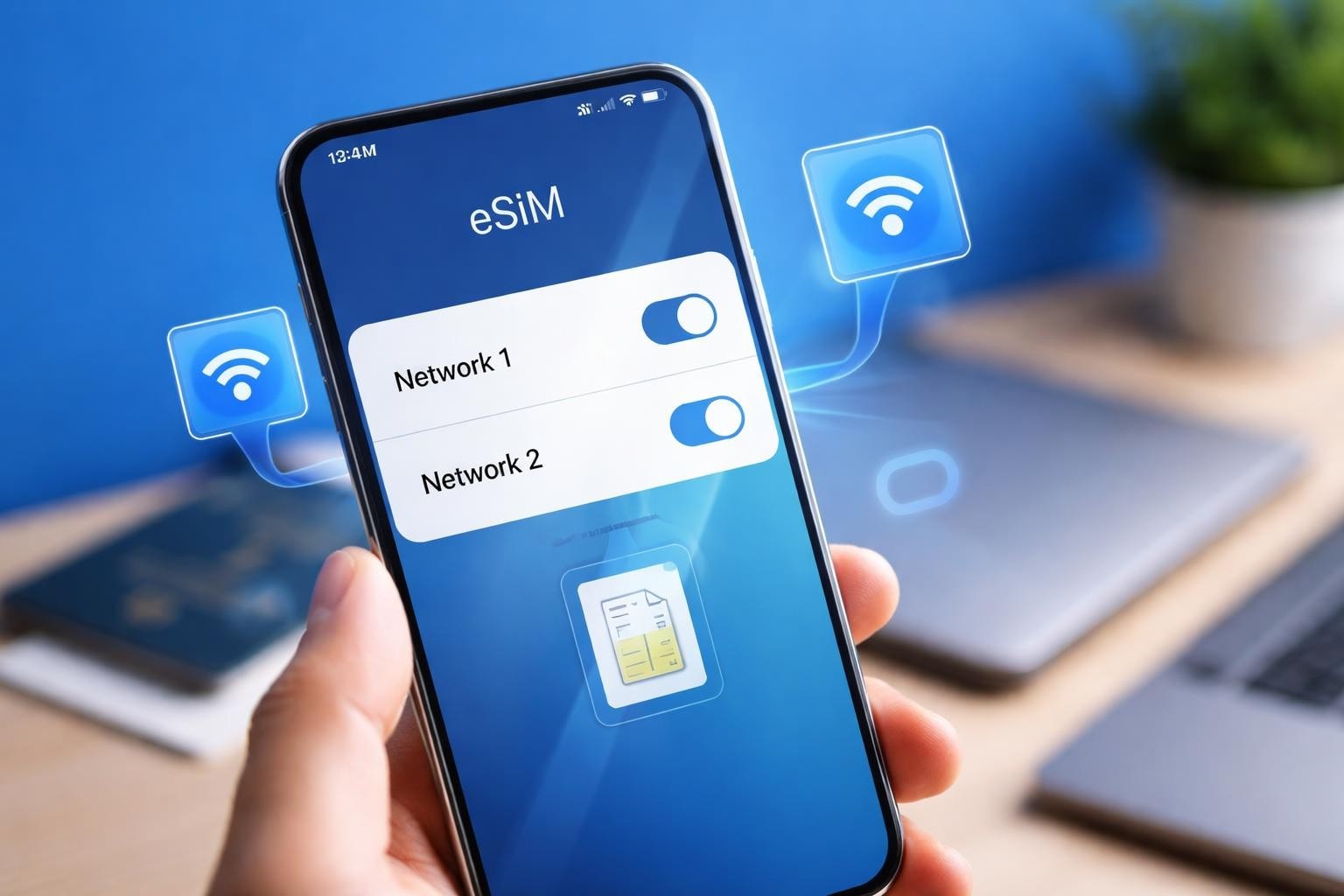
The way we connect to mobile networks is undergoing a fundamental transformation. Gone are the days of fumbling with tiny plastic cards and waiting for postal deliveries. The smart eSIM represents a quantum leap in connectivity technology, embedding programmable SIM functionality directly into your devices. This innovation isn't just about convenience; it's reshaping how we think about global communication, device manufacturing, and network flexibility. Whether you're a frequent traveller, a business professional managing multiple numbers, or simply someone who values seamless connectivity, understanding smart eSIM technology is essential in 2026.
What Makes an eSIM "Smart"?
The term "smart eSIM" goes beyond the basic concept of an embedded SIM. It represents the convergence of hardware innovation and intelligent software provisioning.
A smart eSIM is essentially a reprogrammable chip soldered directly onto your device's motherboard. Unlike traditional SIM cards that store carrier information permanently, this technology allows you to download and switch between multiple carrier profiles remotely. The "smart" element comes from its ability to:
- Adapt to different networks without physical intervention
- Store multiple profiles simultaneously
- Switch carriers through software commands
- Update remotely via encrypted channels
- Integrate with AI for optimal network selection
The Technology Behind Smart eSIM
The architecture of a smart eSIM combines secure hardware with sophisticated software protocols. At its core lies a tamper-resistant chip that meets stringent GSMA specifications for security and functionality.
Remote SIM provisioning technology enables the magic. This system allows carriers to deliver network credentials over the air, eliminating the need for physical distribution. The process involves encrypted communication between your device, the carrier's servers, and a subscription manager platform.
Security features include:
- Advanced encryption algorithms protecting profile data
- Secure element architecture preventing unauthorised access
- Digital certificates authenticating legitimate network operators
- Isolated storage preventing cross-contamination between profiles
The enhanced security measures make smart eSIM technology particularly valuable for enterprise applications and IoT deployments where device security is paramount.
How Smart eSIM Transforms Travel Connectivity
International travel has traditionally meant dealing with expensive roaming charges or hunting for local SIM cards upon arrival. Smart eSIM technology fundamentally changes this equation.
When you land in a new country, your smart eSIM can instantly connect to local networks without requiring a physical SIM swap. This capability has proven transformative for business travellers and digital nomads who cross borders regularly.
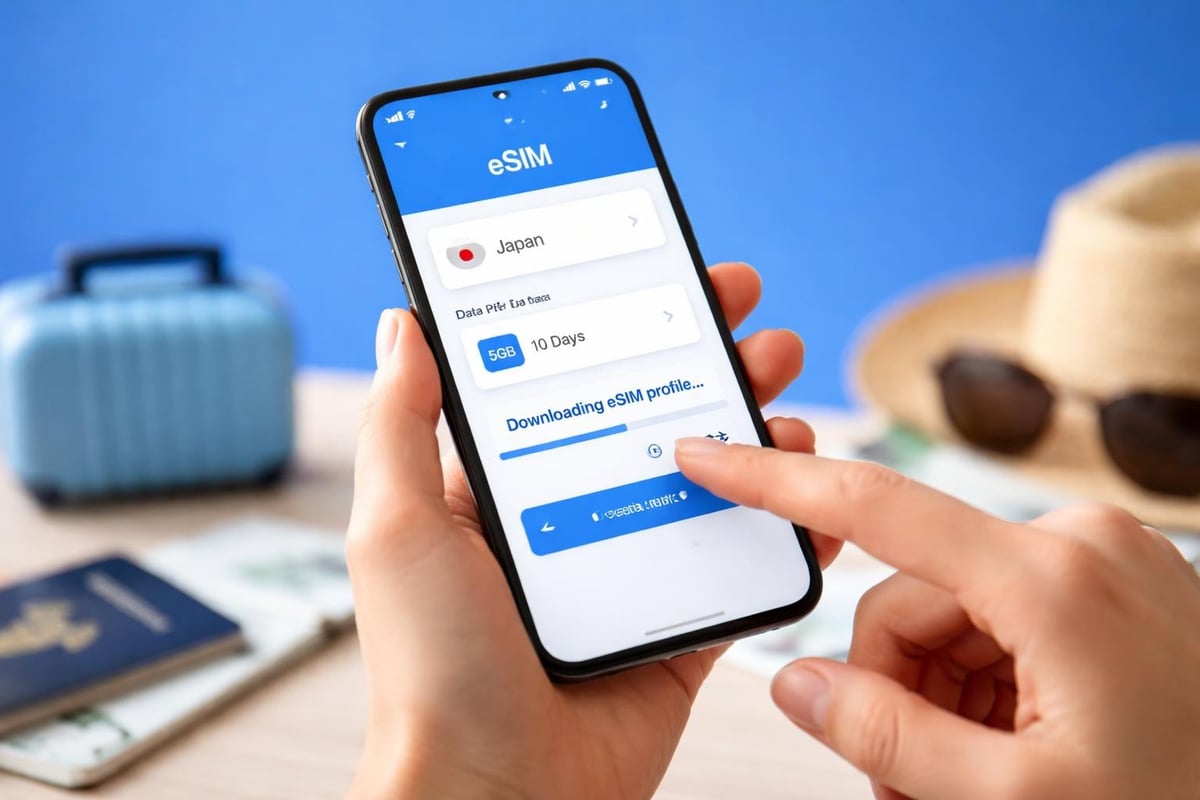
The flexibility extends beyond simple connectivity. Many travellers now maintain multiple profiles simultaneously, keeping their home number active for important calls whilst using local data rates for internet access. This dual-profile capability eliminates the anxiety of missing crucial communications whilst controlling costs.
| Traditional SIM | Smart eSIM |
|---|---|
| Physical card required | Digital activation only |
| Single operator at a time | Multiple profiles stored |
| Roaming fees apply | Local rates available |
| Manual swapping needed | Instant switching |
| Risk of losing card | Embedded permanently |
For those heading to popular destinations, services now offer targeted solutions. Travellers to Australia, for instance, can activate local data plans before their flight even lands, ensuring immediate connectivity upon arrival.
Smart eSIM in IoT and Connected Devices
The Internet of Things revolution depends heavily on smart eSIM technology. Manufacturers embedding these chips into everything from smart meters to industrial sensors benefit from unprecedented deployment flexibility.
Consider a logistics company deploying vehicle tracking devices across multiple countries. With smart eSIM technology, these devices automatically connect to the strongest available network in each region without requiring manual configuration. The simplified roaming and provisioning capabilities reduce operational complexity significantly.
Industrial Applications
Smart manufacturing facilities leverage eSIM-enabled sensors that can switch between networks based on signal strength and cost optimisation algorithms. This intelligent network selection ensures continuous data flow without human intervention.
Key industrial benefits:
- Remote device provisioning across global installations
- Automatic failover between network providers
- Reduced maintenance costs from eliminated physical SIM replacement
- Enhanced security through encrypted profile management
- Scalability for massive IoT deployments
The automotive industry has emerged as a major adopter. Modern connected vehicles utilise smart eSIM technology for everything from navigation updates to emergency services. The integration of eSIM in vehicles transforms them into mobile offices with always-on connectivity.
Device Compatibility and Ecosystem Growth
The smart eSIM ecosystem has expanded dramatically since its introduction. What started with premium smartphones now encompasses tablets, smartwatches, laptops, and an ever-growing array of IoT devices.
Compatible device categories include:
- Flagship smartphones from major manufacturers
- Cellular-enabled tablets and e-readers
- Smartwatches with independent connectivity
- Laptops with integrated mobile broadband
- Connected cars and vehicle telematics
- Industrial IoT sensors and monitoring equipment
Before activating a smart eSIM plan, checking your device compatibility ensures a smooth setup experience. Most devices manufactured after 2020 include eSIM capability, though implementation varies by manufacturer and market.
Activation and Management Simplified
The activation process for smart eSIM technology exemplifies the "smart" moniker. What once required visiting a carrier shop now happens entirely through software.
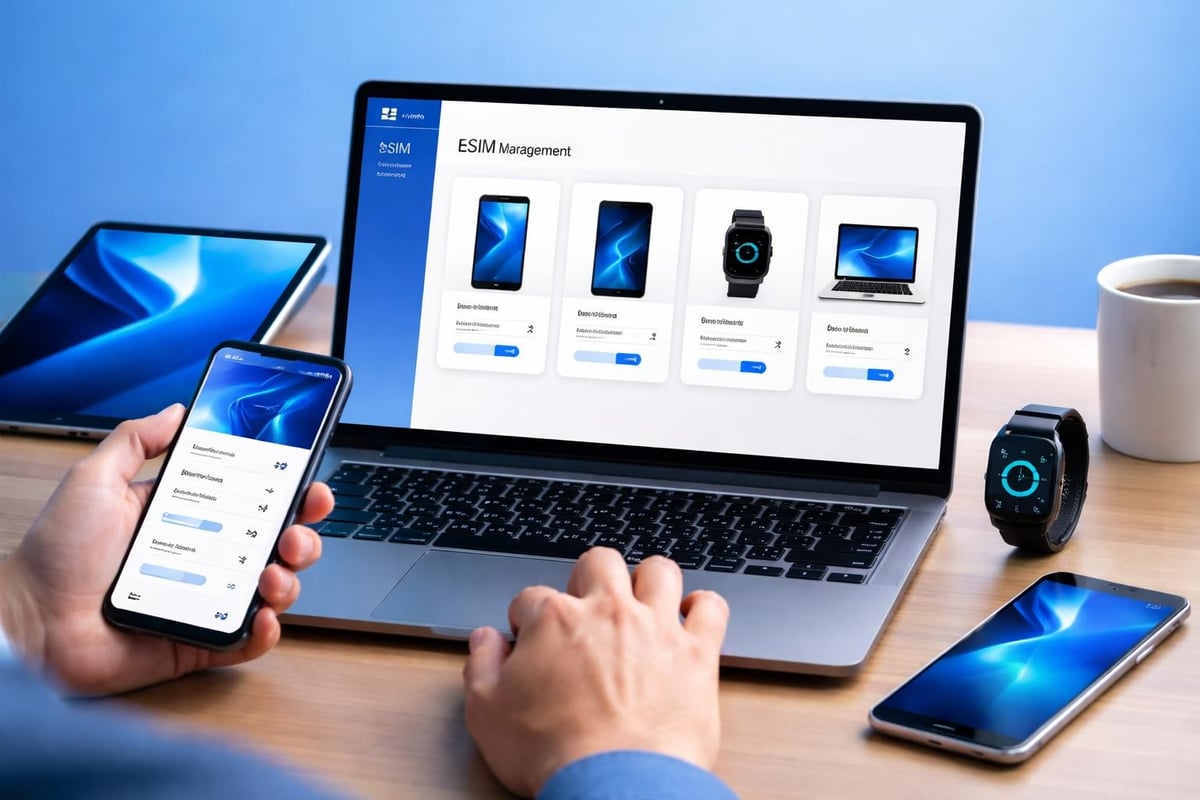
The typical activation workflow involves scanning a QR code or entering an activation code provided by your carrier. Your device then downloads the network profile directly, completing setup within minutes. For those seeking guidance, comprehensive installation guides walk through device-specific steps.
Managing Multiple Profiles
Smart eSIM technology truly shines when managing multiple network profiles. Modern devices allow storing five to ten different carrier profiles simultaneously, though only one or two can be active at any moment.
This capability enables scenarios like:
- Maintaining both personal and business numbers on one device
- Switching between home and travel networks seamlessly
- Testing different carriers without commitment
- Keeping backup connectivity options ready
Profile management happens through your device's settings interface. You can rename profiles, set default lines for calls and data, and switch active profiles with a few taps. The enhanced provisioning capabilities make this flexibility possible whilst maintaining security.
Cost Efficiency and Financial Benefits
The economics of smart eSIM technology favour both consumers and businesses. Eliminating physical SIM production and distribution reduces carrier costs, savings often passed to customers through competitive pricing.
For travellers, the financial advantages are substantial. Instead of paying exorbitant roaming fees, you can activate local data plans at resident rates. A week-long European holiday might cost £50 in data with a smart eSIM versus £200+ in traditional roaming charges.
| Expense Category | Traditional Approach | Smart eSIM Approach |
|---|---|---|
| International roaming | £10-15 per day | £5-20 for entire trip |
| SIM card purchase | £5-10 plus shop visit | £0 (instant digital) |
| Multi-device connectivity | Separate plans each | Shared data pools |
| Network switching | New contract fees | Instant, no penalty |
Businesses deploying IoT solutions benefit from reduced operational expenses. The ability to remotely provision and switch carrier profiles eliminates costly technician visits for SIM replacement. This advantage scales significantly across thousands or millions of connected devices.
Privacy and Security Considerations
Smart eSIM technology introduces both enhanced security features and new considerations for privacy-conscious users. The digital nature of profile management creates different attack surfaces compared to physical SIM cards.
Security advantages include:
- Encrypted profile downloads preventing interception
- Tamper-resistant hardware protecting stored credentials
- Elimination of SIM swap fraud through physical card removal
- Secure authentication protocols for profile activation
However, users should remain vigilant about profile management. Ensuring your device is password-protected prevents unauthorised profile installation. Downloading profiles only from legitimate carriers through official channels protects against fraudulent eSIM profiles.
The comprehensive security features built into smart eSIM architecture make it more secure than traditional SIM cards when properly implemented. The key lies in following best practices for digital security.
Network Coverage and Performance
One common question about smart eSIM technology concerns network performance. Does digital provisioning affect signal strength or data speeds?
The answer is definitively no. Once activated, a smart eSIM profile functions identically to a traditional SIM card. Your device connects to the same cellular towers using identical protocols. The difference lies purely in how the network credentials are stored and managed.
In fact, smart eSIM technology can enhance your connectivity experience through intelligent network selection. Some implementations automatically switch between available networks based on signal strength, ensuring optimal performance regardless of location.
Multi-Network Flexibility
The true performance advantage comes from flexibility. When travelling, you're no longer locked into a single network provider. If coverage is poor with one carrier, switching to an alternative profile takes seconds rather than requiring a new physical SIM.
This flexibility extends to bandwidth-intensive activities. Business travellers conducting video conferences can select networks optimised for data performance, whilst casual users might prioritise cost-effective plans for basic connectivity.
Environmental Impact and Sustainability
The shift to smart eSIM technology delivers measurable environmental benefits. Manufacturing plastic SIM cards, their packaging, and global distribution creates a significant carbon footprint that embedded technology eliminates.
Sustainability advantages:
- Zero plastic waste from SIM cards and packaging
- Eliminated transportation emissions for physical distribution
- Reduced electronic waste from obsolete SIM formats
- Lower energy consumption in manufacturing processes
- Decreased retail space requirements for SIM inventory
With billions of mobile connections worldwide, these savings compound dramatically. Industry estimates suggest eliminating physical SIM cards could prevent thousands of tonnes of plastic waste annually whilst reducing carbon emissions from global logistics networks.
For environmentally conscious consumers and businesses, smart eSIM adoption represents a tangible step toward reducing technology's environmental impact without sacrificing functionality or convenience.
Regional Adoption and Market Growth
Smart eSIM adoption varies significantly by region, influenced by regulatory environments, carrier support, and consumer awareness. Europe and North America lead in consumer adoption, whilst Asia-Pacific shows rapid growth in IoT implementations.
In 2026, over 60% of new smartphones sold globally include eSIM capability. This represents a dramatic increase from just 15% in 2020. The trajectory suggests near-universal adoption by 2028 for consumer devices.
Carrier support has expanded correspondingly. Major operators across 200+ countries now offer eSIM provisioning, with smaller regional carriers following suit rapidly. This growing ecosystem makes smart eSIM technology practical for global connectivity needs.
Regulatory frameworks continue evolving to support this transition. Some jurisdictions now mandate eSIM capability in new devices, accelerating adoption timelines. Consumer protection regulations ensure fair pricing and prevent anti-competitive practices in eSIM provisioning.
Business Use Cases and Enterprise Adoption
Enterprises have embraced smart eSIM technology for diverse applications beyond simple employee connectivity. The technology enables innovative business models and operational efficiencies.
Corporate device management benefits tremendously from centralised eSIM provisioning. IT departments can remotely configure employee devices, add or remove network access, and ensure compliance with corporate policies without physical device handling.
Enterprise applications include:
- Field service equipment with automatic network connectivity
- Corporate smartphone fleets with simplified provisioning
- Temporary contractor access without physical SIM distribution
- International business travel with pre-configured local connectivity
- IoT sensor networks with remote management capabilities
The financial services sector leverages smart eSIM technology for secure point-of-sale terminals that automatically connect to optimal networks. Retail chains deploy inventory tracking systems with embedded eSIM connectivity across multiple countries without complex configuration.
Healthcare organisations utilise eSIM-enabled medical devices for remote patient monitoring, ensuring continuous data transmission regardless of location. The simplified provisioning reduces setup complexity for non-technical healthcare staff.
Future Developments and Innovation
The evolution of smart eSIM technology continues accelerating. Emerging developments promise even greater flexibility and functionality in coming years.
Artificial intelligence integration represents a significant frontier. Future smart eSIM implementations may automatically select optimal networks based on your usage patterns, location, and preferences. Machine learning algorithms could predict connectivity needs and pre-configure profiles accordingly.
Anticipated innovations include:
- Blockchain-based identity management for profile authentication
- AI-driven network optimisation for performance and cost
- Integration with 6G networks for unprecedented speeds
- Enhanced multi-profile capabilities supporting 20+ simultaneous profiles
- Unified global identity for seamless cross-border connectivity
The convergence with other technologies creates exciting possibilities. Imagine smart eSIM profiles that automatically adjust based on your calendar, activating business lines during work hours and personal profiles during leisure time. Or profiles that optimise for specific applications, prioritising video streaming quality or minimising latency for gaming.
Standards organisations continue refining protocols to enhance interoperability and security. The GSMA's ongoing work ensures smart eSIM technology remains open, competitive, and consumer-friendly as adoption scales globally.
Smart eSIM technology has fundamentally transformed how we approach mobile connectivity, offering unprecedented flexibility, security, and convenience for travellers, businesses, and IoT deployments alike. The transition from physical SIM cards to intelligent embedded solutions represents more than technological progress; it's a complete reimagining of global communications infrastructure. Whether you're planning international travel or simply want the freedom to switch carriers without constraints, gosimless.app provides instant eSIM activation with affordable coverage across 200+ countries, making global connectivity as simple as scanning a QR code.
gosimless Team
The gosimless editorial desk — testing eSIMs, carriers and travel connectivity so you don't have to. Updated continuously from the road.