Travelling abroad used to mean hunting for local SIM cards at airport kiosks, dealing with language barriers, and paying astronomical roaming fees. But here's the thing: technology has finally caught up with how we actually travel. A roaming esim changes everything about staying connected internationally, offering instant activation, transparent pricing, and the freedom to switch networks without swapping physical cards. Whether you're a digital nomad working from Bali or a holidaymaker posting sunset photos from Santorini, understanding how roaming eSIMs work could save you hundreds of pounds whilst keeping you connected wherever your adventures take you.
What Makes Roaming eSIM Different from Traditional SIM Cards
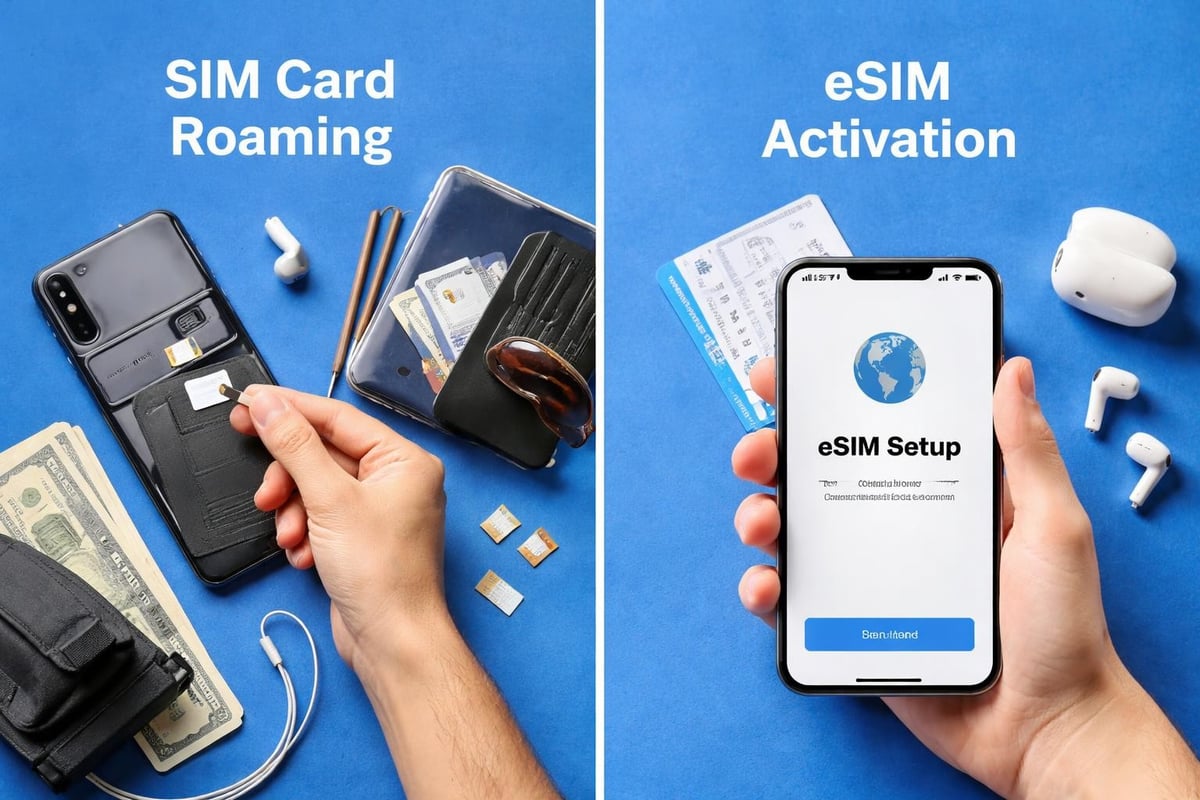
Let's start with the basics. A roaming esim is essentially a digital version of your physical SIM card, but with superpowers. Instead of inserting a piece of plastic into your phone, you download a profile directly to your device. Simple, right?
The magic happens in how these eSIMs handle international connectivity. Traditional roaming means your home network charges you extortionate rates to use partner networks abroad. With a roaming esim, you're essentially becoming a local user wherever you land, accessing networks at local rates without the markup your home carrier would typically add.
Here's what sets them apart:
- No physical card needed – everything happens digitally through QR codes or apps
- Instant activation – often within minutes of purchase
- Multiple profiles – store several eSIMs on one device and switch between them
- Transparent pricing – you know exactly what you're paying upfront
- No surprise bills – prepaid data means no shock when you return home
Think about it this way: you wouldn't pay London hotel prices for accommodation in Bangkok, so why pay London data rates when you're there? The technology behind eSIM roaming makes this possible through sophisticated network partnerships and digital provisioning systems.
How Roaming eSIM Technology Actually Works Behind the Scenes
You might be wondering what happens when you activate a roaming esim. The process is surprisingly straightforward, though the technology underneath is rather clever.
When you purchase an eSIM plan, you receive a QR code or activation code. Scanning this code tells your phone to download a carrier profile – essentially a set of credentials that lets your device authenticate with specific mobile networks. Your phone's embedded SIM chip (which is soldered into the device during manufacturing) stores this profile alongside any others you've added.
The Network Connection Process
Once activated, your roaming esim connects to local networks just like a native SIM would. The difference? Instead of your home network routing your data (and charging you premium rates for the privilege), you're accessing networks directly or through optimized routing agreements.
There are typically two routing methods:
- Local Breakout – your data connects directly through the local network, offering faster speeds and lower latency
- Home-Routed Roaming (HRR) – data routes through your eSIM provider's infrastructure before reaching the internet
Most modern roaming eSIM services use local breakout for better performance, though understanding how data roaming works can help you troubleshoot any connectivity issues you encounter.
Multi-Device Capabilities
Here's something brilliant: many roaming esim solutions support multiple devices simultaneously. Got an iPhone, iPad, and Apple Watch? You can often run them all from a single account, with data shared across devices or allocated separately depending on your plan.
This matters because you're not just carrying one device anymore. You might have a phone for calls, a tablet for work, and a smartwatch for fitness tracking. Managing connectivity across all three used to require multiple SIM cards or expensive tethering plans. Not anymore.
Choosing the Right Roaming eSIM for Your Travel Needs
Not all roaming eSIMs are created equal, and choosing the wrong one can still leave you with connectivity headaches. Let's break down what you should actually look for when comparing options.
Coverage and Network Partners
The first question should always be: where are you going? A roaming esim might advertise coverage in 150 countries, but if it uses second-tier networks in your destination, you'll struggle with speeds and reliability.
Check these details:
- Which specific networks does the eSIM use in your destination?
- Are these primary carriers or budget MVNOs?
- What's the actual data speed (3G, 4G LTE, or 5G)?
- Do they offer coverage in rural areas or just major cities?
For instance, if you're heading to Thailand, you want to know whether your eSIM connects to AIS, DTAC, or True Move – the three major carriers that offer the best coverage across the country.
Pricing Structures and Value
Roaming esim pricing varies wildly. Some providers charge by the day with unlimited data, others by the gigabyte. Neither is inherently better – it depends on how you use data.
| Pricing Model | Best For | Watch Out For |
|---|---|---|
| Pay-per-GB | Light users, email and messaging | Running out mid-trip |
| Daily unlimited | Heavy streaming, video calls | Unused days still charged |
| Fixed data/time | Predictable usage patterns | Throttling after limits |
| Regional plans | Multi-country trips | Countries not included |
I've found that most travelers overestimate their data needs. Unless you're uploading 4K videos daily, 1-2GB per day usually suffices for navigation, social media, and staying in touch. Track your current usage before you travel to make an informed choice.
Activation and Support
When you land after a 12-hour flight, exhausted and confused, the last thing you want is complicated activation procedures. Look for providers offering straightforward installation guides and responsive customer support.
Questions to ask:
- Can you activate before departure or must you wait until arrival?
- Is support available 24/7 across time zones?
- How do you top up if you run low on data?
- What happens if something goes wrong?
Traditional mobile operators are adapting their strategies as travel eSIMs disrupt their lucrative roaming revenue streams, but this competition benefits you through better pricing and service.
Setting Up Your Roaming eSIM: A Step-by-Step Walkthrough
Right, let's get practical. You've chosen your roaming esim provider and purchased a plan. Now what? The setup process is genuinely easier than you'd expect, but there are some tricks to ensure smooth sailing.
Before You Leave Home
Start by checking your device compatibility. Most phones from 2018 onwards support eSIM technology, including iPhone XS and newer, Google Pixel 3 and later, and recent Samsung Galaxy models. But always verify – it's better to discover incompatibility whilst you're still home rather than at your destination.
Next, install your roaming esim profile before departure. Here's why: you'll have reliable WiFi, familiar surroundings, and time to troubleshoot if needed. Many providers let you activate the plan itself once you arrive, but downloading the profile beforehand saves hassle.
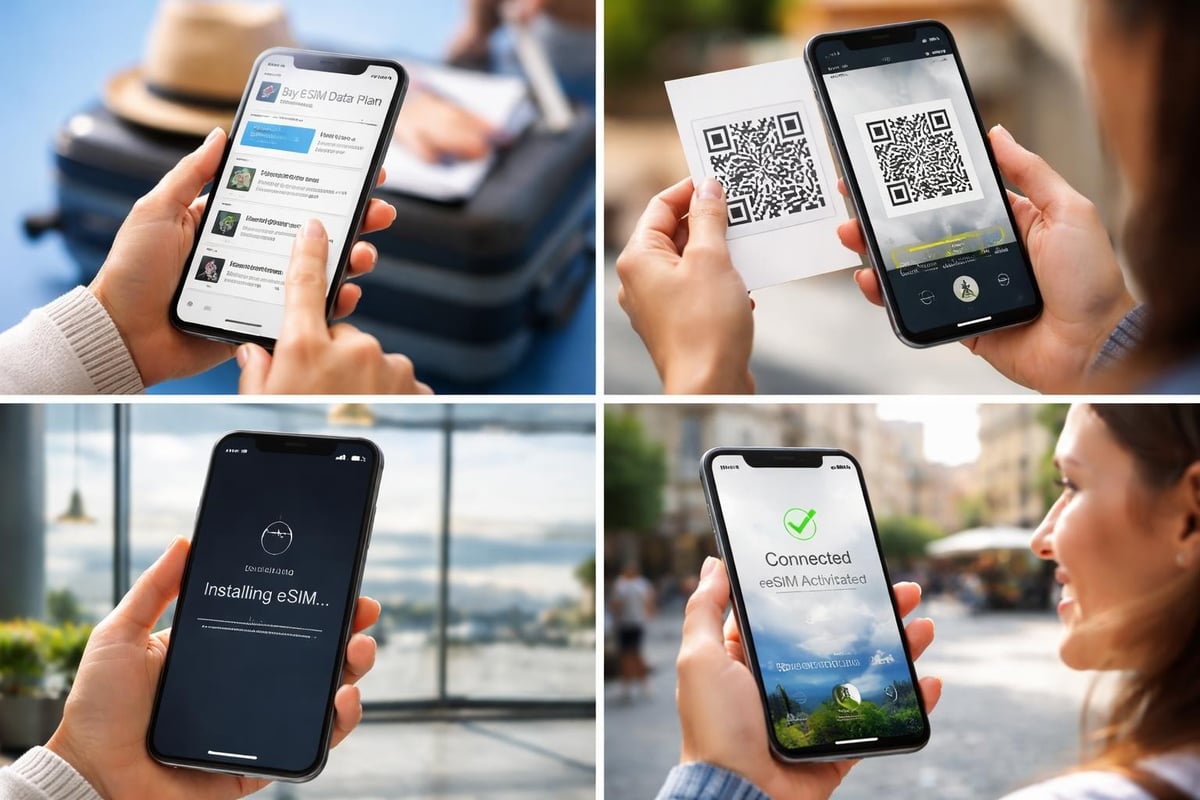
The installation process looks like this:
- Purchase your eSIM plan and receive your QR code via email
- Go to Settings > Mobile/Cellular > Add eSIM (exact path varies by device)
- Scan the QR code with your phone's camera
- Label the eSIM profile (like "Japan Travel" or "Europe Data")
- Choose whether to use it for mobile data, calls, or both
Upon Arrival at Your Destination
When your plane touches down, enable the roaming esim profile you installed. Your phone should automatically connect to available networks. If it doesn't, toggle airplane mode off and on, or manually select a network in your settings.
Here's a pro tip: keep your home SIM active but disable data roaming on it. This way, you can still receive calls and texts to your regular number (often through WiFi calling) whilst using your roaming esim exclusively for data. This dual-SIM capability is one of the genuine advantages of eSIM technology.
Troubleshooting Common Issues
Sometimes things don't work perfectly straightaway. The most common issues are:
- No connection: Check that mobile data is enabled for the correct eSIM profile and that data roaming is turned on
- Slow speeds: Try manually selecting a different network if multiple are available
- Can't install profile: Ensure you have an active internet connection (WiFi works fine)
- QR code won't scan: You can usually enter the activation code manually instead
Most quality providers offer instant support through chat or messaging apps, which is invaluable when you're troubleshooting in an unfamiliar location.
Regional Roaming eSIM Plans vs Country-Specific Options
Should you buy a regional plan covering multiple countries or stick with country-specific eSIMs? This decision impacts both your budget and connectivity experience, so let's explore the trade-offs properly.
When Regional Plans Make Sense
Regional roaming esim plans shine when you're hitting multiple countries quickly. Backpacking through Southeast Asia? Interrailing across Europe? A regional plan means seamless connectivity as you cross borders without manually switching profiles or buying new plans.
Benefits include:
- Single activation for entire trip
- No reconnection hassles at borders
- Often better value for multi-country travel
- Simplified expense tracking
However, regional plans sometimes use different network partners in different countries, meaning your experience in Portugal might differ significantly from your experience in Poland, even on the same plan.
Country-Specific Advantages
For longer stays in one location, country-specific plans typically offer better value and performance. If you're spending two weeks in Japan or a month working remotely from Portugal, dedicated plans usually provide more data for less money.
| Trip Type | Recommended Approach | Example |
|---|---|---|
| Single country, 1+ weeks | Country-specific eSIM | Two weeks in Greece |
| Multi-country tour | Regional plan | 10 days across Italy, France, Spain |
| Hub with day trips | Country-specific | Based in London, day trips to Paris |
| Business multi-city | Regional with backup | Meetings in Berlin, Amsterdam, Brussels |
I've learned this the hard way: don't pay for Europe-wide coverage when you're actually staying put in Barcelona. The pricing premium for flexibility you won't use adds up quickly.
Security and Privacy Considerations with Roaming eSIM
Let's talk about something often overlooked: security. When you're using a roaming esim, you're essentially trusting a digital service provider with your connectivity and, by extension, potentially sensitive data. Understanding the security landscape helps you travel smarter.
How eSIM Security Actually Works
The eSIM chip in your phone uses the same encryption standards as traditional SIM cards. Your credentials are stored securely in a dedicated area of the chip that other apps can't access. When you activate a roaming esim profile, the authentication happens through encrypted channels, making it extremely difficult for anyone to intercept or clone your eSIM.
That said, the security chain is only as strong as its weakest link. This usually isn't the eSIM technology itself but rather:
- Public WiFi networks you connect to
- Apps requesting unnecessary permissions
- Unsecured websites you visit whilst roaming
- Phishing attempts via text or email
Advanced analytics and detection systems help network operators monitor for suspicious activity, but you're still your own best defence.
Privacy Implications
Your roaming esim provider can see your data usage patterns, connected networks, and general location information. Reputable providers have privacy policies limiting how they use this data, but it's worth reading the fine print before purchasing.
Consider these privacy-enhancing practices:
- Use a VPN for sensitive browsing, especially on public networks
- Check eSIM provider privacy policies for data retention and sharing practices
- Avoid inputting sensitive information over mobile data when possible
- Monitor which apps use background data through your eSIM connection
The transparency question matters too. Some providers clearly state their data policies, whilst others hide behind vague terms and conditions. Choose providers who are upfront about what data they collect and why.
The Economics: How Roaming eSIM Saves You Money
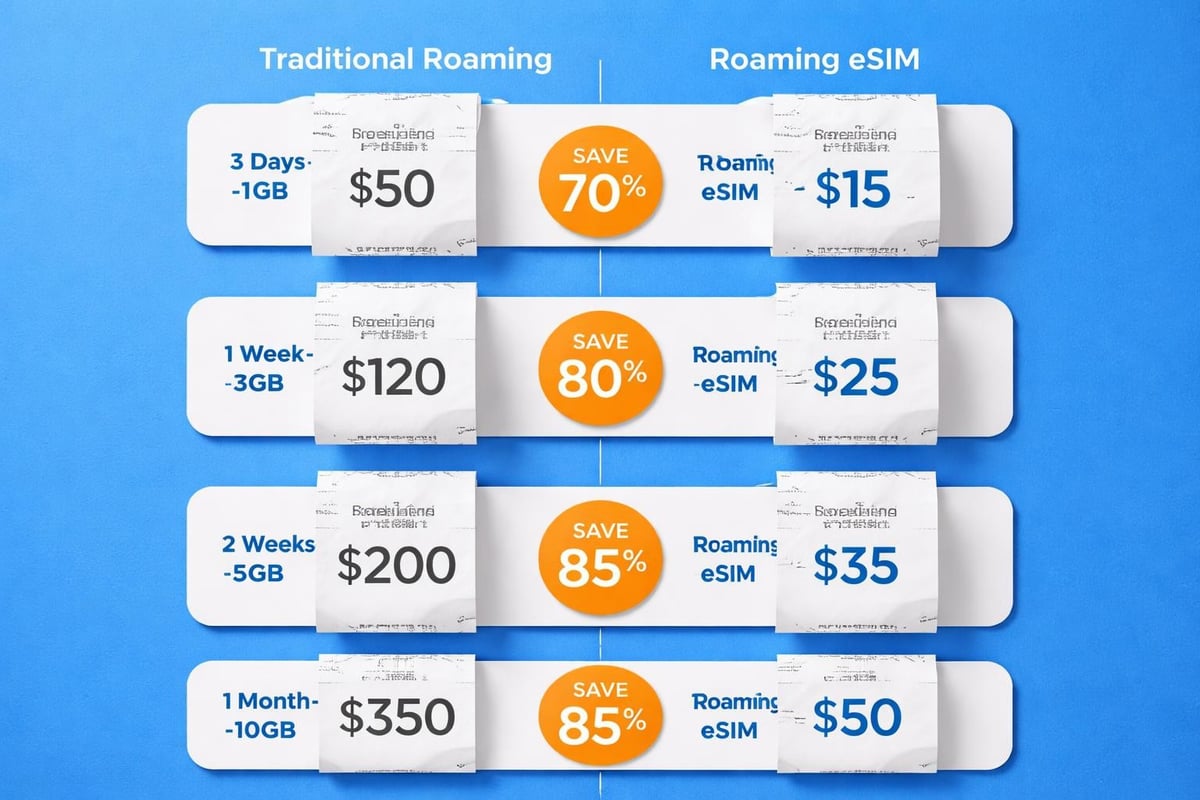
Right, let's talk pounds and pence. How much can a roaming esim actually save you compared to traditional roaming? The answer might surprise you – we're often talking about savings of 80-95% on international data costs.
Breaking Down Traditional Roaming Costs
Your typical UK mobile carrier charges somewhere between £5-15 per day for roaming outside Europe, with data caps that make streaming or video calls prohibitively expensive. Spend a fortnight in Australia and you're looking at £70-210 just for basic connectivity, often with throttled speeds after modest data usage.
The maths gets worse if you exceed your daily allowance. Overage charges can hit £6-12 per additional gigabyte, and these charges rack up quickly if you're using navigation apps, uploading photos, or joining video calls.
Roaming eSIM Cost Comparison
Compare that to roaming esim pricing, where you might pay £15-40 for 10-20GB of data valid for an entire month. Let's visualize this:
| Scenario | Traditional Roaming | Roaming eSIM | Savings |
|---|---|---|---|
| 7 days USA, 5GB data | £70-105 | £12-25 | £45-93 |
| 14 days Thailand, 10GB | £140-210 | £15-30 | £110-195 |
| 30 days Europe, 20GB | £150-300 | £20-45 | £105-280 |
These aren't theoretical savings. Research shows that travelers using eSIMs typically spend 70-90% less on international connectivity compared to traditional roaming packages.
Hidden Costs to Watch For
Not all roaming esim providers are equally transparent. Watch out for:
- Activation fees that aren't included in advertised prices
- Throttling after certain data thresholds
- Time limits that start upon purchase rather than first use
- Renewal charges if auto-renewal isn't disabled
Quality providers are upfront about all costs before purchase. If you're seeing prices that seem too good to be true, dig into the terms and conditions before committing.
Future Trends: Where Roaming eSIM Technology Is Heading
The roaming esim landscape is evolving rapidly, with innovations emerging that'll change how we think about international connectivity. Understanding where things are heading helps you make smarter decisions today.
5G Integration and Performance
As 5G networks expand globally, roaming eSIM services are beginning to offer 5G connectivity in major destinations. This matters because 5G isn't just about speed – it's about latency, reliability, and supporting more devices simultaneously.
In 2026, we're seeing 5G-enabled roaming eSIMs become standard rather than premium offerings. Cities across Asia, Europe, and North America now offer widespread 5G coverage, meaning your eSIM connection in Singapore or South Korea can match or exceed home network speeds.
Blockchain and Enhanced Security
Emerging technologies like blockchain-based roaming frameworks promise to revolutionize how eSIM providers authenticate users and process payments. These systems could enable instant, trustless roaming agreements between networks worldwide, further reducing costs and improving reliability.
Similarly, blockchain roaming management systems aim to reduce fraud and enhance transparency in how providers manage international connectivity. Whilst still largely experimental, these technologies could become mainstream within the next few years.
AI-Powered Network Selection
Smart roaming eSIM systems are beginning to use artificial intelligence to automatically select the best available network based on real-time conditions. Instead of manually choosing between available carriers, your eSIM could automatically switch to whichever network offers the best combination of speed, reliability, and cost at any given moment.
Testing and assurance technologies are becoming more sophisticated, ensuring these automatic switches happen seamlessly without dropping connections or degrading service quality.
Business Travel and Roaming eSIM Solutions
Business travelers have different needs than leisure tourists, and roaming esim technology addresses these requirements brilliantly. If you're travelling for work, certain features become essential rather than nice-to-have.
Expense Management and Documentation
Corporate finance departments love roaming eSIMs because they provide transparent, predictable costs. Instead of dealing with complex roaming bills full of surcharges and unclear line items, you get straightforward pricing that's easy to expense and audit.
Many roaming esim providers now offer:
- Business accounts with centralized billing
- Detailed usage reports for expense reconciliation
- Multiple user management under single accounts
- Invoice generation with proper VAT documentation
This administrative simplification saves hours of back-and-forth with finance teams, letting you focus on actual work rather than explaining why your phone bill tripled during that Tokyo business trip.
Reliability and Redundancy
When you're joining client video calls or presenting to stakeholders remotely, connectivity failures aren't acceptable. Smart business travelers often use dual eSIM setups – one primary roaming esim for general use and a backup from a different provider in case of issues.
Your phone can store multiple eSIM profiles simultaneously, letting you switch between providers instantly if one network experiences problems. This redundancy is especially valuable in countries where network reliability varies significantly by region or carrier.
Security for Sensitive Communications
Business communications often involve confidential information, making security paramount. When selecting a roaming esim for business travel, prioritize providers offering:
- Enterprise-grade encryption standards
- Clear data retention and privacy policies
- Support for corporate VPN configurations
- No data logging or traffic inspection
Industry discussions around billing and transparency highlight that business users increasingly value clear terms and reliable service over pure speed metrics.
Environmental Impact: The Sustainability Angle of Roaming eSIM
Here's something you might not have considered: roaming esim technology is significantly more environmentally friendly than traditional SIM cards. In an era where we're all trying to reduce our environmental footprint, this matters more than you'd think.
Reducing Plastic Waste
Every physical SIM card is made of PVC plastic, comes in plastic packaging, and requires physical distribution. Globally, billions of SIM cards are produced annually, creating substantial plastic waste. Many end up in landfills, where they take hundreds of years to decompose.
A roaming esim eliminates this waste entirely. No plastic card, no packaging, no shipping. Multiply this across millions of international travelers, and the impact becomes significant. If just 10% of international travelers switched to eSIMs, we'd prevent millions of plastic SIM cards from being manufactured annually.
Carbon Footprint of Distribution
Traditional SIM cards require manufacturing facilities, transportation networks, and retail distribution – all contributing to carbon emissions. Producing, packaging, and shipping a physical SIM card generates approximately 2-3kg of CO2 equivalent emissions.
Digital eSIM distribution happens through existing internet infrastructure, which travellers would be using anyway. The marginal carbon cost of downloading an eSIM profile is essentially negligible compared to producing and distributing physical cards.
Longer Device Lifecycles
One subtle environmental benefit: eSIM technology reduces one reason people upgrade phones. Previously, if you frequently travelled to countries requiring different SIM card sizes (standard, micro, nano), you might upgrade your device for compatibility. With eSIMs, your device remains functional longer, reducing electronic waste.
The shift toward roaming eSIMs represents a small but meaningful step toward more sustainable travel practices, complementing other efforts to reduce tourism's environmental impact.
Roaming eSIM technology has fundamentally transformed international connectivity, offering travelers unprecedented flexibility, transparency, and cost savings whilst reducing environmental impact. Whether you're planning a quick business trip or an extended adventure across multiple countries, understanding how to leverage these digital solutions ensures you stay connected without the traditional hassles or expenses of international roaming. Ready to experience seamless global connectivity? Explore instant eSIM activation across 200+ countries with affordable, flexible plans at gosimless.app and leave those expensive roaming charges behind for good.
gosimless Team
The gosimless editorial desk — testing eSIMs, carriers and travel connectivity so you don't have to. Updated continuously from the road.