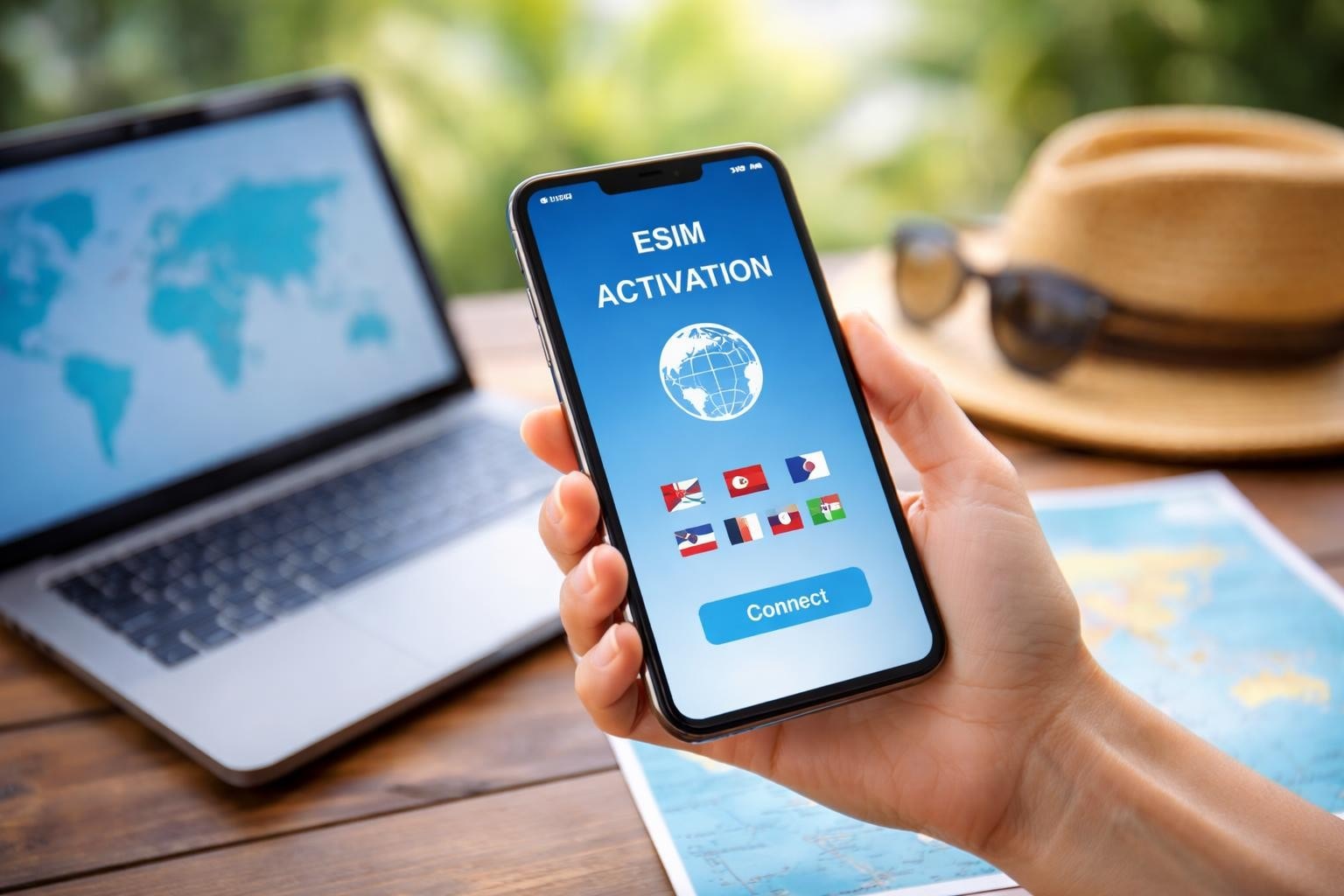
The travel landscape has fundamentally changed in 2026, and staying connected abroad no longer requires hunting for local SIM cards or paying exorbitant roaming charges. Digital nomads, frequent travellers, and international business professionals increasingly rely on nomad esim solutions to maintain seamless connectivity across borders. This technology represents more than just convenience; it embodies a shift towards truly flexible, instant global communication that adapts to modern mobility requirements.
Understanding Nomad eSIM Technology
A nomad esim functions as an embedded SIM card built directly into your compatible device, eliminating the need for physical plastic cards that can be lost, damaged, or swapped. The underlying eSIM architecture provides remote provisioning capabilities, allowing travellers to download carrier profiles digitally within minutes.
Key technical advantages include:
- Remote profile management without physical access to devices
- Multiple carrier profiles stored simultaneously on a single device
- Instant activation regardless of geographical location
- Enhanced security through encrypted digital credentials
- Reduced environmental impact from plastic SIM production
The technology operates through standardised protocols established by the GSMA, ensuring compatibility across manufacturers and network operators. When you purchase a nomad esim plan, you receive a QR code or activation details that programme your device's embedded chip with the necessary carrier information.
How Digital Provisioning Works
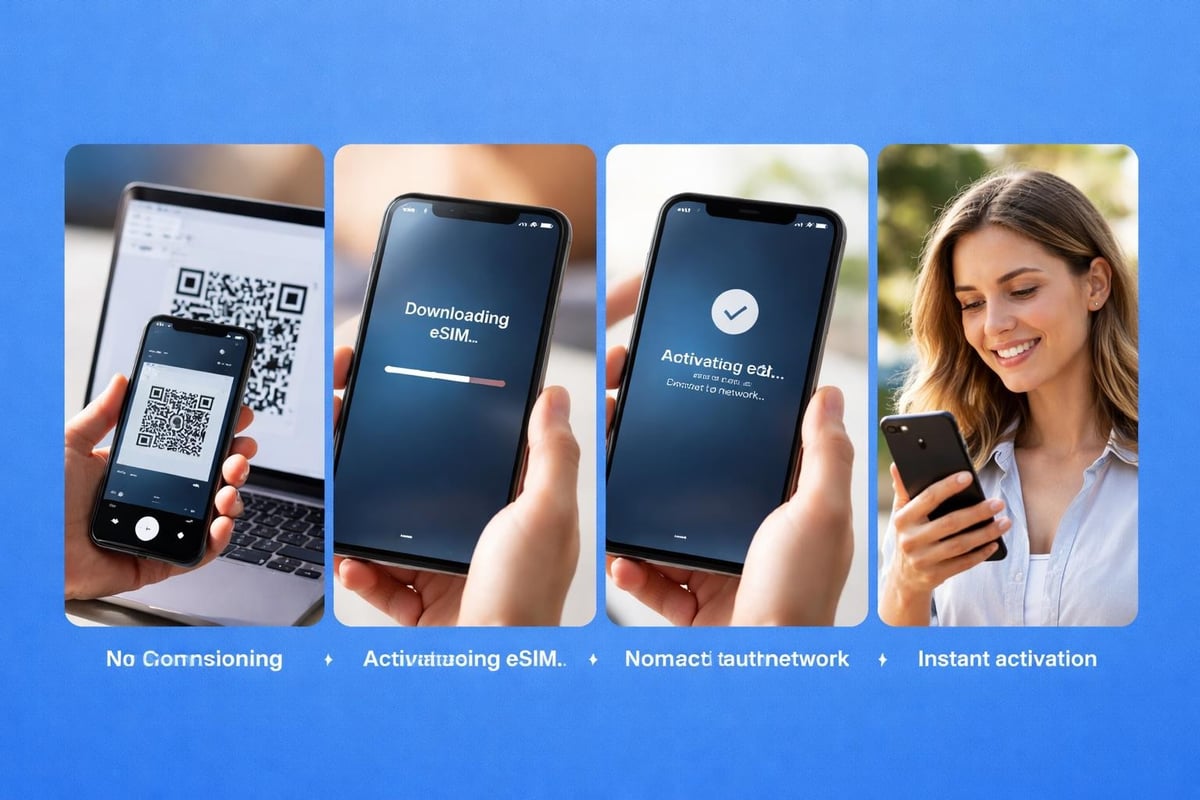
The activation process leverages over-the-air technology to securely transfer network credentials to your device. This happens through encrypted channels that prevent unauthorised access whilst maintaining compatibility with existing cellular infrastructure.
Your device communicates with remote servers to authenticate, download, and install the carrier profile. The entire sequence typically completes within two to five minutes, depending on network conditions and server load.
Benefits for Modern Travellers
International mobility demands communication solutions that match the pace and unpredictability of global travel. Traditional roaming services often fail to deliver cost-effective, reliable connectivity across multiple destinations during single trips.
A nomad esim addresses these challenges through several measurable advantages. Cost savings represent the most immediate benefit, with travellers typically reducing data expenses by 60-85% compared to standard roaming rates. The elimination of physical SIM card purchases at each destination further compounds these savings.
Flexibility Across Destinations
Multi-country travel presents unique connectivity challenges that single-region plans cannot adequately address. Modern nomad esim solutions provide coverage across 150-200+ countries through partnerships with local network operators.
| Feature | Traditional Roaming | Physical Local SIM | Nomad eSIM |
|---|---|---|---|
| Activation Speed | Instant | 15-60 minutes | 2-5 minutes |
| Multi-Country Support | Yes (expensive) | No | Yes (affordable) |
| Device Compatibility | Universal | Universal | eSIM-enabled only |
| Setup Complexity | Automatic | Manual | QR code scan |
| Average Cost Savings | Baseline | 40-70% | 60-85% |
The ability to maintain your primary number whilst using data through your nomad esim creates optimal communication flexibility. Business travellers particularly appreciate this dual-SIM functionality, which allows receiving calls on their home number whilst accessing affordable data services.
Platforms offering instant eSIM activation have streamlined this experience further, reducing friction points that previously complicated international connectivity. The shift towards immediate digital delivery has essentially eliminated waiting periods that characterised older approaches.
Choosing the Right Nomad eSIM Provider
Provider selection significantly impacts your travel experience, affecting everything from network quality to customer support accessibility. The market has expanded considerably, yet not all services deliver equivalent value or reliability.
Essential evaluation criteria include:
- Geographic coverage matching your travel patterns
- Data allowances aligned with your consumption habits
- Network partnerships ensuring quality connectivity
- Pricing transparency without hidden fees
- Customer support availability across time zones
Research the specific countries you'll visit and verify that your chosen provider maintains partnerships with reputable local carriers. Network quality varies dramatically between operators within the same country, and your nomad esim experience depends entirely on these underlying partnerships.
Coverage and Network Quality
Understanding how to verify your eSIM data activation helps troubleshoot connectivity issues before they disrupt critical communications. Testing your connection immediately upon arrival in each new destination allows quick resolution of configuration problems.
Regional providers sometimes offer superior local network access compared to global aggregators. However, global providers typically excel in multi-country scenarios where crossing borders frequently would require multiple local SIM purchases.
The global connectivity infrastructure continues expanding, with eSIM adoption accelerating across both developed and emerging markets throughout 2026.
Installation and Setup Process
Setting up your nomad esim requires minimal technical expertise, though the exact steps vary slightly between iOS, Android, and other operating systems. Most modern smartphones manufactured after 2020 include eSIM capabilities, though verifying device compatibility before purchase prevents disappointing discoveries.
Step-by-Step Activation
- Purchase your plan through your chosen provider's website or mobile application
- Receive activation credentials via email, typically within 30-120 seconds
- Access eSIM settings in your device's cellular or mobile network menu
- Scan the QR code provided or manually enter activation details
- Label your plan with a recognizable name for easy identification
- Configure data settings to route internet traffic through your new profile
- Test connectivity by accessing websites or applications requiring data
The process follows similar patterns across devices, though menu locations differ between manufacturers. Apple devices typically place eSIM controls under Settings > Cellular > Add Cellular Plan, whilst Android devices vary by manufacturer but generally locate controls under Settings > Network & Internet > Mobile Network.
Following the complete installation guide ensures proper configuration, particularly regarding APN settings that occasionally require manual adjustment. Understanding proper APN configuration becomes crucial when automatic settings fail to establish connectivity.
Managing Multiple eSIM Profiles
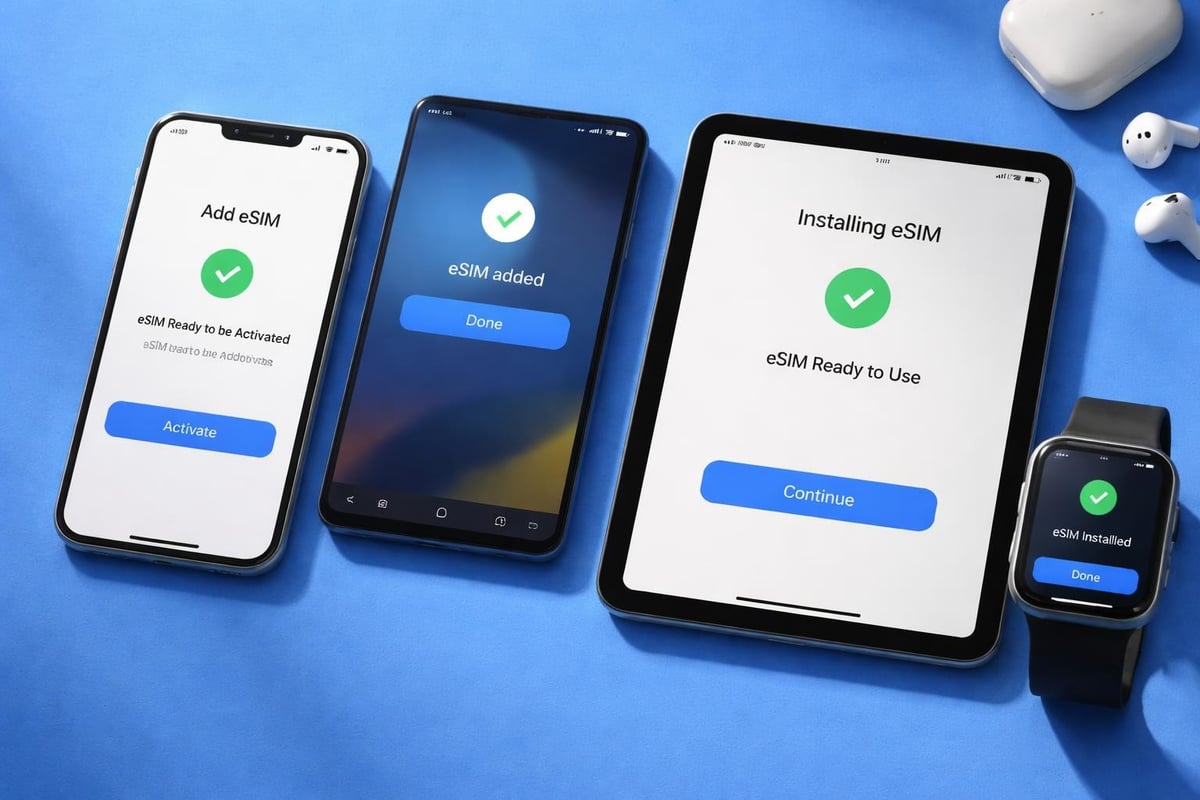
Modern smartphones support storing five to ten eSIM profiles simultaneously, though only one or two can remain active concurrently depending on device specifications. This capability transforms how frequent travellers approach international connectivity.
Strategic profile management allows maintaining regional plans for frequently visited destinations whilst activating them only when needed. A business traveller regularly visiting Europe and Asia might maintain separate profiles for each region, switching between them as travel patterns dictate.
Profile management best practices:
- Delete unused profiles to prevent confusion and accidental activation
- Clearly label each profile with destination and expiration information
- Document data allowances to avoid unexpected depletion
- Disable data roaming on your primary SIM to prevent bill shock
- Set calendar reminders for plan expiration dates
The ability to switch between profiles without physical SIM swapping provides unprecedented flexibility. Travellers can test different providers in the same location, comparing network quality and speeds before committing to larger data packages.
Cost Comparison and Value Analysis
Evaluating nomad esim costs requires examining total connectivity expenses across your typical travel patterns rather than isolated per-gigabyte pricing. A seemingly expensive 10GB plan that covers fifteen countries often delivers better value than three separate 5GB regional plans.
| Duration | Traditional Roaming | Local SIM Cards | Nomad eSIM |
|---|---|---|---|
| 7-day Europe trip | £85-120 | £35-50 | £15-30 |
| 14-day Asia circuit | £150-210 | £60-85 (multiple) | £25-45 |
| 30-day multi-region | £280-400 | £120-180 (multiple) | £60-95 |
These figures represent average costs based on 5GB monthly usage, with actual pricing varying by specific destinations and providers. The convenience factor of avoiding multiple SIM purchases and registrations adds substantial value beyond pure monetary savings.
Travellers exploring diverse regions particularly benefit from unified coverage. Someone visiting Thailand, Singapore, and Vietnam during a single trip avoids purchasing three separate local SIMs by using a comprehensive Asia-Pacific nomad esim plan.
Common Challenges and Solutions
Despite significant technological maturity, nomad esim adoption occasionally encounters obstacles that frustrate users. Understanding common issues and their resolutions minimises disruption to your connectivity.
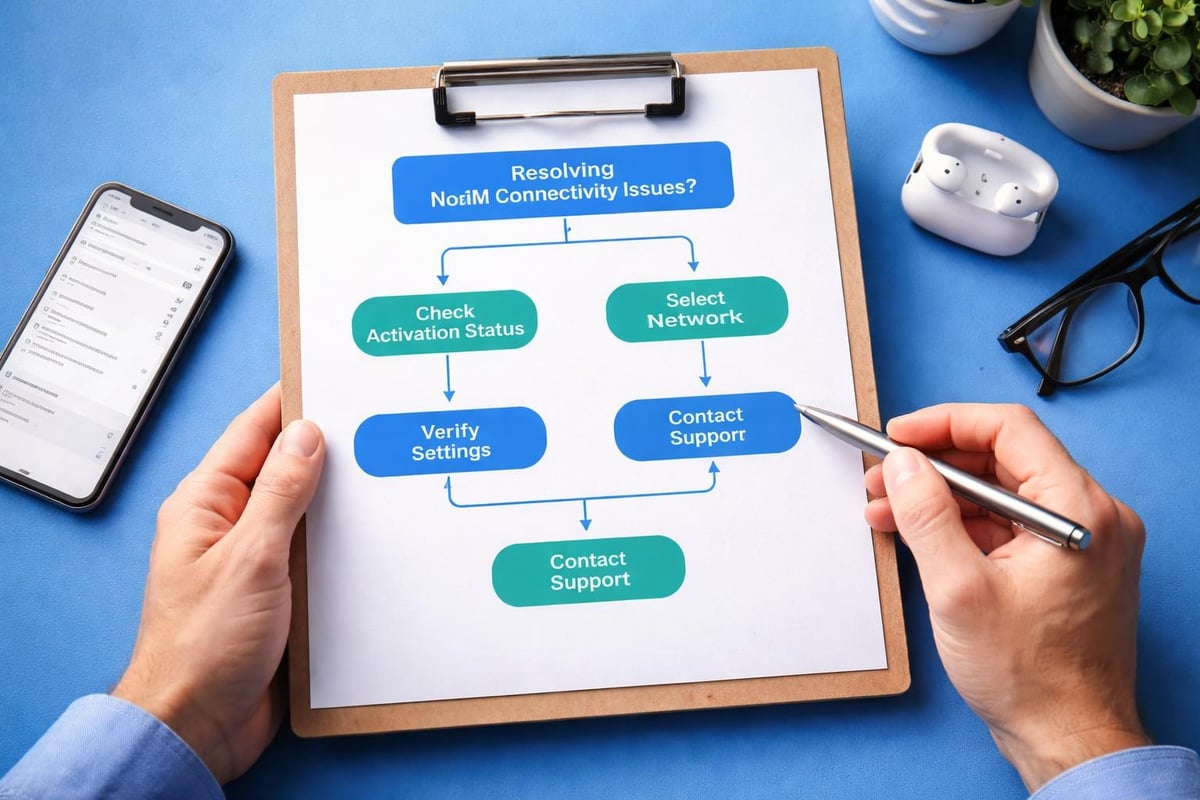
Network selection problems occur when devices fail to automatically connect to optimal carriers. Manually selecting networks through your device's carrier settings usually resolves this, though identifying the best available network requires local knowledge or research.
Activation delays sometimes extend beyond expected timeframes due to server congestion or technical issues. Waiting 10-15 minutes before contacting support allows automatic systems to complete processing in most cases.
Troubleshooting Connection Issues
When your nomad esim fails to establish connectivity, systematic troubleshooting identifies the root cause efficiently. Begin by verifying your plan remains active and contains available data allowance.
Restart your device to refresh network connections and clear temporary configuration glitches. This simple step resolves approximately 40% of connection problems without further intervention.
Check that airplane mode is disabled and mobile data is enabled specifically for your eSIM profile. Device settings sometimes revert to default configurations after software updates or during initial setup.
Regional Considerations and Restrictions
Certain countries maintain regulations that complicate or prohibit eSIM usage, requiring travellers to understand local telecommunications policies before depending entirely on this technology. China, for instance, requires registration procedures that may not accommodate short-term visitors using foreign eSIM services.
Middle Eastern countries sometimes restrict eSIM services or require specific licensing that international providers cannot easily obtain. Researching destination-specific requirements prevents connectivity blackouts in regions with regulatory restrictions.
Countries with eSIM restrictions or special requirements:
- China (registration barriers for foreign services)
- Cuba (limited infrastructure support)
- North Korea (prohibited)
- Iran (regulatory restrictions)
- Syria (infrastructure limitations)
Travellers to these destinations should plan alternative connectivity solutions, including portable WiFi devices or accepting limited connectivity during their visits. However, available eSIM plans continue expanding into previously restricted markets as regulations evolve.
Security and Privacy Considerations
Digital connectivity introduces security considerations that physical SIM cards rarely presented. Understanding how nomad esim providers handle your data and protect against unauthorised access ensures informed decision-making.
Reputable providers implement encryption for credential transmission and storage, preventing interception of sensitive information during profile downloads. The GSMA standards mandate specific security protocols, though implementation quality varies between providers.
Protecting Your Digital Identity
Avoid purchasing eSIM services through unverified third-party marketplaces or suspiciously inexpensive providers. These sources sometimes compromise security standards or engage in data harvesting that exposes personal information.
Review privacy policies to understand data collection, storage, and sharing practices. Providers requiring excessive personal information beyond basic contact details and payment credentials warrant additional scrutiny.
Future Developments in eSIM Technology
The eSIM landscape continues evolving rapidly, with several emerging trends reshaping how travellers approach international connectivity. Industry analysts project that by 2028, over 75% of smartphones sold globally will include eSIM capabilities, up from approximately 60% in 2026.
Anticipated developments include:
- Integrated travel platforms combining flights, accommodation, and connectivity
- Blockchain-based identity verification streamlining activation processes
- AI-powered network selection optimising connection quality automatically
- Embedded IoT device support expanding beyond smartphones and tablets
- Regulatory harmonisation simplifying cross-border service provision
The standardisation of eSIM technology across device categories, including laptops, smartwatches, and automotive systems, will create seamless connectivity ecosystems. This convergence eliminates the fragmented approach currently required when managing connectivity across multiple device types.
Maximising Value from Your Nomad eSIM
Strategic usage patterns significantly impact the value derived from your nomad esim investment. Understanding data consumption patterns and adjusting usage behaviours optimises both costs and experience quality.
Download maps, entertainment content, and essential documents via WiFi before departing to minimise cellular data consumption. Offline resources reduce reliance on constant connectivity whilst travelling between destinations.
Configure automatic updates and cloud synchronisation to occur only when connected to WiFi networks. These background processes consume surprising amounts of data when allowed unrestricted cellular access.
| Activity | Hourly Data Usage | Daily Equivalent (2hrs) |
|---|---|---|
| Email and messaging | 10-20 MB | 20-40 MB |
| Social media browsing | 100-150 MB | 200-300 MB |
| Video streaming (HD) | 1.5-3 GB | 3-6 GB |
| Navigation with maps | 5-15 MB | 10-30 MB |
| Video calls | 300-500 MB | 600-1000 MB |
Understanding these consumption patterns allows selecting appropriately sized data packages. Overestimating needs wastes money on unused allowances, whilst underestimating creates frustrating limitations or unexpected overage charges.
Comparing Provider Ecosystems
The nomad esim market includes both specialised connectivity providers and traditional mobile network operators expanding into digital services. Each approach offers distinct advantages depending on your specific requirements and travel patterns.
Specialist providers typically excel in multi-country coverage and competitive pricing, having built business models specifically around traveller needs. Traditional carriers offer superior network quality in their home markets but often lack comprehensive international coverage or competitive pricing.
Reading authentic user reviews provides insights into real-world performance that marketing materials rarely capture. Focus on feedback from travellers with similar patterns to your own, as a provider excellent for European business travel might disappoint during Asian backpacking trips.
The comprehensive FAQ resources maintained by quality providers demonstrate commitment to customer education and support accessibility. Providers offering detailed documentation typically deliver superior overall experiences compared to those with minimal support infrastructure.
Making the Transition from Traditional SIMs
Shifting from physical SIM cards to nomad esim solutions requires minimal adjustment for most users, though understanding key differences prevents initial confusion. The primary psychological barrier involves trusting digital provisioning over tangible physical cards.
Start by testing eSIM technology during a short trip to familiar destinations before relying on it during complex itineraries. This approach builds confidence whilst maintaining fallback options if issues arise.
Maintain your physical SIM card during initial eSIM experiments, using dual-SIM functionality to compare performance directly. This parallel operation clarifies practical differences and validates that eSIM solutions meet your connectivity requirements.
Consider keeping one emergency physical SIM card for destinations where eSIM infrastructure remains underdeveloped or regulations create uncertainty. This hybrid approach balances innovation adoption with practical risk management.
Modern travellers require connectivity solutions matching their mobility and flexibility demands, and nomad esim technology delivers precisely that combination. Understanding activation processes, provider selection criteria, and strategic usage patterns maximises both value and reliability across diverse international destinations. Whether you're exploring destinations across Europe or venturing further afield, instant eSIM activation eliminates traditional connectivity barriers and expensive roaming fees. Ready to experience seamless global connectivity? Discover how gosimless.app provides instant activation and affordable coverage across 200+ countries with secure, hassle-free setup.
gosimless Team
The gosimless editorial desk — testing eSIMs, carriers and travel connectivity so you don't have to. Updated continuously from the road.