
Travel's changed dramatically over the past few years, hasn't it? You've probably noticed that staying connected abroad isn't the headache it used to be. Gone are the days of hunting for local SIM cards at airport kiosks or paying extortionate roaming charges. The solution? A global eSIM that works the moment you land, wherever you land. This embedded SIM technology is revolutionising how we stay connected whilst travelling, and if you haven't made the switch yet, you're missing out on some serious convenience.
What Exactly Is a Global eSIM?
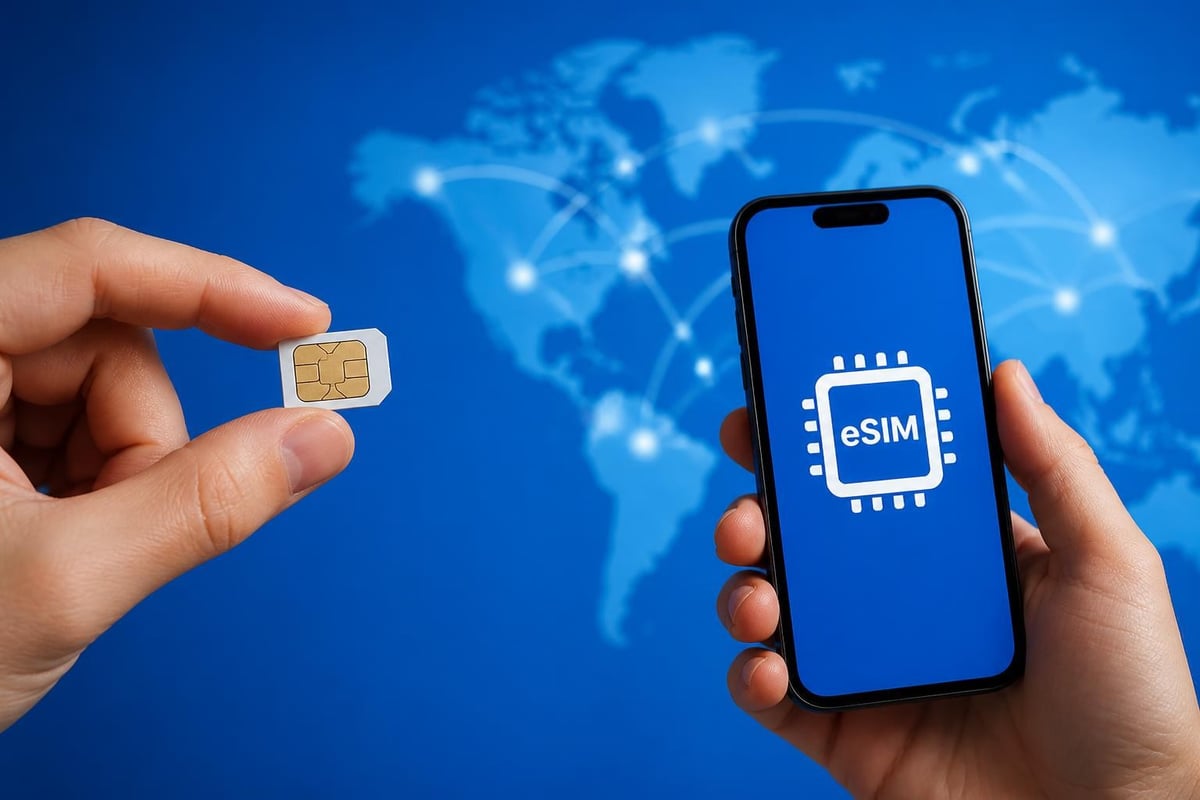
Think of a global eSIM as your digital passport to worldwide connectivity. Unlike traditional SIM cards that you physically swap in and out of your phone, an eSIM is embedded directly into your device. It's programmable, reusable, and can store multiple carrier profiles simultaneously.
But here's where it gets interesting. A global eSIM takes this concept further by offering coverage across numerous countries through a single activation. Rather than purchasing separate data plans for Thailand, France, and Australia, you're buying one plan that works across all three (and potentially 200+ other countries).
The Technology Behind Global eSIMs
The eSIM market is experiencing explosive growth, with industry analysts predicting significant expansion through 2030. This isn't just hype - it's a fundamental shift in how mobile connectivity works.
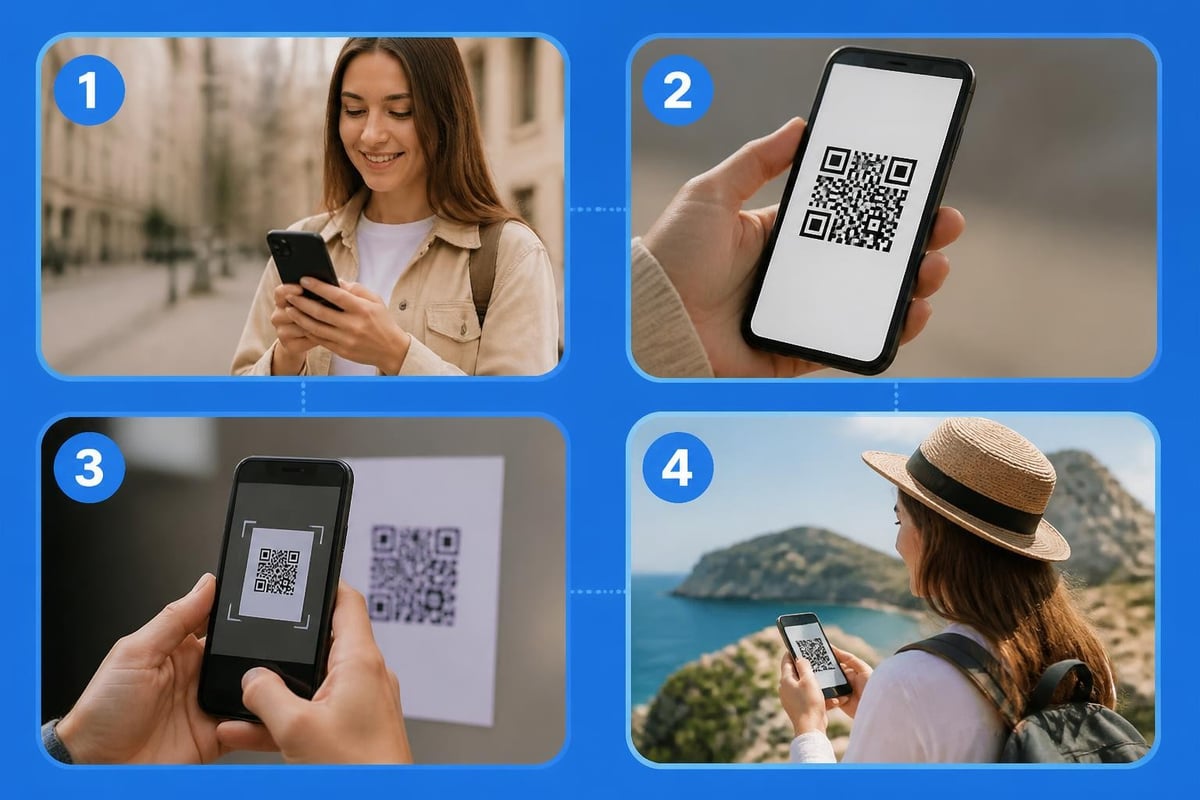
Your device contains a small chip that can be programmed remotely. When you purchase a global eSIM plan, you receive a QR code via email. Scan it, and your phone downloads the carrier profile. No physical components, no waiting for delivery, no tiny cards to lose.
The beauty of this system? You can switch between different eSIM profiles without touching any hardware. Got a work number and personal number? Both can live on your device simultaneously.
Why Travellers Are Switching to Global eSIMs
Let's talk practicalities. Traditional roaming charges from your home carrier can cost a fortune. I've seen bills where a week's holiday data usage cost more than the flight itself. Ridiculous, right?
Global eSIM plans eliminate this problem entirely. Here's what makes them compelling:
- Instant activation - Purchase online, scan a QR code, connect immediately
- No roaming fees - You're using local networks at local rates
- Multi-country coverage - One plan works across continents
- Keep your number - Your primary SIM stays active for calls and texts
- Flexible durations - Buy data for exactly as long as you need it
Cost Comparisons Worth Considering
| Connection Method | Cost for 5GB in Europe | Setup Time | Flexibility |
|---|---|---|---|
| Home carrier roaming | £40-80 | Instant | Low |
| Airport SIM card | £25-35 | 30-60 mins | Medium |
| Global eSIM | £8-15 | 2-5 mins | High |
The numbers speak for themselves. You're saving money whilst actually getting better service. When you compare options like Airalo versus dedicated providers, the differences become even clearer.
How to Choose the Right Global eSIM Provider
Not all global eSIM services are created equal. Some offer genuinely worldwide coverage, whilst others label themselves "global" but only cover a handful of popular destinations. You need to ask the right questions before committing.
Coverage breadth matters most. Does the plan work in the countries you're actually visiting? A "global" plan that doesn't include your destination isn't much use. Check the supported country list carefully - some providers exclude less common destinations or charge premium rates for them.
Data speeds can vary dramatically. Are you getting 4G or 5G? Some budget providers throttle speeds or deprioritise eSIM users during network congestion. Read reviews and check whether the service maintains consistent performance across different regions.
Key Features to Evaluate
- Activation speed - How quickly can you get online after purchase?
- Customer support - What happens if something goes wrong at midnight in Tokyo?
- Top-up flexibility - Can you add more data mid-trip without buying a new plan?
- Device compatibility - Does your phone support eSIM technology?
- Payment security - Are transactions processed through reputable payment gateways?
Before travelling, it's worth checking your device compatibility through a provider's compatible devices guide to avoid any nasty surprises at the airport.
Setting Up Your Global eSIM
The setup process is straightforward, but there are some tricks to making it smoother. First, do this before you leave home whilst connected to WiFi. Trying to configure a new eSIM using airport WiFi is asking for frustration.
Your provider will email you a QR code after purchase. Open your phone's settings, navigate to mobile data or cellular, and select "Add eSIM" or "Add Data Plan". Point your camera at the QR code on your screen (yes, you'll need a second device or printout for this bit).
The phone downloads the carrier profile automatically. This takes anywhere from 30 seconds to a few minutes depending on your connection. Once installed, you can label it something like "Travel Data" to distinguish it from your primary SIM.
Activation Tips That Actually Help
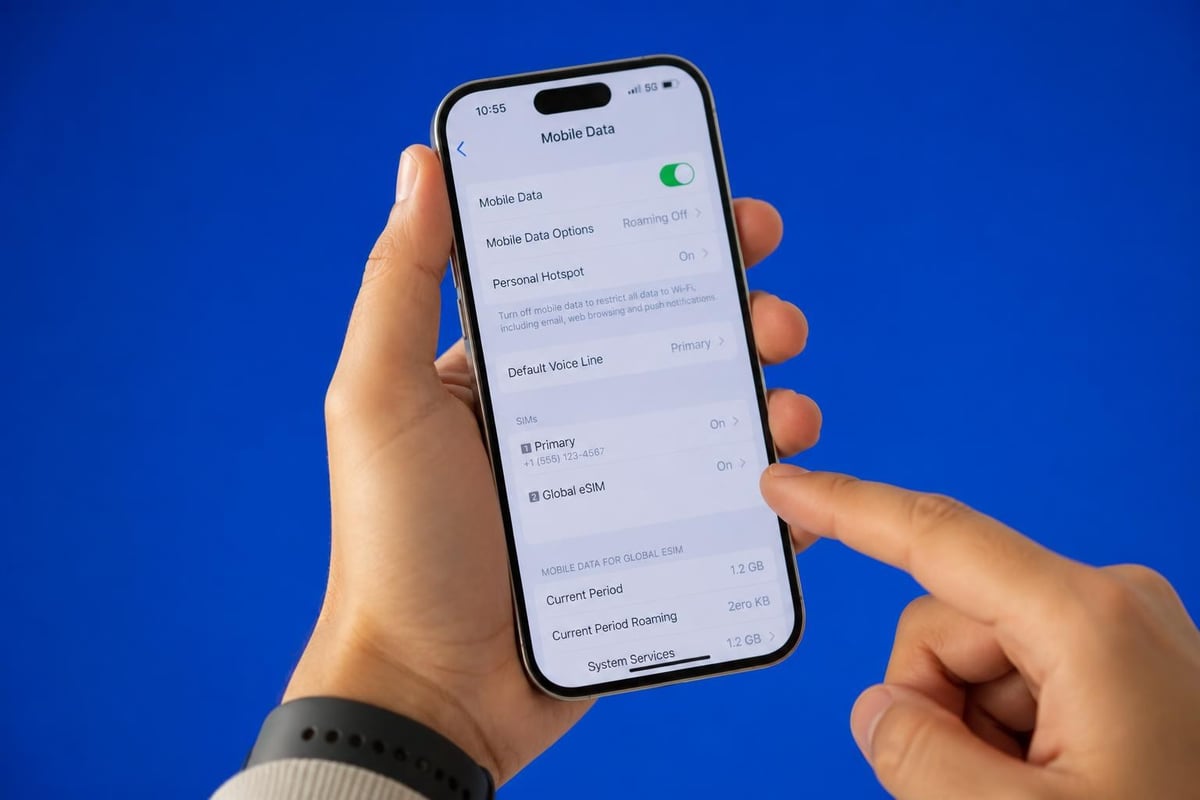
Turn on data roaming for your eSIM - Counterintuitive, I know, but your global eSIM uses local networks, so roaming needs to be enabled. Don't worry, you won't get charged extra.
Disable data roaming on your primary SIM - This prevents your home carrier from connecting and charging you accidentally. You can still receive calls and texts on your primary number whilst using the eSIM for data.
Set your eSIM as the default data line - Navigate to your phone's mobile data settings and select your global eSIM as the preferred connection. This ensures apps use the right network.
For visual learners, detailed step-by-step guides with screenshots can be found in most providers' installation guides, walking you through the exact menus for iPhone and Android devices.
Regional Coverage: What Works Where
Here's something important to understand - not all global eSIM plans offer identical coverage in every country. Network partnerships vary, and connection quality can differ dramatically between destinations.
Europe typically offers the most consistent experience. With strong network infrastructure and competitive markets, your global eSIM will usually connect to major carriers like Vodafone, Orange, or Deutsche Telekom. Speeds are fast, coverage is comprehensive, and switching between countries happens seamlessly.
Asia presents more variation. Major destinations like Japan, Singapore, and Thailand have excellent support, but some providers offer limited options in countries like Myanmar or Laos. eSIM services for Thailand and Japan are particularly robust, with multiple network options.
Coverage by Region
| Region | Network Quality | Typical Speeds | Availability |
|---|---|---|---|
| Western Europe | Excellent | 50-100 Mbps | 99% |
| North America | Excellent | 40-80 Mbps | 95% |
| Asia-Pacific | Very Good | 30-70 Mbps | 90% |
| Middle East | Good | 20-50 Mbps | 85% |
| Africa | Variable | 10-40 Mbps | 70% |
Americas work brilliantly in the US, Canada, and Mexico. The USA eSIM market is particularly competitive, giving you access to networks like T-Mobile and AT&T. Coverage drops off somewhat in Central and South America, though major cities remain well-served.
Common Challenges and Solutions
Even the best technology occasionally throws up problems. Let's address the issues you're most likely to encounter with a global eSIM.
"My eSIM won't activate" - This usually happens when you're trying to install whilst still connected to your home carrier. Switch to WiFi, turn off mobile data completely, then try again. If that doesn't work, delete the eSIM profile and rescan the QR code.
"I'm connected but internet isn't working" - Check your APN settings. Most global eSIM providers configure these automatically, but occasionally they need manual adjustment. Your provider's support documentation will list the correct APN details if needed.
"Speeds are incredibly slow" - You might be connected to a 3G network when 4G is available. Go into network settings and ensure your phone isn't locked to a slower connection type. Also verify you haven't used all your high-speed data allocation.
- Reset network settings as a last resort
- Ensure the eSIM profile hasn't expired
- Check you're not in aeroplane mode (it happens!)
- Verify the country you're in is covered by your plan
For persistent issues, providers with 24/7 support make a massive difference. Being able to chat with someone when you're jet-lagged and frustrated beats wading through FAQ pages.
Business Travel Considerations
Business travellers have different requirements than holidaymakers. You need reliability above all else - missing that video call because your connection dropped isn't acceptable.
Data volume becomes critical. Streaming presentations, downloading large files, and video conferencing consume far more data than casual browsing. Business-focused global eSIM plans often include higher data allowances specifically for these use cases.
Expense management improves dramatically with eSIMs. Rather than submitting physical receipts for airport SIM purchases, you've got digital invoices emailed automatically. Some providers even offer corporate accounts with centralised billing.
Multi-device support matters more in business contexts too. Using the same global eSIM plan across your phone and tablet (or even sharing data with colleagues) streamlines connectivity without juggling multiple accounts.
The Future of Global eSIM Technology
Industry reports predict the eSIM market will explode by 2030, fundamentally reshaping mobile connectivity. Traditional carriers are losing their roaming revenue stranglehold, which benefits consumers enormously.
We're already seeing innovative developments. Some providers now bundle phone numbers with data plans, letting you make local calls without revealing your primary number. Others are integrating eSIM technology with AI-powered network selection, automatically connecting to the fastest available network.
Emerging Trends to Watch
Unlimited data plans are becoming more common. Rather than purchasing fixed data allowances, some global eSIM providers now offer truly unlimited usage in specific countries or regions. The economics work because you're using local infrastructure at wholesale rates.
5G expansion means global eSIM speeds will continue improving. As more countries roll out 5G networks and eSIM providers establish partnerships with these carriers, you'll see download speeds rivalling home broadband.
IoT integration extends beyond phones. Connected devices like smartwatches, laptops, and even cameras are gaining eSIM support, creating seamless connectivity ecosystems. Your entire tech setup could run on coordinated global eSIM profiles.
Practical Scenarios Where Global eSIMs Excel
Let's ground this in real situations. You're backpacking Southeast Asia, visiting Thailand, Vietnam, Cambodia, and Indonesia over six weeks. A traditional approach means buying a new SIM card every time you cross a border - finding shops, dealing with registration requirements, managing multiple numbers.
With a global eSIM, you purchase one plan before leaving home. Land in Bangkok, your phone connects automatically. Cross into Vietnam three weeks later, it connects again within minutes. No shop visits, no language barriers, no wasted time.
Or consider business travel across Europe. Your itinerary includes London, Paris, Frankfurt, and Amsterdam within a week. Traditional roaming would cost hundreds of pounds. Individual country SIMs mean constant swapping and losing connectivity during transit. A single global eSIM handles everything seamlessly.
Major sporting events like the World Cup present unique challenges. Thousands of fans travelling internationally need reliable connectivity for tickets, navigation, and sharing experiences. A World Cup 2026 eSIM specifically designed for multi-city events solves these problems elegantly.
Privacy and Security Aspects
Using a global eSIM actually enhances your privacy compared to traditional roaming. Your home carrier can't track your international data usage patterns in the same detail. You're connecting through local networks using different infrastructure.
Payment security deserves attention. Reputable global eSIM providers process transactions through encrypted payment gateways, never storing full card details. The digital nature means no physical receipt trail either, which some users prefer.
Data encryption remains your responsibility. Your global eSIM provides the connection, but using VPNs for sensitive transactions is still advisable, especially on public networks. The eSIM itself doesn't inherently make your connection more or less secure - it's just the delivery method.
Some travellers worry about having their devices tracked. Here's the reality: your global eSIM connects to local cellular towers, which means location services work identically to how they would with any SIM. If privacy concerns you, the same precautions apply regardless of SIM type.
Making the Most of Your Global eSIM
You've invested in a global eSIM - now maximise its value. Download offline maps before relying entirely on connectivity. Google Maps and Apple Maps let you save regions for offline use, providing navigation backup if you encounter dead zones.
Monitor your data consumption through your phone's built-in usage tracking. Set alerts before reaching 80% of your allowance so you can top up rather than suddenly losing connectivity. Most global eSIM providers also offer apps showing real-time usage.
Test connectivity immediately after landing. Don't wait until you need urgent navigation to discover configuration issues. As soon as you're through customs, check that your global eSIM has connected and data flows properly.
- Screenshot your eSIM QR code and store it securely in cloud storage
- Save your provider's support contact details offline
- Keep your primary SIM active for emergency backup connectivity
- Document which apps consume the most data and restrict background usage
For frequent travellers, exploring free eSIM trial options lets you test providers before committing to larger data packages, ensuring the service meets your expectations.
Environmental Impact You Haven't Considered
Here's an angle that doesn't get discussed enough - global eSIMs are genuinely better for the environment. Traditional SIM cards require plastic manufacturing, packaging, distribution networks, and physical retail presence. That's substantial waste multiplied across billions of users.
An eSIM eliminates all of that. No plastic cards ending up in landfills. No packaging materials. No shipping emissions. The entire transaction happens digitally, reducing the environmental footprint to essentially zero.
For businesses focused on sustainability, switching corporate mobile connectivity to global eSIM solutions demonstrates environmental commitment whilst reducing costs. That's rare - usually sustainability initiatives cost more, not less.
Regional Providers vs True Global Coverage
You'll encounter two types of "global" eSIM services. Regional specialists offer excellent coverage within specific areas - say Europe or Asia - but limited options elsewhere. True global providers maintain partnerships across all continents, though quality can vary.
Regional specialists often deliver better value within their focus area. European eSIM providers typically offer faster speeds and better pricing across the EU than broader global alternatives. If you're spending extended time in one region, this focused approach makes sense.
Global providers offer convenience for multi-continent travel. Rather than managing different regional eSIMs, one plan covers your entire itinerary. The trade-off is sometimes paying slightly more or accepting marginally slower speeds in some locations.
When comparing providers, reviews of services like Nomad and Roamless reveal these distinctions clearly. Each excels in different scenarios, and there's no universal "best" option - only the best fit for your specific needs.
Global eSIM technology has transformed international connectivity from a complicated, expensive hassle into something refreshingly simple. Whether you're exploring multiple countries or just need reliable data for a business trip, the flexibility and cost savings speak for themselves. Ready to experience seamless worldwide connectivity? GoSimless offers instant activation across 200+ countries with no roaming fees, flexible plans, and the kind of straightforward setup that actually works when you need it most.
gosimless Team
The gosimless editorial desk — testing eSIMs, carriers and travel connectivity so you don't have to. Updated continuously from the road.