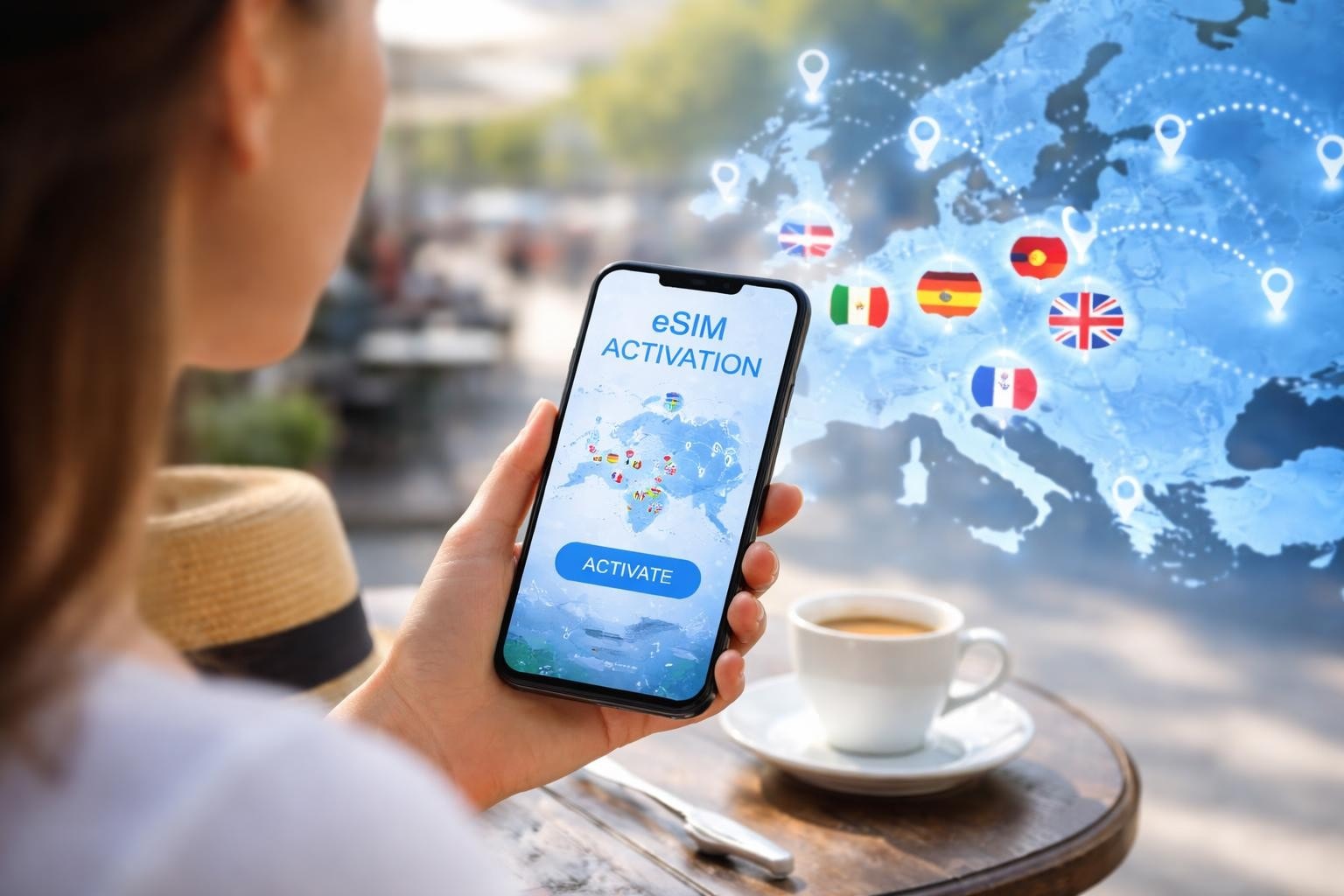
Travelling across Europe has never been easier, but staying connected whilst hopping between countries used to mean juggling multiple SIM cards or paying extortionate roaming charges. Enter the europe esim revolution: a digital solution that's transforming how we maintain connectivity across borders. Whether you're exploring the cobblestone streets of Prague, attending business meetings in Frankfurt, or soaking up the Mediterranean sun in Barcelona, a single eSIM keeps you online without the hassle of physical cards or surprise bills. This technology represents more than just convenience; it's fundamentally changing the landscape of international mobile connectivity.
What Makes Europe eSIM Different from Traditional Options
Traditional SIM cards require you to visit a shop, purchase a physical card, and manually swap it into your device. The europe esim eliminates every single one of these friction points.
An eSIM (embedded SIM) is a digital chip already built into your smartphone, tablet, or smartwatch. Instead of inserting plastic, you download a data plan directly to your device through a QR code or app. The eUICC technology that powers eSIMs allows secure profile storage and remote provisioning, meaning you can switch between carriers without touching your device's internals.
Key Advantages Over Physical SIMs
- Instant activation: Purchase and activate within minutes, even whilst already travelling
- Multi-profile support: Store several eSIM profiles simultaneously and switch between them
- No physical damage: Nothing to lose, break, or incorrectly insert
- Environmental benefits: Reduces plastic waste from SIM card production
- Dual SIM functionality: Keep your home number active whilst using local data
The continent's complex patchwork of countries makes Europe particularly suited to eSIM technology. Cross-border travel is commonplace, and a single europe esim can cover 40+ nations seamlessly.
Coverage and Network Quality Across European Countries
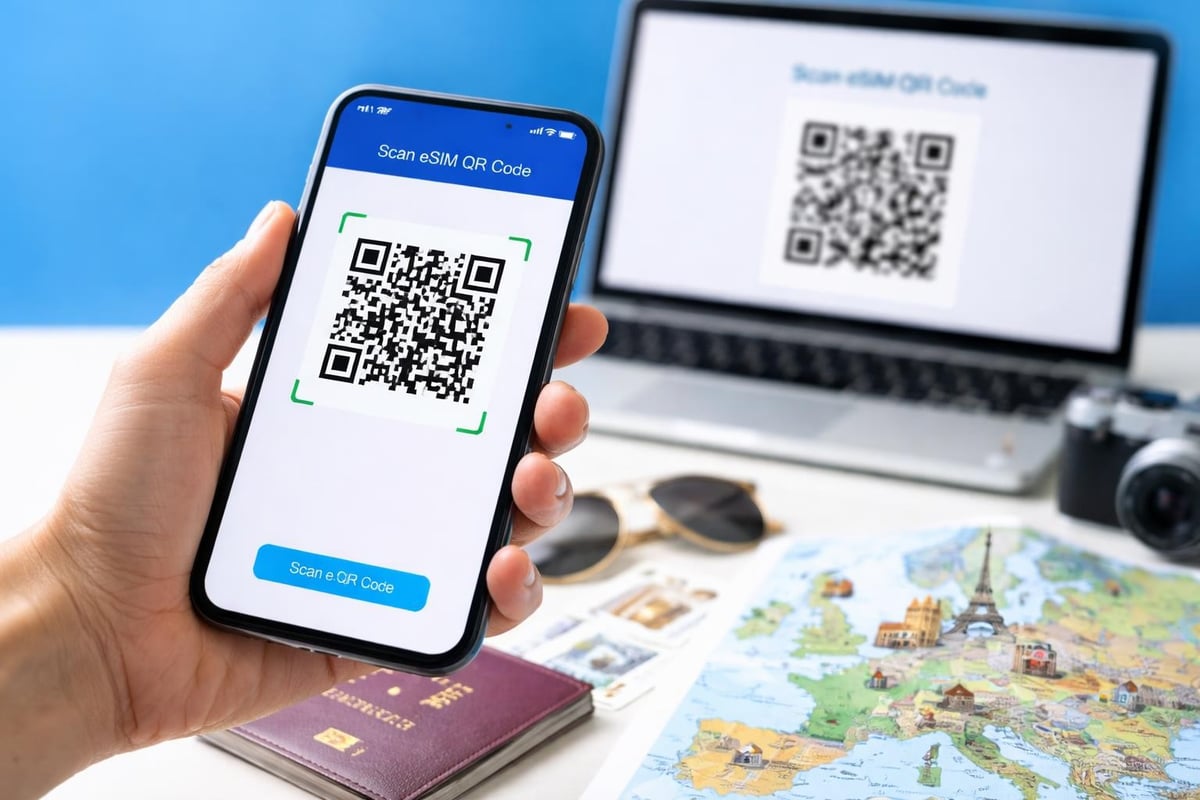
Not all europe esim providers offer identical coverage. Understanding the network infrastructure behind your eSIM helps you make informed decisions about which provider to choose.
Europe's telecommunications landscape divides into two categories: Mobile Network Operators (MNOs) who own physical infrastructure, and Mobile Virtual Network Operators (MVNOs) who rent capacity from MNOs. Network ownership significantly impacts your connection speed, reliability, and coverage in remote areas.
| Network Type | Speed | Coverage | Price | Reliability |
|---|---|---|---|---|
| MNO-backed | Excellent | Comprehensive | Higher | Very High |
| MVNO roaming | Good | Variable | Lower | Moderate |
| Hybrid models | Very Good | Good | Moderate | High |
Regional Coverage Considerations
Western European countries generally offer the strongest network infrastructure. Germany, France, the UK, and the Netherlands boast extensive 4G and 5G coverage even in rural areas. Southern and Eastern Europe sometimes present challenges in mountainous or remote regions.
When evaluating a europe esim provider, examine their partner networks in countries you'll visit. A provider partnering with premium carriers like Vodafone, Orange, or Deutsche Telekom typically delivers superior performance compared to budget network options.
The best eSIM options for European travel in 2026 prioritise partnerships with multiple premium carriers in each country, ensuring you automatically connect to the strongest available signal.
Choosing the Right Data Plan for Your Trip
Your data needs vary dramatically based on trip duration, travel style, and usage patterns. Business travellers attending video conferences require substantially more data than holidaymakers who primarily use messaging apps.
Data Consumption Breakdown
Understanding typical usage helps you avoid purchasing insufficient data or overpaying for excess capacity:
- Light usage (500MB-1GB daily): Email, messaging, maps, occasional browsing
- Moderate usage (1-3GB daily): Social media, frequent browsing, streaming music, video calls
- Heavy usage (3-5GB+ daily): HD video streaming, large file uploads, constant hotspot sharing
Most europe esim providers structure plans around total data allocation rather than daily limits. A 10GB plan for 30 days offers flexibility but requires conscious monitoring. Unlimited plans eliminate anxiety about consumption but typically cost more.
Consider these questions before purchasing:
- How many countries will you visit?
- Will you need hotspot functionality?
- Do you prefer pay-as-you-go or unlimited options?
- What's your backup plan if you exhaust your allocation?
For extensive European travel across multiple countries, Europe eSIM plans provide affordable data without roaming fees, delivering instant activation and flexible coverage that adapts to your itinerary.
Setting Up Your Europe eSIM in Minutes
The setup process varies slightly between iOS and Android devices, but both platforms make activation straightforward. Before purchasing any plan, verify your device supports eSIM technology through the compatible devices list.
iPhone Setup Process
- Purchase your europe esim plan and receive your QR code
- Navigate to Settings > Cellular > Add Cellular Plan
- Scan the provided QR code using your camera
- Label your new plan (e.g., "Europe Travel")
- Select which line for calls, messages, and cellular data
- Enable your eSIM and disable data roaming on your primary SIM
Android Setup Process
- Obtain your eSIM QR code after purchase
- Open Settings > Network & Internet > Mobile Network
- Tap the "+" icon or "Add carrier"
- Scan your QR code or enter activation code manually
- Follow prompts to download your eSIM profile
- Activate the profile and configure data preferences
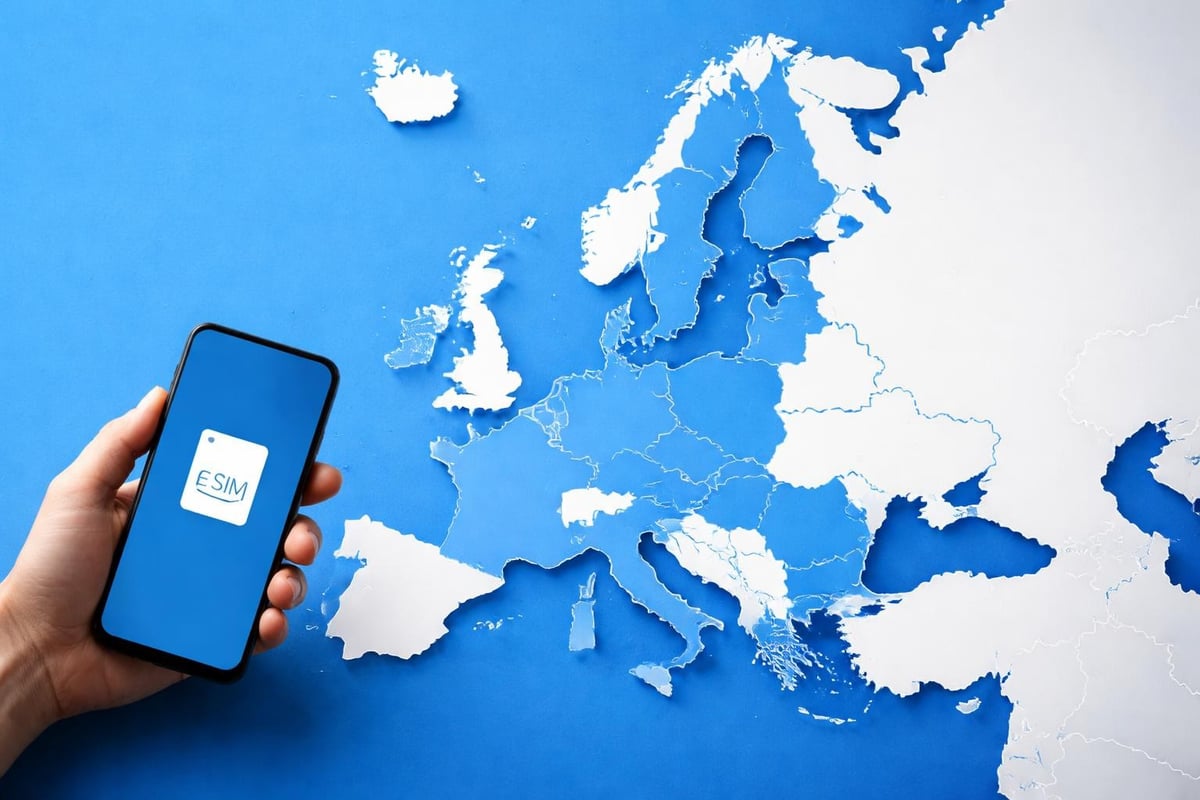
Most issues during setup stem from insufficient WiFi connectivity during profile download. Ensure you complete activation whilst connected to stable internet. The comprehensive installation guide provides troubleshooting steps for common activation challenges.
Comparing Pricing Models and Value
Europe esim pricing structures vary considerably between providers. Understanding these models helps you identify genuine value versus marketing gimmicks.
Common Pricing Approaches
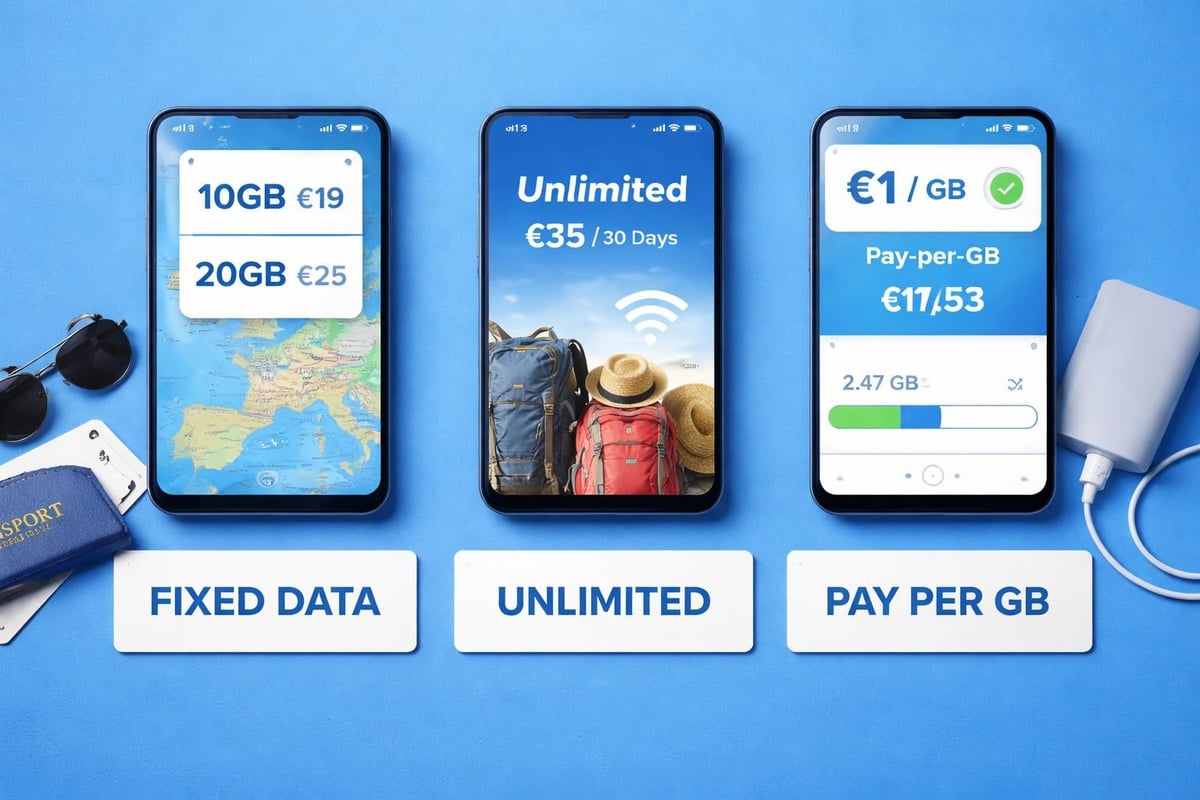
Fixed data packages: Pay a set amount for specific data allocation (e.g., £15 for 5GB). These offer predictability but may leave you with unused data or unexpected overage charges.
Unlimited plans: Pay for unlimited data within a timeframe (e.g., £25 for 7 days unlimited). These eliminate consumption anxiety but often include fair usage policies that throttle speeds after certain thresholds.
Pay-per-GB: Purchase data credits that don't expire (e.g., £3 per GB). These suit infrequent travellers who want flexibility without time pressure.
| Plan Type | Best For | Typical Cost (7 days) | Flexibility | Predictability |
|---|---|---|---|---|
| Fixed data | Regular travellers | £12-20 | Low | High |
| Unlimited | Heavy users | £20-35 | Moderate | High |
| Pay-per-GB | Occasional users | £15-25 | High | Low |
The detailed comparison of European eSIM plans reveals hidden limitations in some "unlimited" offerings, including throttling after 1-2GB daily consumption or restrictions on specific services.
Country-Specific Considerations Within Europe
Whilst a europe esim typically covers dozens of countries, performance and availability differ across regions. Certain destinations require special attention.
Schengen Area vs Non-Schengen Countries
Most europe esim plans cover the 27 EU member states plus Iceland, Norway, Liechtenstein, and Switzerland. However, coverage in the United Kingdom varies by provider following Brexit. Always verify UK inclusion if you're visiting England, Scotland, Wales, or Northern Ireland.
Turkey presents another common confusion point. Despite straddling Europe and Asia, Turkey typically falls under Middle East coverage rather than standard European plans. If Istanbul or Ankara are on your itinerary, confirm Turkish network inclusion or consider a dedicated Turkey eSIM.
Popular Destination-Specific Tips
France: Exceptional coverage nationwide, but verify your eSIM includes Monaco if visiting the French Riviera, as some providers treat it separately. For extended stays, explore France-specific eSIM options.
Italy: Excellent urban coverage but mountainous regions like the Dolomites may experience gaps. Italian eSIM plans often partner with TIM or Vodafone Italia for optimal connectivity.
Spain: Strong nationwide coverage including the Balearic and Canary Islands, though some providers exclude these island groups from standard plans. Check Spain eSIM specifications carefully.
Greece: Mainland coverage is comprehensive, but island-hopping presents challenges. Verify your europe esim covers Greek islands beyond major tourist destinations. The Greece eSIM offerings detail which islands receive coverage.
Managing Multiple eSIM Profiles
Modern smartphones support storing 5-10 eSIM profiles simultaneously, though only one or two can be active at once. This capability enables sophisticated connectivity strategies.
Dual SIM Strategies for Travellers
Keep your home SIM active for calls and texts whilst using your europe esim exclusively for data. This arrangement allows you to:
- Receive important calls on your regular number
- Avoid roaming charges on your primary plan
- Maintain consistent contact information for colleagues and family
- Switch between profiles based on pricing or coverage
Some travellers maintain separate eSIM profiles for different regions. For example, you might keep a europe esim alongside plans for specific countries you visit frequently. When you arrive in Portugal, you could activate a local plan with better rates whilst keeping your pan-European profile ready for your next destination.
Profile Management Best Practices
- Label clearly: Name each profile by region or purpose ("Europe Summer 2026", "UK Business")
- Monitor data: Set up usage alerts to avoid unexpected depletion
- Delete expired profiles: Remove old eSIMs to prevent confusion
- Document details: Screenshot QR codes and activation details for backup
Most devices display which profile currently handles cellular data through a simple indicator. Toggle between profiles in seconds when crossing borders or seeking better coverage.
Troubleshooting Common Europe eSIM Issues
Even with straightforward technology, occasional problems arise. Recognising and resolving common issues keeps you connected.
Connection Problems
No service after activation: First, verify you've enabled the eSIM profile in your settings and selected it as your data line. Restart your device to force network registration. If problems persist, toggle airplane mode on and off.
Slow speeds despite good signal: Check if you've exceeded fair usage limits on unlimited plans. Some providers throttle speeds after specific thresholds. Verify you're connected to 4G/LTE rather than 3G by checking network settings.
Can't receive calls: Remember that most data-only eSIMs don't support traditional voice calls. Use VoIP services like WhatsApp, Skype, or FaceTime for voice communication. If you need a number for incoming calls, consider eSIMs with voice capability.
Activation Difficulties
Failed QR code scans usually indicate poor camera focus or damaged codes. Ensure adequate lighting, hold your phone steady, and try manual entry if scanning fails repeatedly. Some eSIM providers offer activation via app rather than QR codes, which can prove more reliable.
Connectivity issues during profile download require stable WiFi. Airport and hotel networks often block certain protocols required for eSIM activation. Wait until you're on reliable internet before attempting setup, or complete activation before departure.
The frequently asked questions section addresses many technical challenges users encounter with eSIM technology across different devices and scenarios.
Security and Privacy Considerations
Your europe esim connects you to various networks across multiple countries, raising important security questions. Understanding the privacy implications helps you travel safely.
Encryption and Data Protection
Modern eSIM technology employs robust security standards that protect your profile information during download and storage. The embedded Universal Integrated Circuit Card (eUICC) provides hardware-level security that's difficult to compromise.
However, your data travelling across networks remains vulnerable to interception on unsecured connections. Always use VPN services when accessing sensitive information over cellular data, particularly when conducting financial transactions or accessing work systems.
Avoiding Common Scams
Purchase eSIMs only from reputable providers with verified credentials. Fraudulent eSIM sellers occasionally advertise unrealistic prices, then deliver non-functional profiles or steal payment information. Research providers thoroughly and check independent reviews before purchasing.
Be wary of public WiFi networks when activating your europe esim. Criminals sometimes create fake hotspots in tourist areas to intercept data during profile downloads. Use your existing mobile data or trusted networks for eSIM setup.
Business Travel vs Holiday Use Cases
Your connectivity needs differ substantially between business trips and leisure holidays, influencing which europe esim plan suits you best.
Corporate Travel Requirements
Business travellers often need:
- Reliable video conferencing: Minimum 3-5GB daily for multiple Zoom or Teams calls
- VPN access: Ensure your eSIM provider doesn't block VPN protocols
- Expense documentation: Detailed invoices and usage reports for reimbursement
- Hotspot capability: Share connection with laptop and tablet
- 24/7 support: Access to customer service across time zones
Companies increasingly provide corporate eSIM programs that centralise billing and management. Individual business travellers should prioritise reliability over cost savings, as missed connections damage professional relationships.
Leisure Travel Priorities
Holiday travellers typically value:
- Flexible duration: Plans that match trip length without excess
- Social media support: Sufficient data for Instagram, Facebook, TikTok
- Navigation assistance: Maps, translation apps, restaurant discovery
- Photo backup: Cloud sync for travel photography
- Cost efficiency: Balancing adequate data against budget constraints
Family travellers might consider hotspot-enabled eSIMs that share connectivity across multiple devices rather than purchasing separate plans for each family member.
Future Developments in European eSIM Technology
The europe esim market continues evolving rapidly, with several emerging trends worth monitoring.
5G Network Expansion
Fifth-generation networks are expanding across Europe, offering dramatically faster speeds and lower latency. By late 2026, most major European cities provide comprehensive 5G coverage, though rural areas lag behind. Future eSIM plans will increasingly default to 5G connectivity where available.
Regulatory Changes and Standardisation
The European Union continues pushing for standardised digital services across member states. Future regulations may mandate certain eSIM features, improve transparency in pricing, or enforce stricter consumer protections. These developments should benefit travellers through clearer terms and more competitive pricing.
Integration with Travel Services
Emerging partnerships between eSIM providers and travel platforms enable bundled services. Imagine booking a flight and automatically receiving a europe esim configured for your destination countries, activated upon landing. Such integrations reduce friction and improve the overall travel experience.
The comprehensive guide to international eSIM options explores how these technologies extend beyond Europe to create truly global connectivity solutions.
Beyond Europe: Extending Your eSIM Strategy
Once you've mastered european connectivity, applying these principles to worldwide travel becomes straightforward. Many providers offering europe esim coverage also serve other regions.
Travellers visiting multiple continents might choose between regional plans (Europe, Asia, Americas) or global plans covering 100+ countries. Regional plans typically offer better value for focused trips, whilst global plans suit frequent international travellers visiting diverse destinations.
For trips combining European cities with other regions, consider providers offering flexible coverage. Someone visiting Paris before heading to Japan might prefer separate regional eSIMs optimised for each destination rather than a global plan with mediocre coverage everywhere.
The strategic approach involves assessing your typical travel patterns annually and selecting eSIM solutions that align with those patterns. Frequent European travellers benefit from providers specialising in the region, whilst global nomads need broader coverage options.
Maximising Value from Your Europe eSIM Investment
Getting the most from your europe esim extends beyond simply purchasing the cheapest plan. Strategic usage maximises both value and convenience.
Optimisation Techniques
Pre-download content: Before departing, download maps, entertainment, and work documents whilst on WiFi. This reduces cellular data consumption during travel.
Adjust app settings: Configure social media apps to load lower-resolution images, disable auto-play videos, and prevent background data usage for non-essential applications.
Monitor usage religiously: Install data tracking apps that alert you when approaching limits. Most smartphones include built-in monitoring, but third-party apps often provide more granular insights.
Leverage WiFi strategically: Use hotel, restaurant, and public WiFi for large downloads, updates, and backups. Reserve cellular data for essential connectivity when WiFi isn't available.
Share wisely: If using hotspot functionality, set time limits and password-protect your connection. Uncontrolled sharing quickly exhausts data allowances.
The detailed European travel guide offers additional strategies for optimising connectivity whilst managing costs effectively throughout your journey.
When to Upgrade or Switch Plans
Most eSIM providers allow purchasing additional data if you exhaust your allocation. Top-up prices vary significantly, sometimes costing more per GB than the original plan. Calculate whether buying extra data or purchasing an entirely new plan offers better value.
If you're consistently running out of data, upgrade to the next tier on future trips rather than repeatedly buying expensive top-ups. Conversely, if you regularly finish trips with substantial unused data, downgrade to save money.
Navigating Europe's connectivity landscape doesn't need to be complicated or expensive when you understand how europe esim technology works and which options suit your specific travel patterns. Whether you're island-hopping through Greece, conducting business across multiple capitals, or embarking on a month-long backpacking adventure, digital SIM technology keeps you connected without the hassle of physical cards or shock roaming bills. Ready to experience seamless European connectivity? Visit gosimless.app for instant eSIM activation with flexible plans covering 200+ countries, secure payments, and multi-device support that adapts to your travel needs.
gosimless Team
The gosimless editorial desk — testing eSIMs, carriers and travel connectivity so you don't have to. Updated continuously from the road.