Travelling across Europe should be about exploring cobblestone streets in Prague, sampling gelato in Rome, and watching sunsets over Santorini-not hunting for local SIM cards or watching your phone bill spiral into terrifying territory. If you've ever stood in a queue at a European airport kiosk, trying to communicate through jetlag whilst someone explains data packages in broken English, you'll understand why a europe e sim has become the smart traveller's best friend. This digital solution eliminates the faff of physical SIM cards whilst giving you instant connectivity across dozens of countries.
What Is a Europe eSIM and Why Should You Care?
Let's start with the basics. An eSIM (embedded SIM) is a digital SIM card built directly into your phone's hardware. Rather than fumbling with those tiny plastic chips that somehow always disappear when you need them most, you simply download a profile to your device and you're connected.
For European travel specifically, a europe e sim means you can hop from France to Germany to Italy without changing SIM cards or activating expensive roaming packages. You download the profile before you leave home, activate it when you land, and immediately have data for maps, restaurant bookings, and posting those obligatory Eiffel Tower photos.
How Does eSIM Technology Actually Work?
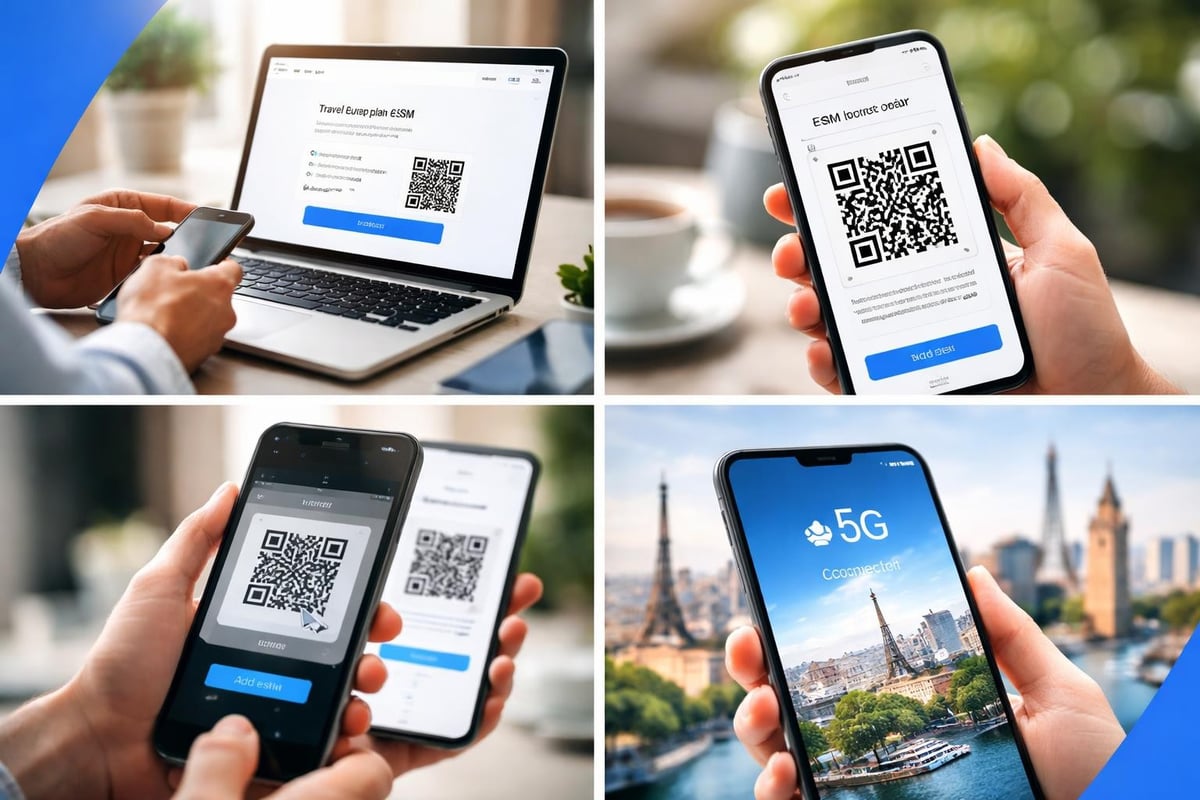
The technical side is straightforward. Your phone contains a small chip called an eUICC (embedded Universal Integrated Circuit Card). When you purchase an eSIM plan, you receive a QR code or activation details via email. Scan the code, and the network profile downloads directly to your device.
Key benefits include:
- No physical SIM cards to lose or damage
- Instant activation within minutes of purchase
- Keep your home number active simultaneously
- Switch between multiple profiles without swapping cards
- Environmentally friendly with zero plastic waste
Think of it like downloading an app versus buying a CD-ROM. The functionality is the same, but the delivery method is infinitely more convenient. Understanding eSIM compatibility is the first step before you travel.
Coverage Across Europe: Which Countries Can You Actually Use?
Here's where it gets interesting. Not all europe e sim plans cover the same territories. Most providers focus on the European Union and European Economic Area (EEA), but coverage can vary significantly.
Standard Coverage Areas
| Region Type | Typical Countries Included | Special Notes |
|---|---|---|
| EU Core | France, Germany, Italy, Spain, Netherlands | Universal coverage across providers |
| EU Extended | Poland, Czech Republic, Hungary, Romania | Included in most comprehensive plans |
| EEA Non-EU | Norway, Iceland, Liechtenstein | Often included but check specifics |
| Non-EU Europe | UK, Switzerland, Turkey | May require separate plans or add-ons |
The Roam-Like-Home policy within the EU means you can use your data allowance across member states without additional charges. However, this policy doesn't automatically extend to all eSIM providers, particularly those operating as MVNOs (Mobile Virtual Network Operators) rather than direct network owners.
Turkey presents an interesting case. Whilst geographically straddling Europe and Asia, it's not part of the EU. Many travellers heading to Istanbul need to verify their europe e sim includes Turkish coverage or grab a dedicated Turkey plan separately.
The UK Post-Brexit Situation
Since Brexit, the United Kingdom operates outside EU roaming agreements. Some europe e sim plans still include the UK, whilst others now treat it as a separate destination. If you're planning a London stopover before heading to Paris, double-check your plan specifics or consider a UK-specific eSIM if you'll spend significant time there.
Choosing the Right Europe eSIM Plan for Your Trip
With dozens of providers flooding the market in 2026, how do you actually choose? Let me share what I've learned from both personal travel and watching countless friends navigate this decision.
Data Requirements: How Much Do You Actually Need?
Most travellers drastically overestimate their data needs. Unless you're uploading 4K video daily or running a remote business, you'll use less than you think.
Typical daily usage patterns:
- Light user (500MB-1GB/day): Maps, messaging, social media browsing, occasional photo uploads
- Moderate user (1-2GB/day): Above plus video calls, streaming music, regular photo/video sharing
- Heavy user (2-5GB/day): Constant streaming, remote work, hotspot sharing, cloud backups
For a two-week European holiday, a 10-15GB plan typically suffices for moderate users. I've found that having Wi-Fi at your accommodation dramatically reduces your mobile data consumption-you'll mainly use cellular data whilst out exploring.
Duration Matters More Than You'd Think
Europe e sim plans typically come in fixed durations: 7 days, 14 days, 30 days, or occasionally 60-90 days. Here's the catch: unused data doesn't roll over once your plan expires. If you purchase a 30-day plan but only travel for two weeks, that remaining data vanishes.
Smart planning approach:
- Match plan duration closely to your trip length
- Add 1-2 buffer days for travel delays
- Consider shorter multiple plans for extended trips with breaks
- Check if your provider offers plan extensions mid-trip
The best eSIM options for European travel vary considerably in their validity periods and renewal options, so this becomes a crucial comparison point.
Regional vs. Multi-Country Plans: What's the Difference?
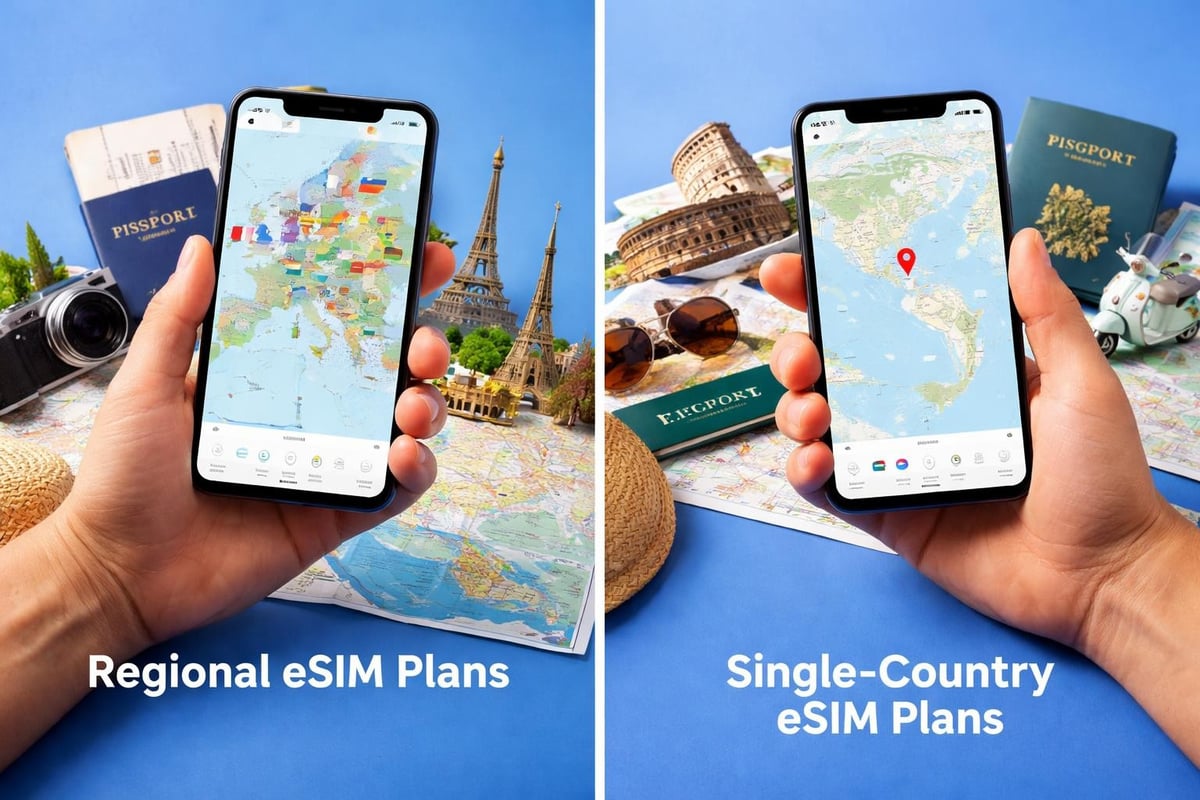
Not all europe e sim offerings are created equal. You'll encounter both regional plans covering multiple countries and single-country plans for specific destinations.
When Regional Plans Make Sense
A regional plan is ideal when you're country-hopping. Interrail adventure? Multi-city business trip? Mediterranean cruise with multiple ports? A single regional eSIM eliminates the headache of activating new plans at every border.
Europe eSIM plans typically offer better value than purchasing individual country plans when visiting three or more nations. The convenience factor alone justifies the slight premium over single-country options.
When Country-Specific Plans Win
Spending two weeks solely in Spain? A dedicated Spain eSIM often provides better rates per gigabyte than a broad European plan. Similarly, extended stays in Italy, France, or Greece benefit from targeted plans with more generous data allowances.
The decision boils down to your itinerary. Variety demands flexibility; depth demands specialisation.
Setting Up Your Europe eSIM: The Actual Process
Right, let's walk through how this actually works in practice. The setup process has become remarkably simple in 2026, but knowing what to expect prevents those panicky moments when you're tired and jetlagged.
Before You Leave Home
Pre-departure checklist:
- Verify your device supports eSIM technology
- Purchase your europe e sim plan online
- Receive QR code and activation instructions via email
- Install the eSIM profile whilst connected to Wi-Fi
- Label the profile (e.g., "Europe Travel") for easy identification
- Keep the eSIM inactive until you arrive
The installation process typically takes less than five minutes. I always recommend installing your europe e sim before leaving home, even if you won't activate it immediately. Airport Wi-Fi can be temperamental, and you don't want to troubleshoot connection issues when you should be heading to your hotel.
Activation Upon Arrival
Once you land in Europe, the activation process couldn't be simpler. Most eSIMs activate automatically when you enable data roaming for that specific profile. Within 30-60 seconds, you'll see the network name appear and data connectivity establish.
Troubleshooting tip: If connection doesn't happen immediately, toggle airplane mode on and off. This forces your phone to search for networks and typically resolves any initial connection hesitation.
Managing Dual SIM Functionality
Here's where eSIMs truly shine. Your physical SIM card stays in your phone, allowing you to receive calls and texts to your regular number (usually via Wi-Fi calling). Meanwhile, your europe e sim handles all data traffic.
| Function | Home SIM | Europe eSIM |
|---|---|---|
| Calls | Receive via Wi-Fi | Not applicable |
| SMS | Receive/send | Not applicable |
| Mobile Data | Disabled | Primary data source |
| Apps/Internet | Uses eSIM data | Provides connectivity |
This dual-SIM capability means family can still reach you on your regular number whilst you navigate foreign streets using your eSIM data. Just ensure data roaming is disabled for your home SIM to avoid surprise charges.
Cost Comparison: What Are You Actually Paying?
Let's talk money. How does a europe e sim compare to traditional options in 2026?
Traditional Roaming Costs
Most UK mobile networks charge £2-5 daily for European roaming, with data caps around 15-25GB. A two-week trip means £28-70 in roaming fees alone. Some premium networks include European roaming, but these plans typically cost £15-30 monthly more than basic plans.
Physical European SIM Cards
Purchasing a local SIM card in Europe runs €15-30 for tourist packages with 20-50GB. However, you're limited to that country, face activation delays, need to manage multiple SIM cards if crossing borders, and deal with language barriers during purchase.
Europe eSIM Pricing
Quality europe e sim plans in 2026 typically range from £8-25 for 5-15GB valid across 30+ countries. Premium unlimited plans reach £40-60 for longer durations. The value proposition becomes clear: better rates, broader coverage, zero hassle.
Real-world example: A 14-day trip visiting France, Italy, and Spain using traditional UK roaming costs roughly £40-70. A comparable europe e sim plan with 15GB costs £15-20. The savings fund several nice restaurant meals.
Network Quality and Speed: What to Expect
You're probably wondering: does a europe e sim offer the same connection quality as local SIM cards? The answer depends on how the provider structures their network partnerships.
MNO vs. MVNO: Why It Matters
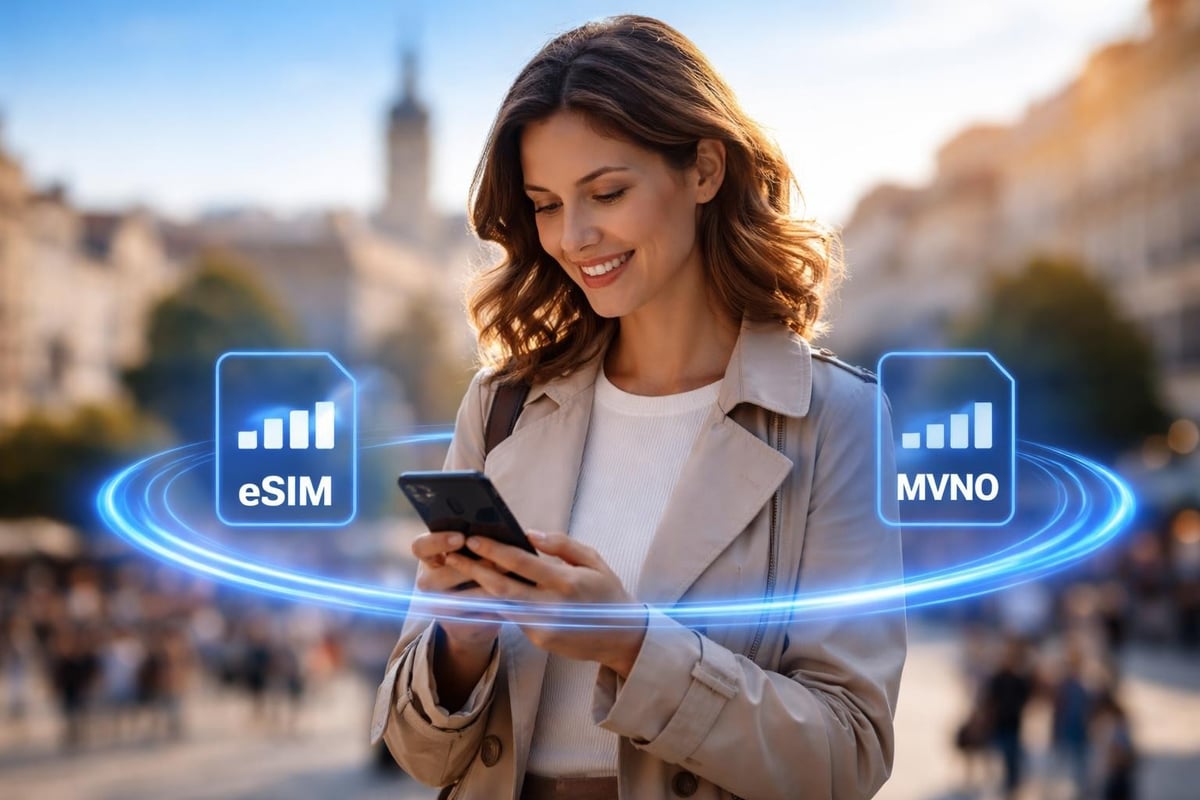
Mobile Network Operators (MNOs) own physical infrastructure-the actual towers and cables. Mobile Virtual Network Operators (MVNOs) rent capacity from MNOs. Network ownership significantly affects performance, particularly during peak usage periods.
MNO-partnered eSIM providers typically offer:
- Priority network access during congestion
- Better 5G availability and speeds
- More reliable connections in rural areas
- Lower latency for video calls and streaming
MVNO-based eSIMs aren't necessarily poor quality, but they may experience slower speeds in crowded tourist areas where networks face heavy demand. That said, for typical travel usage (maps, messaging, social media), both perform adequately.
5G Availability Across Europe
European 5G deployment accelerated significantly between 2024-2026. Major cities like London, Paris, Berlin, Amsterdam, and Barcelona offer widespread 5G coverage. However, many europe e sim plans still default to 4G/LTE networks.
If 5G matters for your usage (perhaps you're working remotely and need fast uploads), verify the plan specifically mentions 5G access. Some providers charge premium rates for 5G-enabled plans.
Common Pitfalls and How to Avoid Them
After helping numerous friends set up their europe e sim connections, I've seen the same mistakes repeatedly. Let me save you the frustration.
Device Compatibility Assumptions
Not every smartphone supports eSIM technology. The feature became standard on iPhones from iPhone XS onwards and on most flagship Android devices from 2020 onwards. However, some budget Android phones still lack eSIM capability.
Always verify compatibility before purchasing. Nothing's more annoying than buying a plan only to discover your device doesn't support it. Check your device settings for "eSIM" or "Cellular Plans" options, or consult the compatibility guide to confirm.
Activation Timing Confusion
Your europe e sim typically starts its validity period when you activate it, not when you purchase it. However, some providers start the countdown from first data usage rather than profile installation. This distinction matters enormously.
Best practice: Install the eSIM profile before travelling, but keep it disabled (data roaming off) until you arrive in Europe. This ensures you don't accidentally trigger the validity period whilst still at home.
Fair Use Policies Nobody Reads
Many "unlimited" europe e sim plans aren't truly unlimited. Fair use policies typically cap daily usage around 500MB-1GB for unlimited plans, with reduced speeds thereafter. Understanding these policies prevents disappointment when your "unlimited" data suddenly crawls.
Read the fine print. If you need genuine unlimited high-speed data, expect to pay premium rates or stick with fixed-allowance plans offering transparent data limits.
Multi-Device Support and Hotspot Capabilities
Travelling with a tablet, laptop, or smartwatch? How does a europe e sim handle multiple devices?
Hotspot Functionality
Most europe e sim plans allow hotspot/tethering, enabling you to share your phone's connection with other devices. This transforms your smartphone into a portable Wi-Fi router, perfect for working on your laptop at a Parisian café or keeping your tablet connected during train journeys.
Hotspot considerations:
- Verify your plan explicitly allows tethering (some restrict it)
- Monitor data consumption carefully-hotspot usage depletes allowances quickly
- Expect 5-10 device connections maximum
- Battery drains faster when running hotspot continuously
Installing eSIM on Multiple Devices
Can you use the same europe e sim on your phone and tablet simultaneously? Generally, no. Each eSIM profile typically works on one device at a time. However, you can purchase separate eSIM plans for each device if needed.
Some providers offer family or multi-device packages with linked data pools, though these remain relatively uncommon in the European market as of 2026.
Customer Support and Mid-Trip Issues
What happens when something goes wrong at 11 PM in Barcelona and your data stops working? The quality of customer support becomes crucial.
Support Channel Availability
Premium europe e sim providers offer 24/7 support through multiple channels:
- Live chat (fastest response, typically 2-5 minutes)
- Email support (slower but detailed, 2-12 hour response)
- WhatsApp support (increasingly common in 2026)
- Automated troubleshooting through apps
Budget providers may restrict support to email-only with business-hours responses. If you're uncomfortable troubleshooting technical issues independently, prioritise providers with comprehensive support options.
Common Mid-Trip Issues and Solutions
| Issue | Quick Fix | Prevention |
|---|---|---|
| No connection on arrival | Toggle airplane mode; restart device | Install profile pre-departure |
| Slow speeds | Check APN settings; verify network selection | Research provider network quality |
| Data depleting quickly | Identify background apps; disable auto-updates | Configure data-saving settings before travel |
| Can't activate plan | Verify device unlock status; check eSIM compatibility | Confirm device compatibility before purchase |
Most issues resolve with simple troubleshooting. The FAQ section addresses the majority of common concerns travellers encounter.
Environmental and Practical Advantages
Beyond convenience and cost, europe e sim adoption delivers tangible environmental benefits worth considering.
Reducing Plastic Waste
Traditional SIM cards generate significant plastic waste globally. Each SIM card involves plastic packaging, the card itself, and disposal issues. With millions of travellers visiting Europe annually, eliminating physical SIM requirements substantially reduces waste.
Eliminating Counterfeit SIM Risks
Purchasing local SIM cards from unofficial vendors carries risks. Counterfeit SIMs may not work properly, could expose your device to security vulnerabilities, or might be linked to fraudulent activities. A reputable europe e sim purchased from home eliminates these concerns entirely.
Simplifying Multi-Country Business Travel
For business travellers visiting European clients across multiple countries, eSIM technology removes connectivity friction. No more juggling multiple SIM cards, maintaining spreadsheets of local numbers, or explaining why you're unreachable during border crossings.
Security Considerations for eSIM Usage
Digital connectivity requires digital security awareness. How safe is a europe e sim compared to traditional options?
Encryption and Data Protection
Reputable eSIM providers implement industry-standard encryption for data transmission. Your internet traffic receives the same protection level as any mobile network connection. However, remember that public Wi-Fi networks (cafés, airports, hotels) present security risks regardless of your SIM type.
Security best practices:
- Use VPN services for sensitive transactions
- Avoid banking on public Wi-Fi networks
- Enable two-factor authentication for important accounts
- Keep your device OS and apps updated
Account Security
When purchasing a europe e sim, you're creating an account with provider credentials. Use strong, unique passwords and enable two-factor authentication where available. Your eSIM account shouldn't reuse passwords from other services.
Lost or Stolen Devices
If your phone is lost or stolen whilst travelling, contact your eSIM provider immediately to suspend service. Most providers allow profile deactivation through their website or app, preventing unauthorized data usage and potential security breaches.
Future-Proofing Your European Travel Connectivity
The eSIM landscape continues evolving rapidly. What can we expect in the coming years, and how should that inform your 2026 decisions?
Increasing Carrier Support
More European mobile networks are partnering directly with eSIM providers, improving coverage quality and expanding regional options. This competition drives prices down whilst improving service quality-good news for travellers.
Integration with Travel Apps
We're seeing increased integration between eSIM services and travel booking platforms. Some hotel booking apps now bundle europe e sim options directly into their checkout process, whilst airline apps offer destination-specific connectivity packages alongside flight tickets.
IoT and Connected Devices
The application of eSIM technology extends beyond phones into smartwatches, laptops, cameras, and other connected devices. As more gadgets adopt eSIM capability, managing connectivity across your entire tech ecosystem becomes simpler.
Making Your Final Decision
Right, you've absorbed plenty of information. How do you actually choose your europe e sim for that upcoming trip?
Decision framework:
- Define your itinerary: Single country or multi-country? Duration? Cities or rural areas?
- Estimate data needs: Review your typical monthly usage and scale for travel activities
- Check device compatibility: Verify eSIM support before proceeding further
- Compare provider options: Consider coverage, pricing, support quality, and user reviews
- Read actual user experiences: Comprehensive provider comparisons offer valuable real-world insights
Don't overthink it. The difference between good eSIM providers is often marginal. Choose one with solid coverage, reasonable pricing, and decent support, then move on to planning the fun parts of your trip.
For travellers seeking reliable connectivity across Europe without the complications of roaming charges or physical SIM cards, exploring international eSIM options provides helpful perspective on the broader market landscape.
Real-World Usage Scenarios
Let me paint some practical pictures of how a europe e sim works in actual travel situations.
The Interrail Adventure
Sarah spent three weeks travelling through seven European countries by train. Her regional europe e sim provided consistent connectivity for booking last-minute accommodation, navigating unfamiliar cities, and staying in touch with travel companions. The ability to use Google Maps without Wi-Fi hunting saved her countless hours and prevented getting lost in Prague's winding streets.
The Business Sprint
James needed connectivity across London, Frankfurt, and Milan during a week of client meetings. His europe e sim enabled video calls from taxi rides, document access from hotel rooms, and seamless email management throughout. The hotspot feature meant his laptop stayed connected during airport layovers without purchasing separate Wi-Fi access.
The Mediterranean Cruise
Emma's cruise stopped at ports in Italy, Greece, and Spain. Her europe e sim activated automatically at each destination, providing shore excursion navigation without requiring new SIM cards at every port. The flexibility transformed her cruise experience from isolated to connected.
These scenarios illustrate the practical value beyond mere technical specifications. Connectivity isn't about data quantities-it's about freedom, convenience, and peace of mind whilst exploring.
Choosing the right europe e sim transforms European travel from potentially stressful connectivity challenges into seamless exploration. Whether you're hopping between multiple countries or settling into a single destination, digital connectivity removes barriers between you and authentic experiences. Ready to simplify your next European adventure? Explore instant eSIM activation with flexible plans covering 40+ European countries, affordable rates, and setup that takes minutes rather than hours. Your next trip deserves better connectivity than hunting for SIM cards at airport kiosks.
gosimless Team
The gosimless editorial desk — testing eSIMs, carriers and travel connectivity so you don't have to. Updated continuously from the road.