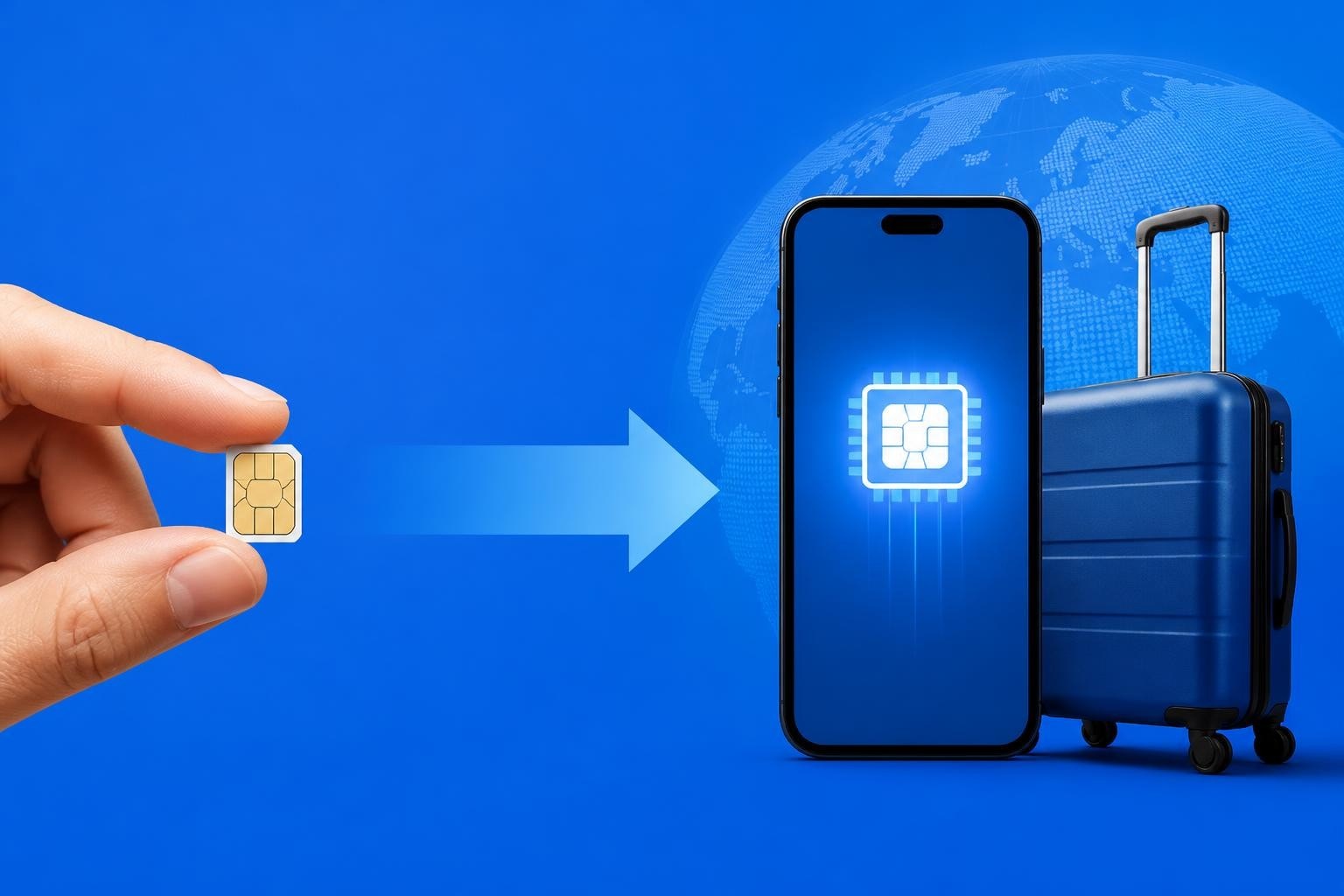
Travelling abroad used to mean queueing at airport kiosks, fumbling with tiny SIM cards, and paying extortionate roaming charges. But in 2026, esim travel has completely transformed how we stay connected on the road. Whether you're backpacking through Southeast Asia, attending business meetings in New York, or island-hopping in Greece, eSIM technology lets you activate data plans instantly without ever touching a physical card. It's convenient, affordable, and honestly, once you've tried it, you'll wonder how you ever managed without it.
What Makes eSIM Travel Different from Traditional Solutions
Remember the stress of landing in a foreign country, desperate for internet to message family or summon a taxi, only to discover your phone's locked or the local SIM vendor has closed? That nightmare scenario has become wonderfully obsolete with esim travel technology.
An eSIM (embedded SIM) is already built into your device. You don't insert anything, you don't swap cards, and you certainly don't risk losing that minuscule piece of plastic. Instead, you simply scan a QR code or use an app to download your plan directly to your phone. Tom's Guide offers an excellent explanation of how this technology works and why it's revolutionising international travel.
The Technical Simplicity Behind eSIMs
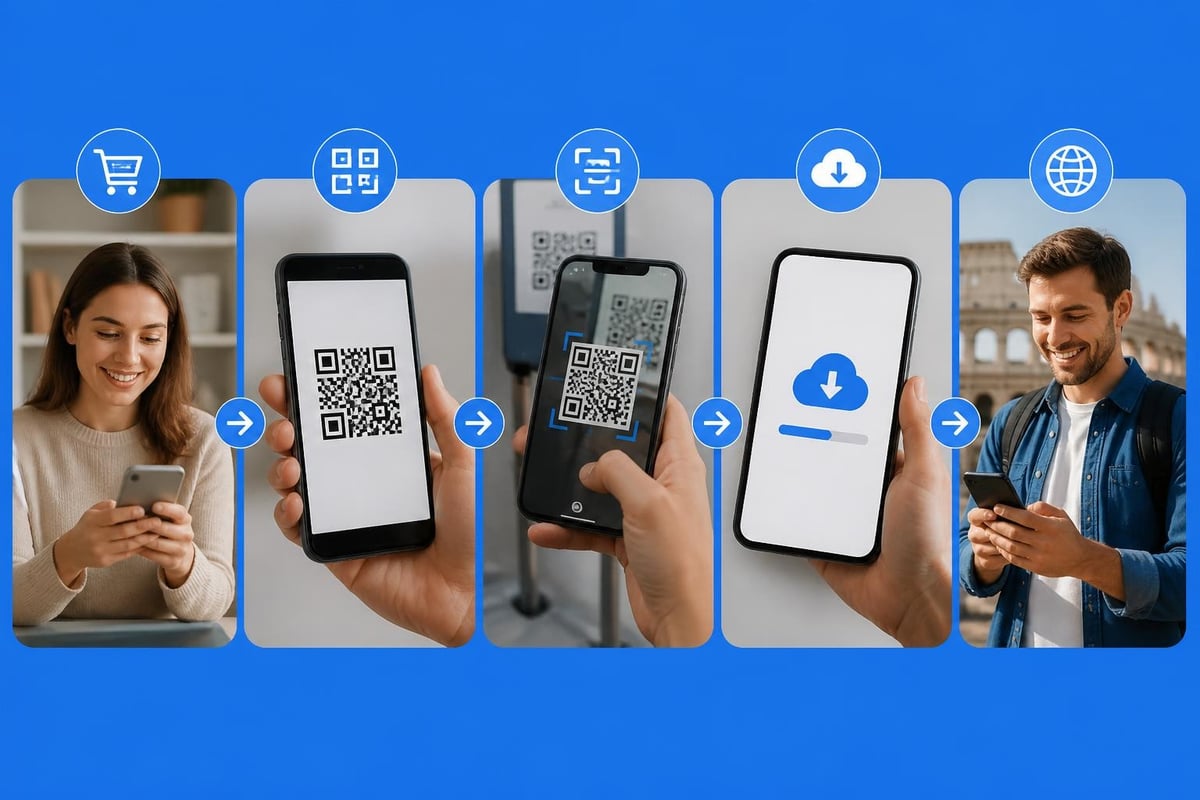
Here's what actually happens when you activate an eSIM:
- You purchase a data plan from a provider
- You receive a QR code or activation details via email
- You scan the code in your phone's settings
- Your device downloads the eSIM profile
- You're connected, usually within minutes
The beauty of this process is that you can complete it before leaving home, at the airport lounge, or even mid-flight if your plane has Wi-Fi. No hunting for shops, no language barriers, no wondering if you've been overcharged.
Why Travelers Are Switching to eSIM Technology
The shift towards esim travel isn't just about convenience, though that's certainly a major factor. There are practical, financial, and security advantages that traditional SIM cards simply can't match.
Cost savings top the list for most travellers. Traditional roaming charges can genuinely ruin a holiday budget. Your home network might charge £5-15 per day for international roaming, which adds up frighteningly fast on a two-week trip. eSIM providers typically offer data packages at a fraction of that cost, often with transparent pricing and no hidden fees.
Device flexibility matters too. Many modern smartphones support multiple eSIM profiles simultaneously. This means you can keep your home number active for important calls whilst using a local data plan for internet. Business travellers particularly appreciate this dual-number capability.
Security Benefits You Might Not Have Considered
Physical SIM cards can be removed, stolen, or tampered with. Your eSIM, however, is embedded in your device's hardware. If someone steals your phone, they can't simply pop out the SIM and use it elsewhere. Kaspersky's security guide highlights how eSIMs offer enhanced protection against SIM-swapping attacks and unauthorised access.
For those concerned about device compatibility, checking your phone's capabilities is straightforward. Most devices manufactured after 2019 include eSIM functionality, and you can verify your specific model through your device manufacturer's compatibility information.
| Security Feature | Traditional SIM | eSIM |
|---|---|---|
| Physical theft prevention | No | Yes |
| SIM-swap protection | Limited | Enhanced |
| Remote deactivation | Possible | Immediate |
| Multi-device management | Complex | Streamlined |
Choosing the Right eSIM Provider for Your Journey
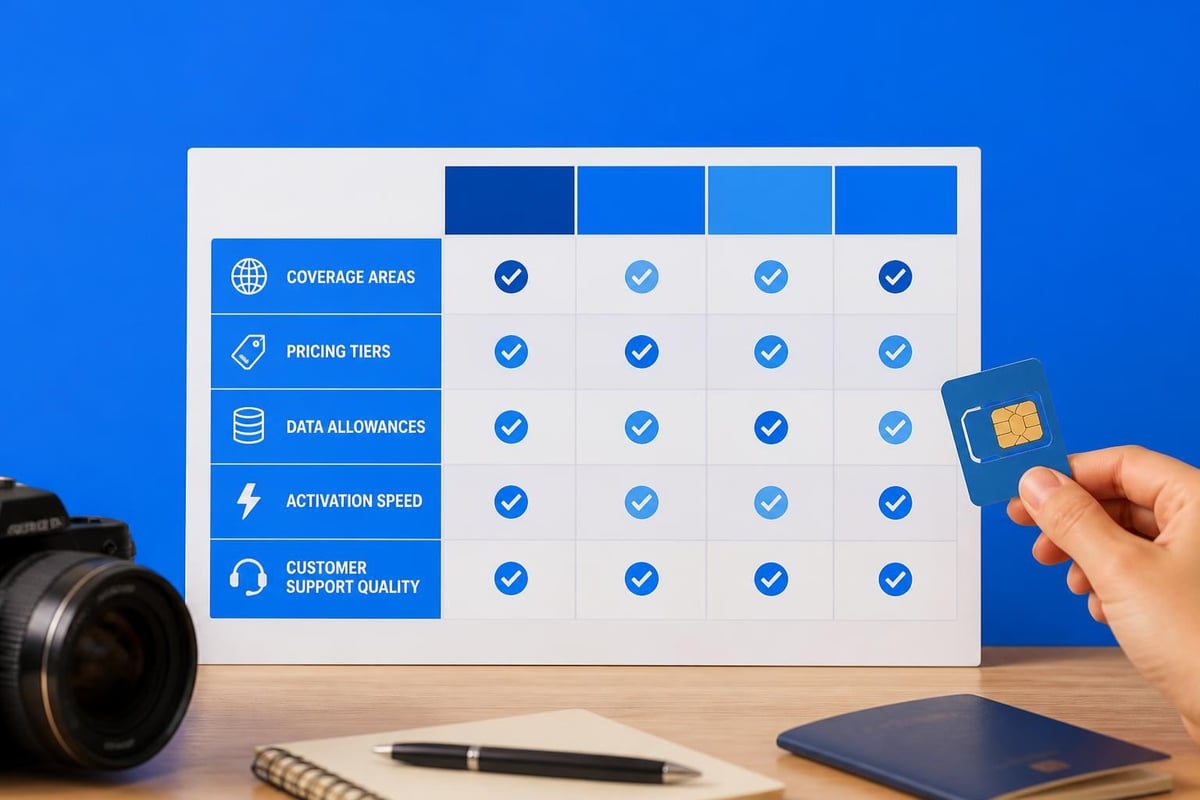
Not all esim travel providers offer the same experience, coverage, or value. The market has exploded in recent years, which gives you plenty of options but can also feel overwhelming when you're trying to make a decision.
What should you actually look for? Coverage is paramount. A cheap eSIM that doesn't work in your destination is no bargain. TechRadar's comprehensive comparison of the top providers in 2026 reveals significant differences in network partnerships and reliability.
Key Factors When Selecting Your Provider
- Geographic coverage: Does the provider support all your destinations?
- Data allowances: Match the plan to your actual usage patterns
- Validity periods: Some plans offer days, others work on data consumption
- Top-up options: Can you easily add more data mid-trip?
- Customer support: What happens if something goes wrong at 2am in Bangkok?
- Activation speed: Instant activation versus several hours' delay
Many travelers find regional plans more economical than global ones. If you're touring multiple European countries, for instance, a Europe-wide eSIM plan typically offers better value than activating separate country-specific plans. The convenience of not switching between providers as you cross borders is genuinely liberating.
Setting Up Your eSIM Before Departure
Preparation makes all the difference with esim travel. Sorting your connectivity before you leave home eliminates stress and ensures you're connected the moment you land.
First, confirm your device supports eSIM functionality. iPhones from XS onwards, Google Pixels from 3 onwards, and most Samsung Galaxy models from S20 onwards all work seamlessly. If you're uncertain, a quick search for your model plus "eSIM compatible" will clarify matters.
Next, decide whether to activate immediately or wait until arrival. Some travellers prefer activating at home to test the connection and resolve any issues whilst still on familiar ground. Others wait until landing to maximise their data validity period. There's no universally correct answer, just what suits your comfort level and travel style.
The Activation Process Demystified
Detailed setup guides walk you through the process step-by-step, but here's the general workflow:
- Purchase your chosen plan online
- Receive QR code and activation instructions via email
- Navigate to Settings > Mobile Data > Add Data Plan (iOS) or Settings > Network & Internet > Mobile Network (Android)
- Scan the provided QR code using your phone's camera
- Label your new plan (e.g., "Travel Data")
- Select which plan to use for mobile data
- Keep your home SIM active for calls/texts if desired
Most providers send activation codes within minutes of purchase. Save these emails offline or screenshot the QR code, just in case you can't access email when needed. It's also worth testing the connection before your trip if possible.
Managing Multiple eSIM Profiles Effectively
One of esim travel's most powerful features is the ability to maintain several eSIM profiles on a single device. Modern iPhones can store eight or more eSIM profiles, though typically only two can be active simultaneously alongside a physical SIM.
This capability proves invaluable for frequent travellers. You might keep a regional eSIM for Europe, another for Asia, and a global backup plan, all ready to activate with a few taps. No more storing physical SIM cards or wondering which tiny piece of plastic corresponds to which country.
Switching between profiles takes seconds. In your phone's settings, you simply toggle which eSIM you want active. Some travelers maintain separate profiles for work and personal use, others switch based on destination or data requirements.
| Use Case | Profile Strategy | Benefit |
|---|---|---|
| Business travel | Work + personal eSIMs | Separate numbers and billing |
| Multi-country trips | Regional eSIM bundles | Seamless border crossings |
| Extended stays | Long-term local + global backup | Cost efficiency plus security |
| Family travel | Shared data pools | Simplified management |
The gosimless.app platform supports multi-device management, meaning you can coordinate eSIMs across your phone, tablet, and even supported smartwatches from a single account. This unified approach simplifies what could otherwise become confusing juggling act.
Real-World eSIM Travel Scenarios and Solutions
Theory is useful, but how does esim travel actually perform when you're navigating Tokyo's subway system or trekking through Patagonia? Let's explore some common scenarios.
Scenario one: The European grand tour. You're visiting six countries in three weeks. Purchasing individual SIM cards would mean constant visits to phone shops and juggling multiple numbers. Instead, you activate a single pan-European eSIM before departure. As you cross from France to Spain to Italy, your connection continues seamlessly. No border interruptions, no configuration changes, just consistent connectivity.
Scenario two: The digital nomad month. You're working remotely from Thailand for four weeks. You need reliable data for video calls, cloud access, and general connectivity. Traditional tourist SIMs might throttle speeds or impose daily limits. With an eSIM optimised for extended stays, you get consistent high-speed data at predictable costs. When you inevitably run low on data, topping up takes minutes through an app rather than finding a shop.
Handling Common Challenges
Even with esim travel's convenience, occasional hiccups occur. Activation fails sometimes. Networks might underperform in specific locations. Data might deplete faster than anticipated. Practical troubleshooting guides address these common issues and their solutions.
The most frequent problem? Forgetting to enable data roaming in your phone's settings. It sounds obvious, but countless travellers have panicked when their eSIM "doesn't work," only to discover they'd left data roaming disabled. Always double-check this setting after activation.

The Future of eSIM Travel Technology
Where's this technology heading? If current trends continue, physical SIM cards will become increasingly rare by 2028. Apple's already eliminated the SIM tray entirely from US iPhone models, and other manufacturers are following suit.
Enhanced integration is emerging rapidly. Imagine booking a flight and automatically receiving an eSIM recommendation for your destination. Some airlines are already experimenting with bundled connectivity packages. Travel insurance providers are exploring eSIM-linked emergency services. The convergence of travel services and connectivity is accelerating.
Improved network partnerships mean better coverage and faster speeds. eSIM providers are negotiating relationships with premium carriers rather than settling for cheapest-available networks. This translates to noticeably better performance, particularly in congested urban areas or remote regions.
Environmental considerations shouldn't be overlooked either. The elimination of physical SIM cards reduces plastic waste, whilst digital delivery eliminates packaging and shipping emissions. It's a small but meaningful contribution to more sustainable travel practices.
Cost Comparison: eSIM vs Traditional Options
Let's talk numbers, because ultimately, travel costs matter. How does esim travel stack up financially against alternatives?
Traditional roaming through your home carrier might cost £8-12 daily. Over a two-week holiday, that's £112-168. A local physical SIM might run £15-30 but requires time to purchase and configure. An eSIM plan for the same period typically costs £20-45 depending on data allowances and destination.
Breaking Down the Economics
Consider a business trip to the United States lasting ten days. You need reliable connectivity for email, mapping, and occasional video calls. Estimated data usage: 15GB.
- Home carrier roaming: 10 days × £10/day = £100
- US physical SIM: £30 for 30GB
- US eSIM plan: £25-35 for 15GB with instant activation
The eSIM offers comparable costs to physical SIMs but with significant time savings and activation convenience. For the business traveller whose time is valuable, that convenience easily justifies any minor price difference. If you're heading to popular destinations like Japan or Thailand, eSIM providers often offer especially competitive rates due to high demand and strong network partnerships.
Making the Most of Your eSIM Data Allowance
Data management whilst travelling can feel like a constant balancing act. You want to share photos, navigate unfamiliar cities, and stay in touch, but you also don't want to exhaust your allowance mid-trip.
Smart data habits make a substantial difference:
- Download maps for offline use before leaving Wi-Fi
- Adjust streaming quality settings (Spotify, Netflix) to lower resolutions
- Disable automatic app updates and cloud backups
- Use Wi-Fi at hotels and cafés for large downloads
- Monitor usage through your phone's built-in tools
Most eSIM providers offer apps that track consumption in real-time. These typically show daily usage, remaining balance, and estimated days until depletion based on current patterns. Some send alerts when you've used 50%, 75%, and 90% of your allowance.
Background app activity often consumes more data than travellers realise. Before departure, review which apps have background data permissions and restrict any non-essential ones. Social media apps, in particular, can silently consume significant data through auto-playing videos and updating feeds.
Essential Questions Answered
You've probably got questions. Everyone does when first exploring esim travel options. Let's address the most common concerns.
"What happens if I need more data than expected?" Most providers allow instant top-ups through their apps or websites. You don't need a new QR code or complex reactivation. Simply purchase additional data, and it's added to your existing profile within minutes.
"Can I use eSIM and physical SIM simultaneously?" Absolutely. Dual-SIM functionality lets you maintain your home number on a physical SIM for calls and texts whilst using an eSIM exclusively for data. This arrangement is particularly popular with business travellers who need to remain reachable on their regular number.
"Will eSIM work with my existing phone number?" Your eSIM provides data connectivity and potentially a new number for local calls. Your original number remains accessible if you keep your physical SIM installed or if your home carrier supports eSIM for your primary line.
For more detailed answers to technical questions, comprehensive FAQ resources provide extensive information about compatibility, activation, and troubleshooting.
Regional Considerations for eSIM Travelers
Not all destinations offer identical esim travel experiences. Network infrastructure, carrier partnerships, and regulatory environments vary significantly across regions.
Asia-Pacific generally offers excellent eSIM coverage and competitive pricing. Countries like Singapore, South Korea, and Australia have embraced eSIM technology enthusiastically, with robust network infrastructure and multiple provider options.
Europe provides seamless connectivity across member states, making it ideal for multi-country trips. The EU's roaming regulations ensure consistent pricing and performance whether you're in Portugal, Greece, or France.
North America has strong eSIM infrastructure in urban areas, though rural coverage can be patchy depending on your provider's network partnerships. Canada and Mexico are increasingly well-covered alongside the United States.
Emerging Markets and Coverage Gaps
Some regions still have limited eSIM availability or higher costs. Parts of Africa, Central Asia, and remote Pacific islands may offer fewer options. In these cases, having a backup plan (whether that's a global eSIM with broader coverage or accepting you'll rely on Wi-Fi) prevents frustration.
Always verify specific coverage for your exact destinations before travelling. Provider coverage maps show which networks they partner with in each country, giving you insight into expected performance quality.
eSIM travel has fundamentally changed how we stay connected whilst exploring the world, offering unprecedented convenience, flexibility, and cost savings compared to traditional options. Whether you're planning a weekend city break or a months-long adventure, having instant, reliable connectivity without the hassle of physical SIM cards transforms your travel experience. If you're ready to simplify your next journey, gosimless.app provides instant eSIM activation with affordable, flexible coverage across 200+ countries, secure payments, and seamless multi-device support to keep you connected wherever your travels take you.
gosimless Team
The gosimless editorial desk — testing eSIMs, carriers and travel connectivity so you don't have to. Updated continuously from the road.