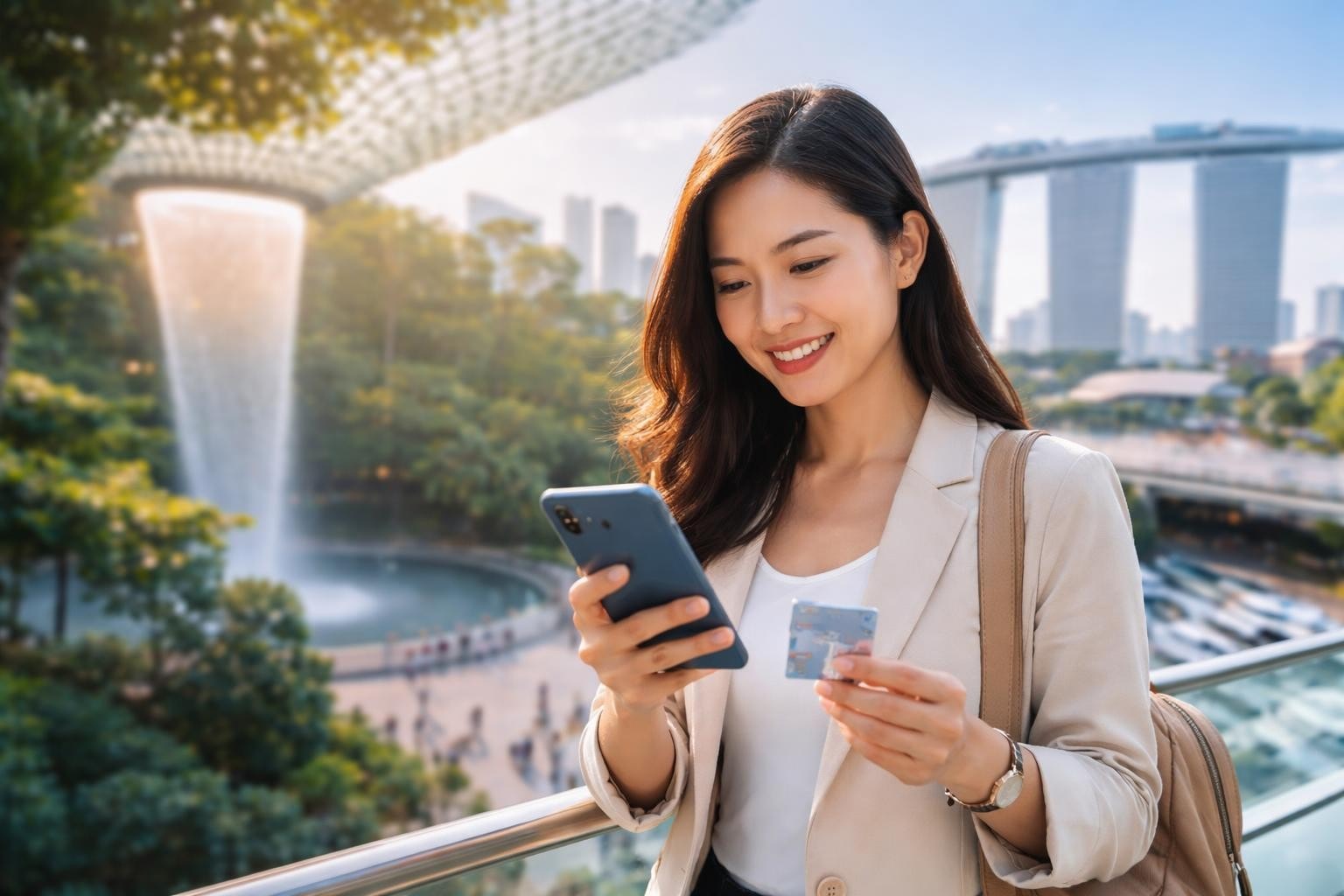
Planning a trip to Singapore? You're probably wondering about the best way to stay connected in this hyper-connected city-state. Gone are the days of hunting for physical SIM cards at airport kiosks or dealing with expensive roaming charges. The eSIM revolution has transformed how travellers maintain connectivity, and Singapore is at the forefront of this digital transformation. Whether you're visiting for business, pleasure, or a bit of both, understanding your eSIM options will save you time, money, and hassle during your stay.
What Makes eSIM Singapore Different from Traditional SIM Cards
Let's get straight to the point. An eSIM is a digital SIM card embedded directly into your device. No physical swapping, no tiny plastic cards that you'll inevitably lose, and no need to queue at telecoms shops when you land.
Singapore's telecommunications infrastructure is amongst the most advanced globally, which means eSIM adoption has been swift and comprehensive. The three major networks (Singtel, StarHub, and M1) all support eSIM technology, alongside numerous international providers offering tourist-focused data packages.
The Key Advantages You'll Notice
When you're using an esim singapore service, you'll immediately appreciate several benefits:
- Instant activation before you even board your flight
- Multiple profile storage on a single device
- No roaming fees with the right provider
- Seamless switching between different plans and networks
- Environmental benefits from eliminating plastic waste
The difference becomes crystal clear the moment you land at Changi Airport. While others queue for physical SIMs, you'll already have connectivity sorted before touching down.
How to Activate Your eSIM for Singapore Travel
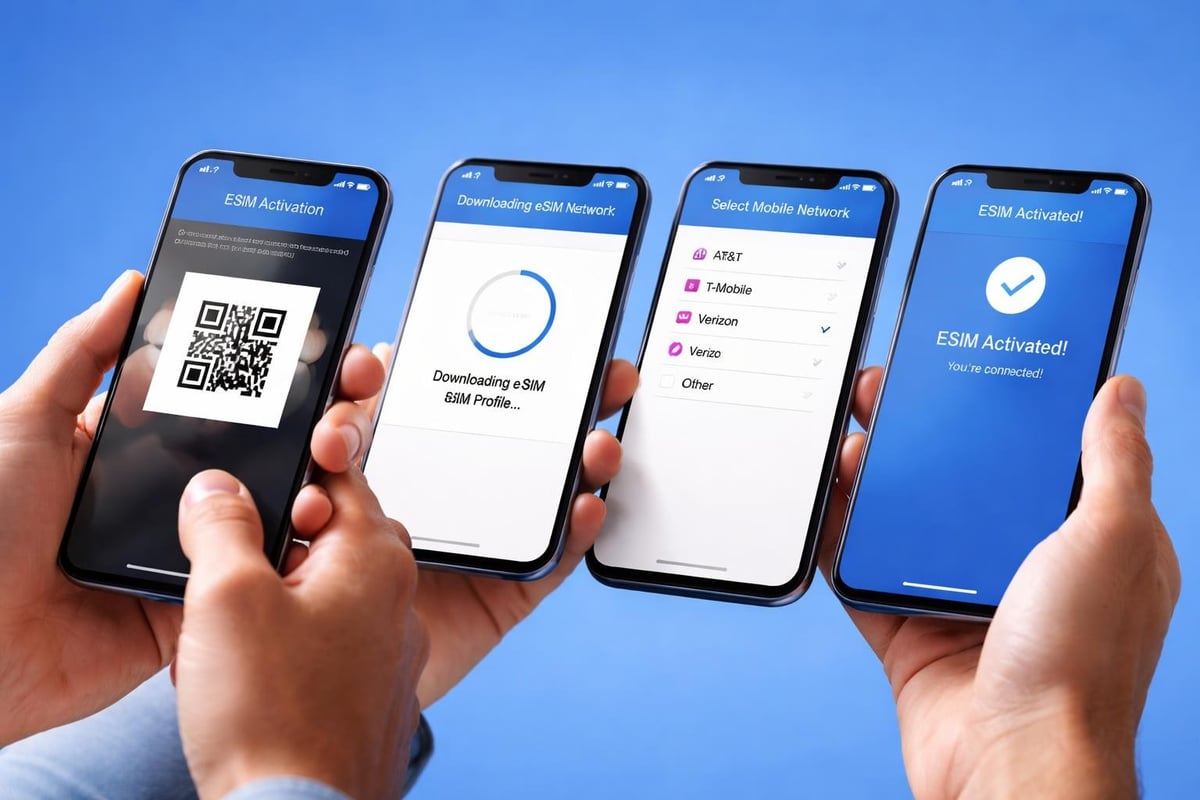
Activating an esim singapore plan couldn't be simpler, though the exact process varies slightly depending on your provider and device. Here's what you need to know.
Before You Travel: Pre-Activation Steps
First, check your device compatibility. Most smartphones released after 2018 support eSIM technology, but it's worth verifying through your compatible devices list before purchasing a plan.
- Purchase your eSIM plan from a reputable provider
- Receive your QR code via email or app
- Scan the QR code in your device settings
- Download the eSIM profile (requires WiFi or existing data connection)
- Activate when ready - typically upon arrival in Singapore
The beauty of this system? You can complete steps 1-4 whilst still at home, ensuring you're connected the second your plane lands.
Device-Specific Activation
| Device Type | Activation Path | Time Required |
|---|---|---|
| iPhone (XS onwards) | Settings > Cellular > Add eSIM | 2-3 minutes |
| Samsung Galaxy | Settings > Connections > SIM Manager | 2-3 minutes |
| Google Pixel | Settings > Network > Mobile network > Add | 2-3 minutes |
| Other Android | Settings > Network > SIM cards | 3-5 minutes |
Once activated, your device will automatically connect to available networks in Singapore. Most modern phones allow you to label your eSIMs ("Singapore Travel", "Work", etc.) for easy management.
Choosing the Right eSIM Singapore Provider
Not all eSIM providers are created equal, and your choice can significantly impact your Singapore experience. The market has exploded in recent years, with various eSIM options for international travel now available.
Local vs International Providers
Local Singaporean Providers:
- Singtel
- StarHub
- M1
- Giga
International Travel eSIM Providers:
- Services offering multi-country coverage
- Often more flexible for short stays
- Usually no local phone number (data-only)
- Competitive pricing for tourists
For tourists staying less than two weeks, international providers typically offer better value. If you're relocating or staying long-term, local providers might suit your needs better, particularly if you need a Singapore phone number.
What to Look for in Your Plan
The Singapore market is competitive, which works in your favour. Here's what matters:
Data allowance - Singapore's extensive WiFi coverage (check out Wireless@SG hotspots) means you might need less data than expected. However, for navigation, grabbing taxis, and uploading those Marina Bay Sands photos, 5-10GB typically suffices for a week's visit.
Network coverage - All three major networks provide excellent coverage across Singapore, but Singtel historically has the most extensive 5G rollout. For most users, the differences are negligible in this tiny nation.
Validity period - Match this to your trip duration. Many providers offer 7-day, 15-day, and 30-day options.
Speed throttling - Some budget plans throttle speeds after a certain threshold. In Singapore's fast-paced environment, this can be frustrating.
Understanding Network Coverage Across Singapore
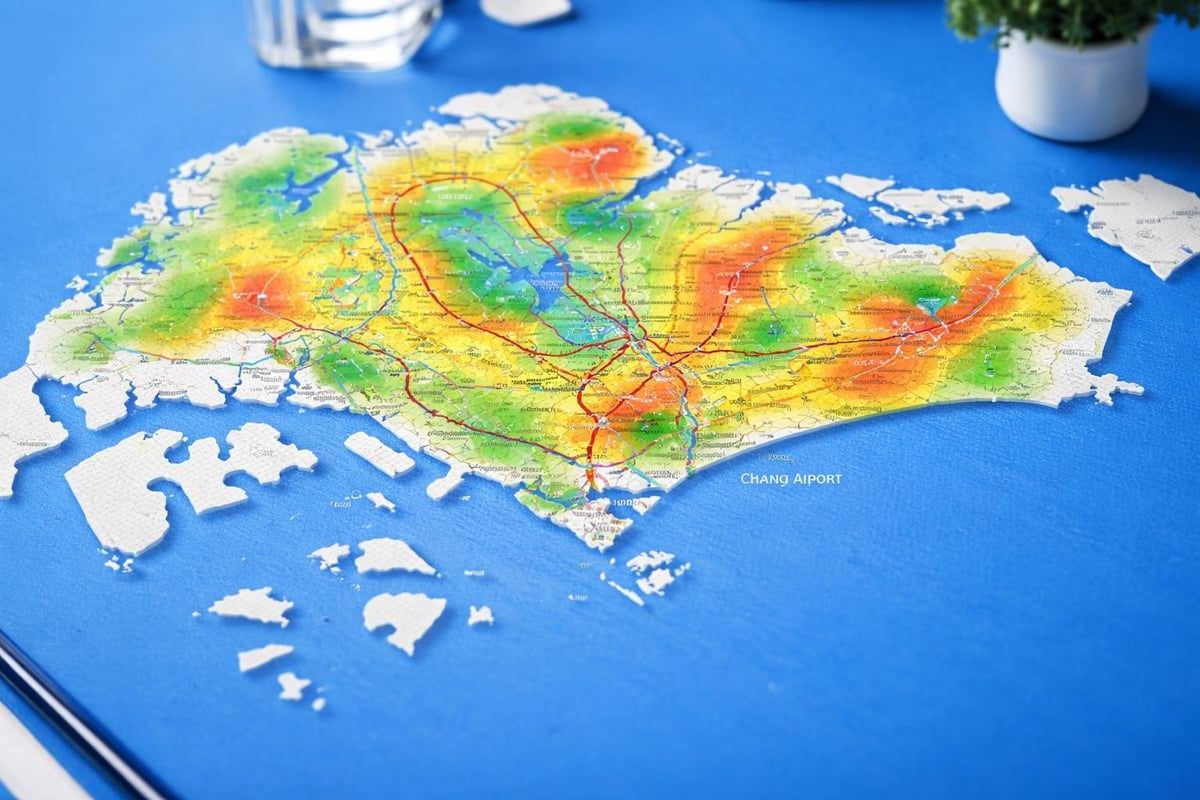
Singapore's compact size means network coverage is exceptional virtually everywhere. You'll maintain strong signals on the MRT, in shopping centres, and even in nature reserves. The city-state invests heavily in telecommunications infrastructure, making it one of the best-connected places globally.
5G Availability and Performance
By 2026, 5G coverage blankets Singapore comprehensively. Both outdoor and indoor connectivity benefit from this, with average speeds exceeding 200 Mbps in most areas.
The 5G network particularly excels in:
- Central Business District (CBD) - Marina Bay, Raffles Place
- Tourist hotspots - Orchard Road, Sentosa, Gardens by the Bay
- Residential areas - HDB estates across all regions
- Transportation hubs - Changi Airport, MRT stations, bus interchanges
If your device supports 5G and your eSIM plan includes it, you'll experience lightning-fast connectivity that rivals home broadband speeds.
Pricing: What You'll Actually Pay for eSIM Singapore
Let's talk numbers. Pricing for esim singapore services varies considerably based on data allowance, validity period, and provider. Here's a realistic breakdown based on current 2026 rates.
Tourist Plan Pricing Comparison
| Plan Duration | Data Allowance | Typical Price Range | Best For |
|---|---|---|---|
| 7 days | 3GB | £5-8 | Light users, WiFi reliant |
| 7 days | 10GB | £10-15 | Average tourists |
| 15 days | 20GB | £18-25 | Extended stays |
| 30 days | Unlimited | £35-50 | Business travellers |
Remember, Singapore's cost of living is high, but eSIM data packages remain competitive due to market saturation and international provider competition.
Hidden Costs to Watch For
Most reputable providers maintain transparent pricing, but watch for:
- Top-up rates if you exceed your allowance
- Activation fees (increasingly rare)
- Payment processing fees for certain currencies
- Speed restrictions after certain data thresholds
Quality providers like those offering comprehensive eSIM plans typically include all costs upfront with no surprises.
Practical Tips for Using Your eSIM in Singapore
You've got your eSIM sorted, but how do you maximize its usefulness during your Singapore adventure? Here are some insider tips from someone who's navigated this ultra-modern city extensively.
Optimize Your Data Usage
Singapore's WiFi infrastructure is genuinely impressive. The government-backed Wireless@SG network offers free WiFi at shopping malls, libraries, community centres, and popular tourist spots. Smart usage means:
- Download offline maps before exploring
- Use WiFi for large downloads and updates
- Stream music rather than downloading entire playlists
- Enable data-saving modes in your most-used apps
Pro tip: Download your MRT maps and grab/taxi apps whilst connected to WiFi. These become essential navigation tools, but map data can drain your allowance quickly.
Managing Multiple eSIM Profiles
Many travellers maintain both their home eSIM and their Singapore travel eSIM simultaneously. Modern smartphones handle this brilliantly:
- Set your Singapore eSIM as primary for mobile data
- Keep your home eSIM active for calls and texts (via WiFi calling)
- Adjust settings so apps use the Singapore data connection
- Monitor usage through your device's built-in tools
This dual-SIM approach means you won't miss important calls from home whilst avoiding roaming charges.
Troubleshooting Common Issues
Even with Singapore's excellent infrastructure, occasionally issues arise:
No service after activation? Toggle airplane mode on and off, or restart your device. This forces a fresh network connection.
Slow speeds despite 5G? Check you're not near capacity limits. Some plans throttle after reaching 80% of your allowance.
Can't make calls? Most tourist eSIMs are data-only. Use WhatsApp, Telegram, or other VoIP services instead.
For comprehensive guidance, check the installation guide which covers device-specific troubleshooting steps.
eSIM Singapore for Business Travellers
Business travellers have different connectivity needs than tourists, and Singapore's position as a regional business hub means providers cater specifically to this segment.
Corporate Requirements
When you're attending meetings at Marina Bay Financial Centre or exhibiting at Singapore Expo, connectivity isn't optional. Business-grade eSIM requirements typically include:
- Higher data allowances for video conferencing and cloud access
- Reliable speeds without throttling during business hours
- Multi-device support for tablets and laptops
- Expense report-friendly billing with detailed invoices
Many business travellers appreciate plans covering multiple Asian destinations. If you're visiting Singapore as part of a broader regional trip, similar to how travellers might use an Australia eSIM for the Asia-Pacific region, multi-country options provide better value than country-specific plans.
Conference and Event Connectivity
Singapore hosts major conferences year-round. Venues like Marina Bay Sands, Suntec Singapore, and the new Changi Exhibition Centre all provide WiFi, but public networks can become congested during peak events.
Having your own eSIM data ensures you can:
- Share presentations reliably
- Maintain VPN connections to corporate networks
- Video call colleagues in different time zones
- Upload content to social media in real-time

The Future of eSIM Technology in Singapore
Singapore rarely sits still when it comes to technology adoption, and eSIM development continues rapidly. What can you expect in the coming years?
Emerging Trends
The Smart Nation initiative drives continuous telecommunications innovation. Current developments worth watching:
- Integrated travel services - Airlines and hotels bundling eSIM connectivity with bookings
- AI-powered network switching - Devices automatically selecting optimal networks
- Blockchain-based eSIM management - Enhanced security and portability
- Embedded IoT connectivity - Wearables and smart devices with independent eSIM capability
By 2027, industry observers expect physical SIM cards to become virtually obsolete in Singapore, with eSIM the default for all mobile connectivity.
Government Support and Regulation
Singapore's Infocomm Media Development Authority (IMDA) actively promotes eSIM adoption. Recent regulatory changes have:
- Mandated eSIM support in all new devices sold locally
- Simplified the eSIM activation process across providers
- Enhanced consumer protection for eSIM services
- Encouraged competition to drive pricing down
This regulatory environment creates a win-win situation where consumers benefit from better services at lower costs whilst providers innovate to differentiate themselves.
Special Considerations for Long-Term Stays
If you're in Singapore for an extended period - perhaps on a work assignment, studying, or exploring long-term relocation - your eSIM strategy differs from short-term tourists.
Converting to Local Services
Many expatriates start with international eSIM plans before transitioning to local providers. This phased approach makes sense:
Month 1: Use an international travel eSIM whilst settling in and determining actual data needs.
Month 2-3: Evaluate local provider offerings now that you understand your usage patterns.
Month 4+: Switch to a local plan if it provides better value, though many find international providers competitive even for extended stays.
Services offered through platforms similar to those comparing various international eSIM providers often remain cost-effective even for stays exceeding six months.
Student-Specific Options
Singapore's universities (NUS, NTU, SMU) attract thousands of international students annually. Several providers offer education-discounted eSIM plans, though these typically require student verification.
Universities also provide campus WiFi, but having reliable mobile data proves essential for:
- Commuting and navigation
- Group project coordination
- Part-time work communication
- Social activities outside campus
Comparing eSIM Singapore with Regional Alternatives
Singapore's position in Southeast Asia means many travellers visit multiple countries in one trip. How does esim singapore connectivity compare with neighbouring options?
Regional Connectivity Considerations
| Country | Network Quality | eSIM Availability | Typical 7-Day Cost |
|---|---|---|---|
| Singapore | Excellent | Widespread | £10-15 |
| Malaysia | Very Good | Growing | £8-12 |
| Thailand | Good | Common | £7-10 |
| Indonesia | Variable | Emerging | £9-14 |
| Vietnam | Good | Limited | £8-11 |
For multi-country itineraries, regional eSIM plans covering Southeast Asia often provide better value than purchasing separate country-specific plans. However, if Singapore is your primary destination with only brief side trips, a Singapore-focused plan typically offers superior speeds and allowances.
The integration between Singapore and Malaysia (particularly Johor Bahru) means many travellers need cross-border connectivity. Most quality eSIM providers include Malaysia in their Singapore plans or offer affordable add-ons.
Essential Apps and Services for eSIM Users in Singapore
Your eSIM provides the connectivity, but these apps maximize its utility during your Singapore stay.
Must-Have Applications
Transportation and Navigation:
- Google Maps - Essential despite its data appetite; download offline maps
- Citymapper - Excellent for public transport routing
- Grab - Southeast Asia's dominant ride-sharing and delivery platform
- SimplyGo - Contactless payment for public transport using your phone
Communication:
- WhatsApp - Nearly universal in Singapore for messaging
- Telegram - Growing popularity, particularly in business contexts
- Zoom/Teams - For video conferencing using your eSIM data
Local Services:
- Singpass - Digital identity for government services (residents/long-term visitors)
- FoodPanda/Deliveroo - Food delivery leveraging your connectivity
- Shopee/Lazada - E-commerce platforms with real-time notifications
For answers to common questions about data requirements and usage, the frequently asked questions section provides helpful guidance on estimating your needs.
Environmental Impact: Why eSIM Matters Beyond Convenience
Here's something you might not have considered: your choice of eSIM over physical SIM cards contributes positively to environmental sustainability.
Singapore takes environmental responsibility seriously, with ambitious targets for waste reduction and carbon neutrality. The shift to eSIM technology supports these goals through:
- Plastic elimination - No SIM card carriers, packaging, or cards themselves
- Reduced logistics - No physical distribution networks
- Lower energy consumption - Digital distribution uses less energy than manufacturing and shipping
- Simplified recycling - Fewer components in old devices
The Numbers Behind the Impact
Conservative estimates suggest each physical SIM card generates approximately 5-10 grams of plastic waste. With billions of SIM cards produced annually, the environmental impact is substantial. Singapore's tourism industry alone (pre-pandemic levels) saw over 19 million visitors annually, many purchasing SIM cards.
If even half of these tourists switched to eSIM, Singapore would eliminate roughly 50-100 tonnes of plastic waste annually. For an environmentally conscious city-state, this matters.
Getting Help When You Need It
Despite eSIM technology's simplicity, questions and issues occasionally arise. Knowing where to find support makes your Singapore experience smoother.
Provider Support Channels
Quality eSIM providers offer multiple support channels:
- 24/7 chat support - Essential for different time zones
- Email assistance - For non-urgent queries
- FAQ databases - Self-service troubleshooting
- Phone support - Though increasingly rare in the digital age
When you're standing in the humidity outside Changi Airport Terminal 3 and your eSIM isn't connecting, responsive support becomes invaluable. This is where established providers distinguish themselves from budget alternatives that offer minimal customer service.
Community Resources
Singapore has an active expat and travel community sharing eSIM experiences:
- Reddit's r/singapore and r/travel threads
- TripAdvisor forums specific to Singapore connectivity
- Facebook groups for expats and digital nomads
- Travel blogs reviewing various eSIM experiences
These community resources often provide practical, real-world insights that official documentation might miss.
Making Your Final Decision
You've absorbed a lot of information about esim singapore options. How do you actually choose the right plan for your specific needs?
Your Decision Framework
Start by answering these questions honestly:
How long are you staying? This immediately narrows your options. Weekend trips need different solutions than month-long assignments.
What's your data usage pattern? Check your current monthly usage. Tourist usage often exceeds normal patterns due to navigation, photography uploads, and constant communication, so add 30-50% to your typical consumption.
Do you need voice calling? Most tourist eSIMs are data-only, relying on VoIP services. If you genuinely need a Singapore phone number for business or local contacts, factor this in.
Will you visit other countries? Multi-country plans suit regional travel better than single-country options.
What's your budget? eSIM plans vary from budget to premium. Define your acceptable price range before comparing options.
Once you've answered these questions, comparing providers becomes straightforward. Look for reviews from travellers with similar profiles to yours, check the provider's reputation for customer service, and verify their coverage in Singapore specifically.
Singapore's embrace of eSIM technology has transformed how travellers and residents stay connected in this dynamic city-state. Whether you're visiting for business, exploring as a tourist, or settling in for a longer stay, choosing the right eSIM plan ensures seamless connectivity without the hassle of physical SIM cards or expensive roaming fees. Ready to experience hassle-free connectivity? gosimless.app offers instant eSIM activation for Singapore and 200+ countries with flexible plans, secure setup, and no roaming charges.
gosimless Team
The gosimless editorial desk — testing eSIMs, carriers and travel connectivity so you don't have to. Updated continuously from the road.