
Travelling to the United States in 2026 and wondering how to stay connected without those eye-watering roaming charges? You're not alone. The way we think about mobile connectivity has completely transformed, and if you haven't heard about eSIM technology yet, you're about to discover something that'll make your American adventure infinitely easier. Whether you're heading to New York for business, exploring California's coastline, or visiting family in Texas, understanding esim for usa options can save you both money and hassle.
What Exactly Is an eSIM and Why Should You Care?
Let's start with the basics. An eSIM is essentially a digital SIM card that's built directly into your smartphone. Rather than fiddling with those tiny plastic cards at the airport or hunting down a mobile shop, you can download your entire mobile plan straight to your device. Simple as that.
Think about it: when was the last time you enjoyed the process of swapping SIM cards? You know the drill. Finding something sharp enough to pop open that tray, trying not to lose the minuscule card, worrying about where to store your home SIM safely. With an eSIM for USA travel, all of that disappears.
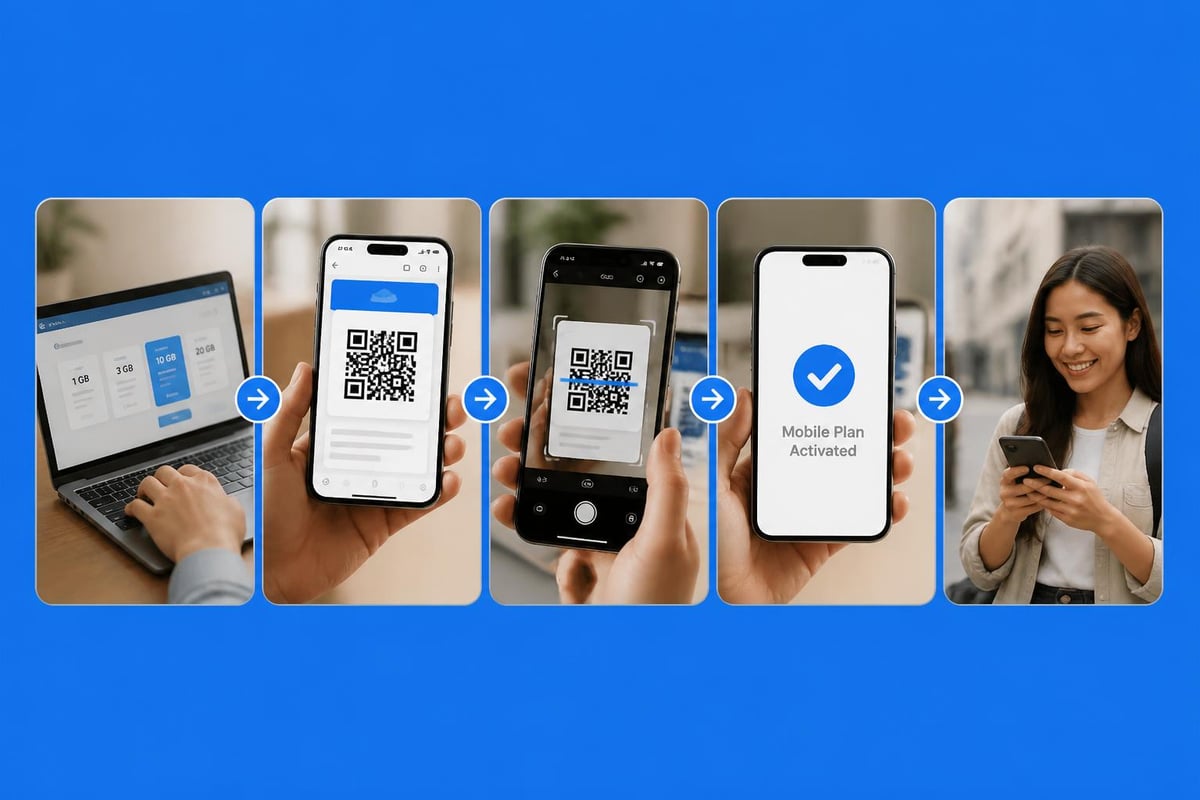
The technology works through an embedded chip in your phone that can store multiple carrier profiles. You simply scan a QR code or use an app, and within minutes you've got an active data plan. No physical cards, no shop visits, no waiting in queues. Understanding which US networks support eSIM helps you make informed decisions about coverage and compatibility.
How eSIM Technology Has Changed American Travel
Back in 2024, Apple made headlines by removing the physical SIM card slot entirely from US iPhone models. That wasn't just a design choice. It was a clear signal about where mobile connectivity is heading. By 2026, we're seeing the full impact of that shift.
Most modern smartphones now support eSIM technology, and the infrastructure across America has adapted beautifully. From major carriers like AT&T and Verizon to international eSIM providers, the options have exploded. The competition? That's brilliant news for your wallet.
Coverage Across the United States: What You Need to Know
Here's something that might surprise you: not all esim for usa plans are created equal. The United States is massive, and coverage can vary dramatically depending on which network your eSIM provider partners with.
The major players in American mobile networks include:
- Verizon: Generally considered the best for rural coverage
- AT&T: Strong nationwide presence with excellent urban coverage
- T-Mobile: Competitive pricing with solid metro area performance
- Regional carriers: Sometimes offer better local coverage in specific states
When you're choosing an eSIM plan, you'll want to think about where you're actually going. Planning a road trip through national parks? You'll need robust rural coverage. Staying in major cities for business? Any reputable provider will serve you well.
Real-World Coverage Scenarios
Let me paint you a picture. Last year, I watched a colleague struggle with connectivity whilst driving through Montana. They'd chosen the cheapest eSIM option without checking the underlying network. The result? Hours of dead zones and missed conference calls. Don't be that person.
| Location Type | Recommended Network | Coverage Quality |
|---|---|---|
| Major Cities (NYC, LA, Chicago) | Any major carrier | Excellent (95-99%) |
| Suburban Areas | AT&T, Verizon | Very Good (90-95%) |
| Rural & National Parks | Verizon | Good to Fair (60-85%) |
| Interstate Highways | AT&T, Verizon | Good (75-90%) |
The beauty of modern eSIM providers is that many partner with multiple networks or piggyback on the strongest available signal. This multi-network approach means you're getting the best of all worlds without locking into a single carrier.
Choosing the Right eSIM Plan for Your USA Trip
Right, so you're convinced about the technology. Now comes the practical bit: which plan actually makes sense for you? This isn't a one-size-fits-all situation, and honestly, that's a good thing.
Your perfect esim for usa plan depends on several factors:
- Length of stay: Weekend trip versus month-long adventure
- Data needs: Casual browsing versus constant video calls
- Coverage requirements: Urban-only versus cross-country travel
- Budget constraints: Premium unlimited versus budget-conscious options
- Device compatibility: Checking your phone supports eSIM technology
For travellers wondering about compatible devices, most iPhones from XS onwards, Google Pixels from 3 onwards, and Samsung Galaxy phones from S20 onwards support eSIM. But always double-check before purchasing a plan.
Breaking Down Plan Types and Pricing
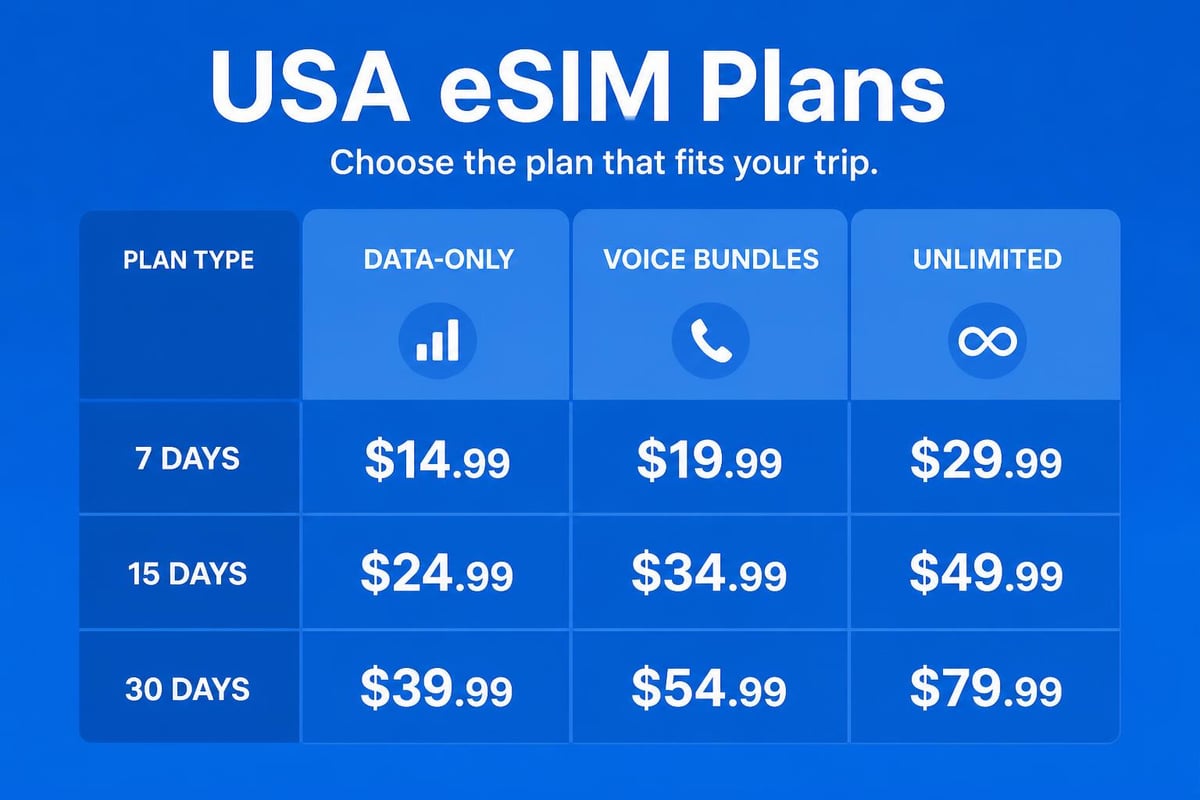
The eSIM market has matured beautifully in 2026. You'll typically encounter three main plan categories:
Data-only plans are perfect if you're happy using WhatsApp or FaceTime for calls. These are usually the most affordable option, ranging from around £5 for 1GB to £50 for 50GB, depending on your provider and duration. Major carriers like AT&T offer international eSIM options that work well for USA connectivity.
Voice and data bundles include a local US phone number and traditional calling minutes. These cost more but can be essential for business travellers who need to make local calls. Expect to pay 30-50% more than data-only equivalents.
Unlimited data plans have become increasingly popular and surprisingly affordable. Some providers now offer truly unlimited data for 30 days at prices comparable to what you'd pay for 20GB from traditional roaming services.
Setting Up Your eSIM: Easier Than You Think
I'll be honest: the first time I set up an eSIM, I was convinced I'd mess something up. Turns out, it's genuinely one of the smoothest tech experiences you'll have. The installation process has been refined to the point where most people complete it in under five minutes.
Here's exactly what happens when you purchase an esim for usa plan:
- Purchase your plan online from your chosen provider
- Receive a QR code via email (usually instantly)
- Open your phone settings and navigate to cellular/mobile data
- Select "Add eSIM" or similar option
- Scan the QR code with your camera
- Confirm the installation when prompted
- Label your new plan (like "USA Travel")
- Select it as your data line
That's it. Genuinely. No technical knowledge required, no complicated configuration, no calling customer service. The technology handles everything in the background.
Troubleshooting Common Setup Issues
Of course, occasionally things don't go perfectly smoothly. If you're having trouble, here are the usual culprits:
- Internet connection required: You need WiFi or data to download the eSIM initially
- eSIM already installed: Most phones support multiple eSIMs but may have installation limits
- Carrier lock: Some phones purchased through carriers might have restrictions
- Software updates needed: Ensure your device is running current iOS or Android versions
The good news? Most eSIM providers now offer 24/7 customer support through chat or WhatsApp, making troubleshooting far easier than dealing with traditional carrier support lines. If you encounter issues, checking the FAQ section often provides quick solutions.
Cost Comparison: eSIM Versus Traditional Options
Let's talk money, because that's what ultimately matters to most travellers. How does esim for usa compare to your alternatives? The numbers might surprise you.
| Option | 7 Days / 5GB | 14 Days / 10GB | 30 Days / 20GB |
|---|---|---|---|
| UK Carrier Roaming | £40-60 | £80-120 | £150-200 |
| USA Prepaid SIM (in-store) | £25-35 | £40-55 | £60-80 |
| eSIM Provider | £8-15 | £15-25 | £25-40 |
| Unlimited eSIM Plan | £20-30 | £35-45 | £45-60 |
These figures are based on 2026 market rates, and the savings speak for themselves. Even if you opt for a premium unlimited eSIM plan, you're typically saving 40-60% compared to traditional roaming charges.
But there's more to value than just upfront cost. Consider what you're actually getting. Traditional roaming often comes with speed throttling, fair use policies, and unexpected overage charges. Quality eSIM providers offer transparent pricing with no hidden fees. You know exactly what you're paying and what you're getting.
Hidden Costs to Watch For
Not all eSIM providers are equally transparent. Before committing, check for:
- Activation fees: Some providers charge setup costs
- Validity periods: Your plan might expire before you've used all the data
- Speed restrictions: "Unlimited" sometimes means unlimited at reduced speeds
- Top-up costs: What happens if you run out mid-trip?
- Refund policies: Can you get money back if plans change?
Reading reviews and comparing providers helps you avoid disappointment. Expert roundups like TechRadar's best eSIM options provide valuable third-party perspectives on reliability and value.
Advanced Features Worth Considering
Modern esim for usa plans aren't just about basic connectivity anymore. The market has evolved to offer features that genuinely enhance your travel experience.
Multi-device support means using the same plan across your phone, tablet, and even smartwatch. Perfect for digital nomads or business travellers who carry multiple devices. Some providers allow you to install the same eSIM profile on up to five devices simultaneously.
Flexible top-ups let you add more data mid-trip without purchasing an entirely new plan. Run out whilst uploading those Grand Canyon photos? Top up instantly through an app rather than scrambling for WiFi.
Hotspot capability isn't always guaranteed with eSIM plans, particularly budget options. If you need to tether your laptop or share connectivity with travel companions, verify this feature before purchasing. It can be the difference between productivity and frustration.

Regional Plans Versus Country-Specific Coverage
Here's an interesting consideration: should you opt for a USA-specific eSIM or a broader North American plan? If you're only visiting the States, country-specific options typically offer better value. But if there's even a slight chance you'll pop over to Canada or Mexico, regional plans become attractive.
North American plans usually cover:
- United States (all 50 states)
- Canada (nationwide coverage)
- Mexico (major cities and tourist areas)
The price premium for regional coverage has decreased dramatically in 2026, sometimes adding only 20-30% to the cost whilst tripling your potential coverage area. For road-trippers or cruise passengers visiting multiple countries, this flexibility is invaluable.
Managing Your eSIM During Your Trip
Once you've landed in the USA and your eSIM is active, managing it properly ensures smooth sailing throughout your stay. The beauty of modern eSIM technology is that most management happens through intuitive apps rather than complicated settings menus.
Most providers offer apps that let you:
- Monitor data usage in real-time
- Purchase top-ups or additional plans
- Check coverage maps for your current location
- Access customer support
- View detailed usage history
Data management tips can stretch your plan further. WiFi is ubiquitous in American cities, from coffee shops to hotels to public libraries. Connect to trusted networks when available, saving your cellular data for when you're actually mobile. Turn off automatic app updates and background refresh for apps you don't need whilst travelling.
Switching between plans becomes relevant if you have both your home SIM (as eSIM) and travel plan installed. Most phones let you designate which line handles data, calls, and messages separately. You might keep your home number active for texts whilst routing all data through your USA eSIM.
What Happens If Things Go Wrong?
Travel rarely goes exactly to plan, does it? Your eSIM provider's responsiveness to problems matters enormously. Before purchasing, check:
- Average customer support response times
- Available support channels (chat, email, phone)
- Coverage of support hours (24/7 versus business hours)
- Language support options
- Refund or replacement policies
The best providers offer instant chat support with knowledgeable staff who can diagnose and resolve issues quickly. You don't want to be stuck without connectivity trying to navigate email support with 48-hour response times.
Special Considerations for Different Traveller Types
Your perfect esim for usa solution depends heavily on why you're visiting and how you'll use connectivity. Business travellers have completely different needs than holiday-makers or digital nomads.
Business travellers should prioritise reliability and speed over cost savings. Missing a video conference because you chose the cheapest plan is false economy. Look for providers with service level agreements, priority support, and proven track records with corporate clients. Unlimited plans make sense here as you won't worry about data caps during important calls.
Holiday travellers can often get away with smaller data packages, especially if you're comfortable using hotel and restaurant WiFi. However, having reliable navigation and the ability to share experiences on social media enhances modern holidays. Mid-tier plans typically strike the right balance.
Digital nomads working remotely from the USA need serious connectivity. Consider unlimited plans from providers with excellent reviews for stability and speed. Being able to hotspot your laptop becomes essential, as does having backup options if your primary eSIM encounters issues.
Family and Group Travel Dynamics
Travelling with others? Coordinating connectivity gets interesting. Some families purchase individual eSIMs for each person, whilst others rely on one unlimited plan with hotspot sharing. Each approach has merits.
Individual plans mean everyone has independent connectivity, useful if you split up for different activities. Shared hotspots save money but require staying relatively close together and can drain the host device's battery quickly. There's also the data management question: unlimited becomes essential if multiple people are streaming, video calling, and uploading content simultaneously.
For families visiting the USA, exploring various eSIM options helps find plans that balance cost with adequate coverage for everyone's needs.
The Future of eSIM Technology in America
Looking ahead, the trajectory for esim for usa adoption is clear. By 2026, we're already seeing developments that seemed futuristic just a few years ago. More carriers are embracing the technology, competition is driving prices down, and user experience continues improving.
Several trends are shaping the current landscape:
Instant activation has become the standard. Remember when you had to wait hours or even days for SIM activation? Now most eSIM plans activate within minutes, with some providers offering truly instant connectivity.
AI-powered network selection is emerging, with eSIMs automatically switching between partner networks to maintain optimal speeds and coverage. You're not locked to a single carrier's infrastructure anymore.
Sustainability benefits shouldn't be overlooked. Traditional SIM cards involve plastic production, packaging, and shipping. eSIMs eliminate all of that, aligning with broader environmental goals whilst offering superior convenience.
Integration with travel platforms means you might purchase your eSIM alongside flights and hotels in a single transaction. Several major booking platforms now offer eSIM options as standard add-ons.
Understanding what eSIM technology actually is helps appreciate these ongoing innovations and make informed choices about adoption.
Making Your Final Decision
Right, you've made it this far, so let's bring everything together. Choosing your esim for usa plan doesn't need to be complicated, but it does deserve a few minutes of thoughtful consideration.
Start by honestly assessing your needs:
- How long are you staying?
- Which areas will you visit?
- What's your typical data usage pattern?
- Do you need a local phone number?
- What's your budget threshold?
With those answers, you can quickly narrow options to a shortlist of suitable providers. From there, check recent reviews, verify coverage maps match your itinerary, and confirm customer support meets your comfort level. The USA eSIM market offers solutions for virtually every budget and requirement.
Don't overthink it, though. The beauty of eSIM technology is its flexibility. Unlike traditional contracts, if a plan doesn't work perfectly, you can simply try a different provider next time. The barriers to switching are practically non-existent.
Remember that the cheapest option isn't always the best value, but the most expensive isn't necessarily superior either. Sweet spots exist in the mid-range where you get reliable coverage, reasonable data allowances, and responsive support without paying premium prices.
Staying connected during your USA travels doesn't have to mean expensive roaming charges or hunting for physical SIM cards anymore. With eSIM technology, you get instant activation, flexible plans, and reliable coverage across America's diverse landscape. Whether you're exploring cities, working remotely, or road-tripping through national parks, the right eSIM plan keeps you connected without the hassle. Ready to experience seamless USA connectivity? Head over to gosimless.app for instant eSIM activation with affordable plans, no roaming fees, and support across your devices.
gosimless Team
The gosimless editorial desk — testing eSIMs, carriers and travel connectivity so you don't have to. Updated continuously from the road.