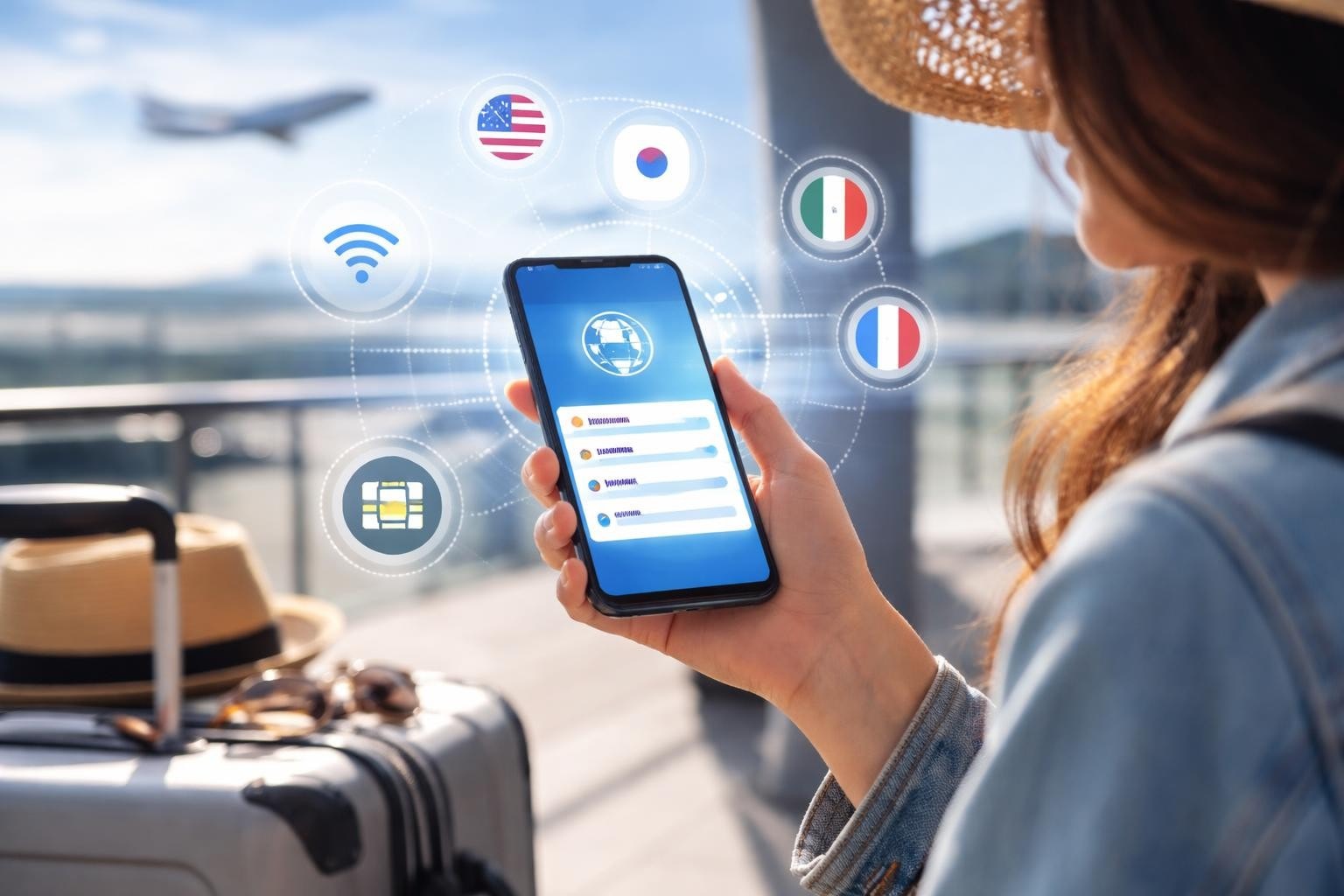
Remember the days of hunting for a local SIM card the moment you landed in a new country? You'd queue at the airport kiosk, fumble with tiny SIM cards, and pray you didn't lose that precious ejector pin. Those days are rapidly becoming ancient history, thanks to eSIM technology. If you're planning any international travel in 2026, understanding esim for travel isn't just helpful-it's essential for staying connected without breaking the bank.
What Exactly Is an eSIM and Why Should Travellers Care?
An eSIM (embedded SIM) is a digital SIM card that's already built into your smartphone. Instead of swapping physical cards when you travel, you simply download a data plan directly to your device. Think of it as upgrading from buying physical music CDs to streaming on Spotify-same result, infinitely more convenient.
The benefits for travellers are substantial. You can avoid expensive roaming charges and stay securely connected across different countries without the hassle of tracking down local providers. And since 2026 has seen eSIM technology become standard in most flagship phones, you're likely already equipped to take advantage of this revolution.
The Growing Adoption of eSIM Technology
The shift towards eSIM has accelerated dramatically. Mobile network operators are increasingly recognising travel eSIMs as a significant growth opportunity, with millions of travellers now choosing digital connectivity over traditional options. Major smartphone manufacturers including Apple, Samsung, and Google have made eSIM compatibility standard across their recent models.
What's driving this change? Convenience plays a huge role, but so does environmental consciousness. Physical SIM cards generate considerable plastic waste, whilst eSIMs eliminate this entirely. For the modern traveller who values both efficiency and sustainability, esim for travel represents the perfect solution.
How eSIM for Travel Actually Works
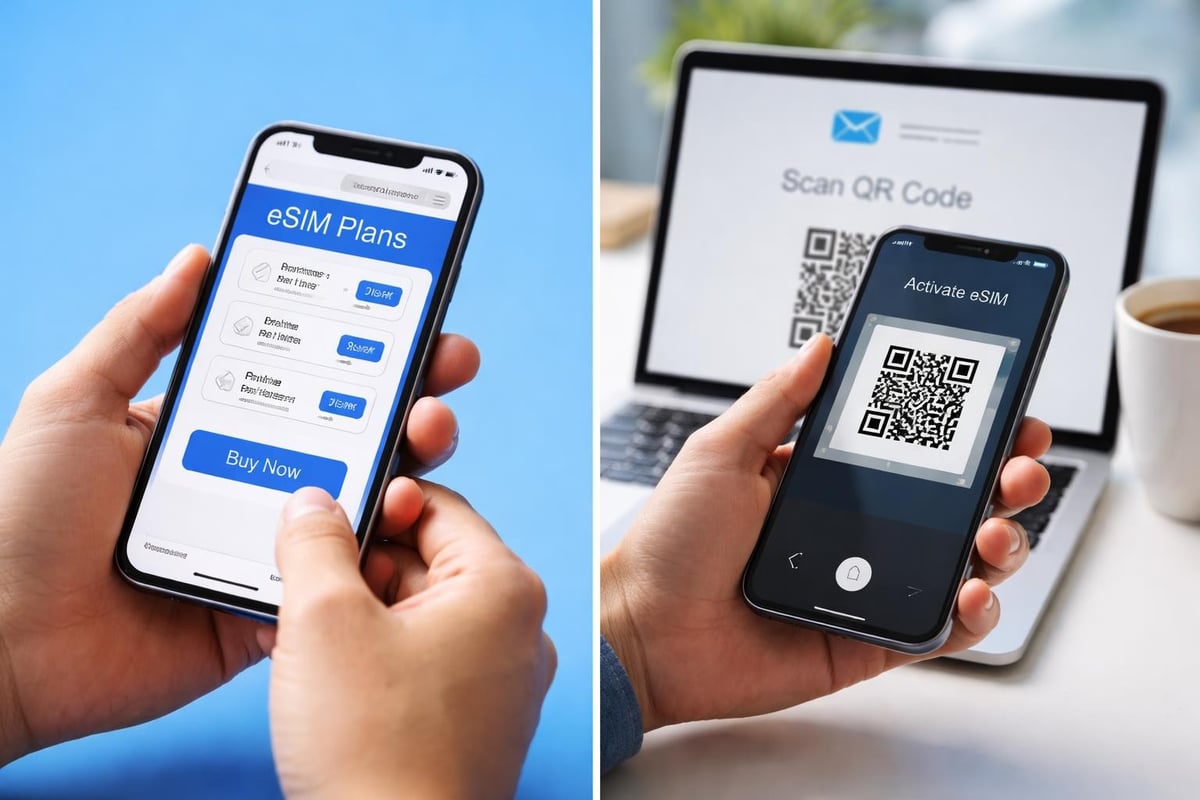
Setting up an esim for travel is remarkably straightforward, even if you're not particularly tech-savvy. Here's the typical process:
- Check your device compatibility before your trip using manufacturer specifications
- Purchase an eSIM plan from a provider offering coverage in your destination
- Receive a QR code via email instantly after purchase
- Scan the QR code through your phone's settings menu
- Activate the plan when you arrive at your destination
The entire setup usually takes less than five minutes. You can even install multiple eSIM profiles on a single device and switch between them as needed-perfect if you're visiting several countries on one trip.
Understanding eSIM Compatibility
Before you get too excited, you'll need to verify your phone supports eSIM technology. Most devices released after 2020 include this capability, but it's worth checking your specific device's compatibility beforehand. iPhones from the XS onwards, Samsung Galaxy phones from the S20 series, and Google Pixels from the 3rd generation all support eSIM functionality.
Here's a quick compatibility reference:
| Brand | Compatible Models | Year Introduced |
|---|---|---|
| Apple | iPhone XS and newer | 2018 |
| Samsung | Galaxy S20 and newer | 2020 |
| Pixel 3 and newer | 2018 | |
| Motorola | Razr 2019 and newer | 2019 |
| Huawei | P40 and newer | 2020 |
Choosing the Right eSIM Provider for Your Journey
Not all eSIM providers are created equal. When selecting a service for your travels, you'll want to consider several key factors that directly impact your experience abroad.
Coverage breadth matters enormously. Does the provider offer reliable service in your destination countries? Some providers specialise in regional coverage whilst others offer truly global options spanning 200+ countries. Comparing different eSIM options helps you understand which suits your itinerary best.
Pricing structures vary considerably. Some providers charge by data volume, others by duration, and some offer unlimited plans with specific terms. For a typical two-week European holiday, you might need between 3-10GB depending on your usage patterns.
Key Features to Look For
- Instant activation without waiting periods
- Multi-device support if you travel with tablets or secondary phones
- Transparent pricing with no hidden roaming fees
- Customer support accessible across time zones
- Flexible plan durations matching your trip length
- Top-up options if you run low on data
The setup process should be intuitive. Understanding how to properly set up your eSIM ensures you're connected the moment you land, rather than scrambling to find WiFi at the airport.
Cost Analysis: eSIM vs Traditional Roaming
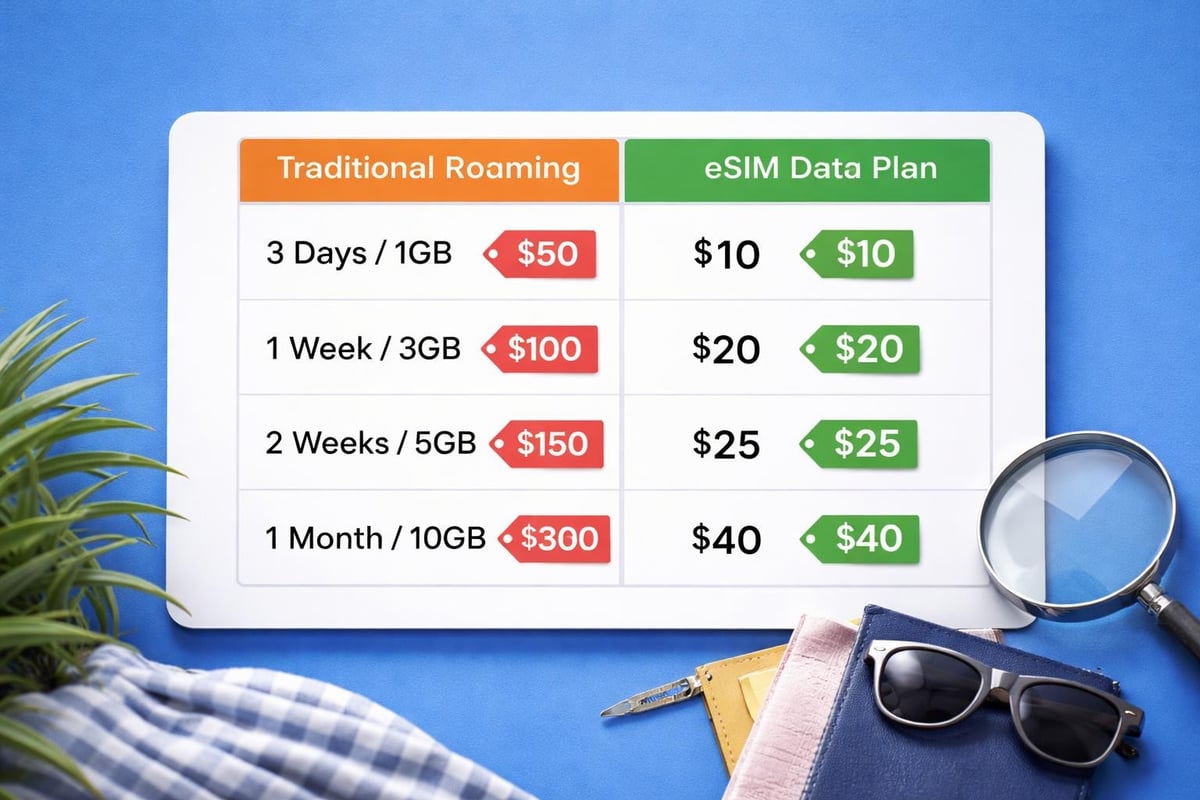
Let's talk money, because that's what really matters when you're budgeting for a trip. Traditional roaming charges from your home carrier can be eye-wateringly expensive-we're talking £5-15 per day just for the privilege of using your phone abroad.
Compare that to esim for travel options, where you might pay £15-30 for a complete two-week data package. The savings are substantial, especially for longer trips or data-heavy users.
| Option | 7-Day Cost | 14-Day Cost | Data Included |
|---|---|---|---|
| Traditional Roaming | £35-105 | £70-210 | Limited |
| Physical Local SIM | £15-25 | £20-35 | 5-15GB |
| eSIM Travel Plan | £10-20 | £15-30 | 5-20GB |
The Associated Press highlights how roaming eSIMs help avoid hefty data fees, particularly during peak summer travel when you're likely using maps, translation apps, and social media constantly.
Hidden Costs to Watch For
Whilst eSIMs are generally more affordable, watch out for these potential extras:
- Activation fees (though reputable providers typically don't charge these)
- Limited validity periods that start from purchase, not activation
- Throttling policies after reaching certain data thresholds
- Regional restrictions within advertised coverage areas
Always read the terms carefully before purchasing. The cheapest option isn't always the best value if it comes with significant limitations.
Regional Coverage and Network Quality
Where you're travelling significantly impacts which esim for travel provider you should choose. Network partnerships determine your actual connectivity experience, not just the provider's marketing claims.
For European travel, many eSIM providers offer excellent multi-country packages that work seamlessly as you cross borders. If you're planning a Mediterranean cruise or interrailing adventure, Europe eSIM solutions provide continuous coverage without needing separate plans for each country.
Understanding Network Partnerships
eSIM providers don't actually own cellular networks-they partner with local carriers in each country. Premium providers establish relationships with multiple networks per country, ensuring you connect to the strongest available signal. This redundancy proves invaluable in rural areas or regions with patchy coverage.
When researching providers, look for transparency about their network partners. Vague promises of "nationwide coverage" mean little if they're using a secondary carrier with limited infrastructure.
Popular destination considerations:
- Asia-Pacific: Check for partnerships with major carriers like Singtel, Telstra, or SoftBank
- Americas: Look for AT&T, T-Mobile, or Rogers network access
- Europe: Vodafone, Orange, and Deutsche Telekom partnerships indicate solid coverage
- Middle East: Etisalat and Zain provide extensive regional networks
Practical Tips for Using eSIM While Travelling
Getting the most from your esim for travel requires a bit of preparation and some smart usage strategies. Here are the insider tips that frequent travellers swear by.
Before you leave home, install your eSIM profile whilst you're still connected to reliable WiFi. Test the connection to ensure everything works properly-the last thing you want is troubleshooting technical issues after a long flight. Having a comprehensive installation guide bookmarked can save considerable stress.
Optimising Your Data Usage
Even with generous data allowances, smart usage extends your plan's lifespan:
- Download offline maps for your destinations before relying on mobile data
- Disable automatic app updates and background refresh for non-essential apps
- Use WiFi for large downloads like streaming video or software updates
- Monitor your data consumption through your phone's settings
- Enable data-saving modes in browsers and social media apps
Most modern smartphones let you set data warnings and limits, preventing unpleasant surprises if you're approaching your allowance.

Managing Multiple eSIM Profiles
One of the cleverest features of eSIM technology is the ability to store multiple profiles simultaneously. This proves particularly useful for different scenarios during your travels.
You might keep your home number active on one eSIM whilst using a travel data plan on another. This way, you can receive important calls or messages without incurring data roaming charges. CNN provides excellent guidance on choosing the right eSIM strategy based on your specific connectivity needs.
Dual-Number Strategies
Savvy business travellers often maintain separate profiles for work and personal use. Your primary number handles calls and texts whilst your travel eSIM provides affordable data. This separation offers several advantages:
- Cost control by segregating business and leisure expenses
- Privacy protection without sharing your primary number internationally
- Flexibility to disable profiles selectively when needed
- Simplified billing when claiming business expenses
Most phones allow you to label each eSIM profile clearly ("Home Number," "Travel Data," etc.) making it easy to select the right one for each purpose.
Troubleshooting Common eSIM Issues
Despite eSIM technology being remarkably reliable, occasional hiccups occur. Knowing how to resolve common issues quickly keeps you connected when it matters most.
Connection problems top the list of traveller complaints. If your eSIM isn't connecting immediately upon arrival:
- Toggle airplane mode off and on to force a network search
- Manually select a network from available carriers in your settings
- Restart your device completely
- Verify the eSIM profile is set as your primary data line
- Check that data roaming is enabled for the eSIM profile
Slow data speeds might indicate network congestion rather than a provider issue. Try moving to a different location or waiting for off-peak hours. Some eSIM plans throttle speeds after reaching certain data thresholds, so verify your usage hasn't exceeded included allowances.
When to Contact Support
If basic troubleshooting doesn't resolve your issue, quality providers offer responsive customer support. Before contacting them, gather this information:
- Your eSIM activation confirmation or QR code
- Current location and destination country
- Specific error messages appearing on your device
- Device model and operating system version
- Steps you've already attempted
Most reputable eSIM providers maintain 24/7 support channels specifically because travel emergencies don't respect business hours.
Security Considerations for eSIM Travel
Using esim for travel doesn't just save money-it can actually enhance your security compared to traditional options. Physical SIM cards can be stolen or swapped maliciously, whilst eSIM profiles require device-level authentication to modify.
That said, you still need to practise good security hygiene. Avoid purchasing eSIM plans from unknown providers offering prices that seem too good to be true. Stick with established companies that offer secure payment processing and clear privacy policies.
Essential security practices include:
- Purchasing eSIMs only from verified, reputable providers
- Using secure payment methods with fraud protection
- Enabling two-factor authentication on accounts
- Avoiding public WiFi for sensitive transactions, even with eSIM data
- Keeping your device's operating system updated
How eSIMs enhance travel security is often overlooked, but the technology's digital nature prevents many physical security vulnerabilities associated with traditional SIM cards.
The Future of eSIM for Travel
Looking ahead, eSIM technology will only become more integrated into the travel experience. We're already seeing automatic carrier switching that selects the best network based on location and signal strength. By 2027, industry analysts predict that over 60% of international travellers will rely exclusively on eSIM connectivity.
Pricing continues to decrease as competition intensifies amongst providers. What cost £50 for a month's international coverage in 2023 now runs closer to £20-30 for similar service in 2026. This democratisation of connectivity means even budget travellers can stay reliably connected throughout their journeys.
Emerging Technologies and Integration
The convergence of eSIM with other travel technologies promises exciting possibilities. Imagine booking a flight and automatically receiving destination eSIM recommendations based on your itinerary. Or arriving in a new country and having your phone automatically activate pre-purchased local connectivity.
Some forward-thinking providers are already exploring:
- AI-powered plan recommendations based on travel patterns
- Automatic top-ups when approaching data limits
- Integrated travel insurance bundled with connectivity plans
- Smart roaming that switches between networks for optimal coverage
Making the Switch to eSIM Travel Connectivity
If you're still relying on traditional roaming or hunting for local SIM cards at airports, it's time to embrace the esim for travel revolution. The technology has matured beyond early adoption challenges into a reliable, cost-effective solution for global connectivity.
Start by checking if your current device supports eSIM functionality. Most phones released in the past three years do, but verifying compatibility takes only a moment. Once confirmed, research providers offering coverage in your upcoming destination countries.
For your first eSIM experience, consider starting with a shorter trip or a single-country plan to familiarise yourself with the process. The learning curve is gentle, and most travellers find the setup process more intuitive than expected. Reading through available eSIM options for different regions helps you understand the variety of plans available.
Comparing Top eSIM Providers
The eSIM market has become increasingly competitive in 2026, which benefits consumers through better pricing and features. TechRadar's comprehensive review of international eSIM providers offers detailed comparisons of coverage, pricing, and user experience across leading options.
When evaluating providers, prioritise those offering transparent pricing without hidden fees. The best services provide clear information about data allowances, validity periods, and supported countries before you purchase.
Practical Scenarios: eSIM in Action
Let's walk through some real-world scenarios where esim for travel proves invaluable, helping you visualise how this technology fits into actual trip planning.
Scenario 1: Multi-country European backpacking trip Sarah's planning three weeks across Spain, Italy, France, and Greece. Rather than purchasing separate SIM cards in each country, she activates a regional eSIM plan before departure. As she crosses borders, her connection transitions seamlessly between local networks without any intervention. She references her Italy travel plans and Greece connectivity needs to ensure continuous coverage.
Scenario 2: Business traveller with dual-number needs James regularly travels between London and Tokyo for work. He maintains his UK number on a physical SIM for calls whilst using a Japan eSIM for data during his trips. This setup lets him receive important calls on his primary number whilst avoiding extortionate roaming data charges.
Scenario 3: Digital nomad with rotating locations Emma works remotely whilst travelling continuously. She maintains three eSIM profiles on her device: one for her home country, one for her current location, and one backup option. As she moves between countries every few weeks, she simply switches active profiles rather than hunting for new connectivity solutions.
Beyond Basics: Advanced eSIM Strategies
Once you've mastered basic esim for travel usage, several advanced strategies can further optimise your international connectivity.
Load balancing across multiple eSIMs allows tech-savvy travellers to distribute data usage across different providers, ensuring backup connectivity if one service experiences issues. This redundancy proves particularly valuable in remote locations or countries with less reliable infrastructure.
Family sharing arrangements through eSIM hotspot capabilities mean one plan can serve multiple devices when travelling together. Parents can maintain connectivity for children's devices without purchasing separate plans for each family member.
Seasonal planning takes advantage of provider promotions. Many eSIM services offer discounted rates during off-peak travel seasons or flash sales around major holidays. Purchasing plans in advance during promotional periods, then activating them when needed, maximises value.
Combining eSIM with Other Connectivity Tools
Smart travellers don't rely exclusively on mobile data. Combining your esim for travel with other connectivity methods creates a robust communication strategy:
| Method | Best For | Limitations |
|---|---|---|
| eSIM Data | Navigation, messaging, general browsing | Data caps on some plans |
| Hotel/Café WiFi | Large downloads, video calls | Security concerns, inconsistent quality |
| Offline Resources | Maps, guides, entertainment | Requires advance preparation |
| VPN Services | Security on public networks | May reduce connection speeds |
Staying connected while travelling has never been easier or more affordable than it is right now. The shift from physical SIM cards to digital eSIM technology represents a genuine improvement in the travel experience, eliminating hassles whilst reducing costs. Whether you're planning a weekend city break or a months-long adventure across continents, understanding how to leverage esim for travel ensures you're always just a tap away from the connectivity you need. Ready to experience seamless global connectivity? gosimless.app offers instant eSIM activation with flexible plans covering 200+ countries, no roaming fees, and setup that takes just minutes-perfect for your next adventure.
gosimless Team
The gosimless editorial desk — testing eSIMs, carriers and travel connectivity so you don't have to. Updated continuously from the road.