Planning a European adventure in 2026? Whether you're exploring the cobblestone streets of Prague, sipping espresso in Rome, or hiking the Norwegian fjords, staying connected shouldn't be complicated or expensive. That's where an esim for europe becomes your travel companion, transforming how you access mobile data across the continent. Gone are the days of hunting for physical SIM cards at airport kiosks or dealing with shocking roaming charges when you return home. Let's explore how this technology can revolutionise your European travels.
What Exactly Is an eSIM for Europe?
Think of an eSIM as your digital passport to connectivity. Unlike traditional SIM cards that you physically insert into your phone, an eSIM operates through embedded technology already built into your device. For European travel, this means you can activate a data plan before your flight even takes off.
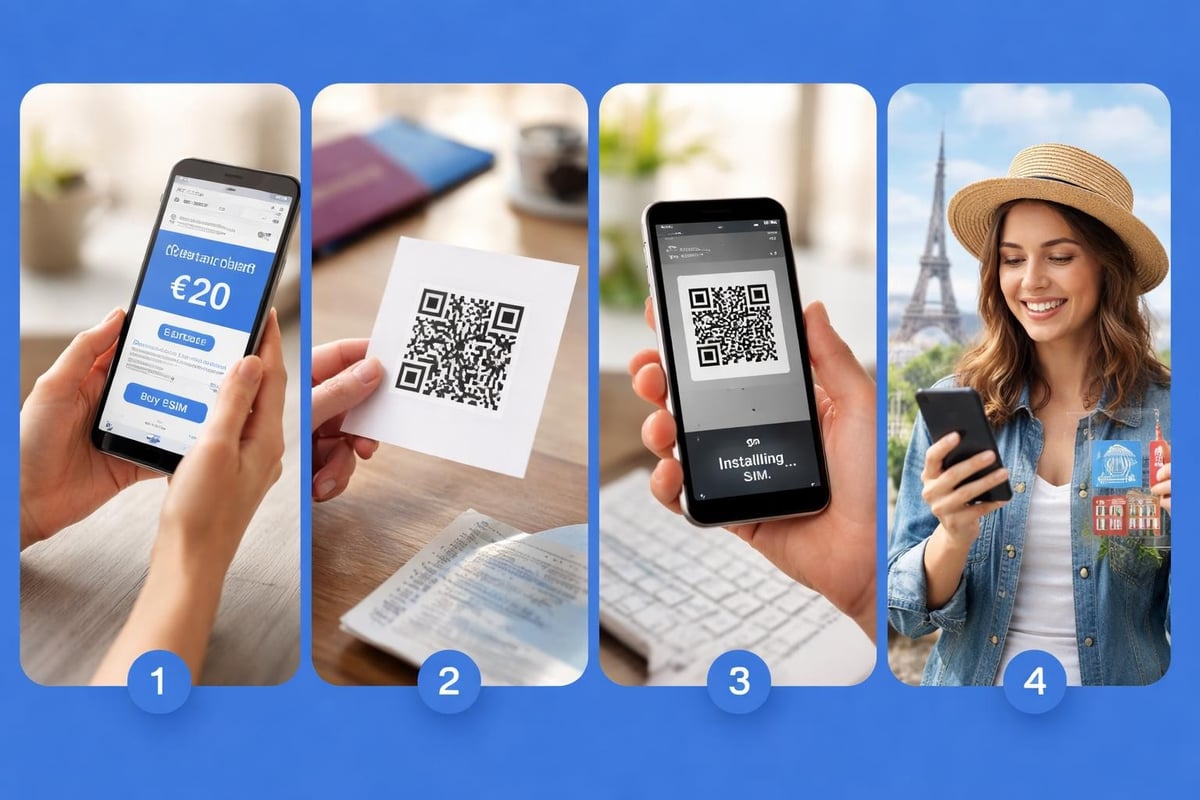
The beauty of using an esim for europe lies in its simplicity. You purchase a plan online, receive a QR code via email, scan it with your phone, and within minutes you're connected. No more removing your home SIM card, no more tiny plastic pieces to lose, and no more language barriers when trying to buy a local SIM.
How eSIM Technology Works Across European Networks
The technical foundation involves eUICC (embedded Universal Integrated Circuit Card) technology, which allows your device to store multiple carrier profiles digitally. When you activate an esim for europe, you're essentially downloading a carrier profile that works across multiple European countries.
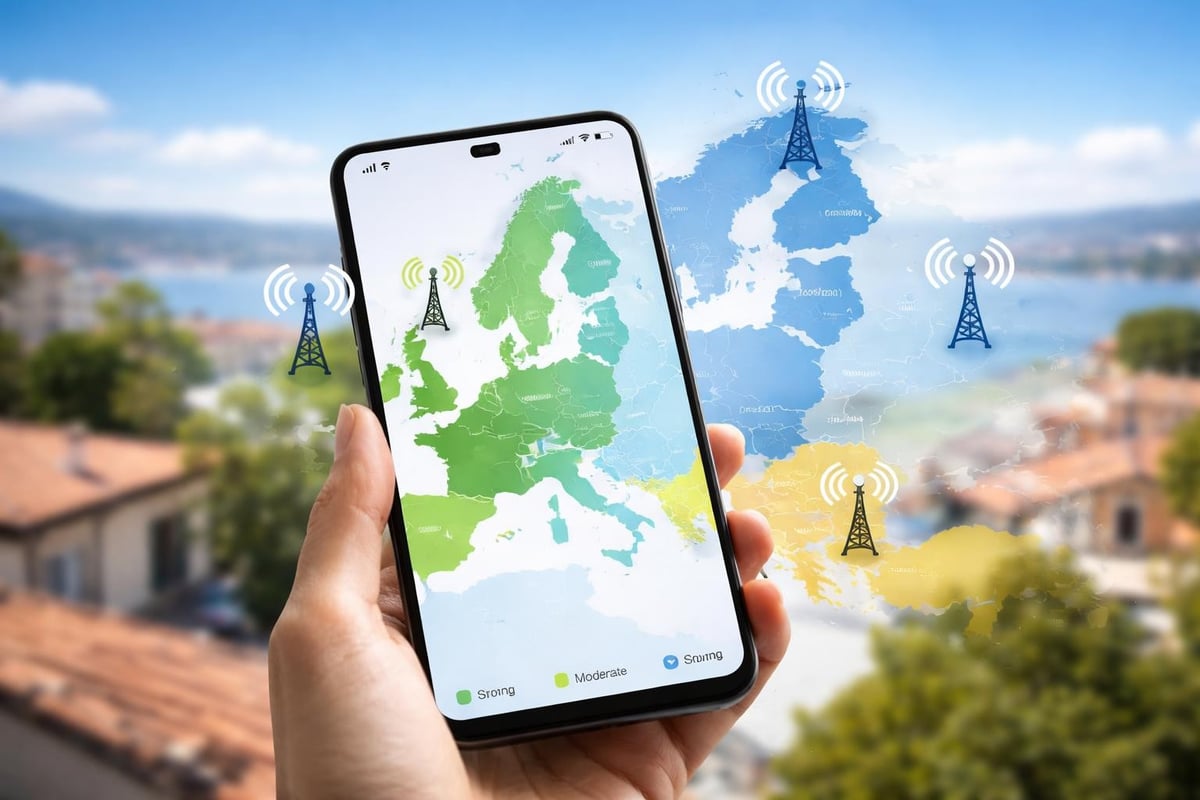
What makes this particularly brilliant for European travel is the multi-country coverage. A single eSIM can connect you across 40+ European nations, automatically switching between local networks as you cross borders. You might start your day in Germany using Deutsche Telekom's network, cross into Austria by lunch, and find yourself connected to A1 Telekom Austria without lifting a finger.
Coverage: Which European Countries Can You Actually Use?
Here's where things get interesting. Not all eSIM plans offer the same coverage, and understanding the differences can save you from connectivity headaches.
Western and Central Europe
Most esim for europe plans excel in these regions:
- United Kingdom: Full 4G/5G coverage across England, Scotland, Wales, and Northern Ireland
- France: Comprehensive coverage including Paris, Lyon, and rural Provence
- Germany: Excellent connectivity from Berlin to Bavaria
- Spain: Coverage spanning Barcelona, Madrid, and coastal regions
- Italy: From Milan's fashion district to Sicily's beaches
- Netherlands: Amsterdam and beyond with high-speed access
- Belgium: Brussels and Bruges fully covered
Nordic and Baltic Countries
Coverage in Northern Europe has improved dramatically in 2026:
- Norway, Sweden, Finland, and Denmark typically included
- Iceland coverage varies by provider
- Estonia, Latvia, and Lithuania increasingly supported
Eastern and Southeastern Europe
This is where you'll want to check the fine print. Some providers offer broader coverage than others:
| Region | Typical Coverage | What to Verify |
|---|---|---|
| Poland, Czech Republic, Hungary | Widely supported | Urban vs rural speeds |
| Romania, Bulgaria | Often included | Network partner quality |
| Greece | Standard coverage | Island connectivity |
| Croatia, Slovenia | Usually available | Coastal area performance |
If you're planning to visit specific countries like Spain, Italy, or Greece, you'll find dedicated plans that often provide better rates and speeds than general European packages.
Choosing the Right eSIM Plan for Your European Adventure
You're probably wondering: how much data do I actually need? The answer depends entirely on how you travel.
Data Usage Scenarios
Light user (1-3 GB for a week):
- Checking maps occasionally
- Messaging via WhatsApp
- Posting occasional photos to Instagram
- Limited web browsing
Moderate user (5-10 GB for a week):
- Regular Google Maps navigation
- Social media throughout the day
- Video calls back home
- Streaming music while walking
Heavy user (15+ GB for a week):
- Constant navigation and location services
- Uploading high-resolution photos and videos
- Streaming Netflix during downtime
- Mobile hotspot for your laptop
For detailed guidance on estimating your needs, check out this comprehensive data usage guide that breaks down typical consumption patterns.
Duration and Flexibility
eSIM plans for Europe come in various timeframes:
- Short trips (7-10 days): Perfect for city breaks or single-country visits
- Standard holidays (14-21 days): Ideal for multi-country tours
- Extended travel (30+ days): Best for digital nomads or long-term explorers
- Unlimited validity: Some plans remain active until you've used all data
The flexibility extends beyond duration. Many providers now offer top-up options, so if you're running low in Portugal or France, you can add more data without purchasing an entirely new plan.
Network Quality: MNO vs MVNO Matters More Than You Think
Not all esim for europe providers are created equal, and the distinction between mobile network operators (MNO) and mobile virtual network operators (MVNO) significantly impacts your experience.
Direct Network Operators vs Resellers
Understanding the difference between MNO and MVNO services is crucial. MNOs own the physical infrastructure, whilst MVNOs rent network access. This affects:
- Speed: MNOs typically offer faster data rates, especially during peak hours
- Priority: During network congestion, MVNO traffic may be deprioritised
- Coverage: MNOs provide more comprehensive coverage in remote areas
- Support: Direct operators often offer better customer service
When selecting your esim for europe, ask whether the provider operates as an MNO or MVNO. For critical business travel or areas off the beaten path, MNO-backed eSIMs deliver more reliable performance.
Setting Up Your eSIM: Easier Than You Might Think
I remember my first time activating an esim for europe. I was convinced I'd somehow break my phone or lose my home number. Turns out, the process is remarkably straightforward.
Before You Purchase
Check device compatibility: Not all phones support eSIM technology. Most iPhones from XR onwards work perfectly, as do recent Samsung Galaxy models and Google Pixels. Visit the compatible devices page to verify your specific model.
Confirm carrier lock status: Your phone must be unlocked to use an eSIM. If you're still paying off your device through your carrier, you might face restrictions.
The Activation Process
Here's the typical sequence for activating your esim for europe:
- Purchase your plan from a reputable provider
- Receive your QR code via email (usually within minutes)
- Navigate to Settings > Cellular/Mobile Data > Add eSIM
- Scan the QR code using your phone's camera
- Label your plan (e.g., "Europe Travel")
- Set data preferences to use eSIM for mobile data
- Keep your home SIM active for calls and texts if needed
The entire process takes roughly five minutes. For visual step-by-step guidance, the installation guide walks you through every screen.
Dual SIM Functionality
One of the cleverest features is dual SIM capability. Your esim for europe handles data whilst your home SIM remains active for important calls. You can even configure your phone to automatically use the cheaper eSIM for data whilst keeping your regular number for voice.
Cost Comparison: What You'll Actually Pay in 2026
Pricing for esim for europe has become increasingly competitive. Let's break down what you can expect:
Typical Pricing Structure
| Data Amount | Duration | Price Range | Best For |
|---|---|---|---|
| 1-3 GB | 7 days | £4-£8 | Light users, city breaks |
| 5 GB | 14 days | £10-£15 | Standard tourists |
| 10 GB | 30 days | £18-£25 | Moderate users, longer trips |
| 20 GB | 30 days | £30-£40 | Heavy users, remote work |
| Unlimited | 7-30 days | £45-£70 | Streamers, constant connectivity |
Compare these rates to traditional roaming charges from major UK carriers, which can still cost £5-£7 per day even within Europe. For a two-week holiday, that's potentially £70-£98 versus a fixed eSIM cost of £10-£15.
Hidden Costs to Watch For
Watch out for these potential extras:
- Activation fees: Some providers charge separately for setup
- Speed throttling: "Unlimited" plans may reduce speeds after certain thresholds
- Top-up costs: Additional data can be expensive if you run out
- Expiry policies: Unused data might disappear after the validity period
Real-World Performance: What Users Actually Experience
The theoretical specifications look great on paper, but how does an esim for europe perform in practice?
Speed Tests Across Major Cities
Based on 2026 user reports, average download speeds vary significantly:
- London, Paris, Berlin: 40-80 Mbps on 5G networks
- Barcelona, Amsterdam, Rome: 30-60 Mbps typically 4G
- Smaller cities: 15-30 Mbps, perfectly adequate for most needs
- Rural areas: 5-15 Mbps, sufficient for navigation and messaging
Upload speeds generally range between 10-30 Mbps in urban areas, which handles video calls and social media uploads comfortably.
Connectivity When You Need It Most
The true test comes in challenging situations:
Train travel: Coverage remains stable on major routes like the Eurostar, ICE trains in Germany, and high-speed trains in France. Expect occasional drops in tunnels, but reconnection happens automatically.
Mountains and remote areas: This is where coverage in remote destinations becomes crucial. Higher-tier eSIM providers maintain better connectivity in Alpine regions, Scottish Highlands, and Norwegian fjords.
Ferry crossings: Coverage typically extends 10-20 km offshore on major routes, though speeds may slow considerably.
Security and Privacy Considerations
Using an esim for europe involves transmitting data across multiple networks, so security deserves attention.
Data Encryption
Reputable eSIM providers use industry-standard encryption for your data transmission. However, you should still:
- Avoid accessing banking apps on public Wi-Fi
- Use a VPN for sensitive transactions
- Enable two-factor authentication for important accounts
- Verify the eSIM provider's privacy policy before purchasing
Account Security
Your eSIM account typically requires minimal personal information, but protect it like any other service:
- Create a strong, unique password
- Enable account notifications for unusual activity
- Download eSIM profiles only from official sources
- Keep your QR code secure and don't share it publicly
Multi-Country Itineraries: Making eSIM Work for Complex Routes
Planning a grand European tour across multiple countries? Your esim for europe needs to handle the complexity.
Automatic Network Switching
Modern eSIM technology detects when you've crossed borders and automatically connects to the best available network. You'll notice a brief "searching" period (usually 30-60 seconds) as your device registers with the new carrier, then connectivity resumes seamlessly.
Coverage Gaps to Anticipate
Even comprehensive esim for europe plans may have limitations:
- Microstates: Monaco, San Marino, Vatican City sometimes require specific arrangements
- Border regions: Occasionally connects to neighbouring country networks with different rates
- Disputed territories: Coverage can be unpredictable in politically complex areas
If your itinerary includes unique destinations like Turkey, you might need a separate regional eSIM, as Turkey technically straddles Europe and Asia.
Top Provider Features Worth Paying For
When evaluating esim for europe options, certain features justify higher prices:
Customer Support
Premium providers offer:
- 24/7 support via chat or email
- Multi-language assistance
- Quick resolution for connection issues
- Replacement codes if activation fails
Technical Capabilities
Look for these advanced features:
Tethering/hotspot: Share your connection with tablets or laptops 5G access: Where available, significantly faster speeds Network selection: Manually choose preferred carriers Usage tracking: Real-time data consumption monitoring
Value-Added Services
Some providers bundle extras:
- Free incoming calls
- International calling credits
- Access to Wi-Fi hotspots
- Travel insurance discounts
When eSIM for Europe Might Not Be Your Best Choice
Despite all the advantages, an esim for europe isn't always the optimal solution.
Situations Favouring Alternative Options
Very short visits (1-2 days): Airport Wi-Fi and offline maps might suffice Group travel: A single pocket Wi-Fi device could serve multiple people more economically Extremely remote locations: Physical local SIM cards sometimes offer better coverage Long-term stays (3+ months): Local contracts might prove cheaper overall
Device Limitations
If your phone doesn't support eSIM, you have options:
- Physical international SIM cards still work perfectly well
- Portable Wi-Fi hotspots provide connectivity for multiple devices
- Relying on accommodation Wi-Fi with occasional cafe stops for connectivity
Making Your Final Decision
Choosing the right esim for europe ultimately depends on your specific circumstances. Ask yourself:
- How many countries am I visiting?
- What's my expected daily data usage?
- Do I need high speeds for work, or just basic connectivity?
- Will I need to share my connection with other devices?
- What's my budget for staying connected?
For comprehensive European coverage, Europe eSIM plans offer instant activation with no roaming fees and affordable data options that work across the continent.
When weighing your options, comparing major eSIM providers can help you understand the differences in coverage, pricing, and features. Different providers excel in different areas, so matching your priorities with provider strengths ensures the best experience.
Troubleshooting Common eSIM Issues
Even with straightforward technology, occasional hiccups occur. Here's how to resolve the most common problems with your esim for europe:
Won't Activate
Solution steps:
- Verify you have an internet connection (use Wi-Fi) during activation
- Ensure the QR code is scanning clearly (increase screen brightness)
- Check that your device iOS/Android version supports eSIM
- Restart your phone and try again
- Contact your provider for a replacement code if needed
No Data Connection After Activation
Quick fixes:
- Toggle aeroplane mode on and off
- Manually select a network in Settings
- Verify data roaming is enabled for your eSIM
- Check your APN settings match provider specifications
- Ensure you haven't exhausted your data allowance
Slow Speeds or Dropped Connections
Improvement tactics:
- Move to a different location (buildings can block signals)
- Manually select a different network carrier
- Disable and re-enable mobile data
- Check for network outages in your current area
- Verify you're not being throttled after reaching fair usage limits
Most issues resolve within minutes using these basic troubleshooting steps. For persistent problems, reputable providers respond quickly through their support channels.
Environmental and Practical Benefits
Beyond convenience and cost savings, using an esim for europe offers genuine environmental advantages worth considering.
Reducing Plastic Waste
Traditional SIM cards generate substantial waste:
- The plastic card itself
- Packaging materials
- Shipping containers and envelopes
- Adapter pieces for different SIM sizes
Multiply this across millions of travellers annually, and the waste adds up considerably. eSIM technology eliminates all physical components, existing purely as digital information.
Simplified Travel Logistics
The practical benefits extend throughout your journey:
Pre-departure: Activate before leaving home, test connectivity, troubleshoot any issues in familiar surroundings In-flight: No need to queue at airport kiosks upon arrival Multi-destination: Switch plans or top up from anywhere with internet access Return home: Keep your eSIM profile installed for future European trips
Future of eSIM Technology in Europe
The trajectory for esim for europe looks increasingly promising as we move through 2026 and beyond.
Emerging Trends
5G expansion: More European cities deploying comprehensive 5G networks Lower pricing: Increased competition driving costs down further Better coverage: Investment in rural and remote area infrastructure Regulatory support: EU initiatives promoting digital connectivity for travellers
What to Expect by 2027-2028
Industry analysts predict several developments:
- Regional eSIM integration with wearable devices becoming standard
- Automatic plan switching based on your location and usage patterns
- Blockchain-based eSIM platforms for enhanced security
- Voice and SMS inclusion becoming standard rather than data-only plans
Expert reviews on eSIM options continue to highlight how quickly this market evolves, with new features and providers emerging regularly.
Special Use Cases: Business Travel and Digital Nomads
Professional travellers have specific requirements that go beyond typical tourist needs for an esim for europe.
Business Travel Priorities
Corporate users need:
| Requirement | Why It Matters | What to Look For |
|---|---|---|
| Reliability | Missed connections cost opportunities | MNO-backed services, redundant coverage |
| Speed | Video conferences require bandwidth | Guaranteed minimum speeds, 5G access |
| Expense tracking | Simplified reimbursement | Detailed usage reports, invoice generation |
| Security | Protecting confidential information | Enterprise-grade encryption, VPN compatibility |
Digital Nomad Considerations
Long-term travellers working remotely across Europe face different challenges:
Cost efficiency: Monthly plans typically offer better value than weekly options when staying 30+ days Flexibility: Ability to pause and resume service between travel periods Hotspot capability: Essential for connecting laptops and other work devices Consistent speeds: Avoiding throttling that impacts productivity
For those combining European travel with trips to other continents, understanding international eSIM options helps create a comprehensive connectivity strategy.
FAQ: Your Burning Questions Answered
Can I use my esim for europe on multiple devices? Not simultaneously. Each eSIM profile works on one device at a time. However, you can delete and reinstall the same profile on a different device if needed, though some providers limit how many times you can do this.
What happens to my home phone number? Your home SIM remains completely unaffected. In dual SIM mode, you can receive calls and texts on your regular number whilst using the eSIM exclusively for data.
Can I buy an eSIM after I've already arrived in Europe? Absolutely. As long as you have internet access (hotel Wi-Fi, cafe, etc.), you can purchase and activate an esim for europe from anywhere. However, buying before departure lets you test everything beforehand.
Will my eSIM work in Switzerland? Switzerland isn't part of the EU, so not all European eSIM plans include it. Verify coverage specifically mentions Switzerland if you're visiting, as some providers charge extra or exclude it entirely.
For more detailed answers to common questions, the comprehensive FAQ section addresses technical queries and specific scenarios.
Staying connected across Europe no longer means juggling multiple SIM cards, paying extortionate roaming fees, or hunting for Wi-Fi hotspots. An esim for europe simplifies international travel while saving you money and hassle. Whether you're exploring Mediterranean coastlines, Nordic capitals, or Alpine villages, digital connectivity keeps you navigating, communicating, and sharing experiences effortlessly. Ready to travel smarter? gosimless.app provides instant eSIM activation with affordable plans covering 200+ countries, secure payments, and multi-device support to keep you connected wherever your European adventures take you.
gosimless Team
The gosimless editorial desk — testing eSIMs, carriers and travel connectivity so you don't have to. Updated continuously from the road.