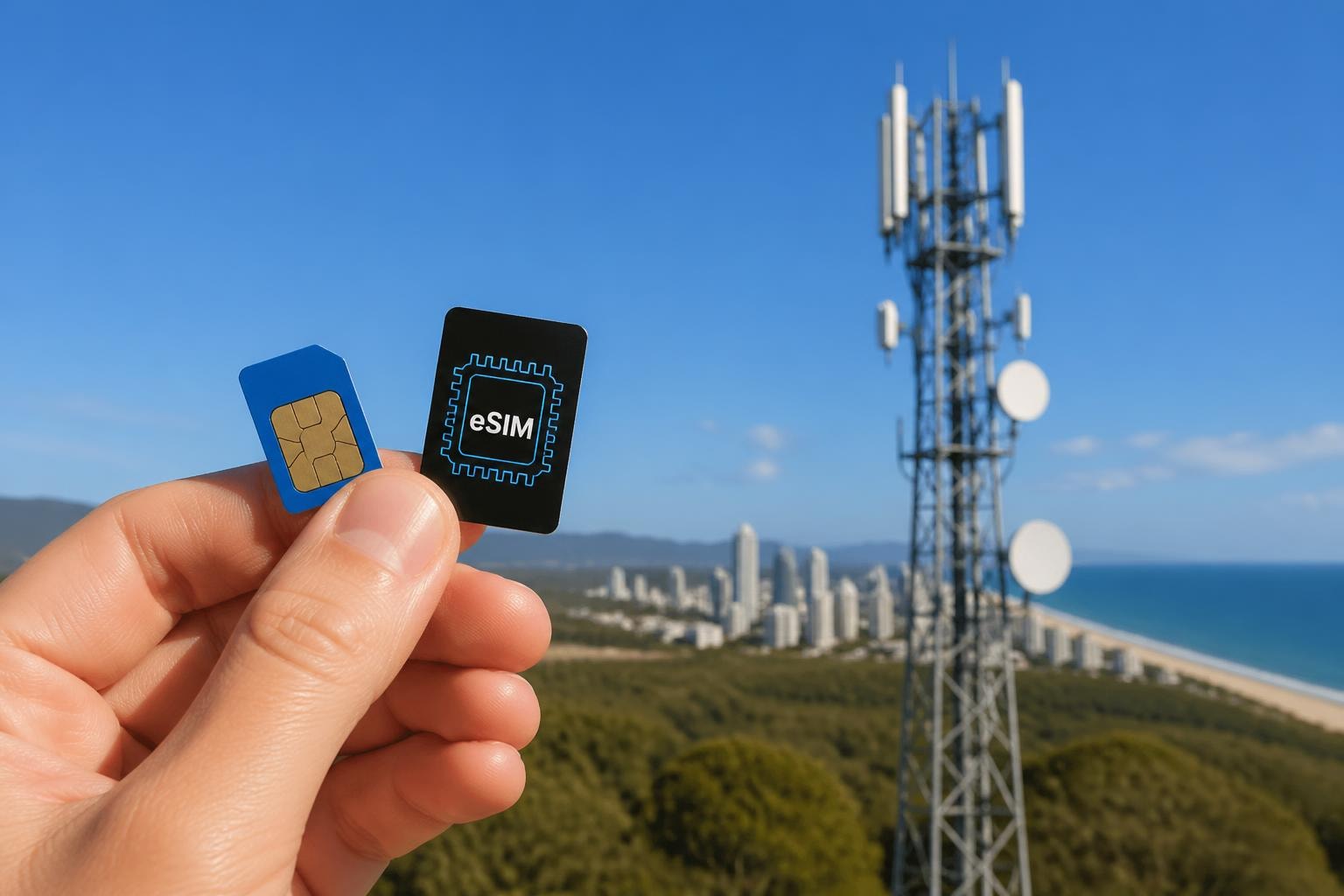
Planning a trip to Australia or relocating Down Under? You're probably wondering how you'll stay connected without facing those dreaded roaming charges. The good news is that getting an esim for australia has never been easier, and in 2026, it's become the go-to solution for travellers and digital nomads visiting the Land Down Under. Whether you're exploring Sydney's harbour, diving the Great Barrier Reef, or road-tripping through the Outback, having reliable mobile data is essential. Let's dive into everything you need to know about using eSIM technology in Australia this year.
What Makes eSIM Technology Perfect for Australia
Australia's vast geography presents unique connectivity challenges. You might find yourself in bustling Melbourne one day and in the remote Northern Territory the next. Traditional SIM cards meant hunting down a shop, queuing up, and dealing with paperwork. Not exactly ideal when you've just landed after a long-haul flight.
eSIM technology has transformed this experience entirely. Instead of fumbling with tiny plastic cards, you simply download a digital profile to your phone before you even board your plane. The process takes minutes, not hours, and you're connected the moment you land.
How eSIM Works in the Australian Market
The Australian telecommunications landscape comprises three major networks: Telstra, Optus, and Vodafone. Each offers different coverage strengths, particularly in regional areas. When you choose an esim for australia, you're typically connecting through one of these networks.
Here's what makes eSIM particularly brilliant for Australian travel:
- Instant activation upon arrival
- No physical store visits required
- Multiple profiles on one device
- Seamless switching between plans
- Environmental benefits from reduced plastic waste
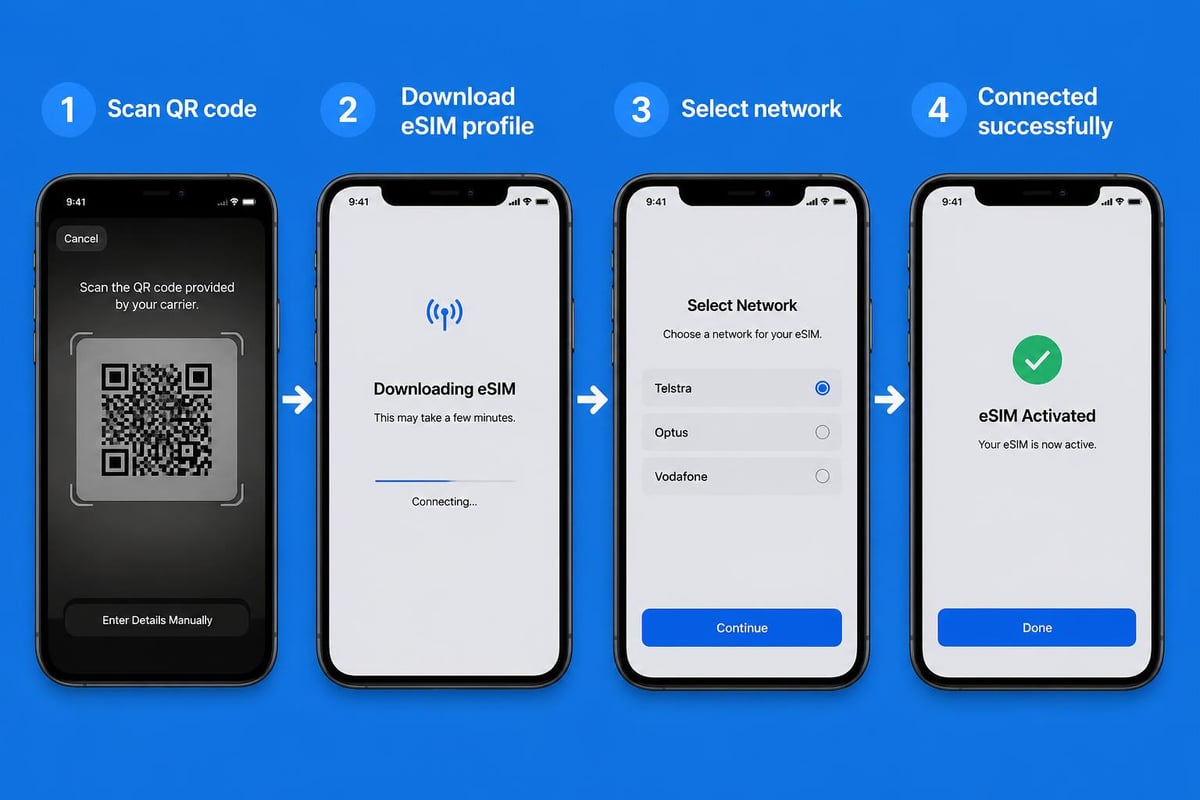
The technology works by embedding a programmable SIM chip directly into your device. You scan a QR code or enter activation details, and within moments, you're connected to the network. It's genuinely that straightforward.
Choosing the Right Australian Network for Your eSIM
Not all networks are created equal, especially when you're dealing with a country as geographically diverse as Australia. The network you choose can make the difference between staying connected and finding yourself without signal in crucial moments.
Network Coverage Comparison
| Network | Urban Coverage | Regional Coverage | Remote Areas | Speed Ratings |
|---|---|---|---|---|
| Telstra | Excellent | Excellent | Best | Very Fast |
| Optus | Excellent | Good | Moderate | Fast |
| Vodafone | Excellent | Good | Limited | Fast |
Telstra consistently leads in coverage, particularly if you're venturing beyond major cities. According to network comparisons for travel eSIMs, Telstra covers approximately 99.5% of the Australian population and reaches far into regional areas where competitors struggle.
If you're sticking to Sydney, Melbourne, Brisbane, and other major centres, any network will serve you well. Planning to explore Tasmania or drive the Great Ocean Road? Telstra-backed eSIM plans offer superior reliability.
Setting Up Your eSIM for Australia
Getting started with an esim for australia is refreshingly simple, though the exact process varies slightly depending on your device. Most modern smartphones from Apple, Samsung, and Google support eSIM technology, but it's worth checking your compatible devices before purchasing a plan.
Installation Steps
- Verify device compatibility on your phone settings
- Purchase your eSIM plan from a trusted provider
- Receive your QR code via email
- Scan the code in your device settings
- Activate your profile and select it as your data line
- Test connectivity before leaving home
For iOS users, Apple provides detailed guidance on preparing and activating eSIMs, which walks through the entire process with screenshots and troubleshooting tips.
The beauty of setting up beforehand is that you can test everything whilst still connected to your home WiFi. If something goes wrong, you've got time to sort it out without the stress of being in an airport or unfamiliar location.
Common Setup Challenges and Solutions
Sometimes things don't go perfectly smoothly. Here are the most frequent hiccups and how to resolve them:
- QR code won't scan: Ensure good lighting and try adjusting distance
- eSIM not activating: Check you've enabled data roaming for the eSIM profile
- No signal: Restart your device and manually select the network
- Slow speeds: Verify you haven't exceeded your data allowance
If you're still stuck, comprehensive troubleshooting guides are available through the installation guide resources.
Data Plans and Pricing for Australian eSIMs
The Australian eSIM market has become increasingly competitive in 2026, which is fantastic news for consumers. Prices have dropped whilst data allowances have grown, making staying connected more affordable than ever.
Typical Plan Options
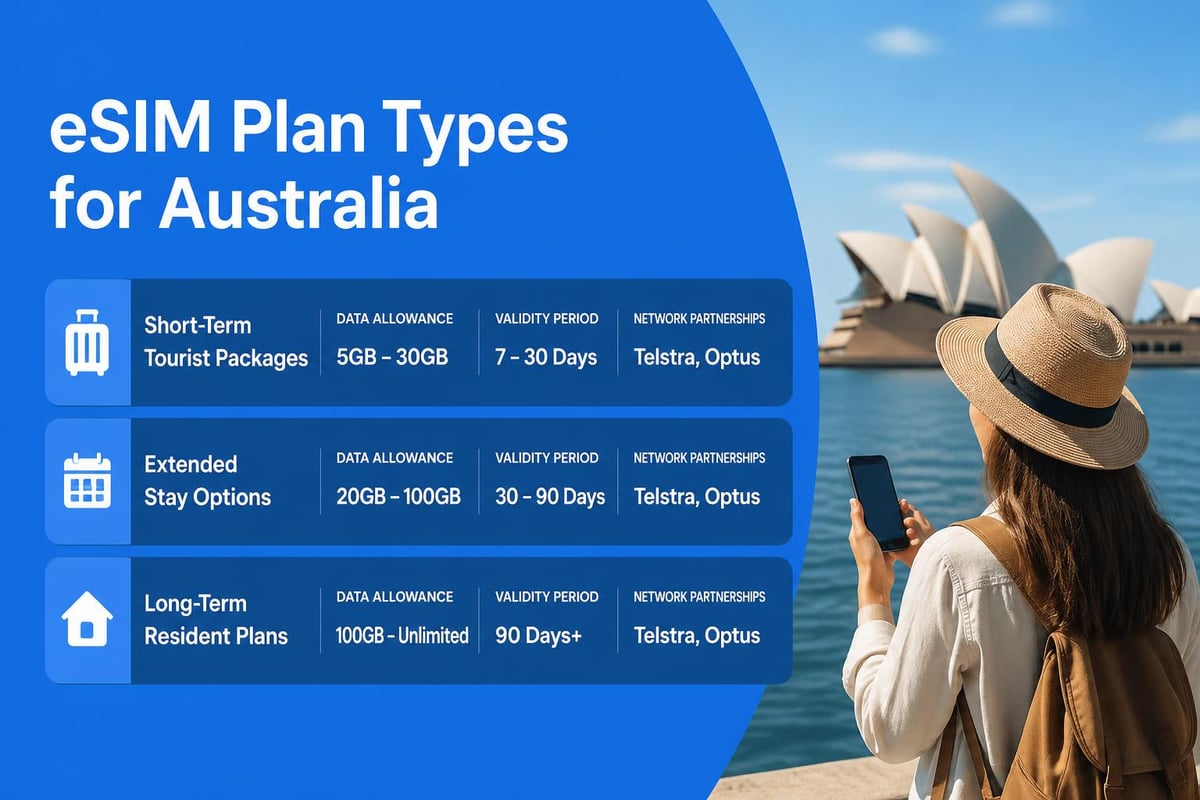
Short-term visitors (1-7 days):
- 1GB to 5GB plans
- Budget-friendly options
- Perfect for casual browsing and navigation
Extended stays (7-30 days):
- 10GB to unlimited data
- Better value per gigabyte
- Suitable for streaming and video calls
Long-term residents:
- 30+ day plans with higher allowances
- Monthly renewable options
- Often the most cost-effective choice
When comparing providers, don't just look at the headline price. Consider the network they use, data speeds (some plans throttle after certain usage), and whether calls and texts are included. Some esim for australia plans offer data-only packages, whilst others bundle traditional voice services.
Regional Coverage Considerations
Australia isn't just Sydney and Melbourne. If your travels take you beyond the eastern seaboard, coverage becomes a critical consideration. The increasing adoption of eSIM technology in Australia has improved infrastructure, but gaps remain in remote areas.
Coverage by Region
Major Cities (Sydney, Melbourne, Brisbane, Perth, Adelaide): All networks provide excellent 4G and 5G coverage. You'll have no issues with video streaming, video calls, or uploading content to social media.
Regional Centres (Cairns, Hobart, Canberra, Darwin): Good coverage from all providers, though 5G may be limited outside city centres. Telstra generally offers the most consistent experience.
Remote and Outback Areas: This is where network choice really matters. Telstra's infrastructure extends furthest into remote Australia, making it the safest choice for adventurous travellers. Optus provides reasonable coverage on major highways, whilst Vodafone's remote coverage is limited.
Planning a road trip along the Stuart Highway or exploring the Kimberley? Opt for a Telstra-backed eSIM. Sticking to coastal routes and popular tourist destinations? You'll have more flexibility in choosing providers.
Advantages Over Traditional SIM Cards
Why has esim for australia become so popular compared to traditional SIM cards? Beyond the obvious convenience factor, there are several compelling advantages that make eSIM the superior choice in 2026.
Dual SIM functionality lets you maintain your home number for important calls whilst using your Australian eSIM for data. No more juggling two phones or constantly swapping SIM cards. You can receive calls on your regular number whilst browsing, navigating, or using apps on the Australian network.
Instant switching between providers means if you're unhappy with coverage or pricing, you can change networks without visiting a shop or waiting for a physical card to arrive. Download a new profile, activate it, and you're sorted.
Environmental impact matters more than ever. Physical SIM cards create plastic waste and require packaging, shipping, and disposal. eSIMs eliminate this entirely, making them the greener choice for environmentally conscious travellers.
Security benefits shouldn't be overlooked either. Physical SIM cards can be removed from stolen phones, potentially compromising your security. eSIMs are embedded in the device, making them harder to tamper with.
What to Look for in an eSIM Provider
Not all eSIM providers are created equal, and choosing the wrong one can lead to frustration, unexpected costs, or connectivity issues. Here's what separates the excellent providers from the mediocre ones.
Essential Features
| Feature | Why It Matters | What to Check |
|---|---|---|
| Network Partnership | Determines coverage quality | Which Australian network they use |
| Activation Speed | Time from purchase to connection | Instant vs delayed activation |
| Customer Support | Help when things go wrong | 24/7 availability, multiple channels |
| Pricing Transparency | Avoid hidden costs | Clear breakdown of charges |
| Device Compatibility | Ensure it works with your phone | Supported device list |
The best providers offer instant activation, meaning you can purchase and activate within minutes. Services like the Australia eSIM provide this level of convenience, eliminating waiting times and letting you get connected immediately upon arrival.
Top-up flexibility is another crucial consideration. Can you add more data mid-trip if you run out? Some providers make this seamless, whilst others require purchasing an entirely new plan. For extended stays or unpredictable usage patterns, flexible top-up options save money and hassle.
Using eSIM Across Multiple Devices
Many travellers carry multiple devices nowadays-perhaps a phone and a tablet, or even a laptop with eSIM capability. Understanding how to manage esim for australia across multiple devices maximises value and convenience.
Some eSIM plans allow data sharing across devices, similar to traditional family plans. Others restrict usage to a single device at a time. If you're travelling with family or need connectivity on multiple gadgets, clarify these details before purchasing.
Multi-Device Management Tips
- Check whether your plan permits simultaneous connections
- Consider separate smaller plans versus one large shared plan
- Use device settings to control which device uses cellular data
- Monitor usage across all devices to avoid overages
- Set up automatic switching to WiFi when available
For travellers who need to work whilst in Australia, having connectivity on both a phone for communication and a laptop for productivity can be essential. Some modern laptops now support eSIM technology, offering a backup connection option when WiFi isn't available.

Troubleshooting Common Issues
Even with the most reliable technology, occasionally things don't work perfectly. Knowing how to troubleshoot common esim for australia problems saves stress and keeps you connected.
No signal after activation: First, ensure you've enabled the eSIM profile and selected it as your cellular data line. Next, toggle airplane mode on and off to force a network reconnection. If that doesn't work, manually select the network in your settings rather than relying on automatic selection.
Slow data speeds: Check whether you've exceeded your high-speed data allowance, as many plans throttle speeds afterwards. Also verify you're in an area with good coverage-inside buildings, particularly older ones with thick walls, can significantly reduce signal strength.
Unable to make calls: Some eSIM plans are data-only and don't include voice services. If calls are important, confirm your plan includes them, or use internet-based calling through apps like WhatsApp, Signal, or FaceTime.
eSIM profile won't delete: This sometimes happens when trying to remove an eSIM. Ensure the profile isn't currently active for cellular data, then restart your device before attempting deletion again.
For persistent issues, most reputable providers offer support resources that address specific problems with detailed solutions.
Comparing eSIM Providers for Australia
The Australian eSIM market has dozens of providers, each claiming to offer the best service. How do you cut through the marketing noise and find the option that truly suits your needs?
Research from TechRadar's eSIM comparison highlights key factors: network quality, pricing transparency, activation speed, and customer support responsiveness. The best providers excel in all these areas, whilst cheaper options often compromise on one or more.
Evaluation Criteria
When assessing providers, consider:
- Network infrastructure: Which Australian carrier they partner with
- Plan flexibility: Range of data allowances and validity periods
- Pricing structure: Cost per gigabyte and any hidden fees
- Activation process: Complexity and time required
- Support availability: Hours, languages, and response times
- User reviews: Real experiences from other travellers
Don't automatically choose the cheapest option. A slightly more expensive plan with superior coverage and support often provides better overall value, particularly if you're relying on connectivity for work or navigation in unfamiliar areas.
Data Usage Tips for Australian Travel
Understanding how much data you'll actually need prevents both overspending on excessive allowances and the frustration of running out mid-trip. Australian adventures often involve data-intensive activities you mightn't consider.
Navigation apps consume more data than you'd expect, particularly when downloading offline maps or using real-time traffic updates. Google Maps, whilst excellent, uses approximately 5MB per hour of active navigation. Offline map downloads can help reduce this.
Social media and photo uploads eat through data quickly, especially if you're sharing Australia's stunning landscapes in high resolution. Instagram, Facebook, and TikTok can consume 100-200MB per hour of active use.
Video streaming should be avoided on cellular unless you've got generous data allowances. A single hour of Netflix in standard definition uses about 1GB, whilst high definition can triple that.
For guidance on estimating your needs, resources about data requirements for trips provide practical frameworks based on different travel styles.
Data Conservation Strategies
- Download maps, podcasts, and entertainment whilst on WiFi
- Disable automatic app updates on cellular
- Use lower resolution for video calls
- Enable data-saving modes in social media apps
- Connect to WiFi whenever available (cafes, hotels, libraries)
Future of eSIM Technology in Australia
The esim for australia landscape continues evolving rapidly. In 2026, we're seeing trends that will shape connectivity for years to come. According to insights on eSIM adoption in Australia, the technology has moved from early adopter phase to mainstream acceptance.
5G expansion across Australia means eSIM users increasingly access faster speeds and lower latency. Major cities now have comprehensive 5G coverage, with regional rollout accelerating. This benefits travellers who need reliable video conferencing or cloud access.
Embedded eSIM devices beyond phones are becoming common. Smartwatches, tablets, and even some cameras now support eSIM connectivity, creating an ecosystem of connected devices that all use the same underlying technology.
Blockchain-based eSIM platforms are emerging, promising even greater security and portability. Whilst still in early stages, these could revolutionise how we think about mobile connectivity.
Price competition continues driving costs down whilst increasing data allowances. What cost $50 for 5GB two years ago now gets you 10GB or more, making international travel connectivity increasingly affordable.
Making the Most of Your Australian eSIM
Once you've got your esim for australia set up and working, maximising its value ensures you get the best possible experience. Small optimisations make significant differences over a longer trip.
Monitor your usage regularly through your device settings. Both iOS and Android provide detailed breakdowns of which apps consume the most data. Identifying data-hungry apps lets you adjust their settings or restrict background usage.
Leverage WiFi strategically. Australia has excellent public WiFi in cities, particularly at libraries, shopping centres, and major tourist attractions. Save bandwidth-intensive activities for these connections.
Consider local apps that might offer better functionality or data efficiency than their international equivalents. Australian banking, transport, and navigation apps are often optimised for local conditions.
Share your connection thoughtfully if your plan allows tethering. Turning your phone into a hotspot for your laptop or tablet provides flexibility, but monitor usage carefully as tethered devices often consume data faster than phones.
For travellers exploring other destinations, similar connectivity solutions exist for places like Japan, Thailand, or the USA, offering the same convenience and flexibility.
eSIM for Business Travellers in Australia
Business visitors to Australia have specific connectivity requirements that differ from leisure travellers. Reliable access to email, video conferencing, and cloud services isn't optional-it's essential for productivity.
Business-Specific Considerations
Higher data allowances are typically necessary for business use. Video calls, cloud file syncing, and VPN connections consume significant bandwidth. Budget for at least 2-3 times the data you'd need for leisure travel.
Expense tracking matters for reimbursement purposes. Choose providers that offer detailed invoices and usage breakdowns. Some business-oriented eSIM services provide consolidated billing across multiple travellers.
Security features become paramount when accessing corporate networks. Ensure your eSIM provider uses encrypted connections and supports the security protocols your company requires.
Multi-country coverage can be valuable if your Australia trip is part of a wider Asia-Pacific tour. Some eSIM plans cover multiple countries in a single package, simplifying management and often reducing costs.
Reliable customer support with business hours that match your schedule is crucial. When you're troubleshooting connectivity before an important meeting, waiting 24 hours for email support isn't acceptable.
Environmental and Sustainability Benefits
Choosing an esim for australia isn't just about convenience-it's also an environmentally conscious decision. The travel industry faces increasing pressure to reduce its environmental footprint, and connectivity choices play a small but meaningful role.
Traditional SIM cards generate plastic waste from the card itself, the packaging, and the tools used to insert them. Multiply this by billions of SIM cards annually, and the environmental impact becomes significant. eSIM technology eliminates this entirely.
Reduced shipping emissions matter too. Physical SIM cards must be manufactured, packaged, and transported-often internationally. Digital eSIM profiles travel via existing internet infrastructure, creating virtually no additional carbon footprint.
E-waste reduction extends the environmental benefits. Devices with eSIM capability often have longer useful lives because users can easily switch providers without compatibility concerns about SIM card sizes or formats.
For environmentally conscious travellers, these considerations align with broader sustainable travel practices like choosing direct flights, using public transport, and supporting local businesses.
Getting connected in Australia doesn't need to be complicated or expensive. With the right esim for australia, you'll enjoy seamless connectivity from the moment you land until you depart, whether you're exploring cities, beaches, or the Outback. Ready to stay connected Down Under? GoSimless offers instant eSIM activation with affordable, flexible coverage that gets you online in seconds-no roaming fees, no hassle, just reliable connectivity across Australia and 200+ countries worldwide.
gosimless Team
The gosimless editorial desk — testing eSIMs, carriers and travel connectivity so you don't have to. Updated continuously from the road.