
Travelling across Europe has never been more connected, yet the traditional hassle of swapping SIM cards at every border crossing feels painfully outdated in 2026. Enter the era of eSIM Europe solutions, where digital convenience meets continent-wide coverage. Whether you're hopping between Paris cafés, exploring Barcelona's architecture, or attending business meetings in Berlin, a single digital SIM profile can keep you connected throughout your journey without the frustration of roaming charges or hunting for local mobile shops.
Understanding eSIM Technology in the European Market
The European continent has embraced eSIM technology faster than most regions globally. By 2022, over 60% of European mobile network operators had already integrated eSIM support, with device shipments reaching an impressive 160 million units in 2021. This rapid adoption wasn't accidental-it's the result of regulatory frameworks that encourage digital transformation and consumer choice.
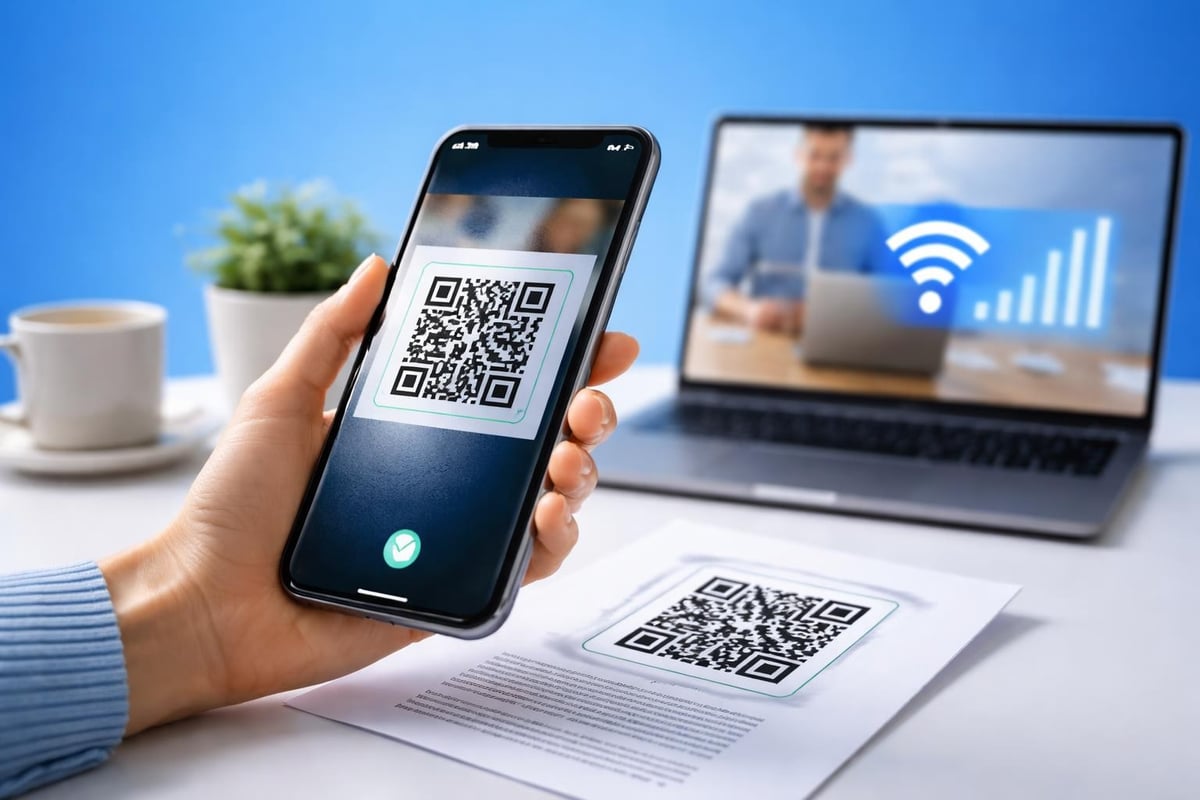
What Makes eSIM Different from Traditional SIMs
An eSIM (embedded SIM) is a programmable chip built directly into your device. Unlike physical SIM cards that require manual insertion and removal, eSIMs allow you to download carrier profiles digitally. This fundamental difference creates several advantages:
- Instant activation within minutes rather than visiting shops
- Multiple profiles stored on a single device simultaneously
- Remote management of your connectivity from anywhere
- Environmental benefits through reduced plastic waste
- Enhanced security with encrypted digital profiles
The shift towards eSIM Europe options reflects broader technological trends. Devices become sleeker without SIM trays, and travelers gain unprecedented flexibility in managing their connectivity needs across borders.
The European eSIM Market Landscape in 2026
Europe currently holds significant influence in the global eSIM ecosystem. The eSIM market demonstrates remarkable growth, with Europe capturing 28% of the market share in 2026, driven by regulatory alignment and increased demand for digital identity solutions. This positions the continent as a leader in mobile connectivity innovation.
Germany leads the European charge, with digital-first companies entering the telecommunications space. Traditional barriers between banking and telecom sectors blur as digital banks like N26 integrate eSIM services into their offerings. This convergence creates new opportunities for consumers seeking streamlined digital experiences.
Regional Adoption Patterns Across Europe
Different European countries show varying levels of eSIM integration:
| Country | Adoption Level | Key Carriers | Notable Features |
|---|---|---|---|
| Germany | Very High | Deutsche Telekom, Vodafone, O2 | Digital bank integration |
| UK | Very High | EE, O2, Vodafone, Three | Post-Brexit flexibility |
| France | High | Orange, SFR, Bouygues | Strong IoT applications |
| Italy | High | TIM, Vodafone, Wind Tre | Tourism-focused plans |
| Spain | High | Movistar, Vodafone, Orange | Mediterranean coverage |
European carriers across these nations have invested heavily in infrastructure to support seamless eSIM experiences, recognising that modern travelers and digital nomads demand flexibility.
Why Travelers Choose eSIM Europe Solutions
Travel patterns across Europe have fundamentally changed. The continent welcomes millions of visitors annually, many of whom cross multiple borders during single trips. Traditional roaming arrangements, even within the EU, can prove costly and complicated for international visitors.
eSIM Europe plans address these pain points directly. Instead of purchasing separate SIM cards in France, Italy, and Greece during a Mediterranean tour, travelers activate a single digital profile covering all three countries. The convenience factor cannot be overstated-no more searching for mobile shops, no language barriers during purchases, no worrying about running out of data mid-journey.
Real-World Benefits for Different Traveler Types
Business professionals conducting meetings across European capitals benefit from consistent connectivity without juggling multiple numbers. Conference calls remain uninterrupted whether you're in Amsterdam or Athens.
Digital nomads working remotely whilst exploring European cities need reliable data connections for video calls, cloud access, and collaborative tools. eSIM solutions provide the bandwidth and stability required for professional productivity.
Leisure travelers sharing holiday photos, navigating unfamiliar streets, and booking last-minute experiences depend on continuous internet access. eSIM Europe options ensure Instagram uploads don't wait until you find cafe WiFi.
How eSIM Europe Coverage Actually Works
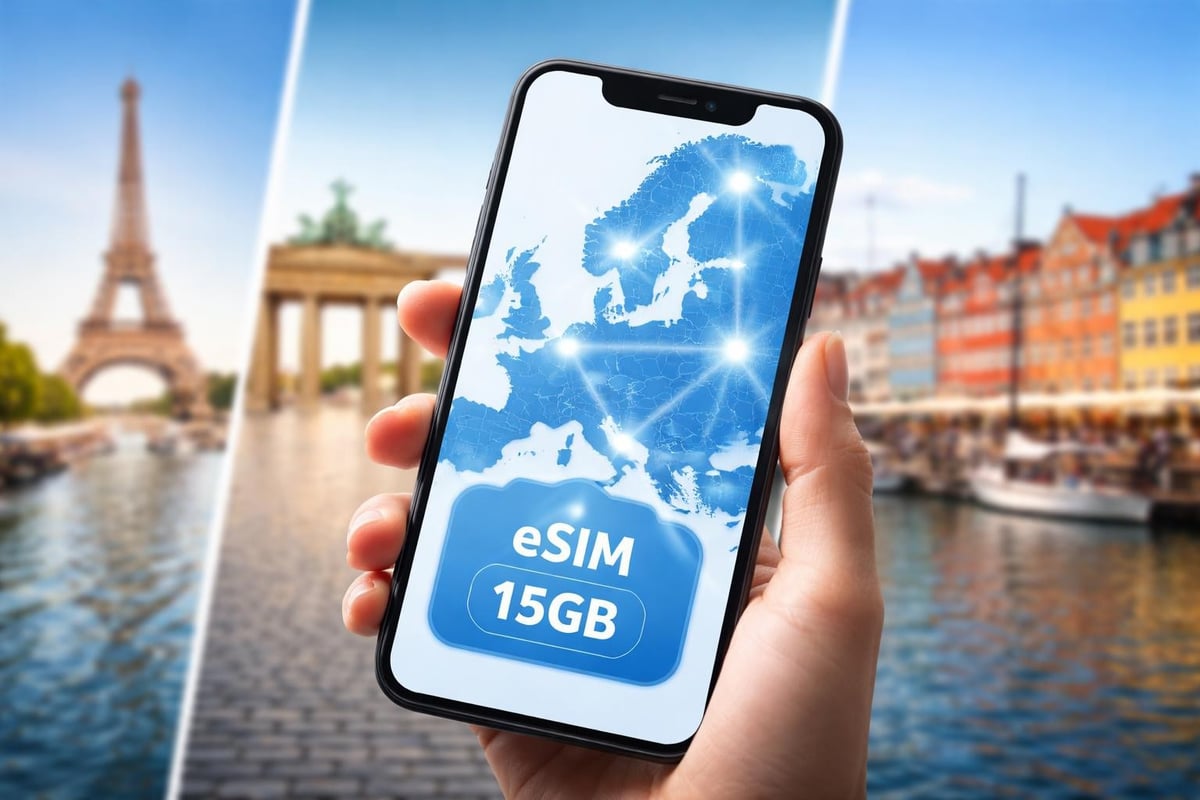
Understanding the technical aspects helps you make informed decisions. When you activate an eSIM Europe plan, you're not connecting to a single network. Instead, your device accesses partnerships between eSIM providers and multiple European carriers, switching networks based on signal strength and availability.
This roaming architecture means you might connect to Vodafone in Spain, then automatically switch to Orange in France, then TIM in Italy-all whilst maintaining the same data allowance and without manual intervention. The experience mirrors having local SIM cards in each country, but managed through a single digital profile.
Coverage Zones and Country Inclusions
Most comprehensive eSIM Europe packages cover these regions:
- Western Europe: France, Germany, Spain, Italy, Netherlands, Belgium, Austria, Switzerland
- Northern Europe: UK, Ireland, Denmark, Sweden, Norway, Finland, Iceland
- Southern Europe: Portugal, Greece, Croatia, Slovenia
- Eastern Europe: Poland, Czech Republic, Hungary, Romania
Some plans extend to over 40 European countries, ensuring coverage whether you're exploring Lisbon's hills or hiking Norwegian fjords. Before purchasing, verify that your specific destinations appear on the covered countries list, particularly if venturing into less-visited regions.
Comparing eSIM Europe Plans and Pricing
The eSIM market offers diverse options ranging from short-term tourist plans to extended coverage for long-term travelers. Pricing structures typically depend on three factors: data allowance, validity period, and geographical coverage breadth.
Typical Plan Structures
Data-centric plans offer specific gigabyte allocations:
- 1GB for quick weekend trips (€5-10)
- 3-5GB for week-long holidays (€15-25)
- 10GB+ for extended stays or heavy usage (€30-50)
- Unlimited options for digital nomads (€60-100 monthly)
Duration-based plans provide unlimited or high-volume data for set timeframes:
- 7-day passes perfect for quick European tours
- 15-day options for extended holidays
- 30-day plans for monthly travelers or temporary residents
When selecting an eSIM Europe solution, consider your actual usage patterns. Streaming video consumes significantly more data than messaging and navigation. Video calls for remote work require stable connections and generous allowances. Most travelers find 1GB per week sufficient for standard usage including maps, messaging, social media, and occasional photo uploads.
For those specifically seeking comprehensive European connectivity, Europe eSIM plans provide instant activation with no roaming fees, delivering affordable data across dozens of countries within seconds of purchase.
Setting Up Your eSIM for European Travel
The activation process remains remarkably straightforward across most providers. You'll need a compatible device-most smartphones released after 2018 support eSIM functionality, though checking your specific model's capabilities prevents disappointment.
Step-by-Step Activation Process
- Verify device compatibility through manufacturer specifications
- Purchase your eSIM plan from your chosen provider
- Receive a QR code via email immediately after payment
- Scan the QR code using your device's camera or settings menu
- Download the eSIM profile following on-screen instructions
- Activate the profile when you arrive in Europe
- Select the eSIM as your data source in network settings
The entire process typically takes 5-10 minutes. Many travelers complete activation before departure, then simply toggle the eSIM on when landing at their European destination. This ensures immediate connectivity as you exit the airport-no waiting, no searching for WiFi to communicate with waiting transfers.
If you encounter difficulties, most providers offer detailed installation guides with device-specific instructions and troubleshooting steps for common issues.
Regulatory Changes Shaping eSIM Europe in 2026
European telecommunications regulations continue evolving, directly impacting eSIM availability and pricing. The EU's 2025 regulatory updates created significant shifts in the market, spurring adoption surges and compelling connectivity providers to adapt their strategies.
These regulations focus on consumer protection, data portability, and competitive market conditions. The result? More eSIM options at competitive prices, with standardised quality expectations across providers. Travelers benefit from this regulatory environment through improved service quality and transparent pricing structures.
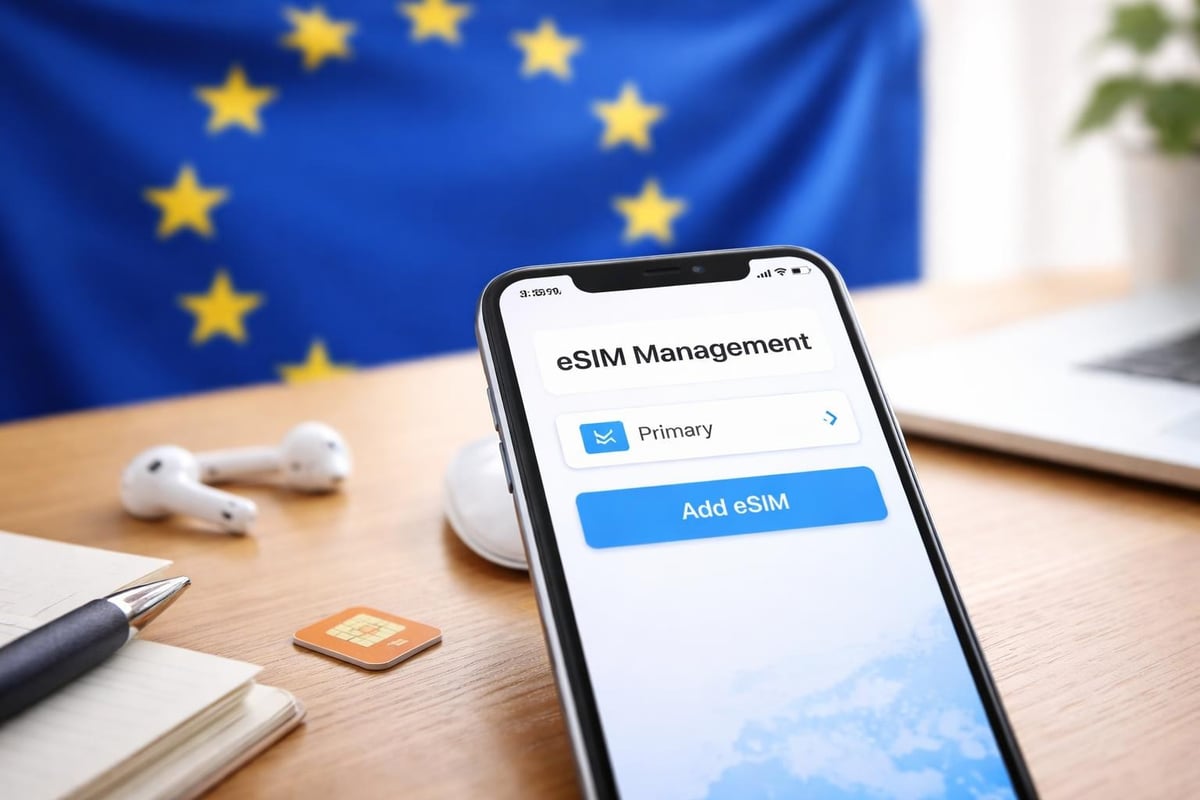
Consumer Rights and Protections
Current European regulations ensure:
- Transparent pricing without hidden fees or surprise charges
- Data portability allowing profile transfers between devices
- Quality standards for network performance and customer service
- Complaint mechanisms for resolving provider disputes
- Clear terms regarding data throttling, validity, and top-up procedures
Understanding these protections empowers you to select providers confidently, knowing regulatory frameworks support your consumer rights throughout your European journey.
Device Compatibility Considerations
Not every device supports eSIM technology, and compatibility varies between manufacturers and models. Before committing to an eSIM Europe plan, verification prevents frustration and wasted purchases.
Checking Your Device's eSIM Capability
Most modern smartphones include eSIM support:
- Apple: iPhone XS/XR and newer models
- Samsung: Galaxy S20 and newer flagship models
- Google: Pixel 3 and newer devices
- Other brands: Many recent releases from Huawei, Oppo, Motorola
Tablets and smartwatches also increasingly support eSIM profiles, enabling connectivity across your entire device ecosystem. The compatible devices page provides comprehensive listings to confirm your specific model's capabilities before purchase.
Beyond phones, eSIM technology extends to laptops, particularly business-focused models enabling cellular connectivity for truly mobile workstations. This expansion reflects the technology's versatility and growing acceptance across device categories.
Beyond Tourism: eSIM Europe for Business and IoT
Whilst travel represents the most visible eSIM application, European businesses increasingly deploy eSIM technology for operational purposes. Enterprise applications in connected logistics and smart infrastructure drive significant adoption, with projections suggesting major milestones reached in 2026.
Smart city initiatives across European capitals utilise eSIM-enabled sensors for traffic management, environmental monitoring, and public services. Fleet management companies equip vehicles with eSIM connectivity for real-time tracking and diagnostics. These industrial applications complement consumer usage, creating robust ecosystems supporting continued eSIM development.
Industrial Use Cases Driving Innovation
| Sector | Application | Benefits |
|---|---|---|
| Logistics | Asset tracking | Real-time location data across borders |
| Automotive | Connected vehicles | Seamless connectivity throughout Europe |
| Healthcare | Remote monitoring | Continuous patient data transmission |
| Retail | Point-of-sale systems | Reliable transaction processing |
| Energy | Smart meters | Automated consumption reporting |
These business applications create network infrastructure improvements benefiting all users, including travelers seeking reliable connectivity during European adventures.
Multi-Country Travel Strategies with eSIM
Planning trips spanning multiple European countries requires strategic thinking about connectivity. Should you purchase individual country eSIMs or opt for region-wide coverage? The answer depends on your itinerary, duration, and usage patterns.
For trips concentrated in specific countries with occasional border crossings, dedicated plans for primary destinations might prove economical. Someone spending two weeks in Spain with a weekend trip to Portugal could choose an eSIM Spain plan with European roaming capabilities.
Conversely, grand tours traversing numerous countries benefit from comprehensive eSIM Europe coverage avoiding the complexity of managing multiple profiles. A month-long journey through France, Italy, Greece, and beyond requires seamless connectivity without activation hassles at each border.
Creating Your Connectivity Strategy
Consider these factors when planning:
- Total trip duration across all countries
- Primary destination versus brief visits
- Data usage patterns (heavy streaming versus basic communication)
- Budget constraints and cost-per-gigabyte calculations
- Backup connectivity needs if primary eSIM encounters issues
Some travelers adopt dual-SIM strategies, maintaining their home SIM for important calls whilst using eSIM for data connectivity. Modern devices supporting multiple profiles simultaneously enable this flexibility without compromises.
Common Questions About eSIM Europe Usage
Understanding practical aspects helps you maximise your eSIM experience. Several questions arise frequently amongst first-time eSIM users planning European travel.
Can I use eSIM on multiple devices? Generally, each eSIM profile works on a single device at a time. However, you can purchase multiple profiles for different devices, or some providers offer family plans with shared data pools.
What happens if I run out of data? Most providers offer top-up options through their apps or websites, adding data to your existing profile without purchasing entirely new plans. Check top-up availability and pricing before departure.
Do eSIMs support phone calls? Some eSIM Europe plans include voice minutes and SMS, whilst others provide data-only service. Data-only plans work perfectly with VoIP services like WhatsApp, Skype, or FaceTime for communication needs.
For comprehensive answers to these and other queries, the FAQ section addresses common concerns with detailed explanations.
Future Trends in European eSIM Technology
The eSIM landscape continues evolving rapidly. Looking ahead through 2026 and beyond, several trends shape the future of connectivity across Europe.
5G integration accelerates as networks expand coverage, enabling faster speeds and lower latency for eSIM users. European cities increasingly offer comprehensive 5G access, transforming mobile experiences for business and leisure users alike.
Increased competition among providers drives prices down whilst improving service quality. New entrants challenge established carriers, benefiting consumers through innovation and competitive pricing structures.
Expanded IoT applications create massive eSIM deployments across European infrastructure, generating economies of scale that reduce costs for individual users whilst improving network reliability.
Industry statistics indicate Europe held 25% of the global eSIM market in 2023, with expectations of continued growth as awareness increases and device compatibility expands.
Maximising Value from Your eSIM Europe Experience
Getting optimal value from eSIM technology extends beyond simply purchasing the cheapest plan. Smart strategies enhance your connectivity experience whilst managing costs effectively.
Timing your activation matters significantly. Many plans begin their validity period upon activation rather than purchase, allowing you to buy in advance but activate when actually needed. This prevents wasted days if your travel plans shift.
Managing data consumption through WiFi whenever available preserves your eSIM allowance for situations requiring mobile connectivity. Download maps, entertainment, and large files whilst connected to hotel or cafe networks.
Understanding fair usage policies prevents surprises, particularly with "unlimited" plans that may throttle speeds after certain thresholds. Read terms carefully to understand actual usage conditions.
Pro Tips for Experienced Travelers
- Keep your home SIM accessible for important calls and two-factor authentication messages
- Screenshot your eSIM QR code as backup if email access becomes problematic
- Test connectivity immediately upon arrival allowing time to address any issues
- Monitor data usage through device settings or provider apps to avoid unexpected depletion
Travelers visiting multiple countries beyond Europe might explore options for specific regions. Those combining European trips with visits to nearby countries could investigate dedicated plans like eSIM Turkey or eSIM Dubai for optimised coverage across their entire journey.
Troubleshooting Common eSIM Europe Issues
Despite straightforward activation processes, occasional technical challenges arise. Understanding common problems and their solutions prevents minor issues from disrupting your travels.
Profile won't download: Verify stable internet connectivity during installation. Use reliable WiFi rather than cellular data for initial setup. Restart your device and attempt activation again if initial downloads fail.
No network connection after activation: Check that you've selected the eSIM as your active data source in network settings. Airplane mode toggling often resolves connection issues. Verify you're within covered countries and not in areas with limited network infrastructure.
Slower than expected speeds: Network congestion in tourist hotspots can impact performance temporarily. Try connecting at different times or locations. Confirm your plan hasn't reached throttling thresholds if speeds consistently disappoint.
Most providers offer customer support through chat, email, or phone channels. Don't hesitate reaching out for assistance-resolving connectivity issues quickly ensures you maximise your European experience without prolonged offline periods.
Environmental and Practical Benefits of Going Digital
Beyond convenience and cost savings, eSIM adoption carries environmental implications worth considering. Physical SIM cards require plastic manufacturing, packaging, and distribution networks. Eliminating these components reduces waste and carbon footprints associated with traditional mobile connectivity.
The digital nature of eSIMs also supports more sustainable travel practices. Reduce visits to physical shops, eliminate packaging waste, and contribute to broader digital transformation reducing resource consumption across telecommunications industries.
Practically, eSIM technology future-proofs your connectivity approach. As more devices eliminate SIM trays entirely, familiarity with eSIM activation and management becomes increasingly valuable. Skills developed managing European eSIMs transfer directly to other regions and future devices.
Availability across countries continues expanding globally, with Europe's near-universal adoption setting standards other regions increasingly follow.
Making Your eSIM Europe Decision
Choosing the right eSIM solution requires balancing multiple factors against your specific needs. Price matters, but connectivity reliability, coverage breadth, customer support quality, and activation simplicity deserve equal consideration.
Research providers thoroughly, reading recent reviews from travelers with similar itineraries. Verify coverage maps match your planned destinations. Understand refund policies in case plans don't meet expectations or travel circumstances change.
Consider starting with shorter-term plans for initial trips, allowing you to test performance and service quality before committing to extended or more expensive options. This approach minimises risk whilst building confidence in eSIM technology for future European adventures.
The complete range of plans available demonstrates the diversity of options catering to different travel styles, durations, and budgets across European destinations and beyond.
European connectivity no longer needs to involve physical SIM cards, language barriers at mobile shops, or anxiety about roaming charges. eSIM Europe solutions deliver seamless, affordable connectivity across dozens of countries through simple digital activation. Whether you're exploring Mediterranean coastlines, conducting business across capital cities, or backpacking through diverse cultures, staying connected enhances every aspect of your journey. Ready to transform your European travel experience? Discover instant eSIM activation and flexible coverage across 200+ countries at gosimless.app, where affordable connectivity meets effortless setup for your next adventure.
gosimless Team
The gosimless editorial desk — testing eSIMs, carriers and travel connectivity so you don't have to. Updated continuously from the road.