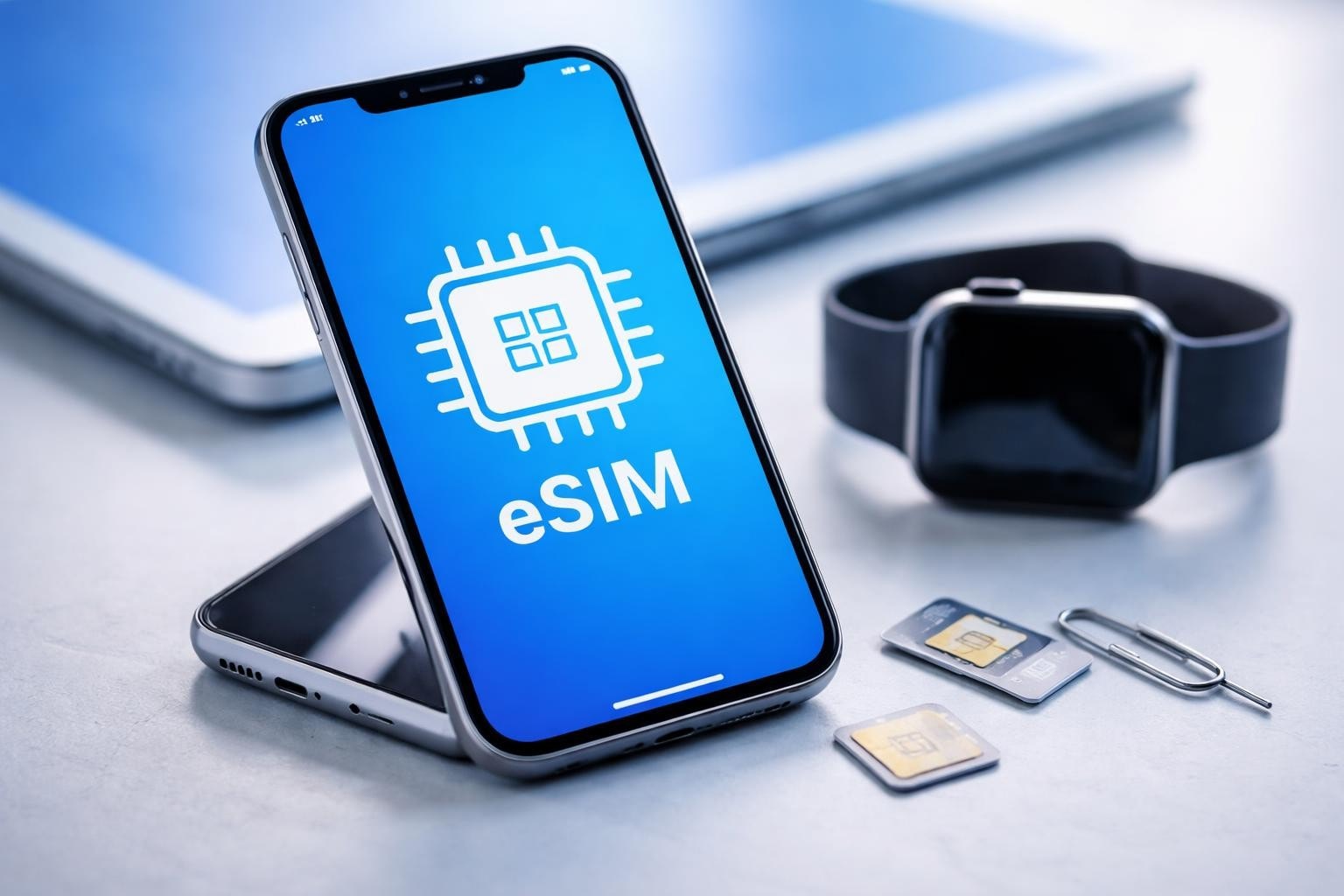
The way we connect to mobile networks has fundamentally changed. Gone are the days when switching carriers meant awkwardly ejecting tiny plastic cards with paperclips or waiting for a new SIM to arrive in the post. The esim card represents a revolutionary shift in telecommunications, embedding the SIM functionality directly into your device's hardware whilst giving you unprecedented flexibility over your mobile connectivity. Whether you're a frequent traveller, a digital nomad, or simply someone who values convenience, understanding eSIM technology has become essential in 2026.
What Exactly Is an eSIM Card?
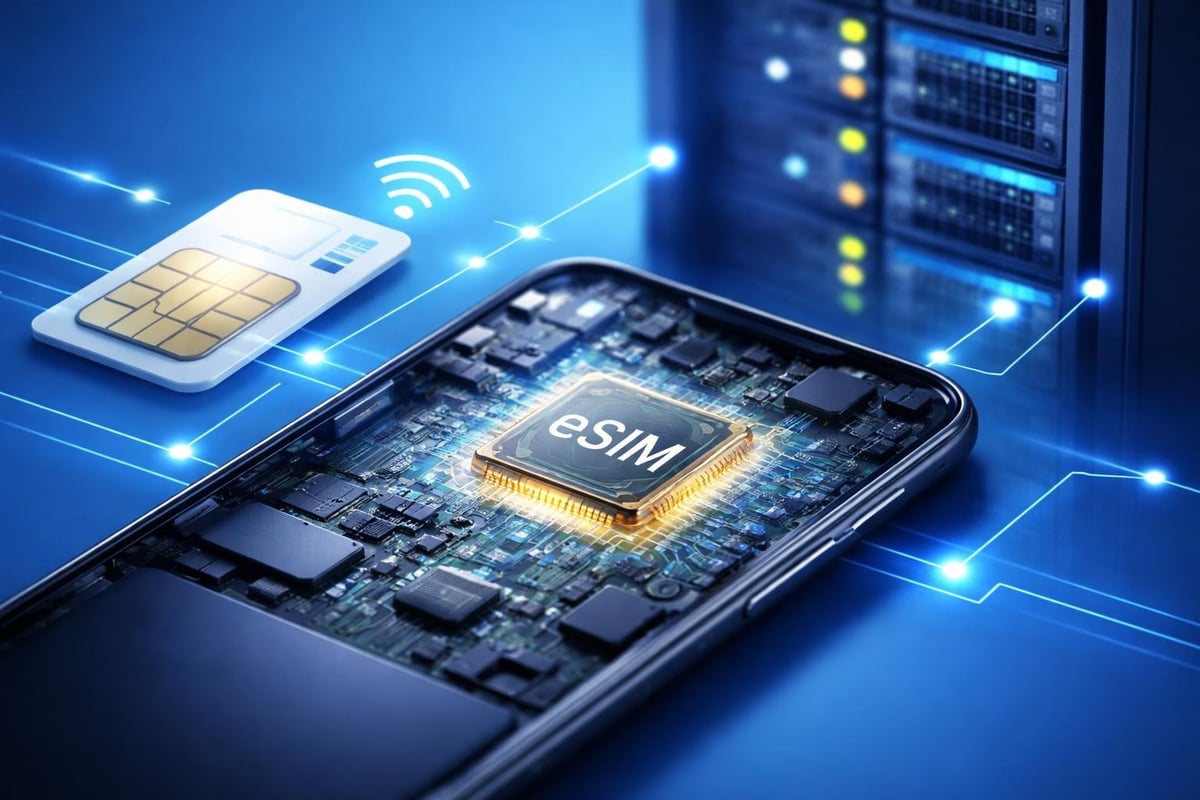
An esim card isn't actually a physical card at all, which makes the terminology slightly confusing at first. Instead, it's a tiny chip embedded directly into your smartphone, tablet, or smartwatch during manufacturing. The "e" stands for "embedded," and this digital SIM performs all the same functions as traditional SIM cards without the removable plastic component.
The technology behind eSIM relies on what's known as Remote SIM Provisioning, which allows you to download carrier profiles directly to your device. Think of it as installing an app, but for your mobile network connection.
The Technical Foundation
Unlike traditional SIM cards that store carrier information on a removable chip, an esim card uses:
- Embedded universal integrated circuit card (eUICC) technology
- Remote provisioning capabilities for downloading carrier profiles
- Multiple profile storage allowing several networks on one device
- Rewritable memory that can be updated without physical replacement
The development of eSIM technology began in earnest around 2010, with the GSMA establishing the first specifications. By 2026, we've seen this technology mature into a mainstream solution adopted by virtually every major smartphone manufacturer.
How Does an eSIM Card Work in Practice?
The activation process for an esim card is refreshingly straightforward compared to traditional SIMs. You don't need to visit a shop, wait for delivery, or fumble with tiny trays.
Activation Steps
- Purchase your eSIM plan from a provider like gosimless.app
- Receive a QR code via email or within your account dashboard
- Scan the code using your device's camera through the settings menu
- Download the profile which typically takes 30-60 seconds
- Activate your connection and start using data immediately
The entire process takes minutes rather than days. For business travellers landing in a new country, this means you can have local data connectivity before you've even left the airport.
Managing Multiple Profiles
One of the most powerful features of eSIM technology is the ability to maintain several network profiles simultaneously. Your device can typically store 5-10 different carrier profiles, though only one or two can be active at once depending on your device.
| Feature | Traditional SIM | eSIM Card |
|---|---|---|
| Physical swap needed | Yes | No |
| Activation time | Hours to days | Minutes |
| Multiple carriers | Requires dual-SIM slot | Multiple profiles stored digitally |
| Lost/damaged risk | High | Virtually none |
| International switching | Manual replacement | Instant digital activation |
The Compelling Benefits of eSIM Technology
Why has the esim card gained such rapid adoption? According to the Trusted Connectivity Alliance, consumer eSIM adoption doubled in 2023, and that trajectory has only accelerated through 2026.
Freedom for Travellers
International travel has become dramatically simpler. Rather than:
- Hunting for local SIM cards at airports
- Paying extortionate roaming charges
- Dealing with language barriers at mobile shops
- Keeping track of multiple physical SIMs
You can now purchase and activate local data plans before you've even boarded your flight. Services offering instant eSIM activation have transformed how we stay connected globally.
Environmental Considerations
The environmental impact shouldn't be overlooked. Traditional SIM cards require:
- Plastic production for the card and packaging
- Manufacturing and shipping logistics
- Physical distribution networks
- Regular replacement creating e-waste
An esim card eliminates all of this, reducing the telecommunications industry's carbon footprint considerably. Whilst each individual SIM seems insignificant, multiply that by billions of mobile users globally, and the environmental savings become substantial.
Enhanced Security
Physical SIM cards can be removed, stolen, or swapped without your knowledge. An esim card is permanently embedded in your device, making SIM-swap fraud significantly more difficult. Combined with device-level security features like biometric authentication, this creates a more secure connectivity ecosystem.
Common Use Cases Transforming Connectivity
The practical applications of eSIM technology extend far beyond simple convenience. Let's explore how different users are benefiting in 2026.
Digital Nomads and Remote Workers
For those working whilst travelling, the esim card has become indispensable. You can maintain your home number whilst adding local data plans in each country you visit. This means clients and colleagues can always reach you on your regular number, whilst you enjoy affordable local data rates for work connectivity.
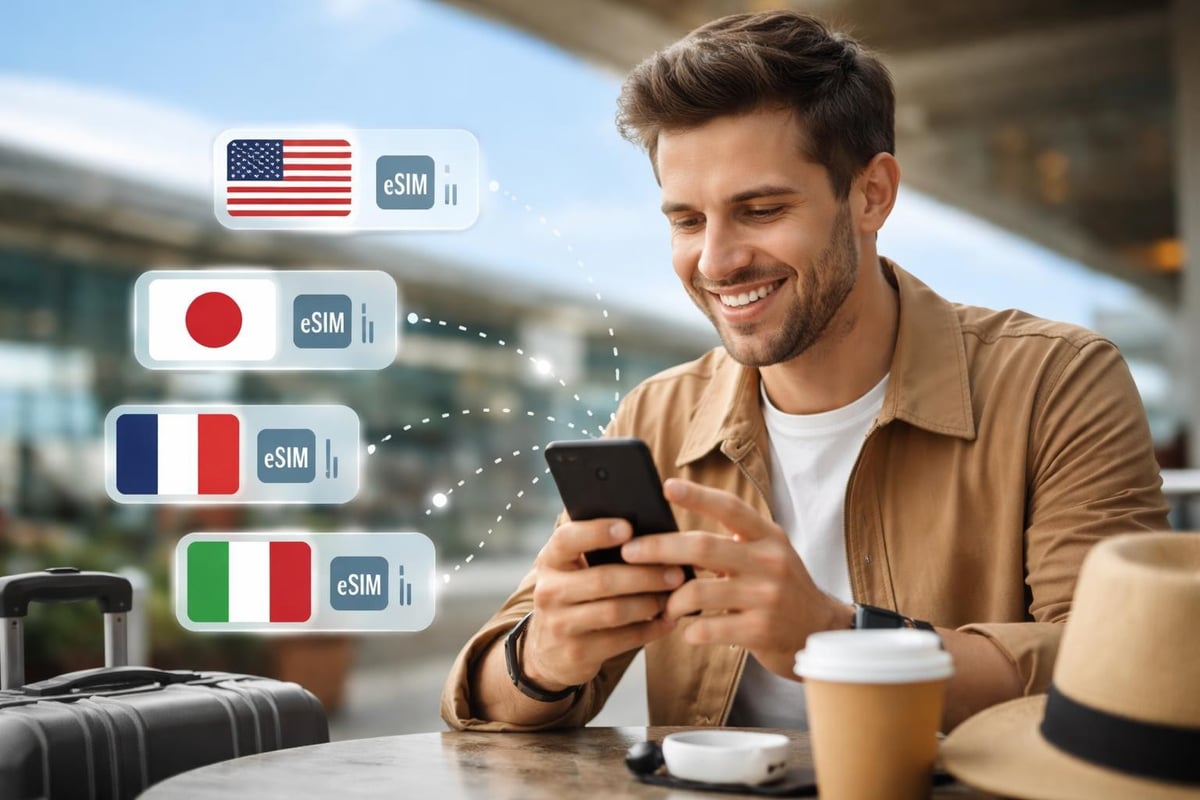
Many remote workers now maintain profiles for their most-visited locations, making country-hopping as simple as toggling a setting. If you're heading to Australia for a month-long working holiday, you can activate local connectivity instantly without disrupting your primary phone service.
IoT and Connected Devices
The Internet of Things has exploded thanks partly to eSIM technology. Devices like:
- Smartwatches maintaining independent connectivity
- Connected cars with built-in navigation and emergency services
- Industrial sensors monitoring equipment remotely
- Security cameras operating without Wi-Fi dependency
All benefit from the compact, reliable nature of eSIM cards. These devices can be manufactured globally and activated in any market without region-specific SIM variants.
Business Expense Management
Companies issuing mobile devices to employees have found eSIM technology dramatically simplifies fleet management. Rather than ordering, distributing, and tracking physical SIMs for hundreds or thousands of devices, IT departments can now remotely provision connectivity.
This becomes particularly valuable when employees travel internationally. Instead of complex roaming packages or expense claims for local SIMs, businesses can provide temporary international eSIM profiles that automatically activate when employees arrive in different countries.
Compatibility and Device Requirements
Not every device supports eSIM functionality, though compatibility has expanded rapidly. As of 2026, most flagship smartphones released in the past three years include eSIM capability, and many newer budget models have adopted it as well.
Checking Your Device Compatibility
Before purchasing an esim card plan, you'll want to verify your device supports the technology. The quickest method is checking your device's compatibility status with your eSIM provider.
Generally, you can confirm eSIM support by:
- Checking for "Add eSIM" or "Add Cellular Plan" in your device settings
- Looking for a device identifier (EID) in your about section
- Consulting your manufacturer's specifications
Popular eSIM-Compatible Devices in 2026:
- iPhone models from iPhone XS onwards
- Samsung Galaxy S20 and newer flagship models
- Google Pixel 3 and all subsequent models
- Most iPad Pro and iPad Air models from 2018 onwards
- Apple Watch Series 3 and newer with cellular
Operating System Requirements
Beyond hardware, your device needs recent software to support eSIM functionality properly. Most providers recommend:
- iOS 12.1 or later for Apple devices
- Android 9.0 (Pie) or later for Android devices
- Regular security updates installed
Potential Drawbacks and Limitations
Whilst eSIM technology offers tremendous advantages, it's worth understanding the current limitations and challenges you might encounter.
Carrier Support Variations
Not all mobile networks support eSIM technology equally. Whilst major carriers in developed markets have embraced it, some smaller regional providers haven't yet implemented the necessary infrastructure. This can occasionally limit your options when selecting carriers in certain countries.
Device Lock-In Considerations
Some carriers lock eSIM profiles to specific devices, making it slightly more complex to transfer your service when upgrading phones. Traditional SIM cards could simply be moved to a new device, whereas eSIM transfers sometimes require contacting your carrier for profile migration.
Initial Setup Learning Curve
For users accustomed to decades of physical SIM cards, the digital nature of eSIM can feel initially confusing. The installation process is straightforward once you've done it, but first-time users sometimes struggle with finding the right settings menus or understanding QR code scanning requirements.
Privacy and Security Considerations
As with any digital technology, eSIM implementation raises important questions about privacy and security. Research has explored potential vulnerabilities in eSIM systems, though the technology has proven generally secure when properly implemented.
Data Protection
Your esim card profile contains sensitive information about your mobile identity and network access. Reputable providers implement:
- End-to-end encryption for profile downloads
- Secure authentication before profile installation
- Tamper-resistant hardware storage
- Regular security audits and updates
User Control
One advantage of eSIM technology is the increased control over your connectivity. You can remotely deactivate profiles if your device is lost or stolen, something impossible with traditional SIM cards without carrier intervention.
The Future of Mobile Connectivity
Looking ahead, the esim card represents just the beginning of a broader transformation in telecommunications. Industry analysts expect that by 2028, over 60% of smartphones sold globally will be eSIM-only, without any physical SIM tray at all.
Emerging Trends
Several developments are shaping the next generation of eSIM technology:
- iSIM (integrated SIM) embedding SIM functionality directly into the device's processor
- Blockchain-based profile management for enhanced security and portability
- AI-driven network selection automatically choosing optimal carriers based on location and usage
- Unified global profiles potentially eliminating country-specific restrictions
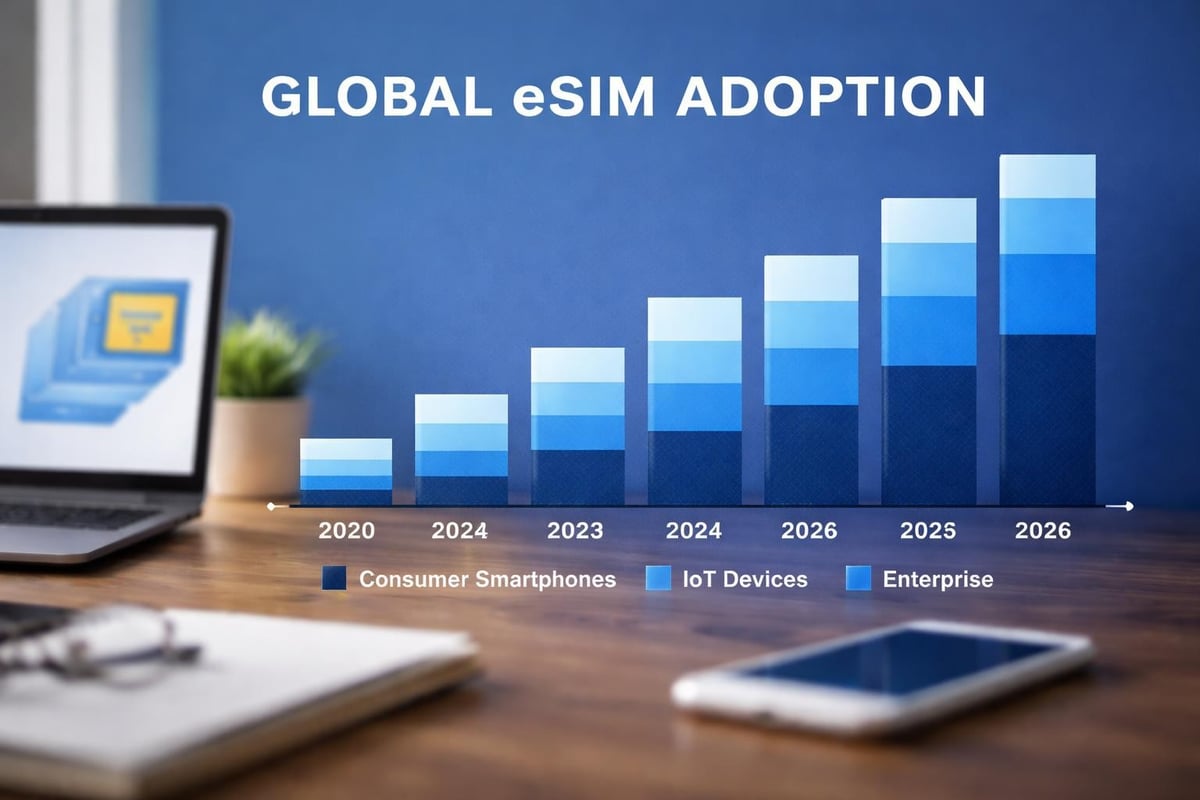
According to recent eSIM statistics, the technology is experiencing exponential growth across consumer and enterprise segments, with particular momentum in the travel and IoT sectors.
Making the Switch to eSIM
If you're ready to embrace eSIM technology, the transition is simpler than you might expect. Whether you're switching from a traditional SIM or adding eSIM as a secondary connection, the process follows similar patterns across providers.
Choosing the Right eSIM Provider
When selecting an esim card service, consider these factors:
| Criteria | Why It Matters |
|---|---|
| Geographic coverage | Ensures connectivity in your travel destinations |
| Data plan flexibility | Allows matching plans to your usage patterns |
| Activation speed | Determines how quickly you're connected |
| Customer support | Critical for troubleshooting when abroad |
| Pricing transparency | Avoids unexpected charges or hidden fees |
Many travellers find that specialized eSIM providers offer better value than traditional carrier roaming packages, particularly for short trips or multi-country itineraries. For comprehensive information about various plans and destinations, exploring available eSIM options can help you make informed decisions.
Keeping Your Original Number
A common concern when switching to eSIM is whether you'll lose your current phone number. The good news is you have several options:
- Port your number to an eSIM-compatible carrier (permanent transfer)
- Use eSIM as secondary whilst keeping your physical SIM as primary
- Dual active lines with your original number on physical SIM and travel data on eSIM
Most modern devices support dual SIM functionality, allowing you to maintain your primary number on a traditional SIM whilst using eSIM profiles for data connectivity when travelling.
Practical Tips for eSIM Users
Maximising your eSIM experience involves understanding a few practical considerations that aren't immediately obvious when you're first getting started.
Managing Data Usage
Without physical SIM swapping as a visible reminder that you're on a different network, it's easier to lose track of data consumption. Most devices now offer detailed breakdowns of data usage by SIM profile, allowing you to monitor consumption closely.
Data Management Strategies:
- Set up usage alerts before reaching plan limits
- Disable background app refresh for data-heavy applications
- Download maps, music, and content on Wi-Fi before travelling
- Use Wi-Fi calling when available to preserve data
Troubleshooting Common Issues
Even with the reliability of eSIM technology, you might occasionally encounter connection problems. The most common issues and solutions include:
- Profile won't activate: Verify you have stable internet for the download
- No service after activation: Check that the correct profile is set as primary
- QR code won't scan: Manually enter activation details if available
- Slow data speeds: Confirm you're connected to the correct network type (4G/5G)
Most eSIM providers offer comprehensive FAQ resources addressing these and other common questions.
Maintaining Profile Organization
As you accumulate multiple eSIM profiles, organisation becomes important. Consider:
- Using descriptive names for each profile (e.g., "Japan Data" or "UK Business")
- Deleting expired or unused profiles to reduce clutter
- Documenting activation details for profiles you might reuse
- Keeping QR codes saved securely for reactivation if needed
Cost Comparison and Value Proposition
One of the most compelling reasons to adopt eSIM technology is the potential cost savings, particularly for international connectivity. Traditional roaming charges can be extortionate, whilst purchasing local SIM cards in every country involves time, effort, and often higher prices for tourists at airport kiosks.
Breaking Down the Numbers
Let's compare typical costs for a week-long European trip requiring 10GB of data:
| Option | Typical Cost | Convenience | Speed to Activate |
|---|---|---|---|
| Home carrier roaming | £80-150 | Very high | Instant |
| Airport SIM purchase | £40-60 | Medium | 30-60 minutes |
| Pre-ordered local SIM | £25-40 | Low | Requires planning |
| eSIM data plan | £15-30 | Very high | 5 minutes |
The value proposition becomes even clearer for multi-country trips, where eSIM regional plans eliminate the need for multiple SIM purchases and constant physical swapping.
Hidden Costs to Consider
Traditional SIM usage often includes hidden costs that eSIM eliminates:
- No physical SIM purchase fees
- No shipping costs for SIM delivery
- No wasted credit on prepaid cards you can't fully use
- No roaming surprise bills from inadvertent usage
The esim card has fundamentally transformed how we approach mobile connectivity, offering unprecedented flexibility, convenience, and cost savings compared to traditional SIM technology. Understanding how to leverage eSIM capabilities positions you to stay connected globally without the hassle of physical cards or excessive roaming charges. Whether you're planning your next international adventure or simply want more flexibility in your mobile service, gosimless.app provides instant eSIM activation with affordable coverage across 200+ countries, making it easier than ever to enjoy seamless connectivity wherever your journey takes you.
gosimless Team
The gosimless editorial desk — testing eSIMs, carriers and travel connectivity so you don't have to. Updated continuously from the road.