
Planning a trip to Australia in 2026? You're probably wondering how you'll stay connected while exploring the Great Barrier Reef, Sydney Harbour, or the vast Outback. Gone are the days of hunting for airport SIM cards or paying extortionate roaming fees. The esim australia tourist experience has transformed completely, offering instant connectivity from the moment you land. Whether you're posting sunset photos from Uluru or navigating Melbourne's laneways, eSIM technology gives you the freedom to stay online without the hassle of physical cards or complicated contracts.
What Makes eSIM Perfect for Australian Travel
The Australian tourism landscape has changed dramatically since eSIM technology became mainstream. You might remember the frustration of previous trips: queuing at airport kiosks, fumbling with tiny SIM cards, or dealing with locked phones. That's all behind us now.
eSIM technology embeds directly into your compatible device, eliminating physical swapping entirely. For tourists visiting Australia, this means you can purchase and activate your data plan before your flight even takes off. The moment you touch down in Sydney, Brisbane, or Perth, you're connected.
Why Traditional SIM Cards Are Becoming Obsolete
Here's what makes the esim australia tourist approach superior to old methods:
- Instant activation - no airport queues or shop visits required
- Multiple profiles - keep your home number active whilst using Australian data
- Flexible plans - switch between providers without physical cards
- Environmental benefits - no plastic waste from disposable SIMs
- Better pricing - competitive rates without physical distribution costs
The Australian telecommunications market has embraced eSIM technology faster than many other regions. Major networks like Telstra, Optus, and Vodafone all support eSIM activation, whilst numerous international providers offer tourist-specific packages.
Understanding Australian Network Coverage
Australia presents unique connectivity challenges that every tourist should understand. The country spans nearly 7.7 million square kilometres, yet most of the population clusters around coastal cities. Your eSIM provider choice directly impacts your experience, particularly if you're venturing beyond metropolitan areas.
Telstra operates the most extensive network, covering approximately 99% of the population and reaching far into regional Australia. Optus follows with strong urban coverage and decent regional reach, whilst Vodafone focuses primarily on metropolitan areas and major highways.
Coverage Across Different Regions
| Region Type | Telstra Coverage | Optus Coverage | Vodafone Coverage |
|---|---|---|---|
| Major Cities | Excellent | Excellent | Excellent |
| Regional Towns | Excellent | Good | Fair |
| Remote Areas | Good | Limited | Poor |
| Highways | Very Good | Good | Fair |
When selecting an Australia eSIM plan, consider your itinerary carefully. Staying in Sydney and Melbourne? Any provider works brilliantly. Planning a road trip along the Great Ocean Road or exploring Tasmania's wilderness? Network selection becomes crucial.
The best eSIM options for travelers to Australia typically operate on multiple networks, giving you flexibility. Some tourist-focused eSIM providers partner with different carriers, automatically connecting you to the strongest available signal.
Choosing the Right eSIM Plan for Your Trip
Not all esim australia tourist plans are created equal. Your ideal option depends on trip duration, data needs, and travel style. Let's break down what actually matters.
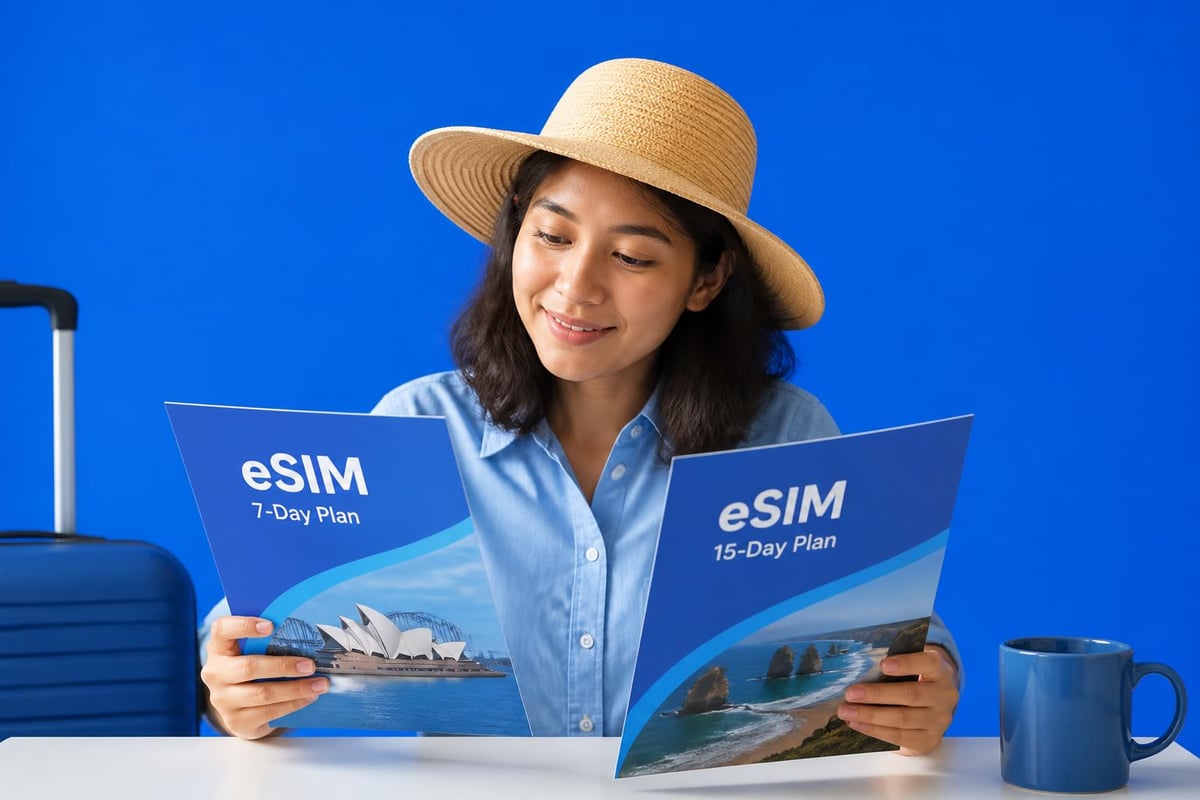
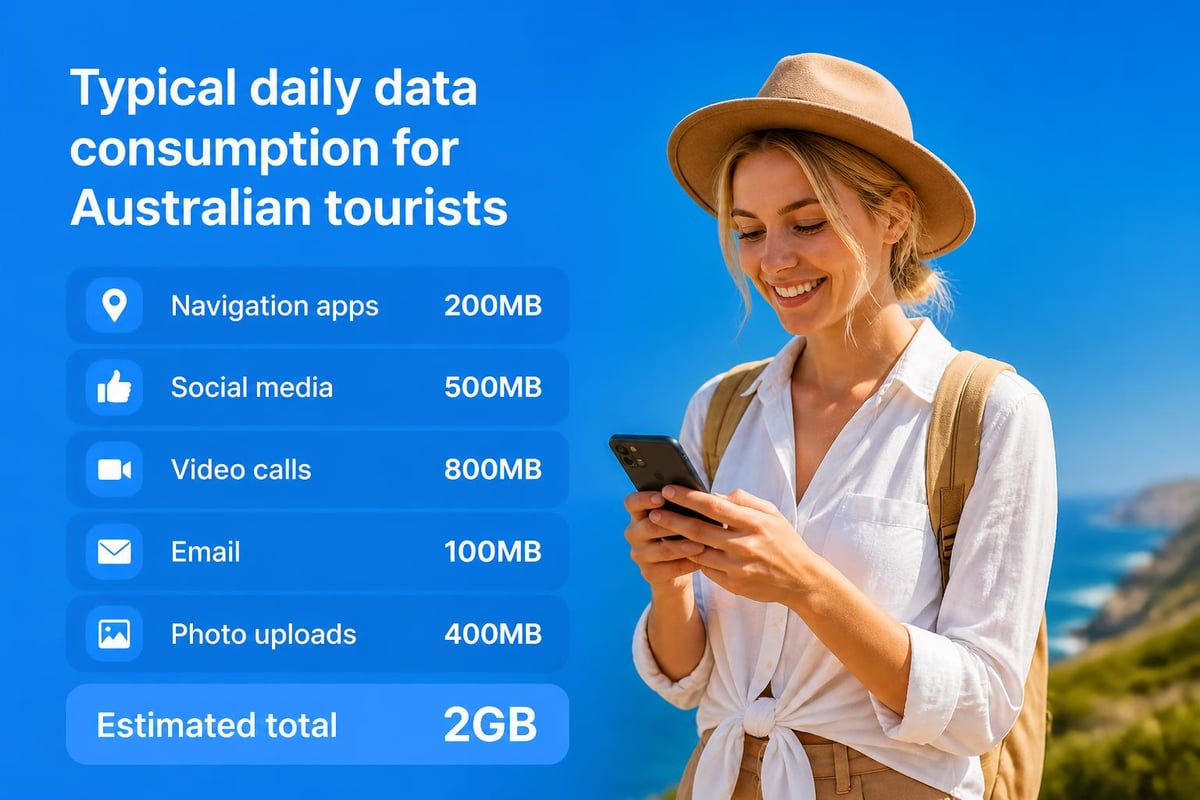
Short visits (1-7 days): Look for compact data packages with generous daily allowances. Most tourists need 1-3GB daily for maps, social media, and staying in touch. These plans typically cost £10-25 depending on total data allocation.
Medium stays (1-3 weeks): Monthly plans often provide better value, even if you're not staying the full thirty days. Expect to pay £25-50 for 10-30GB, which suits most tourism activities comfortably.
Extended adventures (1+ months): Long-term plans or renewable monthly packages make sense. Some providers offer unlimited data options, though these may throttle speeds after certain thresholds.
Essential Features to Compare
- Data allowance - calculate based on your typical usage plus 50% buffer
- Network partner - Telstra for comprehensive coverage, others for city-focused trips
- Activation timing - some plans start immediately, others on first connection
- Top-up flexibility - can you add more data mid-trip if needed?
- Speed restrictions - check if plans throttle after certain usage levels
According to Australia's cheapest eSIM plans, prices have dropped significantly throughout 2026, making connectivity more accessible than ever. Competition among providers benefits tourists, with promotional offers appearing regularly.
Device Compatibility and Setup Process
Before purchasing any esim australia tourist plan, verify your device supports eSIM technology. The good news? Most smartphones released after 2020 include eSIM capability, though regional variations exist.
Compatible Devices Include:
- iPhone XS and newer models
- Samsung Galaxy S20 and later
- Google Pixel 3 and subsequent releases
- Recent Huawei, Oppo, and Motorola flagship models
Apple provides comprehensive eSIM support information specifically for Australian carriers, which proves invaluable when troubleshooting. However, even if your device model supports eSIM generally, certain carrier-locked versions might have restrictions.
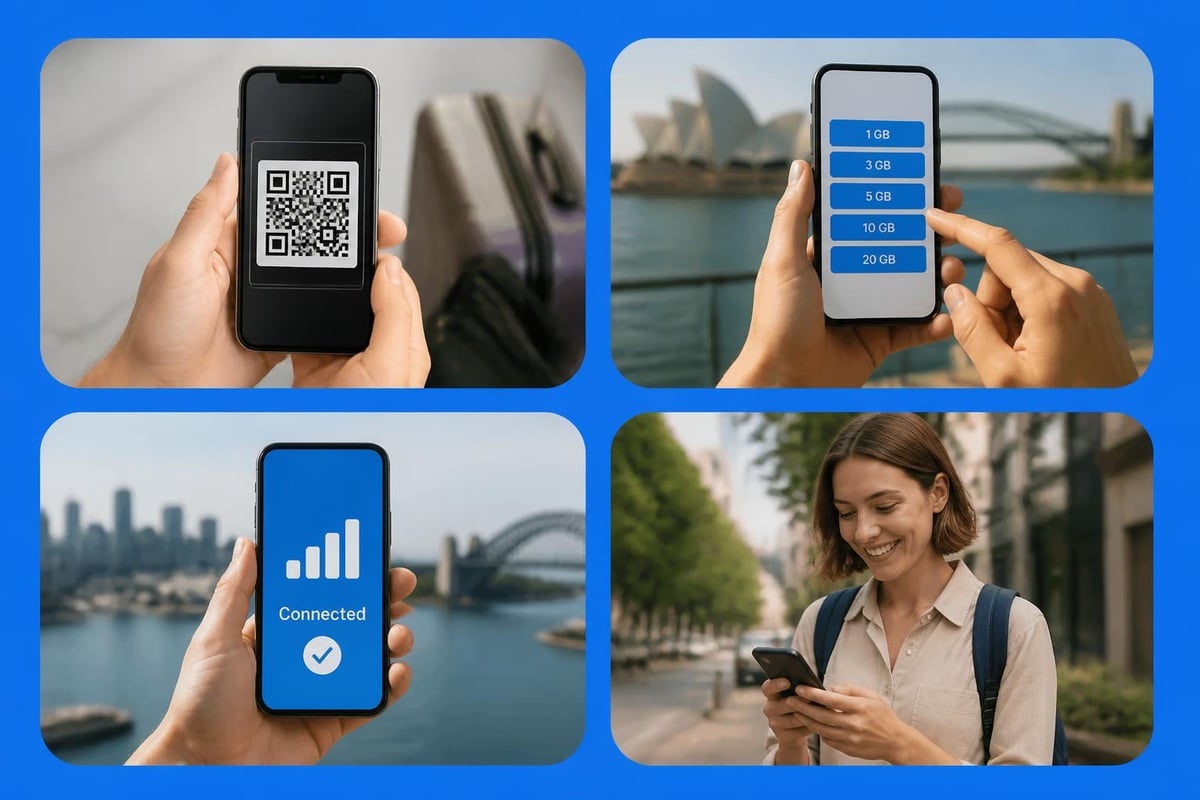
The setup process has become remarkably straightforward. Here's what you'll actually do:
- Purchase your chosen plan online before or after arriving in Australia
- Receive a QR code via email (usually within minutes)
- Navigate to your device's cellular settings
- Select 'Add eSIM' or 'Add Cellular Plan'
- Scan the provided QR code with your camera
- Label the plan (e.g., "Australia Data") and configure preferences
- Enable the eSIM when you're ready to connect
Most providers send detailed instructions alongside your QR code, but the process rarely takes longer than five minutes. If you're checking compatible devices beforehand, you'll avoid any unpleasant surprises at the airport.
Managing Multiple Profiles and Numbers
Here's where eSIM technology truly shines for the esim australia tourist experience. You can maintain your home number for important calls and messages whilst using a separate Australian data plan. No more choosing between accessibility and affordability.
Modern smartphones handle dual-SIM functionality elegantly. You'll designate one line for calls and texts (typically your home SIM or eSIM) and another for mobile data (your Australian tourist eSIM). Incoming calls to your home number still reach you, but you're not paying international roaming rates for data usage.
Setting up dual-SIM operation properly:
| Function | Recommended Setting | Why It Matters |
|---|---|---|
| Mobile Data | Australian eSIM | Avoids roaming charges |
| Default Voice Line | Home number | People can reach you normally |
| iMessage/WhatsApp | Australian eSIM | Uses local data rates |
| Roaming on Home Line | Off | Prevents accidental charges |
This configuration lets you browse Instagram while waiting for your flat white in a Melbourne café, using affordable local data rates, whilst still receiving that important call from your boss back home. The flexibility transforms how you experience connectivity abroad.
Some travelers maintain multiple eSIM profiles simultaneously, which proves useful if you're visiting several countries. You might have eSIM profiles for Thailand, Japan, and Australia all stored on your device, activating whichever matches your current location.
Cost Comparison and Budget Planning
Let's talk money, because understanding the true cost of staying connected in Australia matters for your travel budget. The esim australia tourist market has become increasingly competitive, driving prices down throughout 2026.
Traditional roaming through your home carrier typically costs £8-15 per day with data caps. A two-week Australian holiday would set you back £112-210 just for basic connectivity. Those charges add up faster than you'd think, especially when you're constantly checking Google Maps or uploading beach photos.
Compare that to dedicated tourist eSIM plans. Current eSIM plans available in Australia range from £12 for basic weekly packages to £45 for generous monthly allocations. You're saving 50-80% compared to traditional roaming whilst often getting more data and better flexibility.
Real-World Cost Examples
Budget traveler (10-day trip):
- 5GB eSIM plan: £15
- Daily roaming alternative: £100-120
- Savings: £85-105
Standard tourist (2-week trip):
- 15GB eSIM plan: £28
- Daily roaming alternative: £140-175
- Savings: £112-147
Extended stay (30 days):
- 30GB eSIM plan: £42
- Daily roaming alternative: £240-450
- Savings: £198-408
These figures assume moderate data usage - checking emails, using navigation apps, posting on social media, and making video calls. Heavy streamers might need larger packages, whilst light users could manage with less.
Practical Tips for Maximising Your eSIM
You've purchased your esim australia tourist plan and activated it successfully. Now let's ensure you're getting maximum value from your connectivity throughout your Australian adventure.
Pre-download essential content: Before leaving your accommodation each morning, download offline maps for your destination. Google Maps allows you to save specific areas, reducing data consumption whilst maintaining navigation capability. Similarly, download podcasts, playlists, or entertainment content over WiFi.
Monitor your usage actively: Both iOS and Android provide detailed data usage statistics. Check these regularly to avoid surprises. Set alerts at 50% and 80% of your allowance so you can adjust behaviour or purchase top-ups before running dry.
Connect strategically: Most Australian cafés, libraries, and public spaces offer free WiFi. Save data-intensive tasks like video calls or large file uploads for these moments. Your accommodation almost certainly provides WiFi too.
Data-Saving Techniques That Actually Work
- Disable auto-play for videos on social media platforms
- Use 'Data Saver' modes in Chrome, YouTube, and other apps
- Restrict background app refresh to WiFi only
- Download rather than stream Netflix/Spotify content
- Compress photos before uploading to social media
The installation guide typically includes usage tips specific to your provider, but these universal strategies apply regardless of which plan you've chosen.
Australian tourist hotspots increasingly offer public WiFi networks. Major shopping centres, train stations, and tourist attractions provide free connectivity, though always use a VPN when accessing sensitive information over public networks. Your eSIM becomes a reliable backup when WiFi is unavailable or insecure.
Troubleshooting Common eSIM Issues
Even with the best esim australia tourist plans, occasional hiccups occur. Let's address the most common problems and their solutions, saving you frustration when you'd rather be enjoying Bondi Beach.
eSIM won't activate: First, verify you've scanned the correct QR code and have an active internet connection (use WiFi for initial setup). Restart your device and attempt activation again. If problems persist, ensure your device isn't carrier-locked, as some restrictions prevent eSIM functionality.
No data connection: Check that mobile data is enabled for your Australian eSIM profile specifically. Navigate to cellular settings and confirm the correct profile is selected for data. Toggle airplane mode on and off to force a network reconnection.
Slow speeds: Network congestion affects all carriers, particularly in tourist-heavy areas during peak times. If speeds remain consistently slow, verify you haven't exceeded your plan's fair usage policy. Some unlimited plans throttle speeds after certain thresholds.
Can't receive calls: Remember, your eSIM typically provides data only, not a local phone number. Calls to your home number should still work if you've maintained that profile active. For local calls, use internet-based services like WhatsApp, Skype, or FaceTime.
Most eSIM providers offer 24/7 customer support through chat or email. Don't hesitate to reach out if you're struggling. The frequently asked questions section typically addresses 90% of common concerns.
Beyond the Cities: Regional Connectivity Challenges
The esim australia tourist experience differs dramatically between urban and rural environments. Sydney, Melbourne, Brisbane, and other major cities offer blanket coverage from all providers. Step outside these zones, and the situation changes quickly.
Australia's Outback presents unique challenges. Vast distances between population centers mean network coverage becomes patchy or non-existent. If you're planning a road trip through central Australia, the Kimberley, or remote Tasmania, research coverage maps carefully.
Regional Trip Planning Checklist
- Download offline maps for your entire route before leaving urban areas
- Inform someone of your itinerary when traveling remote routes
- Carry a physical map as backup (seriously)
- Check provider coverage maps against your specific destinations
- Consider a satellite communicator for truly remote areas
- Plan fuel stops around towns with confirmed connectivity
That romantic notion of complete digital disconnection sounds appealing until you're lost on an unmarked dirt road with no way to call for help. Balance the desire for off-grid experiences with practical safety considerations.
Certain tourist routes, like the Great Ocean Road or the Pacific Coast Touring Route, maintain good coverage throughout. Others, such as the Gibb River Road or tracks through the Simpson Desert, require serious preparation and should never be attempted relying solely on mobile connectivity.
Comparing International eSIM Providers
The global eSIM market has exploded, with dozens of providers competing for tourist attention. How do you distinguish between them for your Australian adventure?
Regional specialists vs global providers: Some companies focus exclusively on specific regions, whilst others offer worldwide coverage. Regional specialists often provide better rates and more generous data allowances for their focus areas, whilst global providers offer convenience if you're visiting multiple countries.
Network partnerships matter: Ask which Australian carrier your eSIM uses. A cheap plan on a limited network saves money upfront but costs you in frustration when you can't get signal. Premium providers often partner with Telstra, offering superior coverage at slightly higher prices.
Customer support standards: When something goes wrong at midnight on a Sunday, responsive support becomes invaluable. Check provider reviews specifically mentioning customer service experiences. Live chat support beats email-only options for urgent issues.
You might want to explore comparisons between different providers to understand how services stack up against each other. Features that seem minor during research - like top-up flexibility or activation timing - become crucial during your actual trip.
Future of eSIM Technology in Australian Tourism
The esim australia tourist landscape continues evolving rapidly. What's coming next?
Embedded eSIM becoming standard: By late 2026, virtually all new smartphones ship with eSIM capability as standard. Physical SIM slots are disappearing from flagship models, making eSIM literacy essential for international travelers.
5G coverage expansion: Australia's 5G networks are spreading beyond major cities. Tourist destinations are prioritizing high-speed connectivity, recognizing its importance for visitor experiences and digital content creation.
Automated network switching: Next-generation eSIM profiles will automatically connect to the strongest available network in real-time, eliminating the need to manually select carriers. This technology particularly benefits travelers moving between urban and regional areas.
The tourism industry itself is adapting. Accommodation providers, tour operators, and visitor centers increasingly reference eSIM connectivity in their information packs. It's becoming as fundamental as WiFi passwords or breakfast times.
Australian airports have noticed the shift too. Those kiosks selling physical SIM cards are shrinking, replaced by digital signage directing tourists toward eSIM options. The infrastructure around tourist connectivity is fundamentally transforming.
Security and Privacy Considerations
Staying connected shouldn't compromise your digital security. When using an esim australia tourist plan, maintain the same security practices you'd apply at home.
Use VPNs on public networks: Australian café WiFi is convenient but potentially insecure. A VPN encrypts your connection, protecting sensitive information from potential interception. Most quality VPN services cost less than £8 monthly.
Verify your provider's legitimacy: Stick with established eSIM providers with verified reviews and transparent business information. Scam services exist, collecting payment without delivering functional profiles.
Monitor account activity: Keep tabs on your eSIM account for unauthorized access or unexpected charges. Enable two-factor authentication wherever providers offer it.
Your eSIM profile contains limited personal information compared to traditional contracts, but basic security hygiene still matters. Avoid sharing QR codes publicly, as someone could potentially activate your plan on their device.
Australian consumer protection laws generally cover eSIM services, but international providers may fall outside local jurisdiction. Understanding your rights before purchasing prevents headaches if disputes arise.
Staying connected during your Australian adventure doesn't need to be complicated or expensive. With eSIM technology, you can explore everything from Sydney's harbour to Queensland's rainforests whilst maintaining reliable, affordable connectivity. The flexibility to activate before you travel, switch between networks, and avoid roaming fees transforms the tourist experience entirely. When you're ready to sort your Australian connectivity before your trip, gosimless.app offers instant activation, competitive pricing across 200+ countries, and the flexibility to stay connected without the roaming fee headaches.
gosimless Team
The gosimless editorial desk — testing eSIMs, carriers and travel connectivity so you don't have to. Updated continuously from the road.