
Planning a trip abroad and wondering what'll happen to your phone bill? If you're an EE customer, understanding ee roaming charges has become increasingly important since Brexit changed the landscape for UK travellers. Gone are the days of automatic free roaming across Europe, and navigating the current pricing structure can feel like decoding a foreign language. Let's break down everything you need to know about staying connected with EE when you travel in 2026.
What Are EE Roaming Charges and Why Do They Exist?
When you use your mobile phone outside the UK, your device connects to foreign networks rather than EE's domestic infrastructure. These partner networks charge EE for allowing you to use their services, and those costs get passed on to you as roaming charges.
Think of it like using a cash machine that's not part of your bank's network. You can still withdraw money, but there's usually a fee involved because you're using someone else's infrastructure.
The Post-Brexit Reality
Remember when you could hop over to France or Spain and use your phone exactly as you would at home? Those were the days of the EU roaming regulation, which forced all mobile operators to provide roam-like-at-home services across member states. EE reintroduced roaming charges for European travel in 2022, and they're still in place as of 2026.
The change caught many travellers off guard. You're no longer automatically covered when you land in Barcelona or Rome, which means understanding the current fee structure is essential before you board that flight.
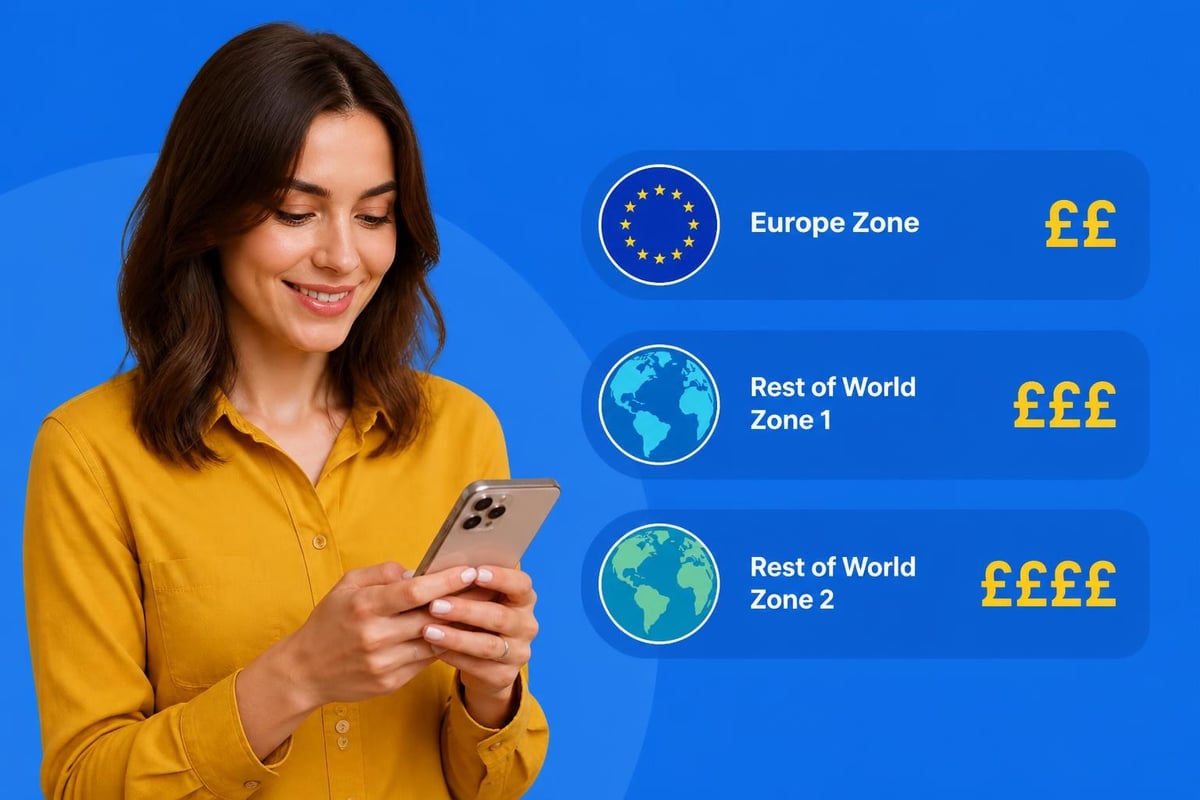
Current EE Roaming Charges Breakdown
EE divides the world into different zones, and your costs depend entirely on where you're travelling. Let's look at what you'll actually pay.
Europe Zone Charges
For most EU countries, Switzerland, Iceland, Liechtenstein, and Norway, ee roaming charges now apply unless you're on specific legacy plans. Here's what different EE customers face:
| Customer Type | Daily Charge | What's Included |
|---|---|---|
| Pay Monthly (most plans) | £2.47/day | Use your UK allowance |
| Pay As You Go | £2.47/day | 500MB data, 120 mins, unlimited texts |
| Smart Plans | Often included | Check your specific plan |
The £2.47 daily charge only applies on days you actually use your phone abroad. If you keep it in airplane mode and rely on Wi-Fi, you won't be charged. But the moment you make a call, send a text, or use data, that daily fee kicks in.
Rest of World Destinations
Travelling further afield? The costs increase significantly. EE's official roaming help page provides comprehensive details, but here's a snapshot:
- USA, Canada, Mexico: £6/day with Travel Data Pass
- Australia, New Zealand: £6/day with Travel Data Pass
- Popular Asian destinations: £6/day with Travel Data Pass
- Without a pass: Eye-watering per-MB data rates
I learned this the hard way during a work trip to New York. I forgot to activate a Travel Data Pass and racked up over £150 in charges in just three days. Don't be like me.
EE's Travel Data Pass: Your Best Official Option?
EE offers Travel Data Passes to make roaming more predictable. You purchase a pass before or during your trip, and it gives you a set allowance for a fixed price.
How Travel Data Passes Work
- Purchase before you travel through the My EE app or by texting TRAVEL to 150
- Activate when you arrive at your destination
- Use your allowance for the specified duration
- Top up if needed or switch back to standard roaming rates
The passes come in various sizes and durations, typically offering better value than pay-as-you-go roaming charges if you're staying connected regularly.
Are They Actually Good Value?
Here's where it gets interesting. A 30-day European Travel Data Pass costs around £35, which sounds reasonable until you do the maths. If you're travelling for two weeks and only use your phone occasionally, you might spend less with the daily £2.47 charge.
But for longer trips or data-heavy usage, the pass provides peace of mind. You know exactly what you're spending upfront.
Countries With Special Roaming Arrangements
Not all destinations are created equal when it comes to ee roaming charges. Some have surprisingly traveller-friendly arrangements.
Ireland: The Exception
Good news for those heading across the Irish Sea. When roaming in Ireland, EE customers can use their phones exactly as they would at home with no extra charges. This applies to both the Republic of Ireland and Northern Ireland, making it one of the best-value destinations for EE customers.
Germany and Popular European Destinations
For countries like Germany, the standard Europe zone charges apply. You'll pay the £2.47 daily rate unless you've got a plan that includes European roaming or you've purchased a Travel Data Pass.

Hidden Costs and Unexpected Charges
Even when you think you've got ee roaming charges figured out, there are several sneaky costs that can catch you out.
Data Roaming While in Transit
Did you know your phone can rack up charges while you're flying over countries? If you're on a flight from London to Dubai with a layover in Germany, your phone might briefly connect to German networks even if you never leave the airport. Always use airplane mode during flights.
Premium Rate Numbers
Calling certain numbers abroad, particularly customer service lines or premium rate services, can cost significantly more than standard roaming rates. Check before you dial.
Cruise Ships and Ferries
This is a big one. When you're on a ship, your phone often connects to maritime networks that charge astronomical rates. I'm talking £5-10 per megabyte in some cases. Understanding how roaming works on EE includes knowing when to disconnect completely.
Comparing EE Roaming Charges to Alternatives
Let's be honest: ee roaming charges aren't the most competitive option available in 2026. The market has evolved, and savvy travellers have discovered more cost-effective solutions.
Traditional Roaming vs eSIM Solutions
Here's a comparison that might surprise you:
| Option | 7-Day Europe Trip Cost | Flexibility | Setup Time |
|---|---|---|---|
| EE Standard Roaming | ~£17.29 (7 days × £2.47) | Uses existing number | Instant |
| EE Travel Data Pass | £10-15 | Uses existing number | Few minutes |
| eSIM (e.g., gosimless.app) | £5-12 | Separate data line | 2-3 minutes |
The eSIM option becomes even more attractive for longer trips or when visiting multiple countries. Instead of worrying about daily charges accumulating, you purchase exactly the data you need upfront.
Why More Travellers Are Switching to eSIMs
Modern smartphones support eSIM technology, which means you can activate a virtual SIM card without physically swapping anything. For frequent travellers, this has become the go-to solution. You can explore affordable eSIM options for Europe that often work out significantly cheaper than traditional roaming.
The beauty of eSIMs? You keep your UK number for calls and texts but use a local data connection for everything else. No bill shock when you return home.
Managing Your EE Roaming Costs Effectively
You don't have to resign yourself to expensive bills. Here are practical strategies that actually work.
Before You Travel
- Check your specific plan details – Some EE contracts include European roaming
- Download offline maps – Google Maps and other apps work without data
- Update apps over Wi-Fi – Prevent automatic updates eating into your allowance
- Set data limits on your phone's settings
- Consider your compatible device options if exploring eSIM alternatives
While You're Away
- Connect to Wi-Fi whenever possible (hotels, cafés, restaurants)
- Use messaging apps like WhatsApp instead of SMS
- Disable automatic app updates and background data refresh
- Monitor your usage through the My EE app
- Keep airplane mode on when you're not actively using your phone
Smart App Usage
Some apps are data vampires. Facebook, Instagram, and TikTok can consume gigabytes without you realizing. If you're relying on ee roaming charges rather than unlimited data, stick to lightweight browsing and save the social media scrolling for Wi-Fi.
What EE Doesn't Tell You About Roaming
There are several aspects of roaming that don't make it into the official marketing materials.
Fair Use Policies Still Apply
Even with inclusive European roaming on certain plans, EE's fair use policies mean you can't spend months abroad using your UK allowance. Typically, you're limited to around two months of continuous EU roaming before additional charges kick in.
Network Speed Variations
Your 5G speeds at home might drop to 3G in some countries. EE doesn't guarantee the same network speeds abroad as you experience domestically, which can be frustrating if you're trying to work remotely or stream content.
Customer Service Challenges
Need help while abroad? Calling EE customer service from overseas can be expensive and frustrating. Screenshot important information before you leave, including your account details and any pass activation confirmations.

The Future of International Connectivity
As we move through 2026, the telecommunications landscape continues to evolve. EE roaming charges represent an increasingly outdated model as eSIM technology becomes mainstream.
Why the Industry Is Shifting
Traditional roaming relies on complex agreements between mobile networks worldwide. Each operator negotiates rates, creating a web of charges that ultimately land on your bill. eSIM providers bypass this entirely by offering direct local network access.
Think about it: why pay for the privilege of using a German network through EE when you could just connect directly to that network with an eSIM? The middleman markup disappears.
What This Means for EE Customers
You're not locked into expensive roaming charges forever. Your phone likely supports dual SIM functionality, meaning you can keep your EE number for calls while using a data-only eSIM for internet access. It's like having the best of both worlds.
Many travellers now maintain their primary UK number for important calls while relying on cost-effective data solutions for everything else. Checking the installation guide for eSIM setup takes just minutes and can save you significant money.
Specific Destinations and Their Roaming Costs
Let's get practical. Here's what you'll actually pay in popular travel destinations with EE.
European City Breaks
- Paris, France: £2.47/day or included in some plans
- Barcelona, Spain: £2.47/day or included in some plans
- Amsterdam, Netherlands: £2.47/day or included in some plans
- Rome, Italy: £2.47/day or included in some plans
For a long weekend in any European city, you're looking at around £10-12 in roaming charges if you don't have inclusive roaming.
Long-Haul Destinations
The costs multiply quickly for destinations outside Europe:
- New York, USA: £6/day with Travel Data Pass (around £42 for a week)
- Dubai, UAE: £6/day with Travel Data Pass
- Sydney, Australia: £6/day with Travel Data Pass
- Tokyo, Japan: £6/day with Travel Data Pass
Compare those weekly costs to a USA eSIM or destination-specific eSIM, and the savings become obvious. You could potentially cut your connectivity costs by 60-70% for long-haul trips.
Real Customer Experiences with EE Roaming
Reading fee schedules is one thing, but what actually happens when you travel?
The Budget Backpacker
Sarah travelled through Southeast Asia for three months in early 2026. She kept her EE SIM for emergencies but relied primarily on local eSIMs. "I would have spent hundreds on EE roaming charges," she told me. "Instead, I spent maybe £40 total on data across Thailand, Vietnam, and Indonesia by using eSIMs."
The Business Traveller
James flies to European cities weekly for work. "I kept getting stung by the £2.47 daily charge, which doesn't sound like much until you're paying it 15-20 times a month. That's £300-500 annually just to use my phone for work trips. I switched to keeping EE for my number but using an eSIM for reliable European coverage."
The Holiday Maker
The Martinez family went to Florida for two weeks. Without realizing it, they racked up £168 in roaming charges (two phones × £6/day × 14 days). "We didn't even use that much data," Mrs. Martinez explained. "We could have bought unlimited data eSIMs for about £30 total. Lesson learned for next year."
Practical Tips for Different Types of Travellers
Your roaming strategy should match your travel style.
For Occasional Travellers (1-2 trips per year)
- EE's daily charges might be acceptable for short European trips
- Always activate airplane mode when not using your phone
- Rely heavily on Wi-Fi
- Consider a Travel Data Pass for trips longer than a week
For Frequent Travellers (Monthly or more)
- eSIM solutions offer better long-term value
- Maintain your EE number for calls, use eSIM for data
- Research destination-specific options before each trip
- Track your annual roaming spend to identify savings opportunities
For Digital Nomads and Extended Travellers
Honestly? EE roaming charges make no sense for your lifestyle. You need:
- Flexible, affordable data solutions
- Multi-country coverage
- No daily fees eating into your budget
- The ability to work from anywhere
Traditional roaming simply wasn't designed for people who live abroad part-time or work remotely from various countries.
Common EE Roaming Mistakes and How to Avoid Them
Let's prevent some painful (and expensive) lessons.
Mistake #1: Assuming Free European Roaming
Many people still think EU roaming is free because it was for several years. EE's roaming charges were reintroduced after Brexit, and this catches people out constantly. Always verify your plan includes European roaming before you travel.
Mistake #2: Not Understanding "Fair Use"
"Inclusive roaming" doesn't mean unlimited roaming. Fair use policies exist, and exceeding them triggers additional charges. Read the terms carefully.
Mistake #3: Leaving Data Roaming On
Your phone can use data in the background even when you're not actively browsing. Apps update, emails sync, photos backup. Disable data roaming in your settings when you're not using it.
Mistake #4: Not Exploring Alternatives
Many EE customers simply accept roaming charges as inevitable. They're not. Comparing options takes 10 minutes and could save you hundreds of pounds annually. Whether you explore gosimless.app or other solutions, doing your homework pays off.
Understanding Your Bill When You Return
Roaming charges appear differently on your bill than regular usage, which can be confusing.
You'll see line items for each day you roamed, plus any additional charges if you exceeded allowances. EE typically bills roaming charges the month after you travel, so don't be surprised when last month's holiday appears on this month's statement.
If you spot charges that don't make sense, contact EE immediately. Billing errors do happen, and they're usually correctable if you catch them quickly.
Navigating ee roaming charges doesn't have to mean accepting expensive bills or staying disconnected while you travel. By understanding the current fee structure and exploring modern alternatives like eSIM technology, you can stay connected affordably wherever your adventures take you. Whether you're heading to Europe for a weekend city break or embarking on a months-long journey across multiple continents, gosimless.app offers instant eSIM activation with coverage across 200+ countries and absolutely no roaming fees, giving you the freedom to explore without worrying about your phone bill.
gosimless Team
The gosimless editorial desk — testing eSIMs, carriers and travel connectivity so you don't have to. Updated continuously from the road.