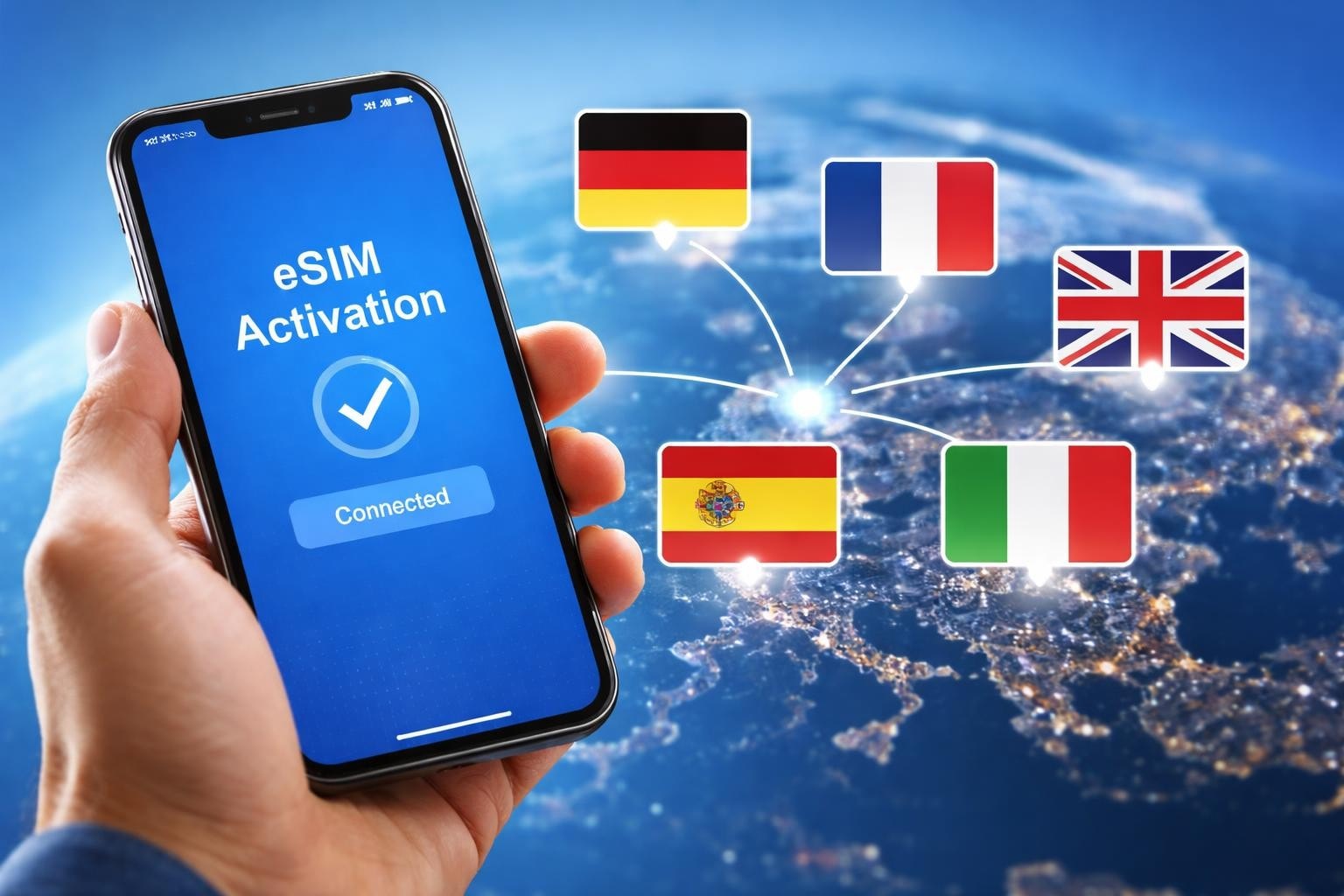
Travelling across Europe has never been easier, but staying connected whilst hopping between countries used to mean juggling multiple SIM cards, paying extortionate roaming fees, or hunting for Wi-Fi hotspots. Enter eSIM technology, which is revolutionising how we stay online across the continent. With Europe capturing 28% of the global eSIM market share in 2026, this digital solution has moved from novelty to necessity for both travellers and residents navigating the European mobile landscape.
What Makes E SIMs Europe Different from Traditional SIMs
The fundamental shift with e sims Europe lies in their embedded nature. Unlike physical SIM cards you pop in and out of your device, eSIMs are built directly into your phone, tablet, or smartwatch. This isn't merely a convenience factor; it represents a complete reimagining of how we connect to mobile networks.
Traditional SIM cards require:
- Physical insertion and removal
- In-person purchase at shops or kiosks
- Waiting for delivery if ordered online
- Storage space in your device
- Risk of loss or damage
E SIMs Europe offer:
- Instant digital activation
- Purchase and setup from anywhere
- Switching between carriers without new hardware
- Multiple profiles on one device
- Environmental benefits through reduced plastic waste
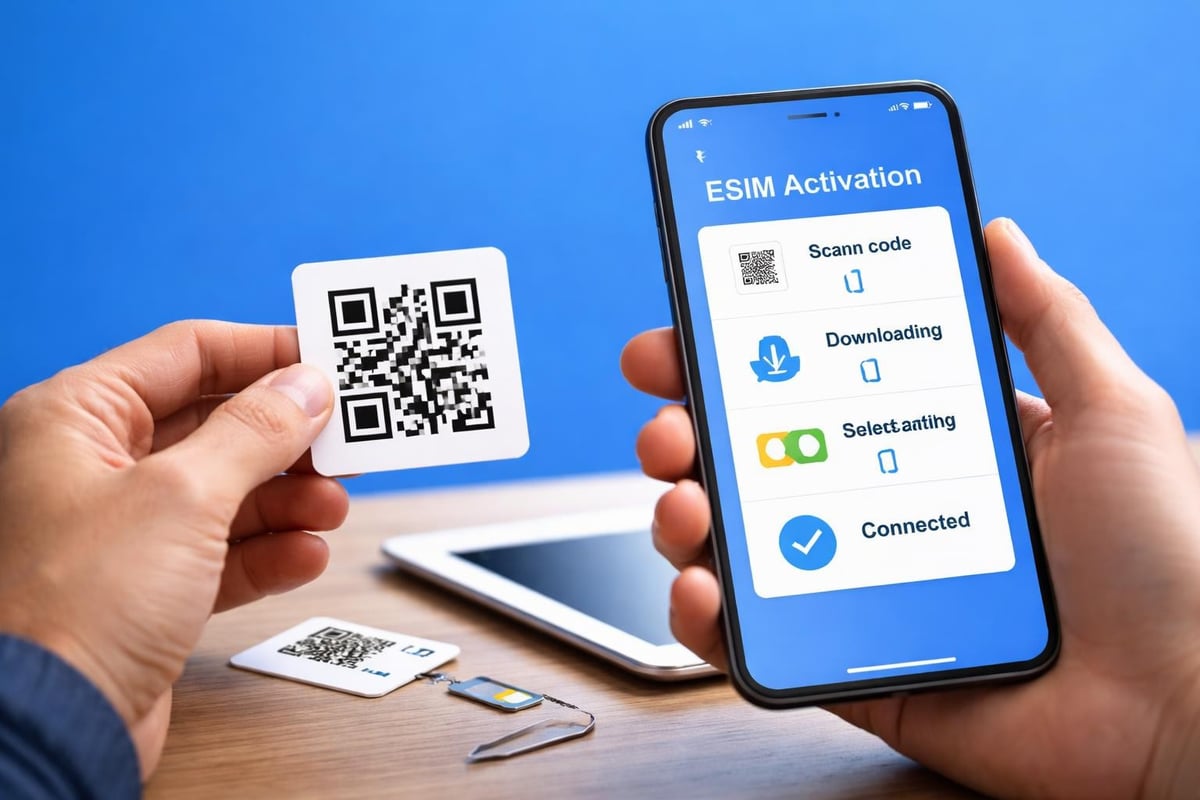
The technology works through a rewritable chip inside your device that downloads carrier profiles digitally. When you purchase an e SIM for Europe, you receive a QR code or activation details via email, scan it with your device, and you're connected within minutes. This seamless process has contributed to over 60% of European mobile network operators supporting eSIM technology by 2022, with that number climbing steadily through 2026.
European Countries Leading the E SIM Revolution
Not all European nations have embraced eSIM technology at the same pace. The infrastructure, regulatory environment, and consumer demand vary significantly across the continent.
Western Europe's Strong Adoption
Germany, the United Kingdom, France, and Spain lead the charge in e sims Europe deployment. These countries benefit from robust carrier support and government initiatives promoting digital transformation. Major operators like Deutsche Telekom, Vodafone, Orange, and Telefónica have invested heavily in eSIM infrastructure.
| Country | eSIM Penetration (2026) | Leading Carriers | Coverage Quality |
|---|---|---|---|
| Germany | 42% | Deutsche Telekom, Vodafone, O2 | Excellent |
| UK | 38% | EE, Vodafone, Three | Excellent |
| France | 35% | Orange, SFR, Bouygues | Very Good |
| Spain | 33% | Movistar, Vodafone, Orange | Very Good |
| Italy | 31% | TIM, Vodafone, WindTre | Good |
Nordic and Benelux Excellence
Scandinavia and the Low Countries showcase some of Europe's highest digital adoption rates. Norway, Sweden, Denmark, Finland, Netherlands, Belgium, and Luxembourg report eSIM penetration above 40% amongst smartphone users. These markets benefit from tech-savvy populations and excellent mobile infrastructure.
Emerging Markets
Eastern European countries like Poland, Czech Republic, and the Baltic states are rapidly catching up. Whilst overall penetration remains lower, growth rates exceed Western European averages. If you're exploring destinations beyond typical tourist hubs, checking compatible devices ensures your phone supports eSIM before departure.
Choosing the Right E SIM Provider for European Travel
The e sims Europe market offers dozens of providers, each with different strengths. Selecting the right one depends on your specific travel patterns and connectivity needs.
Coverage Breadth vs Regional Specialisation
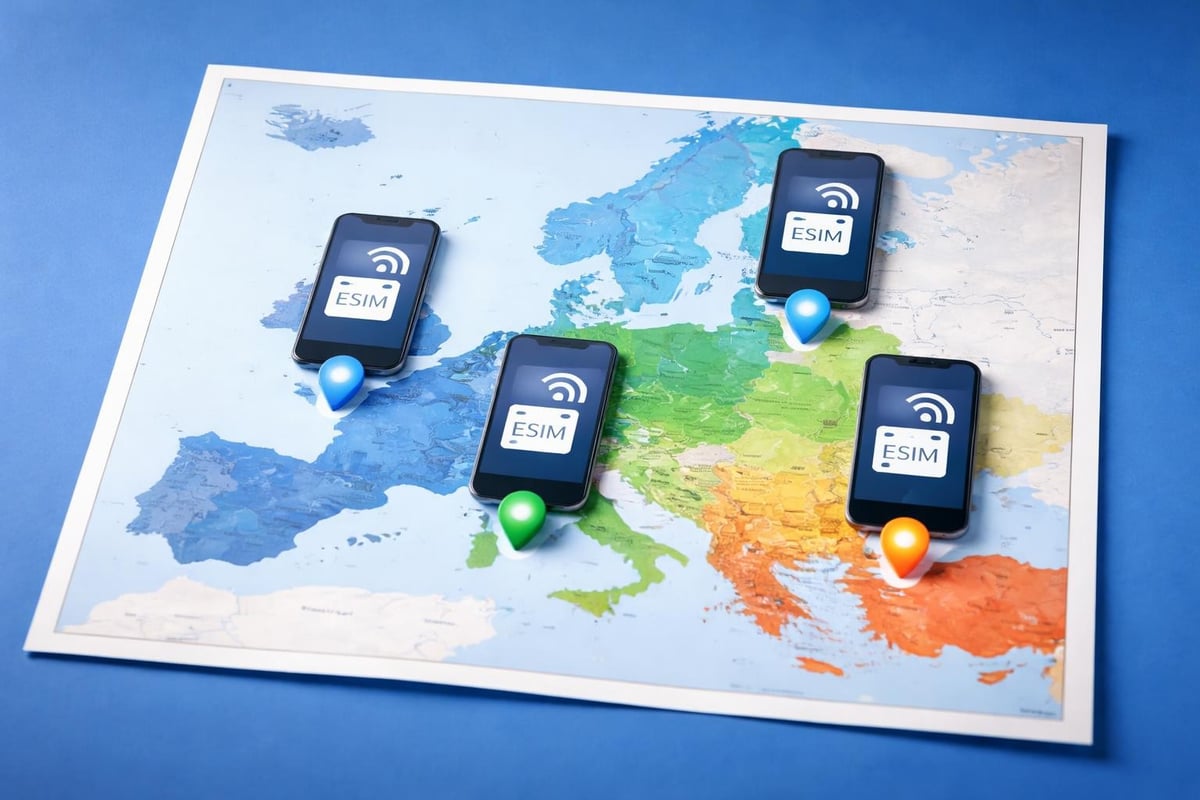
Some providers offer pan-European coverage across 30+ countries, whilst others specialise in specific regions. For Interrail trips or multi-country tours, broad coverage prevents purchasing separate plans for each destination. Travellers focusing on particular countries might benefit from region-specific offerings like plans for Spain, Italy, or France.
Pan-European providers typically cover:
- EU member states (27 countries)
- UK and Switzerland
- Norway, Iceland, Liechtenstein
- Turkey (sometimes included)
Data Allowances and Validity Periods
E sims Europe come with varying data packages and time limits. Understanding your usage patterns prevents overpaying for unused data or running out mid-trip.
- Light users (1-3GB): Email checking, messaging, occasional maps
- Moderate users (5-10GB): Social media, regular navigation, video calls
- Heavy users (15GB+): Streaming, constant connectivity, hotspot sharing
- Unlimited plans: Remote workers, content creators, extended stays
Validity periods range from single-day options to 90-day packages. The Europe eSIM offerings at gosimless.app provide flexible data plans delivered in seconds without roaming fees, making it simple to match your exact travel duration.
Speed and Network Priority
Not all e sims Europe offer the same connection speeds. Some providers sell deprioritised data, meaning you might experience slower speeds during peak usage times. Premium options guarantee 4G or 5G speeds with network priority equivalent to local subscribers.
Device Compatibility and Technical Requirements
Before purchasing e sims Europe, verify your device supports the technology. The ecosystem has expanded dramatically, but not all phones, tablets, and wearables include eSIM capability.
Smartphones Supporting E SIMs
Apple devices:
- iPhone XS and newer (including all iPhone 11, 12, 13, 14, 15, and 16 models)
- iPad Pro (2018 onwards)
- iPad Air (2019 onwards)
- iPad (7th generation onwards)
- iPad mini (2019 onwards)
Samsung devices:
- Galaxy S20 series and newer
- Galaxy Note 20 series and newer
- Galaxy Z Fold and Z Flip series
- Galaxy A54 and selected A-series
Google Pixel:
- Pixel 3 and all subsequent models
- Pixel Fold
- Pixel tablets with cellular
The comprehensive device compatibility list at gosimless.app helps confirm whether your specific model supports eSIM before purchase.
Carrier Lock Considerations
Even if your phone includes eSIM hardware, carrier locks can prevent activation. Devices purchased through monthly contracts or payment plans often carry restrictions. Contact your current carrier to confirm unlock status before travelling. Most European countries mandate unlocking after contract completion, but policies vary.
Activation Process and Setup Procedures
Getting your e sims Europe running requires just a few straightforward steps. The process typically takes under ten minutes from purchase to active connection.
Standard Activation Workflow
- Purchase your eSIM plan through a provider's website or app
- Receive your QR code via email or directly in the app
- Access your device settings and navigate to mobile/cellular options
- Select "Add eSIM" or "Add cellular plan"
- Scan the QR code using your device camera
- Label your plan (e.g., "Europe Travel") to distinguish from other SIMs
- Configure data settings selecting which SIM handles data vs calls
- Enable data roaming for your new eSIM profile
The installation guide provides device-specific instructions for both iOS and Android platforms, complete with screenshots for each step.
Troubleshooting Common Issues
Even with straightforward setup, occasional hiccups occur. These solutions resolve most activation problems:
QR code won't scan: Adjust lighting, increase screen brightness, or manually enter activation details
No network connection: Toggle aeroplane mode on/off, restart device, verify data roaming enabled for correct SIM
Can't find "Add eSIM" option: Confirm device compatibility, check for carrier lock, ensure iOS/Android version supports eSIM
Multiple eSIM confusion: Delete unused profiles, clearly label active plans, designate primary vs secondary SIM
Cost Comparisons: E SIMs Europe vs Traditional Roaming
Financial savings represent a major driver behind e sims Europe adoption. Traditional roaming fees, whilst reduced within the EU, still cost substantially more than dedicated eSIM plans when travelling from outside Europe or using non-EU carriers.
EU Roaming Regulations Impact
Since 2017, EU "Roam Like at Home" rules allow EU residents to use their domestic allowances throughout the bloc without extra charges. However, 2025 regulations brought significant changes affecting both traditional carriers and eSIM providers, creating new opportunities for digital-first solutions.
"Roam Like at Home" covers:
- All 27 EU member states
- Iceland, Liechtenstein, Norway (EEA)
- Not UK, Switzerland, Turkey (separate agreements)
Travellers from the UK, US, Australia, or Asia face different economics. International roaming from these regions often costs £5-15 per day, whilst e sims Europe typically range from £3-8 per gigabyte.
Real-World Price Scenarios
| Usage Pattern | Traditional Roaming | E SIM Europe | Savings |
|---|---|---|---|
| Weekend trip (2GB) | £20-30 | £5-8 | 65-75% |
| Week holiday (5GB) | £50-105 | £12-20 | 75-81% |
| Two-week tour (10GB) | £100-210 | £20-35 | 80-83% |
| Month business (25GB) | £250-450 | £40-70 | 84-85% |
These figures reflect 2026 pricing across mainstream providers. Budget options offer even greater savings, whilst premium services with guaranteed speeds cost moderately more.
Security and Privacy Considerations
Digital connectivity brings security questions. E sims Europe operate with equivalent safety to physical SIM cards, but understanding the technology helps make informed decisions.
Data Encryption and Network Security
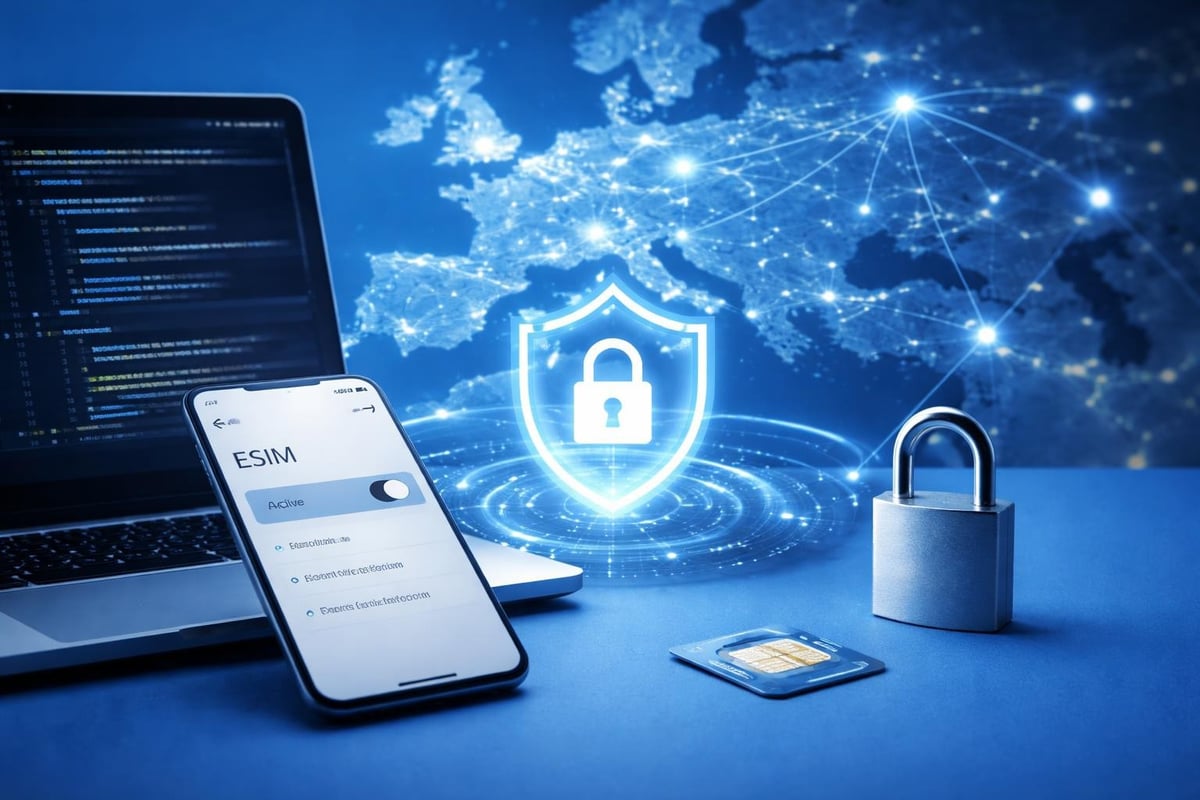
Mobile networks encrypt data transmission through protocols like LTE and 5G security architecture. Your e sims Europe connection benefits from the same encryption whether using physical or embedded SIM technology. The security level depends on the carrier network, not the SIM format.
Best practices for secure connectivity:
- Use VPN services when accessing sensitive information
- Avoid conducting financial transactions on public Wi-Fi
- Enable two-factor authentication for important accounts
- Keep device operating systems updated
- Download eSIM profiles only from verified providers
Provider Reputation and Reliability
With numerous e sims Europe providers entering the market, distinguishing established operators from fly-by-night operations matters. Research provider backgrounds, read user reviews, and verify they use reputable carrier partnerships. The plans section at gosimless.app demonstrates transparent pricing and clear carrier relationships across 200+ countries.
Business Travel and Remote Work Applications
E sims Europe serve business travellers and digital nomads exceptionally well. The ability to maintain multiple numbers, separate work and personal data, and switch networks without hardware changes addresses professional connectivity needs.
Dual SIM Functionality Benefits
Modern smartphones support using both traditional SIM and eSIM simultaneously, or multiple eSIM profiles. This enables:
- Keeping your home number active for calls whilst using local data
- Maintaining separate business and personal lines
- Testing different carriers for optimal coverage
- Switching between networks without changing settings
Business professionals attending conferences in different European cities throughout the year particularly benefit. Rather than arranging local SIMs for each trip, a renewable e sims Europe subscription provides consistent connectivity.
Long-Term Stay Considerations
Digital nomads spending months in Europe face different requirements than short-term tourists. eSIM smartphone penetration reached 25% across Europe in 2023, reflecting growing adoption for both temporary and permanent usage.
For stays exceeding 90 days, compare e sims Europe against local contract plans. Traditional carriers sometimes offer better value for extended periods, though eSIM flexibility remains advantageous if you move between countries frequently. Destinations like Portugal, Greece, and Turkey attract remote workers who benefit from seamless connectivity solutions.
Environmental Impact and Sustainability
The shift toward e sims Europe carries environmental implications worth considering. Digital solutions reduce physical waste, though they're not entirely carbon-neutral.
Plastic Reduction Benefits
Traditional SIM cards generate substantial plastic waste. Each SIM card kit includes:
- The plastic carrier card
- The SIM chip itself (multiple sizes)
- Packaging materials
- Printed instructions
- Protective envelopes
With billions of SIM cards produced annually, eliminating physical production for e sims Europe significantly reduces plastic consumption. Estimates suggest each eSIM prevents approximately 8 grams of plastic waste compared to traditional SIM cards with packaging.
Digital Infrastructure Energy Costs
Whilst eSIMs eliminate physical manufacturing, they require data centres, network infrastructure, and digital distribution systems that consume electricity. The environmental equation balances reduced physical production against increased digital operations. Overall, studies indicate net environmental benefits, particularly as renewable energy increasingly powers data infrastructure.
Future Developments in European E SIM Technology
The e sims Europe market continues evolving rapidly. Understanding upcoming changes helps make forward-thinking connectivity decisions.
Market Growth Projections
European eSIM market forecasts extending to 2031 predict substantial expansion driven by traveller adoption and service provider growth. Key trends shaping this trajectory include:
Technological advancements:
- 5G network expansion across secondary European cities
- Improved activation speeds and reliability
- Enhanced security protocols
- Integration with IoT devices and connected vehicles
Market dynamics:
- Traditional carriers launching competitive eSIM offerings
- Digital-first providers expanding coverage
- Price competition benefiting consumers
- Regulatory frameworks supporting eSIM adoption
Integration with Wearables and IoT
E sims Europe functionality extends beyond smartphones. Smartwatches, tablets, laptops, and connected devices increasingly support eSIM technology. The Apple Watch Series 3 onwards, Samsung Galaxy Watch models, and various fitness trackers include cellular eSIM capability.
This expansion enables standalone device connectivity without phone tethering. Imagine leaving your phone at the hotel whilst your smartwatch maintains connection for maps, messages, and emergency calls during a cycling tour through Tuscany.
Comparing Top E SIM Europe Providers for 2026
With numerous options available, evaluating providers requires examining multiple factors beyond basic pricing. Reviews of the best eSIM providers for Europe assess coverage, features, and user experience to guide selection.
Evaluation Criteria
Coverage breadth: Number of European countries included
Network partnerships: Quality of carrier relationships (premium operators vs budget networks)
Data packages: Range of options from day passes to extended plans
Customer support: Availability, responsiveness, multilingual assistance
Additional features: Top-ups, auto-renewal, usage tracking, hotspot capability
Payment flexibility: Accepted methods, currency options, refund policies
User Experience Factors
Technical specifications matter, but practical usability determines satisfaction. Consider these experience elements:
- App quality: Intuitive interface, reliable performance, useful features
- Activation speed: Time from purchase to active connection
- Network switching: Ability to change carriers if coverage proves inadequate
- Transparency: Clear pricing, no hidden fees, honest data throttling policies
- Account management: Easy monitoring of usage, simple plan modifications
The FAQ section at gosimless.app addresses common questions about activation, coverage, and troubleshooting, demonstrating commitment to user support.
Managing Multiple E SIMs Across European Destinations
Frequent European travellers often accumulate several eSIM profiles. Effective management prevents confusion and optimises connectivity.
Organisation Strategies
Label each eSIM profile clearly with the country or region it serves. Rather than "eSIM 1" and "eSIM 2," use "France Travel April 2026" or "Spain Business Trip." This clarity helps when switching between profiles or troubleshooting connection issues.
Profile management tips:
- Delete expired or unused eSIM profiles regularly
- Keep one backup profile for emergencies
- Document activation codes and account details securely
- Understand which profile handles calls vs data
- Set default selections to prevent accidental usage
Cross-Border Travel Considerations
E sims Europe with multi-country coverage simplify border crossings. Unlike traditional roaming that requires manual network selection, quality eSIM providers automatically connect to partner networks as you move between countries.
When travelling through multiple nations in quick succession, such as driving from Amsterdam through Belgium into France, seamless handoffs prevent connectivity gaps. Verify your chosen provider covers all countries on your itinerary. For specialised destinations, dedicated country plans might offer better value than pan-European options.
Making the Switch: Transitioning from Physical to E SIMs
If you've always used traditional SIM cards, switching to e sims Europe might feel daunting. The transition proves straightforward with proper preparation.
Pre-Travel Preparation
Two weeks before departure:
- Confirm device compatibility
- Research provider options and pricing
- Compare coverage for specific destinations
- Read reviews from travellers with similar itineraries
One week before:
- Purchase your eSIM plan
- Receive and save activation details
- Test activation at home (many providers allow pre-activation)
- Familiarise yourself with the provider's app
Day before travel:
- Verify eSIM profile installation
- Check data settings configuration
- Ensure primary SIM settings correct if maintaining dual SIM
- Screenshot important activation information
First-Time Activation Tips
Your inaugural e sims Europe experience sets expectations for future usage. Choose a straightforward destination for your first attempt. Countries with robust eSIM support like Germany, UK, or France provide reliable networks and extensive carrier partnerships.
Start with a small data package to test functionality before committing to larger plans. This approach limits potential losses if the service doesn't meet expectations whilst allowing real-world evaluation. Most providers offer multiple package sizes, enabling upgrades if initial testing proves successful.
Regional Variations Within Europe
E sims Europe aren't uniform across the continent. Geographic, economic, and infrastructural differences create varying experiences.
Western vs Eastern Europe
Western European countries benefit from mature telecommunications infrastructure, extensive 4G/5G coverage, and competitive markets driving innovation. Eastern European nations have made remarkable progress but sometimes show coverage gaps in rural areas.
| Region | 5G Availability | Rural Coverage | Average Speeds |
|---|---|---|---|
| Western Europe | Extensive | Very Good | 45-85 Mbps |
| Nordic Countries | Excellent | Excellent | 55-95 Mbps |
| Southern Europe | Good | Good | 35-65 Mbps |
| Eastern Europe | Developing | Variable | 25-55 Mbps |
| Balkans | Limited | Fair | 20-45 Mbps |
Urban vs Rural Connectivity
Major European cities provide exceptional coverage regardless of carrier. Amsterdam, Paris, Berlin, London, Madrid, and Rome maintain near-perfect connectivity throughout metropolitan areas. Challenges emerge in countryside regions, mountain areas, and remote islands.
For hiking in the Scottish Highlands, cycling through rural Provence, or exploring Greek islands, verify your e sims Europe provider's coverage extends beyond urban centres. Provider coverage maps indicate network availability, though real-world performance sometimes varies from advertised territories.
E sims Europe have fundamentally transformed how travellers and residents maintain connectivity across the continent, offering unprecedented flexibility, cost savings, and convenience compared to traditional solutions. Whether you're planning a weekend city break, multi-country tour, or extended remote work stay, understanding eSIM technology, provider options, and activation processes ensures seamless connectivity throughout your European adventures. For instant eSIM activation with affordable and flexible coverage across Europe and 200+ countries, gosimless.app delivers secure, straightforward solutions with no roaming fees and support for multiple devices.
gosimless Team
The gosimless editorial desk — testing eSIMs, carriers and travel connectivity so you don't have to. Updated continuously from the road.