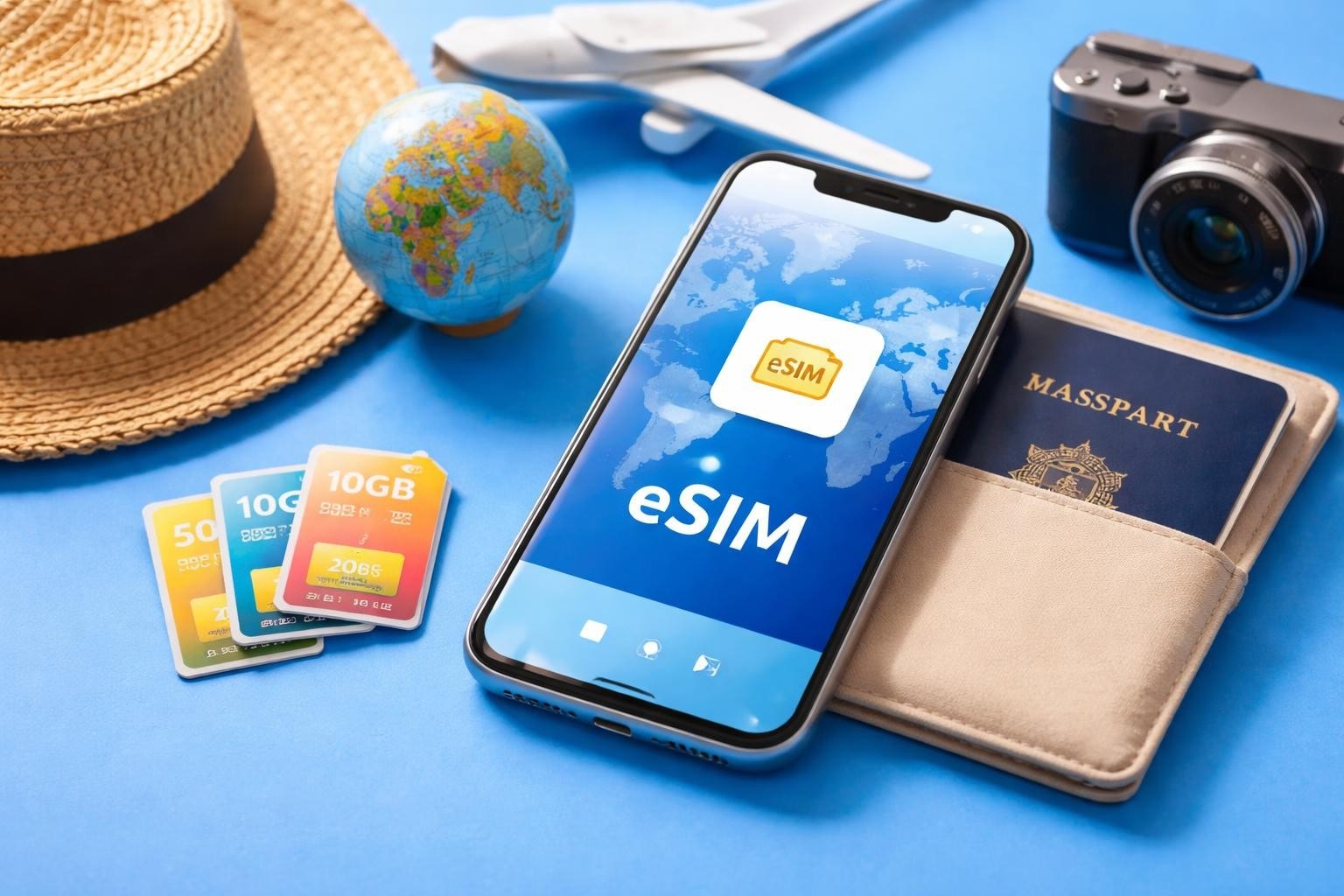
Remember the days of hunting down a local SIM card in every new country, fumbling through language barriers at airport kiosks, and paying extortionate roaming charges? Those days are rapidly becoming ancient history. Travel eSIMs have revolutionised how we stay connected abroad, and in 2026, choosing the best travel eSIM for your adventures has never been more important or, frankly, more confusing with so many options flooding the market.
What Makes a Travel eSIM the Best Choice
Before we dive into specific providers, let's talk about what actually defines the best travel eSIM. It's not just about the cheapest price or the flashiest marketing.
The right eSIM for you depends on several critical factors. Coverage is paramount-what good is a bargain if you can't get signal where you're travelling? Then there's data allocation, pricing transparency, activation speed, and customer support when things inevitably go wonky at the worst possible moment.
Key Features to Evaluate
When comparing travel eSIM providers, you'll want to assess:
- Geographic coverage: Does it work in all your destinations?
- Data plans: Flexible options from short trips to extended stays
- Activation process: How quickly can you get connected?
- Pricing structure: Hidden fees or straightforward costs?
- Network quality: Which local carriers do they partner with?
- Multi-device support: Can you use it across your phone and tablet?
- Customer service: Real support when you need it
According to expert comparisons of leading eSIM providers, the differences between top-tier services often come down to these specific features rather than wild price variations.
How Travel eSIMs Actually Work
You might be wondering how these digital SIMs function differently from the plastic cards you're used to. The technology is surprisingly elegant.
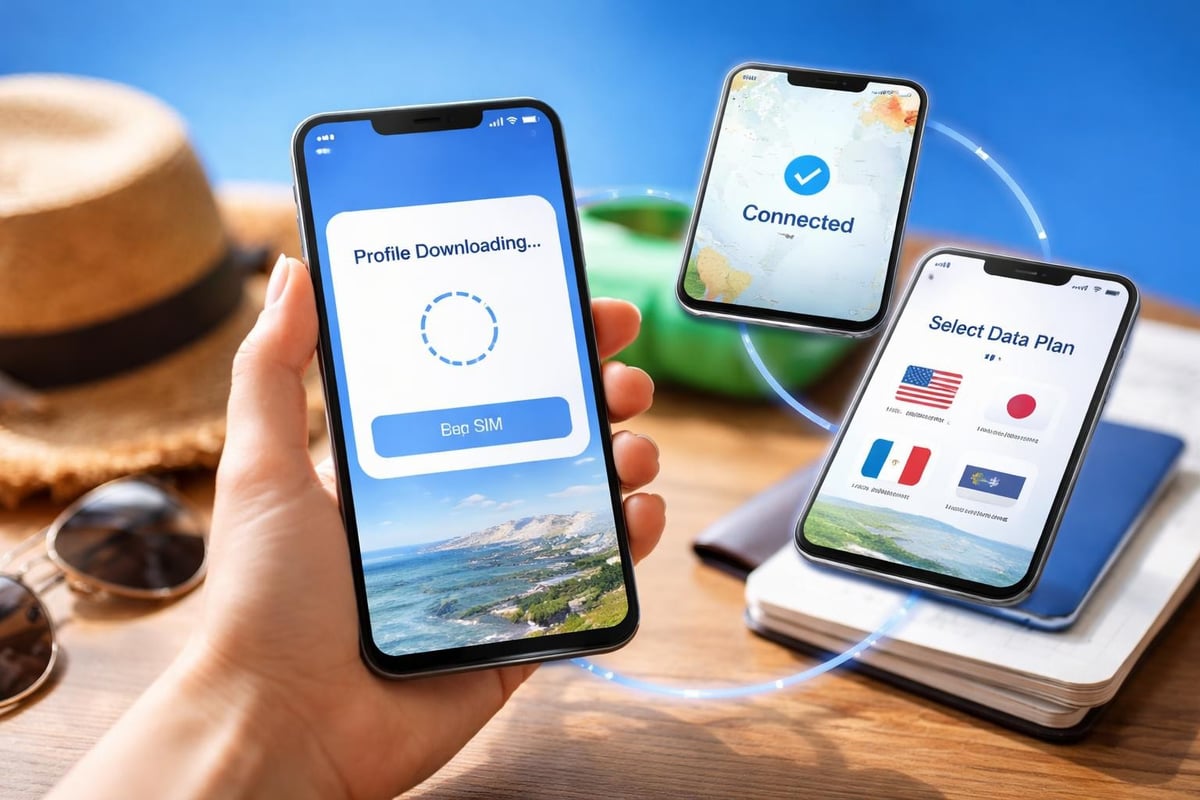
An eSIM is essentially a programmable chip built into your device. Instead of swapping physical cards, you download a profile over the air. This means you can activate service within minutes, even before your plane touches down. For travellers hopping between countries, you can store multiple eSIM profiles and switch between them as needed-no more tiny SIM ejector tools or lost cards rattling around your wallet.
Device Compatibility Matters
Not every phone supports eSIM technology, though most flagship devices from 2020 onwards do. Before purchasing any travel eSIM, you'll want to verify your device is compatible to avoid disappointment at the airport.
| Device Type | eSIM Support Since | Common Models |
|---|---|---|
| iPhone | iPhone XS/XR (2018) | iPhone 11-16, SE (2020+) |
| Samsung | Galaxy S20 (2020) | S21-S25, Z Fold/Flip series |
| Pixel 3 (2018) | Pixel 4-9 series | |
| Other Android | Varies by manufacturer | Check specific model specs |
Comparing the Best Travel eSIM Providers in 2026
Right, let's get into the specifics. The travel eSIM market has matured significantly, with several providers establishing themselves as reliable options.
Coverage Champions
When evaluating the best travel eSIM for extensive global coverage, look for providers offering service in 150+ countries. This matters especially if you're planning multi-country trips or unexpected detours.
The leaders in this space typically partner with multiple mobile network operators in each country, ensuring you're not stuck with a single carrier that might have poor coverage in rural areas. TechRadar's comprehensive analysis of international travel eSIMs highlights how network partnerships directly impact your real-world connectivity.
For instance, if you're exploring Europe this summer, you'll want an Europe eSIM that covers everything from Portugal to Greece without forcing you to buy separate plans for each country. Regional packages have become increasingly popular, offering better value than global plans if you're staying within one continent.
Pricing Models Explained
Travel eSIM pricing can feel like decoding an ancient language, but it generally falls into three categories:
- Pay-as-you-go data: Purchase specific data amounts (1GB, 3GB, 10GB, etc.)
- Time-based unlimited: Unlimited data for set durations (7 days, 14 days, 30 days)
- Top-up friendly: Start small and add more data if needed
The best travel eSIM for budget-conscious travellers usually offers granular data options. Why pay for 10GB if you only need 3GB for a week? Conversely, heavy data users might save money with unlimited plans, especially if you're streaming, video calling, or uploading content regularly.
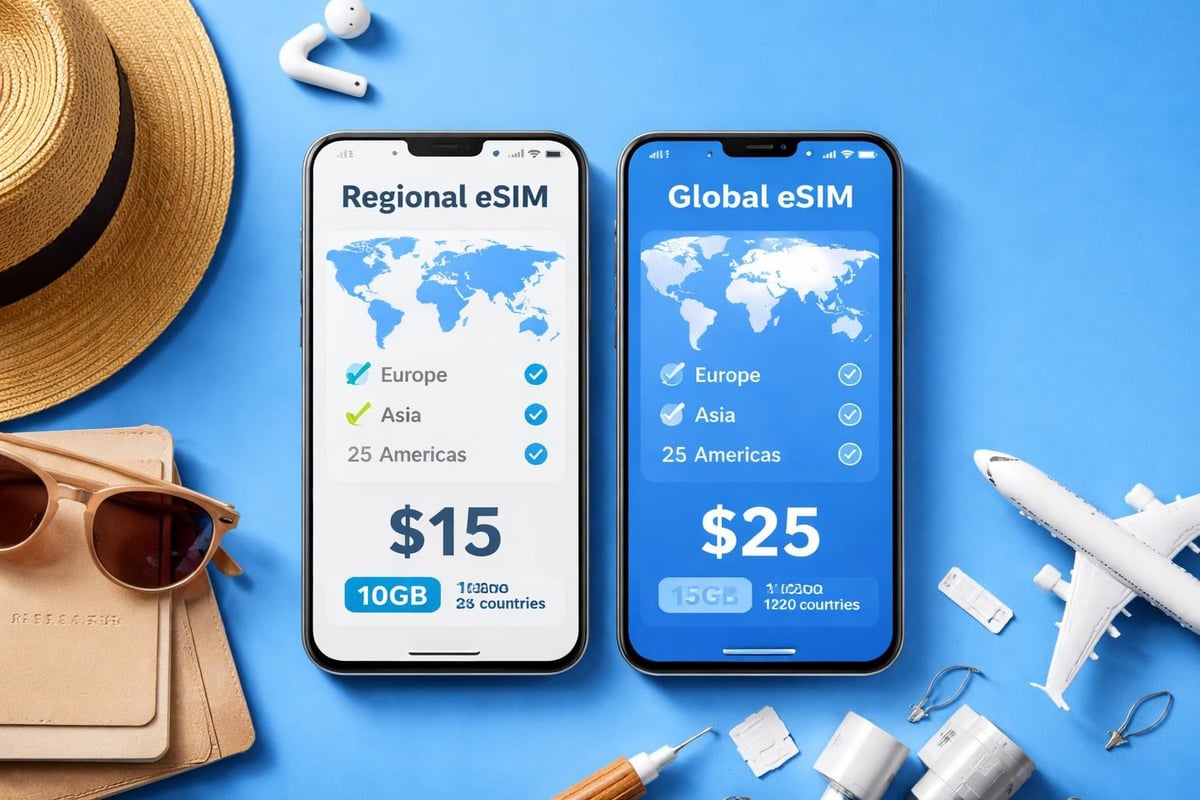
Regional vs Global eSIM Plans
Here's a question I get asked constantly: should you choose a regional or global eSIM plan?
The answer depends entirely on your itinerary. If you're spending three weeks island-hopping in Southeast Asia, a regional plan will almost always offer better value than a global option. However, if you're on a round-the-world adventure touching multiple continents, global coverage eliminates the hassle of switching plans every few weeks.
Popular Regional Options
| Region | Typical Coverage | Best For | Average Price (7 days, 3GB) |
|---|---|---|---|
| Europe | 30-40 countries | Business travel, extended holidays | £8-15 |
| Asia-Pacific | 15-25 countries | Digital nomads, backpackers | £10-18 |
| Americas | North, Central, South America | Cross-continental trips | £12-20 |
| Middle East | 10-15 countries | Business, cultural tourism | £15-25 |
Regional plans shine when you're staying within a defined area. The guide to eSIM basics explains how regional eSIMs often include better data allowances because providers can negotiate more favourable rates with local carriers.
Installation and Activation Simplified
One of the biggest advantages of the best travel eSIM services is their streamlined setup process. Gone are the days of complicated configurations and mysterious APN settings.
Most modern eSIM providers follow this simple pattern:
- Purchase your plan online
- Receive a QR code via email
- Scan the code with your phone's camera
- Confirm installation
- Activate when you arrive at your destination
The entire process typically takes less than five minutes. If you need detailed instructions for your specific device, comprehensive installation guides walk you through each step with screenshots and troubleshooting tips.
Common Setup Mistakes to Avoid
Even with simplified processes, travellers sometimes stumble. Here's what to watch out for:
- Installing too early: Some eSIMs start counting days immediately upon activation
- Forgetting to enable data roaming: Your eSIM needs this turned on to work
- Not saving the QR code: If you delete it before installation, you might need to contact support
- Assuming automatic switching: You usually need to manually select your eSIM as the active data line
What About Data Speeds and Network Quality
Price and coverage matter, but they're worthless if your connection crawls along at 2G speeds. The best travel eSIM providers offer 4G LTE as standard, with 5G increasingly available in major cities worldwide.
Network quality varies based on which local carriers the eSIM provider partners with. Premium services typically connect you to the strongest available network in each location, automatically switching between carriers to maintain optimal speeds. Reviews of specific providers often highlight real-world speed tests, which can vary dramatically between competing services.
Customer Support: The Unsung Hero
Picture this: you've just landed in Tokyo, your eSIM won't activate, and your hotel confirmation is in your email. Suddenly, responsive customer support becomes incredibly important.
The best travel eSIM providers offer multiple support channels:
- Live chat: Instant help when you need it urgently
- Email support: For less time-sensitive questions
- Comprehensive FAQs: Self-service troubleshooting
- Social media: Quick responses via Twitter or Facebook
- Phone support: Some premium services offer call-back options
Before committing to any provider, check their support hours. Are they available 24/7, or only during business hours in one time zone? When you're travelling across multiple time zones, this can make a massive difference. You can explore detailed frequently asked questions to understand what kind of support you should expect.
Special Features Worth Considering
Beyond the basics, several advanced features can elevate your experience with a travel eSIM.
Security and Privacy
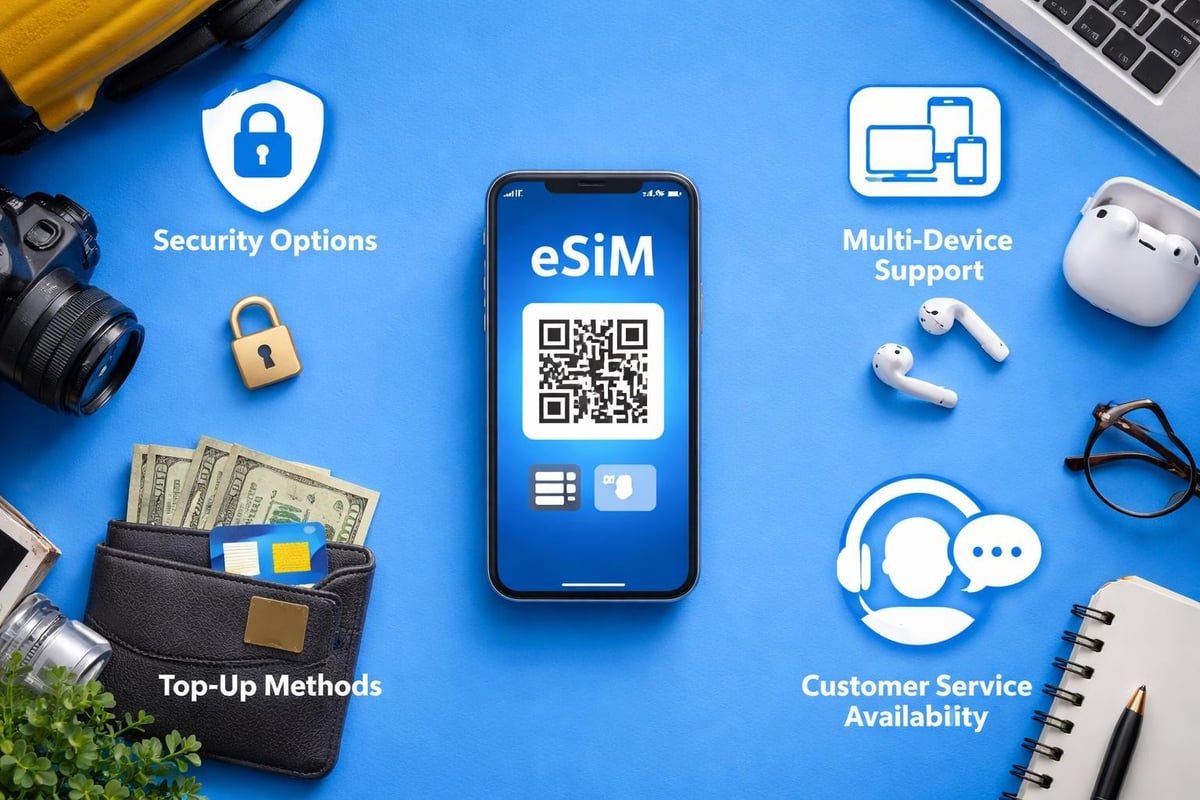
Some providers, like Saily, include built-in security features such as ad blocking and malicious website protection. When you're connecting to mobile networks in unfamiliar countries, these extra layers of security aren't just nice-to-haves-they're essential protection for your personal data.
Multi-Device Management
Do you travel with multiple devices? The ability to manage several eSIM profiles from one account simplifies your digital life considerably. You can monitor data usage across your phone, tablet, and even eSIM-compatible laptop from a single dashboard.
Top-Up Flexibility
Running out of data mid-trip is frustrating. The best travel eSIM services let you purchase additional data instantly through their app, without needing to buy an entirely new plan. This flexibility proves invaluable when your usage patterns change unexpectedly.
Making Your Final Decision
So, how do you actually choose the best travel eSIM for your specific needs? Start by mapping out your travel plans in detail.
List every country you'll visit, estimate your data consumption (remember to account for maps, messaging, and occasional video calls), and determine how long you'll be away. With this information, you can effectively compare providers.
For a two-week European holiday with moderate data usage, you might prioritise regional coverage and mid-tier data allowances. For a year-long digital nomad adventure, unlimited data and worldwide coverage become essential. Business travellers might value reliability and premium support over absolute lowest cost.
Beginner's guides to travel eSIMs often recommend starting with a shorter plan for your first trip to test the service before committing to longer durations.
Real-World Usage Scenarios
Let's talk practically about how different travellers use eSIMs.
The Weekend City Breaker
You're flying to Barcelona for four days. You need maps, restaurant lookups, and occasional social media posting. A 3GB regional plan covering Spain should suffice, typically costing under £10. You might check specific destination options to compare data allowances and pricing.
The Digital Nomad
Working remotely while travelling through Southeast Asia for three months requires serious data. Video conferences, cloud file syncing, and general browsing quickly consume data. An unlimited regional plan or sequential country-specific plans make more sense than pay-as-you-go options.
The Family Holiday
Travelling with kids means multiple devices-phones, tablets loaded with downloaded content, and perhaps a laptop. Look for providers offering family or multi-device discounts, or consider how data sharing works across devices on your chosen plan.
The Future of Travel Connectivity
eSIM technology continues evolving rapidly. We're seeing increased integration with travel apps, automatic profile switching based on location, and even eSIMs bundled with travel insurance or other services.
The best travel eSIM in 2026 isn't necessarily the cheapest or the one with the most countries listed. It's the service that matches your travel style, budget, and connectivity needs while providing reliable support when problems arise. As comprehensive 2026 guides emphasise, the market has matured to the point where most major providers deliver solid basic service-it's the details that differentiate them.
Price Transparency and Hidden Fees
Nothing sours a travel experience faster than unexpected charges. When evaluating eSIM providers, scrutinise their pricing structure carefully.
Some questions to ask:
- Is the advertised price the final price, or are there activation fees?
- What happens if you exceed your data allowance-do they throttle speeds or charge overage fees?
- Can you get refunds for unused data?
- Are there different prices for different countries within a regional plan?
The most reputable providers display all costs upfront with no surprises. Be wary of deals that seem too good to be true-they often hide costs in the fine print or deliver subpar network quality.
Environmental and Practical Benefits
Beyond convenience, eSIM technology offers genuine environmental advantages. Eliminating plastic SIM cards and packaging reduces waste, particularly relevant given the millions of international travellers each year.
Practically speaking, you'll never again worry about losing a tiny SIM card, damaging the SIM slot on your phone, or keeping track of your original home SIM while travelling. Everything lives digitally in your device, accessible with a few taps.
Comparing Providers Head-to-Head
When you're down to your final few options, create a comparison matrix. Here's a simplified example:
| Feature | Provider A | Provider B | Provider C |
|---|---|---|---|
| Countries covered | 150+ | 180+ | 120+ |
| 7-day Europe plan (3GB) | £12 | £15 | £10 |
| Customer support | 24/7 chat | Email only | 24/7 phone |
| Installation | QR code | QR code | QR code |
| Top-up available | Yes | Yes | No |
| 5G support | Selected countries | Worldwide | No |
This visual comparison clarifies trade-offs immediately. Perhaps Provider C is cheapest but lacks 5G and top-up options. Provider B costs more but offers superior support and coverage.
Detailed provider comparisons can help you understand how different services stack up across multiple criteria, though remember that your specific priorities should guide your decision.
Choosing the best travel eSIM doesn't have to be overwhelming once you understand what matters for your specific journey. Focus on coverage where you're actually travelling, honest pricing, reliable support, and features that match your connectivity habits. When you're ready to experience seamless global connectivity without roaming fees or the hassle of physical SIM cards, gosimless.app offers instant eSIM activation with flexible coverage across 200+ countries, making it simple to stay connected wherever your adventures take you.
gosimless Team
The gosimless editorial desk — testing eSIMs, carriers and travel connectivity so you don't have to. Updated continuously from the road.