
Travelling abroad used to mean hunting down local SIM cards at airports, dealing with language barriers, and paying extortionate roaming charges. Thankfully, those days are behind us. With eSIM technology, you can activate mobile data plans instantly without ever touching a physical card. But which provider offers the best eSIM for travel in 2026? Let's dive into what makes an eSIM truly travel-friendly and explore your top options.
What Makes an eSIM Great for International Travel
Not all eSIMs are created equal, especially when you're hopping between countries or continents.
The best eSIM for travel needs to tick several boxes. First, you want extensive coverage across multiple destinations. There's nothing worse than landing in a new country only to discover your eSIM doesn't work there. Second, straightforward pricing matters enormously. Hidden fees, confusing data packages, and unexpected charges can quickly sour your experience.
Key Features to Look For
When evaluating travel eSIMs, keep these priorities in mind:
- Multi-country coverage: Can you use one plan across your entire trip, or do you need separate plans for each destination?
- Instant activation: How quickly can you get connected after purchase?
- Flexible data options: Are there plans for both short weekend breaks and month-long adventures?
- Transparent pricing: Do you know exactly what you're paying upfront?
- Customer support: Can you get help when you're stuck at 2am in a foreign timezone?
According to CNBC Select's comprehensive guide, the eSIM market has expanded significantly in recent years, with dozens of providers competing for your business. This competition has driven prices down and quality up, which is brilliant news for travellers.

Top eSIM Providers for Global Coverage
Let's break down the leading contenders in the travel eSIM space and what sets them apart.
Regional vs Global Plans
You'll encounter two main approaches when shopping for the best eSIM for travel. Some providers specialise in regional bundles (like Europe eSIM plans covering 30+ countries), whilst others offer truly global packages.
Regional plans typically offer:
- Better value for money within their coverage area
- Higher data allowances
- Optimised network partnerships in specific regions
- Simpler setup for focused trips
Global plans provide:
- Single-plan convenience for multi-continent trips
- Consistent pricing structure
- No need to switch plans at borders
- Broader but sometimes more expensive coverage
| Feature | Regional Plans | Global Plans |
|---|---|---|
| Cost per GB | £3-8 | £5-12 |
| Setup complexity | Low | Very low |
| Best for | Single-region trips | Multi-continent travel |
| Coverage depth | Excellent | Good |
Understanding Coverage Maps
Before committing to any provider, check their actual coverage. Some advertise "200+ countries" but offer limited network partnerships in many locations. TechRadar's analysis of global SIM options emphasises verifying which specific carriers your eSIM will connect to in your destination countries.
Have you ever experienced the frustration of having "coverage" that barely loads a webpage? Network quality matters as much as availability. Look for providers partnering with premium carriers, not just budget MVNOs.
Comparing Pricing Models and Value
Price structures vary wildly across eSIM providers, and finding the best eSIM for travel often comes down to matching plans to your actual usage patterns.
Pay-As-You-Go vs Packages
- Data packages offer a set amount of data for a fixed period (like 5GB for 7 days)
- Top-up models let you add data as needed
- Unlimited plans provide unrestricted data for a daily or weekly fee
- Pay-as-you-go charges per MB used
Most travellers find packages offer the best value, but unlimited plans can bring peace of mind if you're constantly streaming or video calling home.
Let me share a quick example from my last trip to Southeast Asia. I initially bought a 3GB package thinking I'd mostly use WiFi. Within two days, I'd burned through it using maps and uploading photos. A 10GB package would've actually been cheaper than buying two smaller ones.
Hidden Costs to Watch Out For
Beyond the advertised price, watch for these sneaky extras:
- Activation fees (some charge £2-5 just to set up)
- Top-up minimums (requiring you to buy more data than you need)
- Speed throttling after certain thresholds
- Different pricing for different countries within "global" plans
- Expiry dates on unused data
The most transparent providers show you the total cost upfront, including any fees. Before checking out, you should understand the complete picture.
Activation Speed and Setup Simplicity
You've just landed after a 12-hour flight. How quickly can you get online?
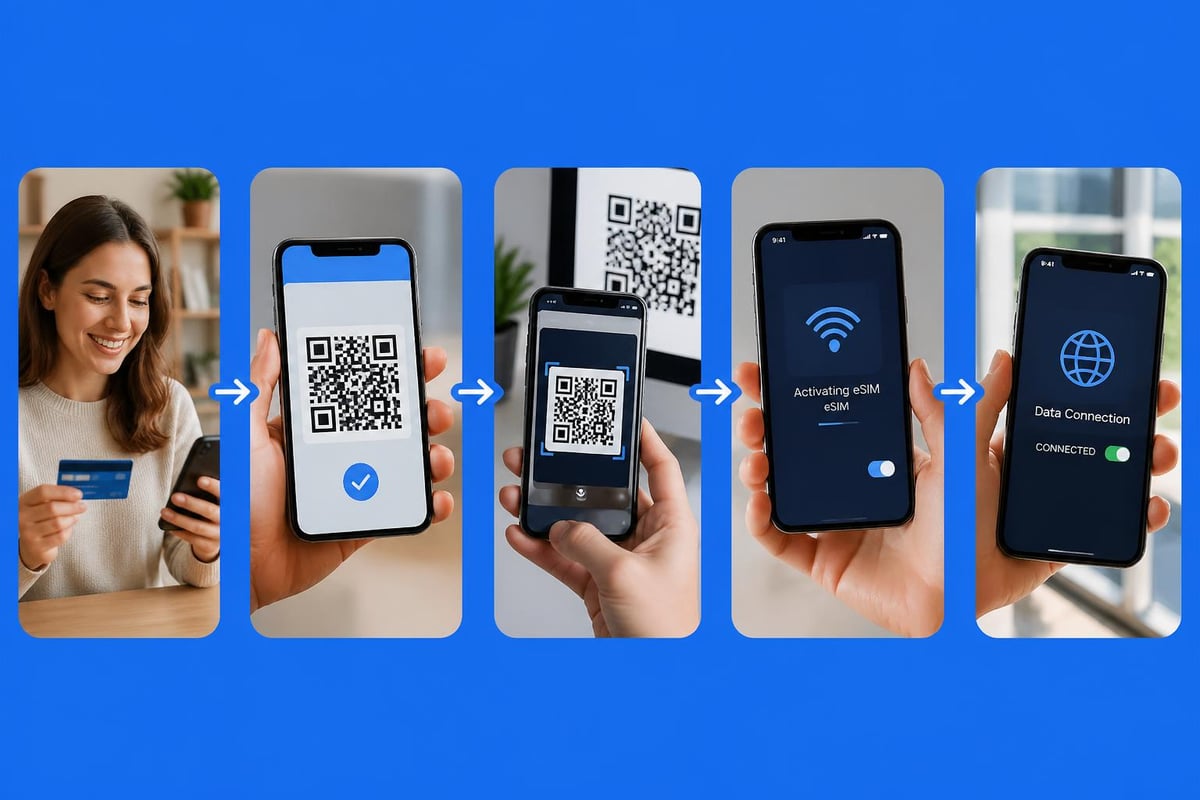
The best eSIM for travel activates within minutes, not hours. Modern providers use QR codes for instant installation, though the process varies slightly. Most work like this:
- Purchase your plan online before or after landing
- Receive a QR code via email
- Scan the code in your phone's settings
- Activate the eSIM and select it for mobile data
- Start browsing immediately
Some devices require specific steps, so checking the compatible devices list beforehand saves potential headaches. iPhones from the iPhone XS onwards support eSIM, as do most recent Android flagships.
Installation Support Resources
Even with straightforward setup, questions arise. Does your provider offer clear guidance? The best ones provide:
- Video tutorials for different phone models
- 24/7 chat support
- Detailed installation guides with screenshots
- Troubleshooting FAQs for common issues
- Multi-language support documentation
As Tom's Guide explains about eSIM functionality, the technology itself is brilliant, but provider support makes or breaks the user experience.
Coverage Depth in Popular Destinations
Let's get specific about how different providers perform in high-traffic travel destinations.
European Travel
Europe remains the most competitive market for travel eSIMs. Multiple providers offer excellent coverage across the Schengen zone and UK. For someone planning a grand tour touching France, Italy, Spain, and Greece, you'll find plans ranging from £15 for 5GB to £40 for 20GB covering 30-day periods.
The network quality generally stays consistent because most providers partner with major carriers like Vodafone, Orange, and TIM. Whether you're exploring destinations in Italy or skiing in French Alps, connection reliability typically matches what locals experience.
Asia-Pacific Region
Asia presents more variation. Countries like Japan, Singapore, and South Korea have excellent eSIM infrastructure with fast speeds and broad coverage. Others require more careful provider selection.
CloudOn's review of travel eSIM apps highlights significant differences in how providers handle less-developed markets. Some maintain quality by partnering with premium carriers, whilst others sacrifice speed for broader coverage.
Americas Coverage
Both North and South America benefit from improving eSIM availability. The USA market offers particularly competitive rates, with some providers charging as little as £8 for 10GB on major networks like T-Mobile and AT&T.
Mexico and Canada also feature strong coverage, though pricing tends to run slightly higher than US-only plans. For travellers doing a full Americas tour, regional packages typically beat global plans on value.
Device Compatibility and Multi-SIM Management
Here's something many people overlook when choosing the best eSIM for travel: how well it plays with your existing setup.
Dual SIM Functionality
Modern smartphones let you run your home SIM and a travel eSIM simultaneously. This means you can:
- Receive calls and texts on your regular number
- Use data through your travel eSIM
- Switch between them instantly
- Avoid missing important messages whilst abroad
You'll need to configure which SIM handles calls, texts, and data. It sounds complicated, but takes about 30 seconds once you know where to look. Your home carrier stays available for urgent calls whilst the eSIM handles all data traffic, dodging those nightmare roaming charges.
Managing Multiple eSIM Profiles
Many frequent travellers maintain several eSIM profiles on their device. You might have:
- A European regional plan
- An Asia-Pacific plan
- A North American plan
- A global backup plan
Most phones store 5-10 eSIM profiles, though only one or two can be active simultaneously. This lets you switch between regions without re-purchasing or re-installing plans. Pretty handy if you're a digital nomad or regular business traveller.
| Device Type | eSIM Profiles Stored | Active at Once |
|---|---|---|
| iPhone 13-15 | 8+ | 2 |
| Google Pixel 7-8 | 5-8 | 2 |
| Samsung S22-S24 | 5-10 | 2 |
Data Speeds and Network Priority
Not all mobile data is created equal, even on the same network.
Understanding Network Priority Levels
Carriers operate multiple service tiers. Premium customers get priority access during network congestion, whilst budget MVNOs get whatever bandwidth remains. This rarely matters in low-traffic areas, but becomes crucial in crowded tourist hotspots.
The best eSIM for travel connects you to networks with reasonable priority. You don't necessarily need premium tier access (which costs significantly more), but bottom-tier connections can become unusable during peak hours.
Think about trying to navigate using Google Maps in central Rome at midday. If your connection crawls because you're last in the priority queue, that bargain-basement eSIM suddenly doesn't seem like such a great deal.
Speed Testing Real-World Performance
According to Travel and Time's international eSIM guide, actual speeds vary dramatically between providers claiming similar specs. Their testing revealed speed differences of 5-10x between providers using the same underlying networks.
Why such variance? It comes down to:
- Network priority agreements
- Data throttling policies
- Server infrastructure quality
- Peering arrangements with local carriers
- Fair usage caps that aren't always advertised
Special Features That Add Value
Beyond basic connectivity, several providers differentiate themselves with extra features.
Hotspot Capability
Can you share your connection with other devices? Most travel eSIMs allow hotspot functionality, but some restrict it or charge extra. This matters if you're travelling with family, want to connect your laptop, or need to help a fellow traveller in a pinch.
Top-Up Flexibility
Running low on data mid-trip? The smoothest providers let you top up within seconds through their app. Others require you to purchase entirely new plans or wait hours for manual activation. When you're standing outside a closed museum because your confirmation email won't load, that convenience difference feels massive.
Call and SMS Options
Whilst most travel eSIMs focus on data, some include call minutes and SMS capabilities. This can be useful for:
- Booking restaurants that only take phone reservations
- Receiving verification codes
- Making local calls to hotels or tour operators
- Emergency communications
However, apps like WhatsApp and Telegram work perfectly well for most communication needs, so many travellers skip this feature to save money.
Customer Support When Things Go Wrong
You're abroad, your connection isn't working, and you need help. What happens next?
The quality of customer service separates good providers from great ones. Reviews on TechRadar's Roamless analysis emphasise that responsive support proves invaluable when technical issues arise in unfamiliar locations.
Essential support features include:
- 24/7 availability (not just business hours in one timezone)
- Multiple contact channels (chat, email, phone)
- Multi-language assistance
- Quick response times (under 10 minutes for urgent issues)
- Knowledgeable staff who understand technical troubleshooting
Check provider reviews on independent sites before committing. A pattern of unresolved support tickets or days-long response times should wave red flags, regardless of how attractive the pricing looks.
Regional Specialists vs Global Giants
Should you choose a provider focusing on specific regions or one offering worldwide coverage?
Benefits of Regional Specialists
Companies concentrating on particular areas often deliver superior value within their territory. They negotiate better rates with local carriers, understand regional regulations, and optimise their networks for local conditions. If you're planning extended time in one region, specialists frequently beat global providers on both price and performance.
For instance, someone spending three months exploring Thailand, Vietnam, and Indonesia might find better value and service from an Asia-focused provider than a global one spreading resources across 200 countries.
When Global Providers Make Sense
If your journey spans multiple continents, managing separate regional plans becomes tedious. Global providers offer convenience through unified billing, single-app management, and consistent service quality regardless of location. You pay a premium for this simplicity, but for many travellers, it's worth it.
Business travellers hitting five countries across three continents in two weeks particularly benefit from global plans. The time saved not researching and purchasing regional plans often justifies the extra cost.
Environmental and Practical Benefits
Beyond convenience, eSIMs offer genuine sustainability advantages over physical SIM cards.
Each year, billions of plastic SIM cards get manufactured, distributed, and ultimately discarded. The production process involves:
- Plastic manufacturing from petroleum products
- Metal contact production
- Packaging materials
- Global shipping logistics
- Retail distribution networks
eSIMs eliminate all of this. Your connectivity arrives digitally, reducing waste and carbon footprint. Whilst it's not the primary reason to choose the best eSIM for travel, it's a pleasant bonus knowing you're reducing environmental impact.
Practically, never worrying about losing a tiny plastic card or dealing with disposal also simplifies travel. Your connectivity lives safely in your device, backed up in the cloud, retrievable anywhere.
Making Your Final Decision
So how do you actually choose the best eSIM for travel for your specific needs?
Start by mapping your journey. List every country you'll visit and approximate how long you'll spend in each. This determines whether regional or global plans make more sense.
Next, estimate your data usage. Check your current monthly consumption, then add 20-30% for increased map usage, photo uploads, and unfamiliar WiFi situations. It's better to overestimate slightly than run out mid-trip.
Creating Your Comparison Matrix
Build a simple spreadsheet comparing your top 3-4 options:
| Provider | Coverage | Data Included | Duration | Total Cost | $/GB |
|---|---|---|---|---|---|
| Option A | 30 countries | 10GB | 30 days | £25 | £2.50 |
| Option B | Global | 8GB | 30 days | £35 | £4.38 |
| Option C | 25 countries | 15GB | 30 days | £30 | £2.00 |
This makes value comparison obvious. Don't just look at headline prices, calculate the actual cost per gigabyte whilst factoring in coverage for your specific destinations.
Reading Real User Reviews
Marketing materials always sound perfect. Real user experiences tell the actual story. Check multiple review sources, looking particularly for recent feedback (2025-2026). eSIM quality can change quickly as providers switch network partners or adjust priorities.
Comparison analyses like those on Freaking Nomads aggregate user experiences across different providers, highlighting consistent patterns in service quality, speed, and support responsiveness.
Pay special attention to reviews from travellers visiting your specific destinations. An eSIM might work brilliantly in Western Europe but struggle in Southeast Asia, or vice versa.
Testing Before Your Big Trip
Here's a pro tip many travellers overlook: test your eSIM before you actually need it.
If possible, purchase and activate your eSIM a few days before departure whilst still at home. This lets you:
- Verify the installation process works on your device
- Confirm you understand how to switch between SIMs
- Test the provider's app and interface
- Contact support with any questions whilst not under time pressure
- Ensure your device is properly configured
Some eSIMs only activate when they detect you've arrived in the coverage country, which is fine. But going through the setup process at home means you'll recognise the steps when you're tired, jet-lagged, and just want to message your family that you've arrived safely.
The installation process typically takes under five minutes once you understand the steps, but attempting it for the first time in a busy airport with spotty WiFi can be frustrating.
Common Mistakes to Avoid
Learn from others' errors rather than making them yourself.
Waiting until you land to purchase: Many eSIMs activate instantly, but some take 15-30 minutes. Airport WiFi can be unreliable for downloading QR codes. Buy before your flight when you have solid connectivity.
Not checking device compatibility: Just because your phone is modern doesn't guarantee eSIM support. Some carriers lock eSIM functionality even on compatible hardware. Verify both device capability and carrier permissions.
Ignoring data rollover policies: Some providers let unused data roll to your next purchase. Others expire it completely. If you frequently return to the same regions, rollover policies affect long-term value.
Forgetting to disable roaming on your home SIM: Even with an eSIM active, your home carrier might charge roaming fees if their SIM remains enabled for calls. Configure your device properly to avoid surprise bills.
Choosing unlimited plans when you don't need them: "Unlimited" sounds attractive but often costs 2-3x more than generous fixed allowances. Most travellers use 5-8GB weekly. A 20GB monthly plan typically provides plenty of headroom without paying premium unlimited pricing.
Looking Ahead: eSIM Technology in 2026
The eSIM landscape continues evolving rapidly. Several trends are shaping what the best eSIM for travel looks like in 2026 and beyond.
Network partnerships are expanding, with more carriers joining eSIM ecosystems. This increases competition and drives prices down whilst improving coverage quality. Countries that had limited options two years ago now offer multiple competitive providers.
App-based management is becoming more sophisticated. Leading providers now offer features like:
- Real-time data usage tracking
- Automatic plan recommendations based on consumption patterns
- One-tap renewals and top-ups
- Travel-specific features like offline map storage
- Integration with travel planning apps
5G coverage through eSIMs is also expanding globally. Whilst 4G remains perfectly adequate for most travel needs, 5G access is increasingly available in major cities worldwide, offering significantly faster speeds for those with compatible devices.
Choosing the best eSIM for travel ultimately depends on matching providers' strengths to your specific journey requirements. Whether you prioritise cost-efficiency, maximum coverage, or setup simplicity, today's competitive market offers excellent options for every traveller type. Ready to ditch roaming fees and stay seamlessly connected on your next adventure? GoSimless.app provides instant eSIM activation with affordable, flexible coverage across 200+ countries, ensuring you're connected the moment you land.
gosimless Team
The gosimless editorial desk — testing eSIMs, carriers and travel connectivity so you don't have to. Updated continuously from the road.