Planning a European adventure in 2026? You're probably wondering how to stay connected without drowning in roaming charges or hunting for local SIM cards in every country. The good news is that eSIM technology has revolutionised how travellers maintain connectivity across borders. Finding the best eSIM for Europe means comparing coverage, pricing, activation processes, and data allowances to match your specific travel needs. Let's dive into everything you need to know to make an informed choice.
What Makes an eSIM Perfect for European Travel
eSIMs eliminate the hassle of physical SIM cards entirely. No more fumbling with tiny plastic chips or worrying about losing them in your hotel room. But what exactly should you look for when choosing the best eSIM for Europe?
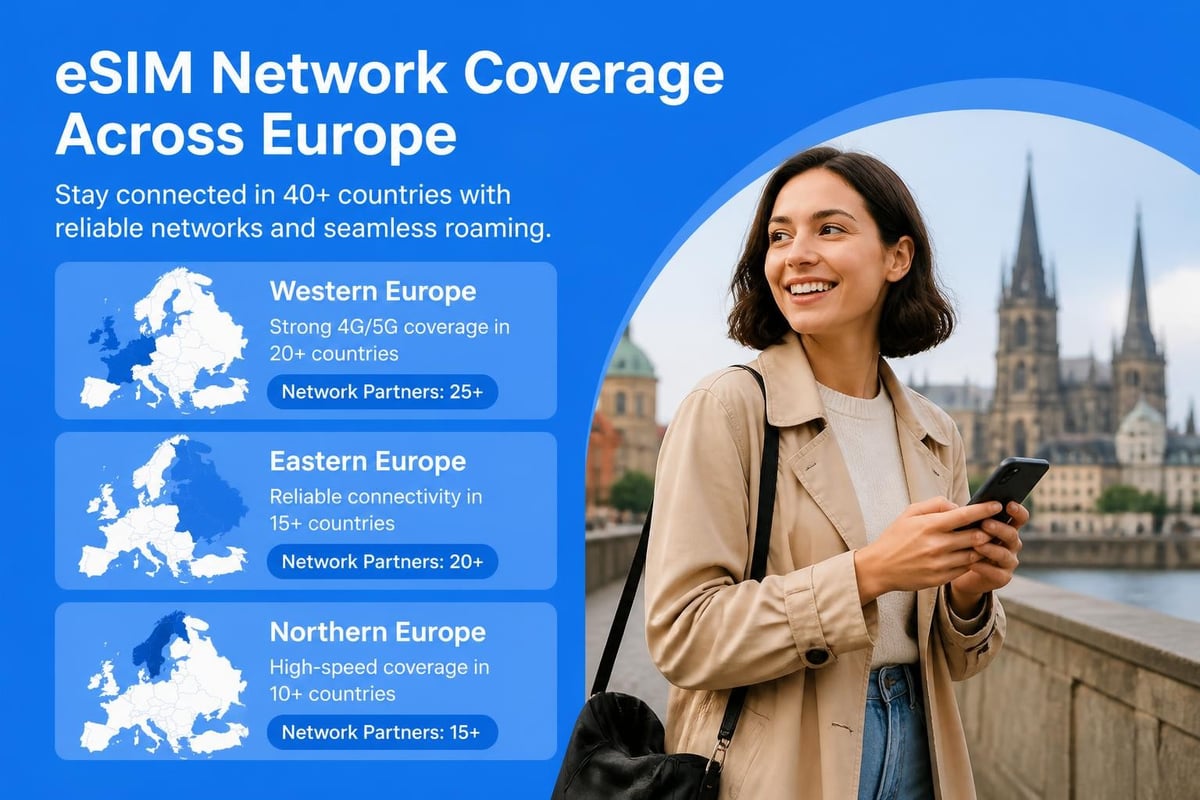
Coverage breadth sits at the top of the list. Europe comprises over 40 countries, and whilst many eSIM providers claim "European coverage," the actual number of countries included varies dramatically. Some plans cover the EU27 plus a handful of extras, whilst others extend to Switzerland, Norway, Iceland, and the UK.
Speed and network quality matter just as much as coverage. Your eSIM provider should connect you to reputable local networks, preferably offering 4G or 5G speeds. Nobody wants to navigate Rome's cobblestone streets with a connection that struggles to load Google Maps.
Key Features to Prioritise
When evaluating options, these factors separate excellent providers from mediocre ones:
- Instant activation that works the moment you land
- Transparent pricing with no hidden fees or unexpected charges
- Flexible data plans ranging from short trips to extended stays
- Multi-country coverage so you don't need different plans for each destination
- Customer support available when technical issues arise
- Top-up options if you run out of data mid-trip
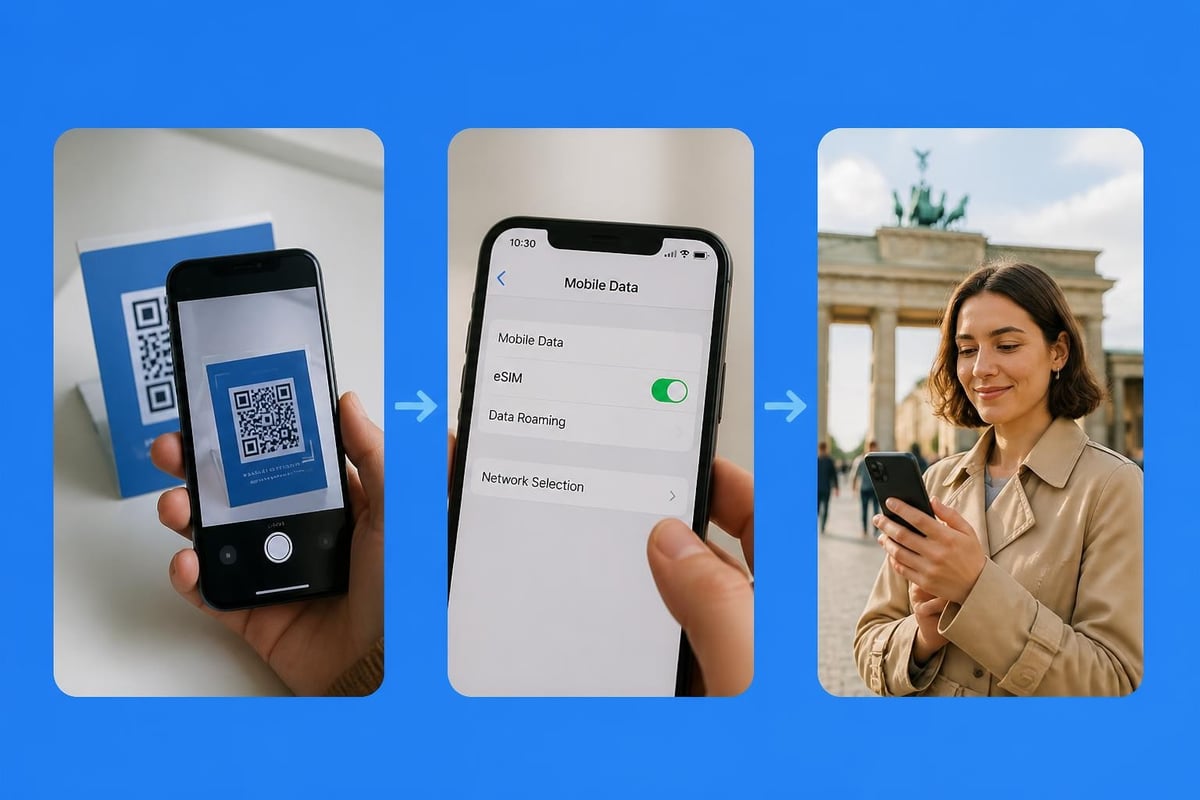
The installation process should be straightforward, typically involving scanning a QR code and following simple setup instructions.
Comparing Top eSIM Providers for Europe
The eSIM market has exploded recently, with dozens of providers competing for your attention. According to TechRadar's comprehensive comparison, the top contenders each offer distinct advantages depending on your travel style.
Coverage and Network Quality
European coverage isn't one-size-fits-all. Some providers excel in Western Europe whilst struggling in Eastern regions. Others offer comprehensive continent-wide access but at premium prices.
| Provider Type | Countries Covered | Network Partners | Typical Speeds |
|---|---|---|---|
| Premium Plans | 35-40 countries | Tier-1 operators | 4G/5G |
| Mid-Range Plans | 30-35 countries | Mixed quality | 3G/4G |
| Budget Plans | 20-30 countries | Budget operators | 3G/4G |
Many travellers don't realise that eSIM providers don't own networks themselves. They partner with local operators in each country. The best eSIM for Europe connects you to established networks like Vodafone, Orange, or Deutsche Telekom rather than budget alternatives.
Pricing Structures That Make Sense
Pricing varies wildly across providers. You'll encounter three main models:
Pay-per-GB plans work brilliantly for light users who primarily rely on hotel WiFi. You might pay £4-8 per gigabyte, making them cost-effective for checking emails and occasional navigation.
Unlimited data plans suit heavy users who stream content, video call frequently, or work remotely. Expect to pay £20-50 per week, though recent testing shows that "unlimited" often includes fair-use policies.
Duration-based plans offer set amounts of data over specific periods (7 days, 14 days, 30 days). These provide predictable costs and often represent the best value for typical holiday durations.
Regional Coverage Considerations
Not all European eSIMs treat every country equally. Understanding these nuances helps you avoid connectivity surprises.
Western Europe: The Easy Winners
Countries like France, Germany, Spain, and Italy enjoy robust coverage from virtually every provider. Competition here drives prices down and quality up. If you're only visiting major Western European destinations, you'll have plenty of excellent options.
For instance, travellers heading to Spain or Italy can choose from numerous providers with competitive rates. These popular destinations typically offer the fastest speeds and most reliable connections.
Eastern Europe and the Balkans
Poland, Czech Republic, and Hungary receive decent coverage from most providers, but venture into Romania, Bulgaria, or the Balkans, and options narrow considerably. Always verify that your specific destinations appear on the provider's coverage list.
The UK and Non-EU Countries
Post-Brexit, the UK sits outside EU roaming agreements. Some European eSIM plans include the UK, whilst others require separate coverage. Switzerland, Norway, Iceland, and Turkey present similar considerations.
Before purchasing, check whether your plan covers:
- United Kingdom
- Switzerland
- Norway and Iceland
- Turkey (partially European)
- Russia (western regions)
Data Allowances and Speed Throttling
Understanding data consumption patterns prevents mid-trip headaches. How much data do you actually need?
Realistic Data Usage Patterns
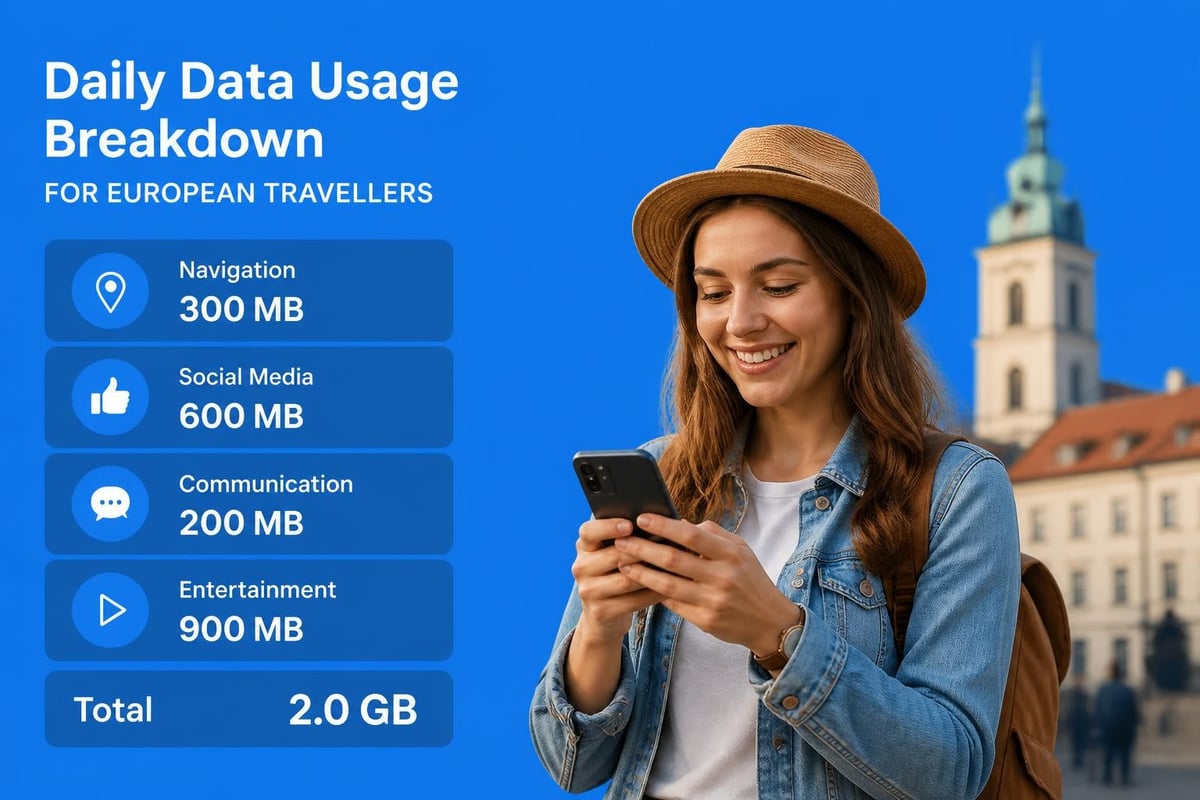
Most travellers overestimate their data needs. Here's what typical activities consume:
- Navigation (Google Maps): 5-10 MB per hour
- Social media browsing: 50-100 MB per hour
- Video streaming (HD): 3 GB per hour
- Video calls: 300-500 MB per hour
- Email and messaging: 10-20 MB per day
A week-long city break involving navigation, social media, and occasional video calls typically requires 3-5 GB. Two weeks touring multiple countries might need 8-12 GB unless you're streaming content.
Speed Throttling Policies
Industry comparisons reveal that many providers throttle speeds after certain thresholds. You might enjoy 5G speeds for the first few gigabytes, then drop to 3G for the remainder.
Read the fine print carefully. Terms like "unlimited data" often mean unlimited access at reduced speeds after consuming your high-speed allowance. For most travellers, 4G speeds prove perfectly adequate for everyday tasks.
Activation and Setup Simplicity
Technical complexity frustrates even seasoned travellers. The best eSIM for Europe should activate effortlessly, ideally before you even leave home.
Pre-Trip vs. On-Arrival Activation
Providers split into two camps: those allowing pre-trip activation and those requiring you to be in-destination. Pre-trip activation offers significant advantages. You can troubleshoot technical issues from the comfort of your sofa rather than at a bustling airport.
The typical setup process involves:
- Purchasing your plan and receiving a QR code via email
- Scanning the code in your device settings
- Naming your eSIM (like "Europe Travel")
- Selecting it as your data line
- Enabling data roaming for the eSIM
Most modern smartphones support eSIM technology, but it's worth checking device compatibility before purchasing. iPhones from XR onwards, Google Pixels from 3 onwards, and Samsung flagships from S20 onwards typically work perfectly.
Multi-Device Support
Travelling with multiple devices? Some providers allow you to share plans across devices or purchase multi-device packages. This proves particularly valuable for families or business travellers carrying both phones and tablets.
Top Picks for Different Travel Styles
Your ideal eSIM depends entirely on how you travel. Let's match providers to travel styles.
For Digital Nomads and Remote Workers
If you're working whilst travelling, reliability trumps price. You need consistent speeds, generous data allowances, and coverage across multiple countries. Look for plans offering:
- Minimum 20 GB monthly allowances
- 4G speeds or better
- Coverage in 30+ countries
- Extended validity periods (30-90 days)
- Top-up flexibility
These plans typically cost £30-60 monthly but deliver the reliability remote work demands. Comprehensive testing shows that premium providers maintain more consistent speeds during peak hours.
For Short City Breaks
Weekend warriors and city-break enthusiasts need different features. You're probably visiting one or two countries for 3-7 days, relying heavily on navigation and social media.
Ideal plans include:
- 2-5 GB data allowances
- 7-day validity periods
- Instant activation
- Budget-friendly pricing (under £10)
For Multi-Country Tours
Rail-passing across Europe or road-tripping through multiple countries? Seamless country transitions matter most. You want automatic network switching without manual intervention or additional charges.
The best multi-country plans offer:
- Coverage in 30+ European countries
- Automatic network switching
- 14-30 day validity
- 10-20 GB allowances
- Consistent pricing regardless of location
Travellers exploring France, Greece, and surrounding countries benefit from regional eSIM plans that eliminate the hassle of purchasing separate coverage for each destination.
Common Pitfalls to Avoid
Even experienced travellers make mistakes when choosing eSIMs. Here's what to watch out for.
The "Unlimited" Data Trap
Unlimited data rarely means truly unlimited. Providers implement fair-use policies, typically throttling speeds after 10-50 GB daily usage. For most travellers this proves irrelevant, but if you're planning to tether devices or stream continuously, read the terms carefully.
Ignoring Validity Periods
Data allowances and validity periods operate independently. A 10 GB plan with 14-day validity expires after two weeks regardless of whether you've used all 10 GB. Heavy users might exhaust data before expiry, whilst light users might waste unused gigabytes.
Forgetting About Top-Up Options
Running out of data mid-trip ranks among travellers' top frustrations. Before purchasing, verify whether the provider offers easy top-ups through their app. Some require purchasing entirely new plans, whilst others let you add data to existing ones.
Not Testing Before Departure
Activate and test your eSIM before leaving home. This gives you time to resolve technical issues with customer support whilst you still have reliable internet access. Troubleshooting connectivity problems from a foreign country with patchy WiFi proves infinitely more stressful.
Privacy and Security Considerations
eSIMs offer security advantages over public WiFi, but not all providers handle your data equally responsibly.
| Security Feature | Why It Matters | What to Look For |
|---|---|---|
| Encryption | Protects data in transit | 256-bit encryption standard |
| Payment Security | Safeguards financial information | PCI DSS compliance |
| Data Privacy | Limits information collection | Clear privacy policies |
| Network Security | Prevents unauthorised access | Partnerships with reputable carriers |
Reputable providers use secure payment gateways and encrypt your personal information. They also partner with established European networks that maintain robust security protocols. According to expert reviews, leading eSIM services prioritise customer privacy whilst maintaining transparent data-handling practices.
Making Your Final Decision
Choosing the best eSIM for Europe ultimately depends on balancing your priorities. Budget-conscious travellers might sacrifice some speed for affordability, whilst business users prioritise reliability over cost savings.
Questions to Ask Yourself
Before committing to a provider, consider these questions:
- How many countries will I visit?
- What's my expected daily data consumption?
- Do I need coverage before arriving in Europe?
- Will I require customer support in English?
- Am I comfortable with app-based management?
- Do I need to maintain my home number simultaneously?
Your answers shape which features matter most. Someone backpacking for months prioritises different attributes than someone taking a week-long business trip to Paris.
Reading the Reviews That Matter
Not all eSIM reviews carry equal weight. Real-world testing from experienced travellers provides more valuable insights than marketing materials. Look for reviews that discuss actual connection speeds, customer service responsiveness, and activation reliability rather than just repeating provider claims.
Pay attention to recent reviews from 2026, as the eSIM landscape evolves rapidly. A provider that excelled last year might have changed network partners or pricing structures.
Future-Proofing Your Connectivity
The eSIM market continues evolving, with new features emerging regularly. Some providers now offer:
- Instant plan switching to adjust data allowances mid-trip
- Shared data pools for travelling groups
- Automatic network optimisation selecting the fastest available carrier
- Integration with travel apps for seamless booking and management
Staying informed about these developments helps you make smarter choices. Following eSIM industry updates keeps you aware of new features and competitive pricing changes.
The shift towards eSIM technology represents more than just convenience. It's transforming how we think about international connectivity. Traditional roaming charges and physical SIM card limitations are becoming relics of the past.
For European travel specifically, Europe eSIM options continue expanding, with providers adding countries and improving network partnerships. The competitive market benefits consumers through better pricing and enhanced features.
Regional Flexibility Matters
Whilst we've focused on Europe-wide coverage, don't overlook region-specific options. If you're primarily visiting Portugal, a dedicated Portugal eSIM might offer better value than a pan-European plan. Similarly, Turkey-focused travellers should compare Turkey-specific options against broader European packages.
This flexibility extends beyond Europe. Many travellers combine European trips with visits to nearby regions, making global eSIM coverage increasingly relevant. Understanding how your European eSIM integrates with broader international plans helps you maximise value across multiple trips.
Beyond Basic Connectivity
The best eSIM for Europe delivers more than just data access. It provides peace of mind, knowing you can navigate unfamiliar cities, translate menus, book last-minute accommodations, and stay connected with loved ones without worrying about connectivity gaps or surprise charges.
Modern travel demands reliable digital access. Whether you're photographing the Amalfi Coast and uploading to Instagram, navigating Prague's medieval streets, or joining work video calls from a Barcelona café, your eSIM serves as the foundation for your entire trip experience.
Smart travellers recognise that connectivity costs represent a small fraction of overall travel expenses. Saving £10 on a subpar eSIM plan isn't worthwhile if it leaves you struggling with slow speeds or coverage gaps at crucial moments. Investing in quality connectivity often proves the best value decision you'll make.
The providers mentioned throughout this guide each excel in different areas. Some offer the broadest coverage, others the most competitive pricing, and still others the most advanced features. Your perfect choice depends on matching these strengths to your specific requirements.
Remember that eSIM technology works alongside your existing phone number. You can maintain your home SIM for calls and texts whilst using your eSIM exclusively for data. This dual-SIM functionality, available on most modern smartphones, provides the best of both worlds without forcing you to choose between staying in touch at home and enjoying affordable European connectivity.
Finding the best eSIM for Europe transforms your travel experience from connectivity stress to seamless digital access across the continent. With instant activation, no roaming fees, and flexible plans that adapt to your journey, modern eSIM solutions eliminate the traditional hassles of staying connected abroad. Ready to simplify your European connectivity? gosimless.app delivers instant eSIM activation with affordable coverage across 200+ countries, including comprehensive European options, secure payment processing, and multi-device support designed for the way you actually travel.
gosimless Team
The gosimless editorial desk — testing eSIMs, carriers and travel connectivity so you don't have to. Updated continuously from the road.