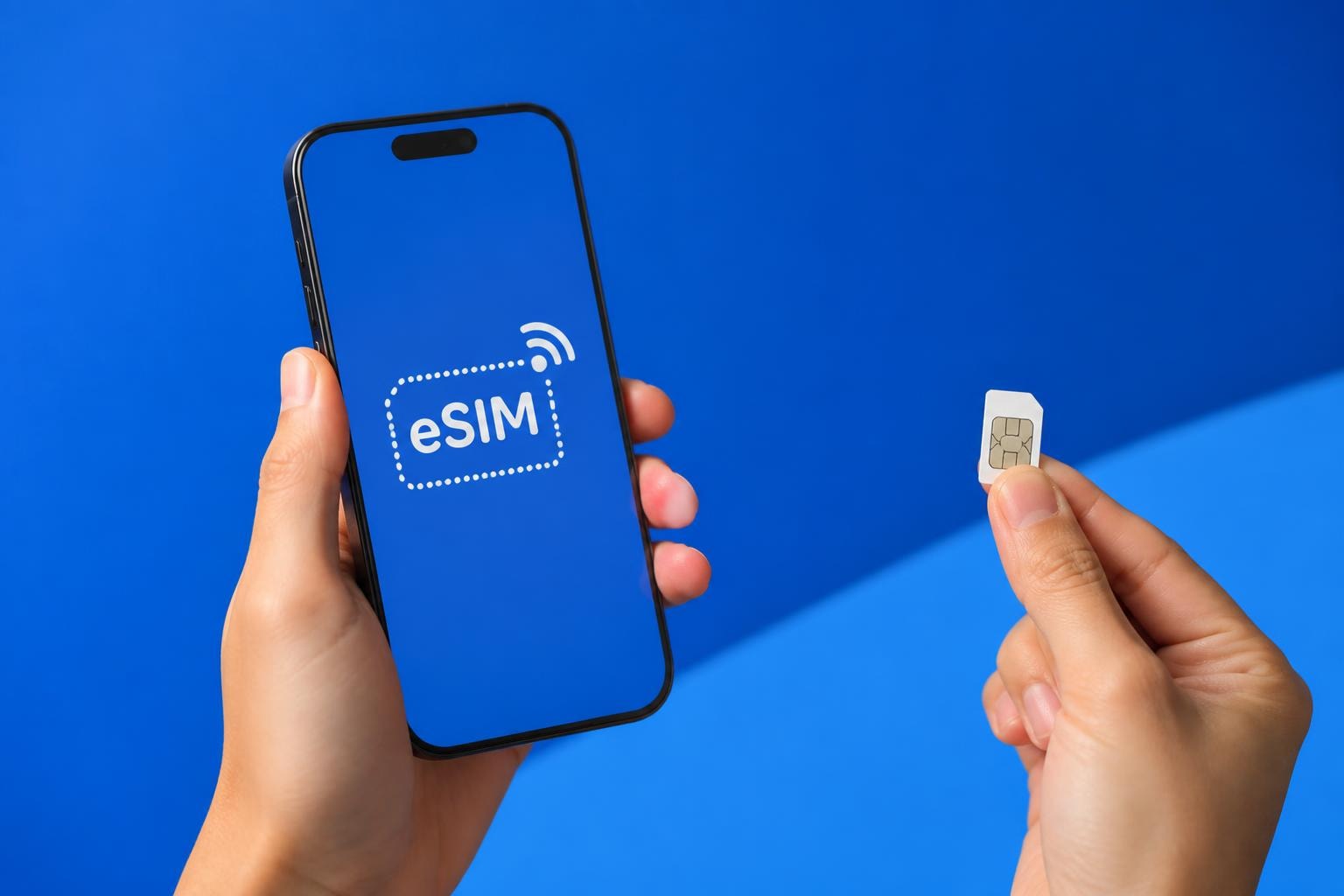
Planning a trip to Australia or living there and tired of juggling physical SIM cards? You're not alone. The eSIM revolution has transformed how we stay connected Down Under, offering instant activation, competitive pricing, and the freedom to switch providers without wrestling with those tiny plastic cards. But with dozens of providers flooding the market in 2026, finding the best eSIM Australia option for your specific needs can feel overwhelming. Whether you're a backpacker exploring the Outback, a business traveller bouncing between Sydney and Melbourne, or a digital nomad settling in for a few months, this guide will help you navigate the eSIM landscape and choose the perfect solution.
What Makes an eSIM Provider Stand Out in Australia
When you're evaluating the best eSIM Australia providers, you need to look beyond flashy marketing claims and dig into what actually matters for reliable connectivity. Australia's unique geography presents challenges that not all providers handle equally well.
Network coverage is absolutely critical. Australia has three major networks: Telstra, Optus, and Vodafone. The best eSIM providers partner with Telstra, which consistently offers the most extensive coverage across both urban centres and regional areas. If you're planning to venture beyond capital cities, this becomes even more important.
Key Features to Prioritise
- Instant activation - No waiting for physical delivery or shop visits
- Transparent pricing - Clear data allowances without hidden fees
- Network flexibility - Access to multiple carriers for better coverage
- Customer support - Responsive help when technical issues arise
- Multi-device compatibility - Works across iPhone, Samsung, Google Pixel, and other eSIM-capable devices
Price matters, but it shouldn't be your only consideration. A provider offering dirt-cheap rates but partnering with a network that drops to 3G in regional areas isn't doing you any favours. According to recent testing across Australian cities, performance varies significantly between providers even when they use the same underlying network.

Top eSIM Providers for Australia in 2026
The Australian eSIM market has matured considerably over the past year. Let's break down the leading contenders and what makes each one worth considering.
Premium Options with Extensive Coverage
Several providers have established themselves as reliable choices for Australian connectivity. TechRadar's March 2026 evaluation highlighted providers like Nomad, Airalo, and Holafly as top contenders, each bringing different strengths to the table.
Nomad excels in regional coverage thanks to its Telstra partnership. If you're planning to explore Tasmania, drive the Great Ocean Road, or venture into the Northern Territory, Nomad's superior reach makes it a strong candidate. Their pricing sits in the mid-range, but you're paying for reliability where it counts.
Airalo offers competitive pricing and operates in over 200 countries, making it ideal if Australia is just one stop on a multi-country journey. Their data packages are flexible, though some users report slower speeds in congested urban areas during peak times.
Holafly has built a reputation for unlimited data plans, which sounds fantastic until you read the fine print. Fair usage policies typically kick in around 20-30GB per day, throttling speeds afterwards. Still, for heavy users who stream content or work remotely, their unlimited structure provides peace of mind.
| Provider | Network Partner | Starting Price | Best For |
|---|---|---|---|
| Nomad | Telstra | £8 (1GB/7 days) | Regional coverage |
| Airalo | Optus | £4.50 (1GB/7 days) | Budget-conscious travellers |
| Holafly | Vodafone | £19 (unlimited/5 days) | Heavy data users |
| gosimless.app | Multiple | £5 (1GB/7 days) | Flexible multi-country plans |
Value-Focused Alternatives
Not everyone needs premium coverage or unlimited data. eSIMRated's comprehensive comparison found that HelloRoam offers an excellent balance of affordability and performance for travellers sticking mainly to capital cities.
The beauty of eSIM technology lies in its flexibility. You can start with a smaller package and top up if needed, rather than committing to expensive plans upfront. If you're considering Australia eSIM options, checking your actual data usage on previous trips helps avoid overpaying for capacity you won't use.
Pricing Breakdown: What You'll Actually Pay
Let's talk numbers. eSIM pricing in Australia has become more competitive in 2026, but understanding the structure helps you avoid surprises.
Short-Term Tourist Plans
Planning a one-week Sydney holiday? Expect to pay between £5-15 for 1-3GB of data. This covers casual browsing, maps, social media, and the occasional video call back home. Most providers offer packages in these increments:
- 1GB for 7 days - Suitable for light users who mainly access WiFi
- 3GB for 7 days - Comfortable allowance for moderate usage
- 5GB for 14 days - Ideal for two-week holidays with regular data needs
- 10GB for 30 days - Covers extended trips or working holidays
Long-Term Resident Options
Staying longer? Monthly packages offer better value. Providers typically offer 20-50GB packages ranging from £25-45 per month. Some even include voice minutes and SMS, though most travellers rely on WhatsApp and similar apps these days.
Here's something many people overlook: data validity periods. A 10GB package valid for 30 days might seem identical to a competitor's offering, but if you can only use it for 15 days, it's actually far more expensive per day. Always check both the data allowance and validity period.
Coverage Reality Check: Where eSIMs Actually Work
Australia's vastness creates unique connectivity challenges. Sydney, Melbourne, Brisbane, Perth, and Adelaide enjoy excellent 4G and increasingly 5G coverage from all major networks. But venture into regional areas, and the picture changes dramatically.
Urban vs Regional Performance
In major cities, you'll rarely notice performance differences between network partners. Finder's latest eSIM analysis shows that Optus and Vodafone deliver comparable speeds to Telstra in metropolitan areas, often at lower price points.
The gap widens outside cities. Telstra invested heavily in rural infrastructure, meaning eSIMs using their network maintain connectivity in places where competitors drop to patchy 3G or lose signal entirely. If your Australian adventure includes:
- Great Ocean Road - Telstra essential for consistent coverage
- Uluru and Red Centre - Telstra strongly recommended
- Tasmania's west coast - Telstra often the only option
- Coastal Queensland north of Cairns - Telstra for reliable service
Optus and Vodafone work perfectly well along major highways and in regional towns, but gaps exist between population centres. Understanding your itinerary shapes which provider makes sense.

Device Compatibility: Will Your Phone Work?
Not all phones support eSIM technology, and compatibility varies by model and region. Before purchasing any eSIM for Australia, verify your device appears on the compatible devices list.
iPhones and eSIM Support
Apple embraced eSIM technology early. These models work seamlessly:
- iPhone XS, XR, and newer (including iPhone 15 series)
- iPhone 14 and 15 models sold in the US are eSIM-only
- Dual SIM capability lets you keep your home number active while using an Australian eSIM for data
Android and Other Devices
Android compatibility expanded significantly, but fragmentation remains. Samsung Galaxy S20 onwards, Google Pixel 3 onwards, and many Oppo, Xiaomi, and OnePlus flagships from 2024-2026 support eSIM. Always verify your specific model, as regional variations exist.
Some iPads and Apple Watches with cellular capability also support eSIM, perfect for staying connected during outdoor activities without carrying your phone.
Activation Process: How Quick Is Instant?
The best eSIM Australia providers deliver genuinely instant activation, but "instant" means different things to different companies. Here's what to expect from a smooth activation experience.
Standard Activation Steps
- Purchase your plan - Select data amount and validity period
- Receive QR code - Delivered via email within seconds to minutes
- Scan and install - Use your phone's camera to scan the QR code
- Configure settings - Enable the eSIM and set it as your data line
- Connect - Start using data immediately upon arrival in Australia
The entire process typically takes 5-10 minutes for first-time users, dropping to 2-3 minutes once you're familiar with the steps. If you need detailed guidance, the installation guide walks through device-specific instructions.
Troubleshooting Common Issues
Occasionally, activation doesn't go smoothly. The most frequent problems include:
- QR code won't scan - Try adjusting brightness, checking camera focus, or manually entering the activation code
- eSIM installed but not connecting - Verify you've enabled data roaming and selected the correct data line
- Slow activation - Some providers take 15-30 minutes to provision new eSIMs during peak periods
Customer support quality varies dramatically between providers. The best ones offer 24/7 live chat, while budget options might only provide email support with 24-48 hour response times.
Data Speed Expectations in 2026
What speeds can you realistically expect from the best eSIM Australia providers? Real-world testing shows significant variation based on network partner, location, and time of day.
4G Performance Benchmarks
In Australian capital cities, 4G download speeds typically range from 20-100 Mbps, with uploads between 5-30 Mbps. These speeds comfortably handle:
- Video streaming - HD quality on Netflix, YouTube, Stan
- Video calls - Smooth Zoom, Teams, or FaceTime conversations
- Cloud work - Accessing Google Drive, Dropbox, Office 365
- Social media - Instagram, TikTok, Facebook without buffering
Peak congestion in CBD areas during business hours can reduce speeds by 30-50%, but you'll rarely notice unless downloading large files.
5G Availability and Performance
5G coverage expanded substantially across Australian cities in 2026. When available, speeds jump to 100-400 Mbps, occasionally hitting 500+ Mbps in optimal conditions. However, 5G isn't necessary for most mobile activities, and not all eSIM providers offer 5G access even on compatible networks.
| Activity | Minimum Speed | Recommended Speed |
|---|---|---|
| Email and messaging | 1 Mbps | 2 Mbps |
| Social media browsing | 3 Mbps | 5 Mbps |
| HD video streaming | 5 Mbps | 10 Mbps |
| Video conferencing | 3 Mbps | 8 Mbps |
| Large file downloads | 10 Mbps | 25+ Mbps |

Special Considerations for Different Traveller Types
Your ideal eSIM choice depends heavily on how you'll actually use it. Let's break down recommendations by traveller profile.
Backpackers and Budget Travellers
You're probably moving between hostels, using WiFi when available, and prioritising cost savings. A 3GB/14-day package typically provides enough coverage for maps, booking accommodation, and staying in touch. Focus on providers offering the cheapest rates for major city coverage, as you'll supplement with WiFi.
Top-up flexibility matters more than initial package size. Choose providers letting you add data mid-trip rather than committing to large packages upfront.
Business Travellers
Reliability trumps price when missing an email could cost thousands. Telstra-backed eSIMs justify their premium for consistent connectivity in airports, hotels, and conference centres. Consider 10-20GB packages even for short trips, as video conferencing consumes data rapidly.
Many business travellers appreciate comparing providers directly to understand exactly what differentiates premium options from budget alternatives.
Digital Nomads and Extended Stays
Working remotely from Australia requires treating your eSIM like essential infrastructure. Monthly packages of 30-50GB provide comfortable headroom for video calls, cloud syncing, and streaming during downtime. Some digital nomads run dual eSIMs, keeping a backup from a different network provider for redundancy.
Consider providers offering multi-month discounts if staying beyond 30 days. The savings add up quickly when you're committing to 3-6 months of service.
Road Trippers and Adventure Seekers
Coverage gaps will plague you unless you choose wisely. Telstra-partnered eSIMs cost 20-40% more but prevent the frustration of losing signal between towns or in national parks. Download offline maps before leaving major cities, but don't rely on them exclusively.
Practical testing footage demonstrates real-world performance across various Australian routes, helping set realistic expectations.
Multi-Country Travel: Australia Plus
If Australia represents just one destination in a broader trip, multi-country eSIM packages offer better value than buying separate country-specific plans. Many providers now offer regional packages covering Australia, New Zealand, and Southeast Asia.
Asia-Pacific Packages
Travelling through Singapore, Thailand, Australia, and New Zealand? Regional packages typically cost 15-25% less than purchasing individual country eSIMs. You'll receive a single data pool usable across all covered countries, simplifying management and avoiding leftover data in one location while running short in another.
Coverage quality varies by country within these packages. Providers might partner with premium networks in some countries while using budget carriers in others. Research network partners for each destination you'll visit.
Managing Your eSIM: Practical Tips
Once activated, a few smart practices maximise your eSIM value and prevent unexpected issues.
Monitoring Data Usage
Your phone's built-in tools track data consumption, but reset them manually when activating your eSIM to get accurate readings. Set alerts at 50% and 80% of your allowance, giving time to top up before running out.
Some activities consume data faster than you'd expect:
- Social media - Instagram and TikTok with autoplay can burn through 1GB in a few hours
- Navigation - Google Maps uses minimal data, but Waze with live traffic updates consumes more
- Messaging apps - WhatsApp voice calls use approximately 750KB per minute
- Streaming music - Spotify standard quality uses about 40MB per hour
Preserving Data When Needed
Running low on data mid-trip? Enable low data mode in your phone settings, which prevents background app updates and reduces streaming quality. Download Netflix shows on WiFi before venturing out, and use offline maps whenever possible.
Many travellers don't realise their phone continuously syncs photos to cloud storage, consuming significant data. Disable automatic backup when using mobile data, manually uploading on WiFi instead.
Security and Privacy Considerations
eSIM technology is inherently more secure than physical SIM cards, which can be physically stolen or swapped. However, buying from reputable providers matters for data privacy.
Choosing Trusted Providers
Stick with established companies that clearly state their data handling policies. Avoid suspiciously cheap providers with no physical address or unclear ownership, as some harvest user data or inject tracking into connections.
Reading reviews from multiple sources helps identify providers with concerning privacy practices. The gosimless.app FAQ addresses common security questions about eSIM technology.
Public WiFi vs Mobile Data
While eSIM data costs money, it's significantly more secure than public WiFi in cafes, airports, or shopping centres. If handling sensitive information like banking or work documents, mobile data provides better protection against man-in-the-middle attacks.
Future-Proofing Your Choice
The eSIM market continues evolving rapidly. Making a choice that remains relevant throughout your Australian stay requires considering upcoming trends.
Network Technology Advances
Australia's major carriers are aggressively expanding 5G coverage throughout 2026 and 2027. While unnecessary for most current applications, future-proofing with a 5G-capable eSIM and compatible device ensures you're ready when bandwidth-intensive applications become mainstream.
Telstra's targeting 95% population coverage by late 2027, with Optus and Vodafone following similar trajectories. Regional 5G deployment lags behind cities but is accelerating.
Price Trends
Competition among eSIM providers has driven prices down 20-30% over the past 18 months. This trend will likely continue as more players enter the market and traditional carriers offer eSIM options alongside physical SIMs. Don't lock into long-term contracts unless they offer substantial discounts, as prices may drop further.
Finding the best eSIM Australia option ultimately depends on balancing your coverage needs, budget constraints, and travel style. Whether you prioritise Telstra's extensive regional reach, budget-friendly options for city stays, or flexible multi-country packages, the right eSIM transforms your Australian connectivity from a headache into a seamless experience. Ready to stay connected without the hassle of physical SIM cards? gosimless.app delivers instant eSIM activation with affordable, flexible coverage that works across Australia and 200+ countries worldwide, with secure payments and multi-device support that makes staying connected effortless.
gosimless Team
The gosimless editorial desk — testing eSIMs, carriers and travel connectivity so you don't have to. Updated continuously from the road.