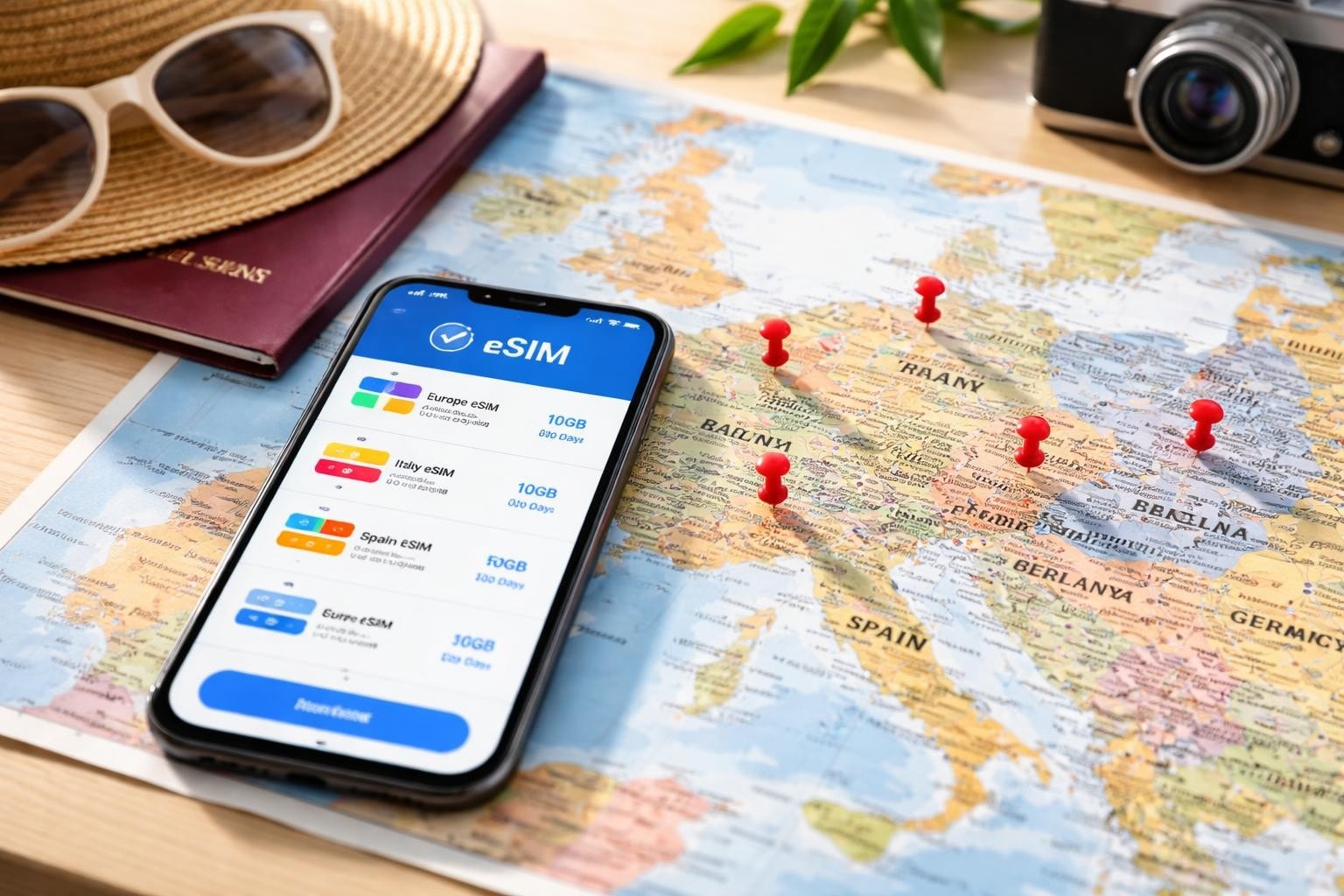
Planning a European adventure in 2026? Whether you're island-hopping in Greece, exploring Parisian museums, or cycling through Amsterdam, staying connected shouldn't cost a fortune. Gone are the days of hunting for local SIM cards at airports or facing shocking roaming charges. The best eSIM for Europe offers instant connectivity, transparent pricing, and the freedom to switch between countries without changing your number. But with dozens of providers claiming to offer the perfect solution, how do you choose? Let's explore what makes an eSIM truly worth your money and which options deliver genuine value for European travellers.
What Makes an eSIM the Best Choice for European Travel
You've probably heard the buzz about eSIMs, but what actually makes them superior to traditional SIM cards for European trips? The answer lies in convenience and flexibility.
Traditional SIM cards require physical swapping, which means you're potentially losing your home number or juggling multiple devices. With an eSIM, your phone can hold multiple profiles simultaneously. Activate one before your flight, and you'll have data the moment you land in Barcelona or Rome.
Key advantages of using eSIMs in Europe:
- Instant activation without visiting shops or kiosks
- No physical card to lose or damage
- Keep your primary number active for calls
- Switch between plans without changing hardware
- Perfect for multi-country European tours
- Environmentally friendly with zero plastic waste
The European market has embraced eSIM technology faster than most regions. Major networks across France, Germany, Spain, and Italy now support eSIM activation, giving travellers reliable coverage from Lisbon to Helsinki.
Coverage Zones: Understanding European eSIM Networks
Not all European eSIM plans are created equal. Some cover the entire European Union, while others focus on specific regions or exclude certain countries. Understanding coverage zones helps you avoid nasty surprises.
EU vs Europe-Wide Coverage
The distinction matters more than you'd think. EU coverage typically includes the 27 member states, but what about Switzerland, Norway, or the UK post-Brexit? Check whether your plan includes these popular destinations.
According to comprehensive eSIM reviews for Europe, the best providers offer coverage across 30+ European countries, ensuring you're connected whether you're in Oslo or Athens.
| Coverage Type | Typical Countries Included | Best For |
|---|---|---|
| EU Only | 27 EU member states | Budget-conscious travellers staying within EU borders |
| Europe-Wide | EU + UK, Switzerland, Norway, Iceland | Multi-country trips including non-EU destinations |
| Regional Premium | Full Europe + Turkey, Russia (western) | Extended European tours |
Network Partners and Speed
When you're searching for the best eSIM for Europe, network partnerships determine your actual experience. Providers partner with major carriers like Vodafone, Orange, Deutsche Telekom, and Telefónica to deliver service.
Premium eSIM providers typically offer 4G LTE as standard, with 5G increasingly available in major cities. However, speeds can vary dramatically. Some budget options throttle speeds after certain usage, whilst others maintain full-speed connectivity throughout your data allowance.
Pricing Models: Finding Value Without Sacrificing Quality
European eSIM pricing can feel like a maze. Daily rates, data packages, unlimited plans – which actually saves you money?
Pay-As-You-Go vs Package Deals
Pay-as-you-go plans charge per gigabyte or per day. These work brilliantly for short trips or light users. If you're visiting Paris for a long weekend and mainly using Wi-Fi, why pay for 10GB?
Package deals bundle data for specific durations. A 7-day, 5GB plan for €15 offers better value than paying €3 per day. The best eSIM for Europe often combines packages with top-up flexibility, allowing you to add data mid-trip if needed.
Here's what you might expect to pay in 2026:
- Budget tier: €0.80-€1.50 per GB for basic coverage
- Mid-range: €1.50-€3.00 per GB with better speeds and support
- Premium: €3.00+ per GB for unlimited speeds and priority networks
Hidden Costs to Watch For
Read the fine print. Some providers advertise low headline prices but add activation fees, charge separately for texts, or throttle speeds after modest usage. The truly best eSIM for Europe maintains transparent pricing with no surprises.
Look for providers offering instant eSIM activation with clear data allowances and no hidden charges. The slight premium for transparency often saves money and frustration overall.
Top Features That Separate Great eSIMs from Average Ones
Beyond coverage and pricing, certain features transform a decent eSIM into an exceptional travel companion. What should you prioritise?
Instant Activation and Setup
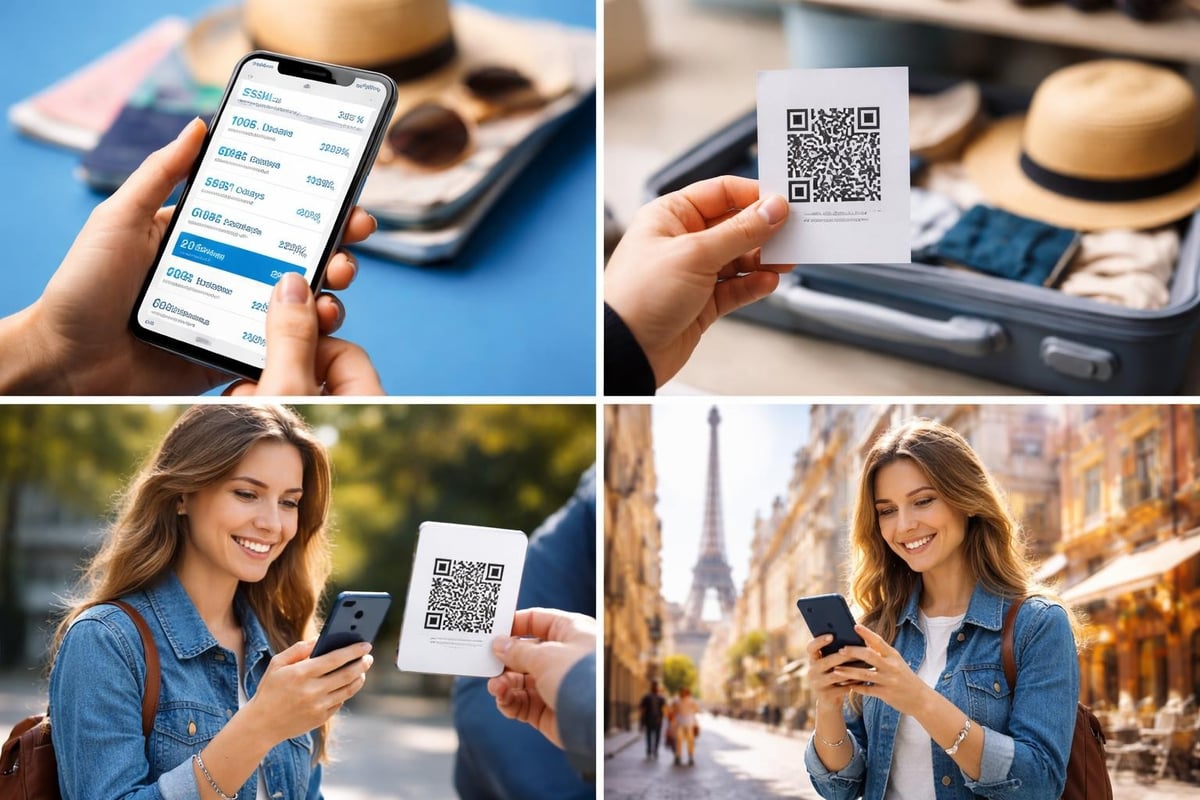
You shouldn't need a technology degree to activate your eSIM. The best providers deliver QR codes within minutes of purchase, with clear installation guides that work across iPhone and Android devices.
Setup should involve:
- Purchase your plan online
- Receive QR code via email
- Scan code in device settings
- Activate when you're ready to use
- Start browsing immediately
Any provider requiring complex APNs or manual configuration in 2026 hasn't kept pace with user expectations.
Multi-Device Support
Travelling with both a phone and tablet? The best eSIM for Europe allows you to use your data across multiple devices. Some providers offer hotspot functionality, whilst others let you install the same eSIM on different devices (though usually only one can be active simultaneously).
Customer Support Availability
When you're standing in the middle of Dubrovnik with no connection, you need help fast. Providers with 24/7 support via chat or email significantly reduce stress. Check whether support is available in your language and response times for urgent issues.
Comparing the Leading European eSIM Providers
Let's get specific. Which providers actually deliver on their promises, and how do they stack up against each other?
Coverage Champions
Several providers stand out for exceptional European coverage. International eSIM reviews consistently highlight providers offering 35+ country coverage with reliable partnerships.
When comparing options, consider whether you'll visit popular destinations like Spain, Italy, France, or Greece. Most providers excel in Western Europe but vary in Eastern European coverage.
| Provider Tier | Countries Covered | Average Speed | Typical Price (5GB/7 days) |
|---|---|---|---|
| Budget | 20-25 | 3-10 Mbps | €8-€12 |
| Standard | 28-32 | 10-30 Mbps | €15-€22 |
| Premium | 35+ | 30-100 Mbps | €25-€35 |
Flexible Data Packages
The best eSIM for Europe adapts to your travel style. Weekend city breakers need different plans than month-long backpackers. Look for providers offering:
- Short-term packages (3-7 days) for quick trips
- Medium-term options (14-30 days) for extended holidays
- Long-term plans (60-90 days) for digital nomads
- Top-up capabilities to extend coverage mid-trip
Europe eSIM options have evolved to include highly customisable packages that let you pay only for what you'll actually use, with the flexibility to adjust as your plans change.
Specialised Country Coverage
Planning to spend most of your trip in one country? Some travellers find better value with country-specific plans rather than multi-country packages. For instance, if you're spending two weeks primarily in Portugal with just weekend trips to Spain, a Portugal-focused plan might offer more data for less money.
However, for classic European tours hitting five or six countries, the best eSIM for Europe remains a multi-country package that eliminates the hassle of switching plans at borders.
Device Compatibility: Will Your Phone Work?
Before getting excited about any eSIM plan, verify your device actually supports the technology. Not all phones do.
Compatible Devices and Requirements
iPhones: All models from iPhone XS onwards support eSIM, including iPhone 11, 12, 13, 14, 15, and 16 series. Newer models can hold multiple eSIMs simultaneously.
Android: Samsung Galaxy S20 and newer, Google Pixel 3 and later, various models from Huawei, Oppo, and Motorola. Check your specific device compatibility before purchasing.
iPads and Tablets: Many recent iPads support eSIM, perfect for staying connected on larger screens.
Your phone must also be carrier-unlocked. Devices locked to specific carriers won't accept eSIM profiles from other providers, regardless of technical capability.
Checking Your Phone's eSIM Status
Not sure if your phone supports eSIM? Here's how to check:
For iPhone:
- Open Settings
- Navigate to General > About
- Look for "Digital SIM" or "Available SIM"
- If present, you're good to go
For Android:
- Open Settings
- Go to Connections > SIM card manager
- Look for "Add eSIM" or similar option
- Check manufacturer specifications online
Regional Data Usage Tips for European Travel
Having the best eSIM for Europe means nothing if you burn through data in two days. How much do you actually need, and how can you make it last?
Estimating Your Data Needs
Different activities consume vastly different amounts of data. Understanding your usage patterns helps you choose the right package size.
Typical data consumption:
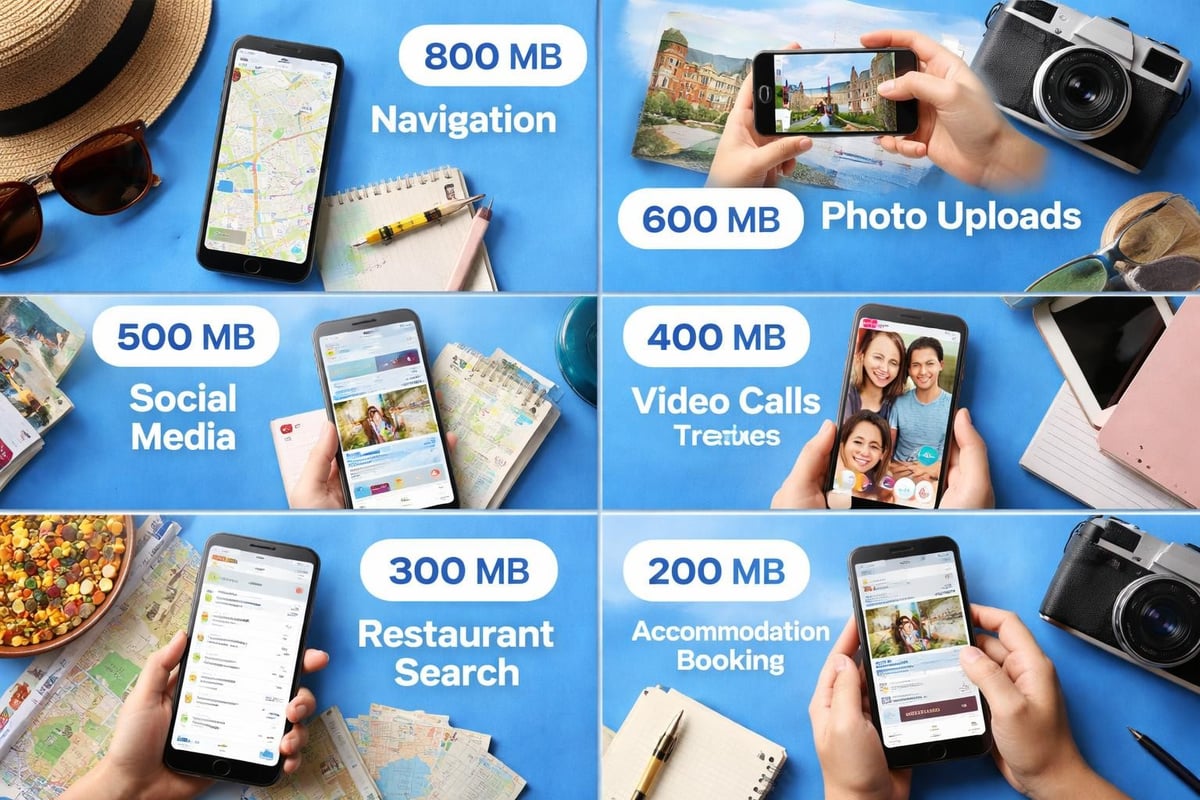
- Google Maps navigation: 5-10 MB per hour
- Social media browsing: 50-150 MB per hour
- Video streaming (HD): 1-3 GB per hour
- Video calls: 500 MB per hour
- Email and messaging: 10-20 MB per hour
- Photo uploads: 3-5 MB per photo
For a typical two-week European holiday with moderate social media, maps, and messaging, most travellers need 3-7GB of data. Heavy video streamers or remote workers might need 15-20GB or more.
Data-Saving Strategies
Maximise your eSIM value with these practical tips:
- Download maps offline before leaving Wi-Fi
- Use Wi-Fi at accommodations and cafes for large downloads
- Disable automatic app updates on cellular
- Lower video streaming quality to standard definition
- Turn off background app refresh for non-essential apps
- Cache Spotify playlists or podcasts before travelling
Activation Timing: When to Set Up Your eSIM
Timing your eSIM activation correctly prevents wasted days and ensures smooth connectivity. Should you activate before leaving home or after landing?
Pre-Departure vs Arrival Activation
Most eSIM plans begin their validity period upon activation, not purchase. This distinction matters tremendously. If you activate a 7-day plan three days before your trip, you'll waste nearly half your coverage.
Best practice approach:
- Purchase your eSIM days or weeks in advance
- Install the eSIM profile on your device (doesn't activate the plan)
- Keep your home SIM as primary until departure
- Switch to your eSIM as your plane lands or just before
- Activate the plan when you're ready to use data
Some providers offer "activation on first connection" plans that only start counting when you first use data in Europe. These provide maximum flexibility for travellers with uncertain schedules.
Managing Multiple eSIM Profiles
Modern smartphones can store multiple eSIM profiles, though typically only one can be active alongside a physical SIM. This capability lets you keep your home number for calls whilst using your European eSIM for data.
Set your European eSIM as the default cellular data source whilst keeping your home number active for incoming calls. You'll stay reachable without incurring roaming charges for data usage.
Country-Specific Considerations Across Europe
Europe isn't monolithic. Different regions present unique connectivity challenges and opportunities worth considering when selecting the best eSIM for Europe.
Western Europe Excellence
Countries like France, Germany, Spain, and Italy offer excellent 4G and 5G coverage even in rural areas. Any reputable eSIM provider performs well here. Competition among carriers means strong speeds and reliable connections.
If you're visiting Turkey, which straddles Europe and Asia, verify your plan includes Turkish coverage, as some "European" plans exclude it.
Eastern European Variables
Coverage in Poland, Czech Republic, Hungary, and Romania has improved dramatically but can still be patchy in rural areas. Premium eSIM providers typically partner with better local carriers, delivering superior rural connectivity.
Nordic Region Specifics
Scandinavia presents unique challenges. Norway, Iceland, and parts of Finland and Sweden feature stunning but remote landscapes. Not all eSIM plans include full Nordic coverage, and remote areas may have limited connectivity regardless of provider.
UK Post-Brexit
Following Brexit, some "EU" eSIM plans exclude the UK or charge extra for British coverage. If visiting England, Scotland, Wales, or Northern Ireland, specifically confirm UK inclusion in your package. Some providers now offer separate UK plans that might provide better value for British-heavy itineraries.
Security and Privacy Considerations
Staying connected abroad means considering digital security. How do eSIMs compare to traditional roaming or public Wi-Fi for protecting your data?
eSIM Security Advantages
eSIMs offer several security benefits over traditional connectivity methods:
Physical security: No SIM card means nothing to physically steal or swap. SIM-swapping attacks, where criminals take over phone numbers, become significantly harder.
Encrypted connections: Reputable eSIM providers route data through encrypted tunnels, protecting your information from interception on public networks.
Separate data line: Using an eSIM for data whilst maintaining your home number for calls creates segmentation. If one profile is compromised, the other remains secure.
Privacy Best Practices
Even with the best eSIM for Europe, maintain good digital hygiene:
- Avoid banking or sensitive transactions on public Wi-Fi
- Use VPN services for additional encryption
- Enable two-factor authentication before travelling
- Regularly review app permissions and data access
- Update your device software before departure
Making the Final Decision: Your European eSIM Checklist
With all this information, how do you actually choose? Use this decision framework to identify the best eSIM for Europe for your specific needs.
Pre-Purchase Checklist
Before committing to any provider, verify:
- Coverage: Does it include all countries you're visiting?
- Data amount: Is the package sufficient for your usage patterns?
- Duration: Does the validity period match your trip length?
- Device compatibility: Will it work with your phone model?
- Speed: Are there throttling limits or speed caps?
- Support: Is customer service available when you need it?
- Price: Does the total cost (including fees) represent good value?
- Reviews: What do recent travellers say about reliability?
Comparing Your Top Options
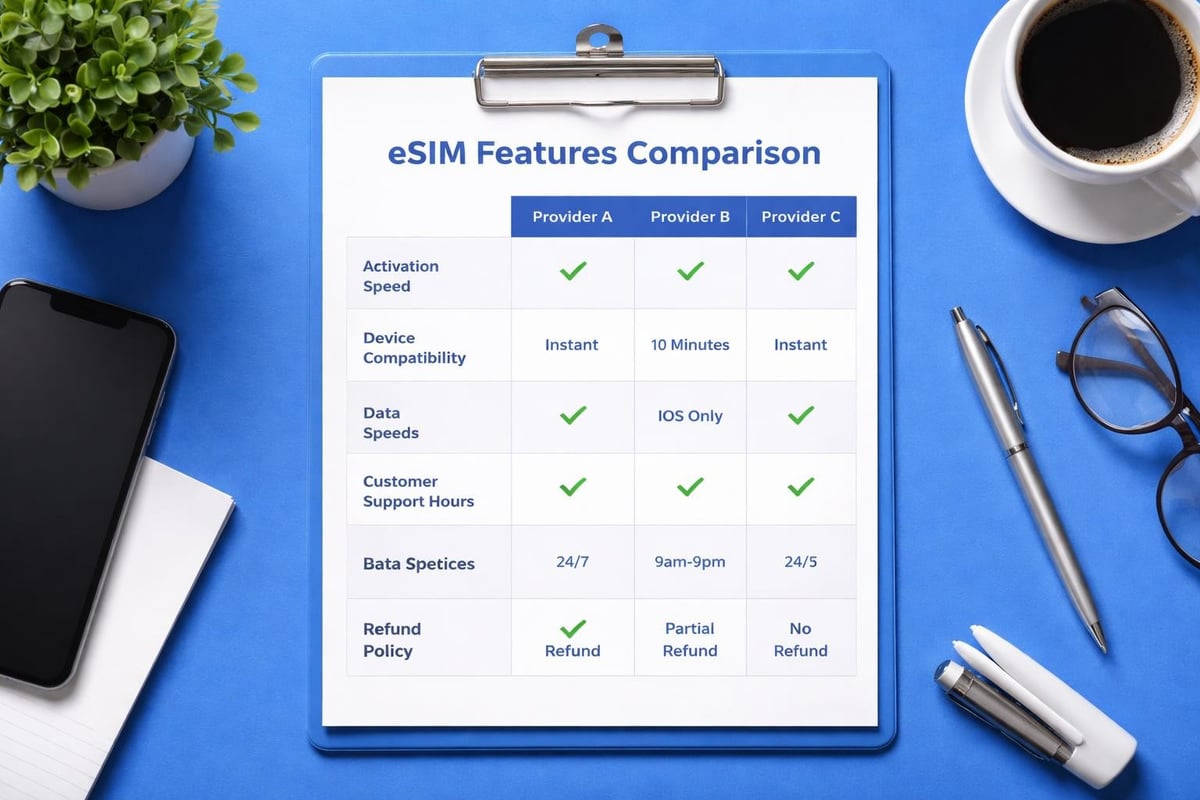
Once you've narrowed to 2-3 providers, create a simple comparison. Focus on factors that matter to you personally. Business travellers might prioritise speed and reliability over price, whilst backpackers might make opposite trade-offs.
Don't forget to check recent reviews on sites like Gizmodo's European eSIM rankings to see how providers perform in real-world conditions.
Alternative Scenarios: When to Consider Different Options
The best eSIM for Europe works brilliantly for most travellers, but certain situations call for alternative approaches.
Extended Stays and Digital Nomads
Planning to spend 3-6 months in Europe? A standard tourist eSIM probably isn't your best bet. Consider:
- Local carrier eSIM plans in your primary country
- Regional eSIM plans designed for longer durations
- Multiple country-specific eSIMs to maximise value
- Hybrid approaches with local SIM in base country plus travel eSIM for trips
Business Travellers with Special Requirements
Corporate travellers often need features beyond basic connectivity. Look for:
- Priority customer support with guaranteed response times
- Higher data caps or unlimited options
- Call and SMS capabilities (some eSIMs are data-only)
- Expense-friendly invoicing and documentation
- Corporate account management for teams
Budget Backpackers
Travelling on a shoestring? You can still use eSIMs effectively:
- Choose smaller data packages and rely heavily on Wi-Fi
- Opt for regional plans rather than full European coverage
- Purchase data in smaller increments as needed
- Focus on essential apps only when using cellular data
Finding the best eSIM for Europe in 2026 comes down to matching your specific travel plans with the right combination of coverage, pricing, and features. Whether you're exploring multiple countries or focusing on a single destination, the right eSIM eliminates connectivity hassles whilst keeping costs predictable. Ready to stay connected across Europe without the roaming fees? Check out gosimless.app for instant eSIM activation with flexible plans covering 200+ countries, secure payment options, and multi-device support that keeps you online from the moment you land.
gosimless Team
The gosimless editorial desk — testing eSIMs, carriers and travel connectivity so you don't have to. Updated continuously from the road.