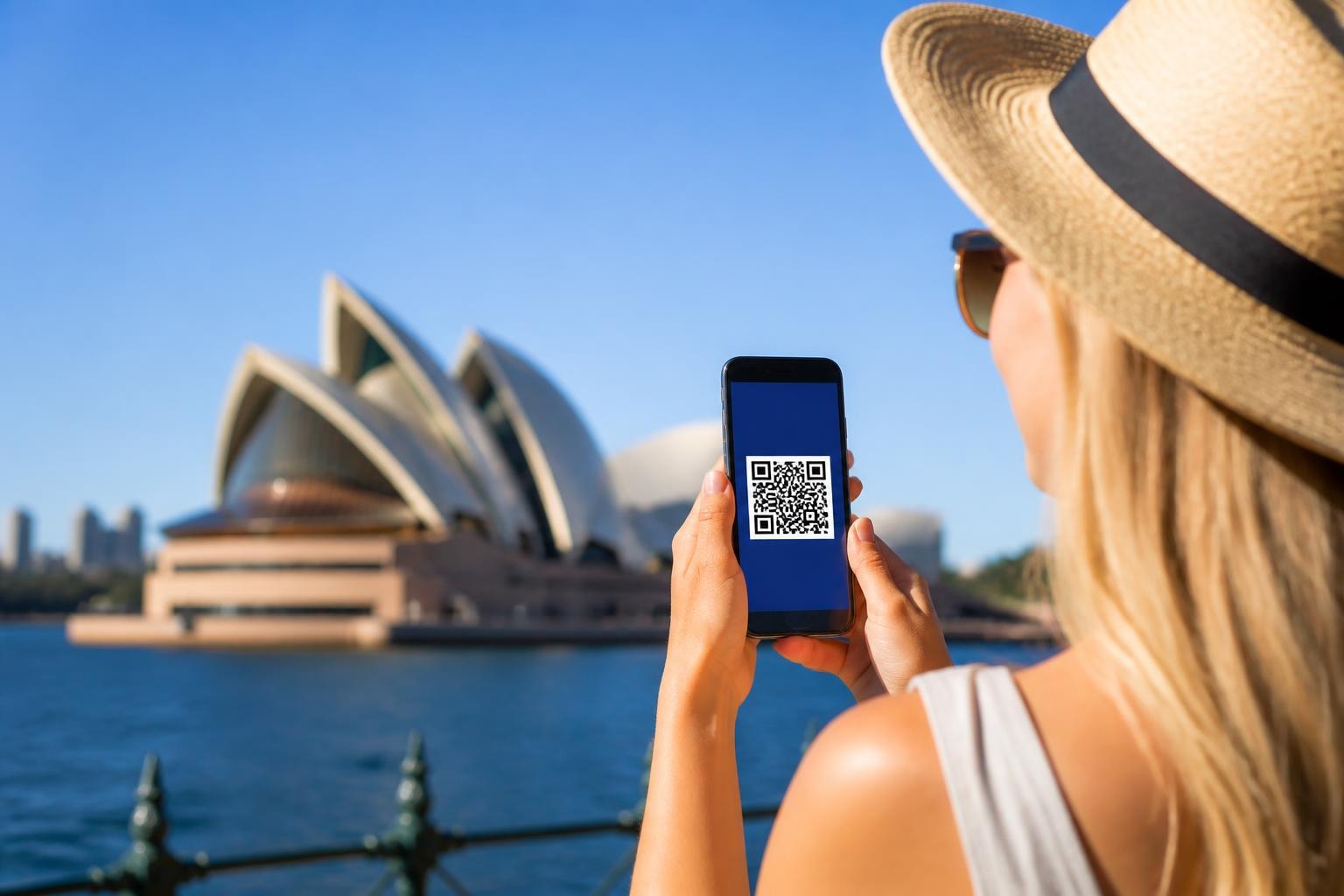
Thinking about making the switch to an australia e sim? You're not alone. In 2026, eSIM technology has transformed how Australians and visitors stay connected, ditching those tiny plastic cards for something far more convenient. Whether you're a frequent flyer tired of juggling multiple SIM cards, a tech enthusiast eager to embrace the latest mobile innovation, or simply curious about what all the fuss is about, understanding how australia e sim services work can save you time, money, and a fair bit of hassle.
What Exactly Is an Australia E SIM?
Let's start with the basics, shall we? An eSIM is an embedded SIM card that's built directly into your device. Unlike traditional SIM cards that you physically insert and remove, an australia e sim is essentially a digital version that lives inside your phone, tablet, or smartwatch. Think of it as your SIM card going completely virtual.
The technology itself isn't brand new, but its widespread adoption in Australia has really taken off over the past few years. Major Australian carriers like Telstra have been championing eSIM technology, making it easier than ever for customers to activate service without visiting a store or waiting for plastic to arrive in the post.
How Does It Actually Work?
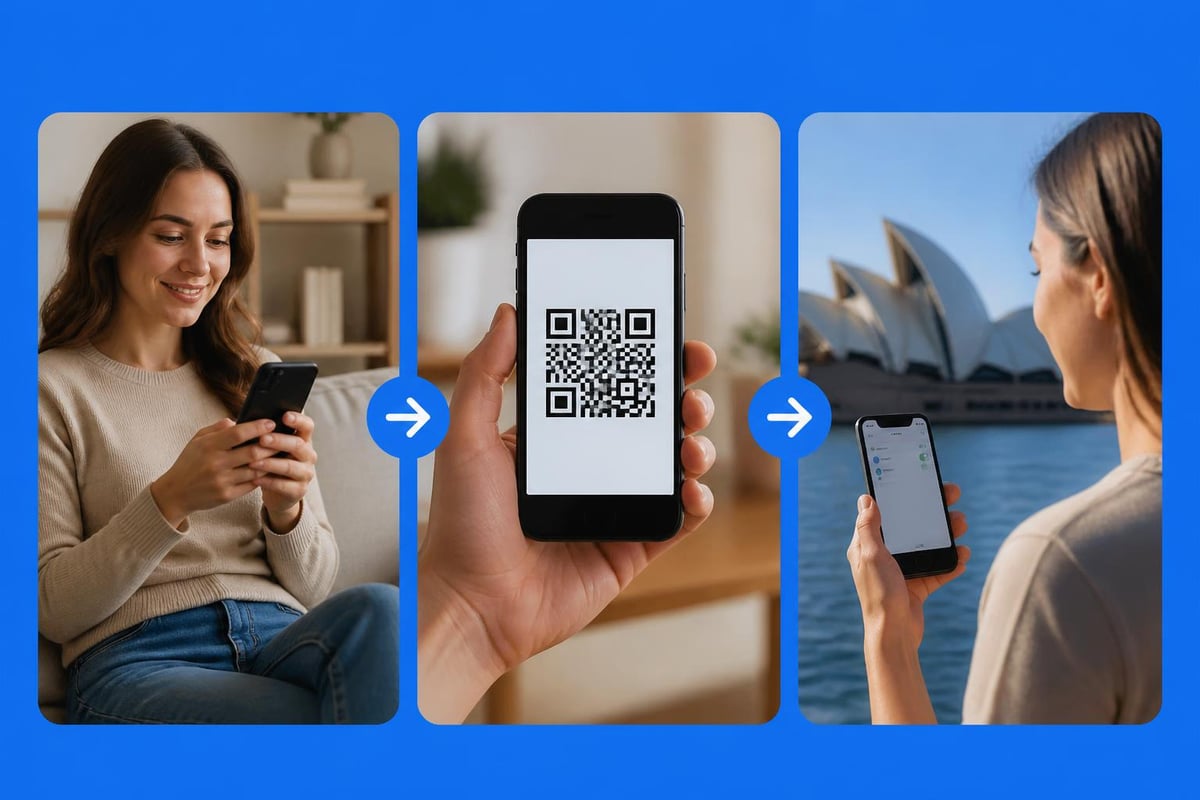
Here's where it gets interesting. When you purchase an australia e sim plan, you receive a QR code instead of a physical card. You simply scan this code with your device's camera, and boom – your phone downloads the eSIM profile and activates your service. The whole process typically takes minutes rather than days.
But what's happening behind the scenes? Your device stores multiple eSIM profiles, which means you can switch between different networks or plans without swapping physical cards. Travelling overseas? Add an international plan. Need a separate number for work? Download another profile. It's that flexible.
Why Australians Are Making the Switch
You might be wondering what's driving this shift. The benefits of an australia e sim extend well beyond just convenience, though that's certainly a major factor.
For travellers, the advantages are particularly compelling:
- No more hunting for SIM card shops at airports
- Instant activation before you even land
- Keep your Australian number active whilst using a local data plan
- Switch between multiple plans seamlessly
For everyday users, the practical benefits add up quickly:
- Dual SIM functionality without needing two physical slots
- Immediate activation when purchasing a new device
- Easier network switching if you're unhappy with service
- Reduced environmental waste from plastic cards
I remember chatting with a mate who recently returned from a European holiday. He'd activated his eSIM data plan before leaving Sydney, and connectivity was sorted the moment he stepped off the plane in Rome. No queues, no confusion about which local provider to choose, no overpriced roaming charges. That's the beauty of modern eSIM technology.
Device Compatibility in Australia
Before diving headfirst into the australia e sim world, you'll need to check whether your device actually supports the technology. Not all phones and tablets do, particularly older models.
Compatible Devices
Most flagship devices released after 2018 support eSIM functionality. Here's a quick breakdown:
| Device Type | Compatible Models |
|---|---|
| iPhones | iPhone XS, XR, and all newer models (excluding SE 2020 in some regions) |
| Samsung | Galaxy S20 series and newer, Galaxy Z Flip/Fold series |
| Google Pixel | Pixel 3 and newer models |
| Tablets | iPad Pro (2018+), iPad Air (2019+), iPad Mini (2019+) |
| Watches | Apple Watch Series 3+, Samsung Galaxy Watch4+ |
You can verify your specific device's compatibility through Tech Frontier's comprehensive compatibility checker, which addresses Australian-specific carrier requirements and regional variations. Different carriers sometimes have slightly different compatibility lists, so it's worth double-checking with your intended provider.
Checking Your Device Settings
Not sure if your phone supports eSIM? Here's how to check:
- For iPhone: Go to Settings > General > About. If you see "Available SIM" or "Digital SIM", you're good to go.
- For Android: Navigate to Settings > Connections > SIM card manager. Look for "Add mobile plan" or "Add eSIM".
- Dial *#06# on any device to see your EID (embedded identity document) number – if one appears, your device supports eSIM.
The gosimless.app compatible devices page provides an up-to-date list that's regularly maintained with the latest models and carrier-specific details.
Major Australian Providers Offering eSIM
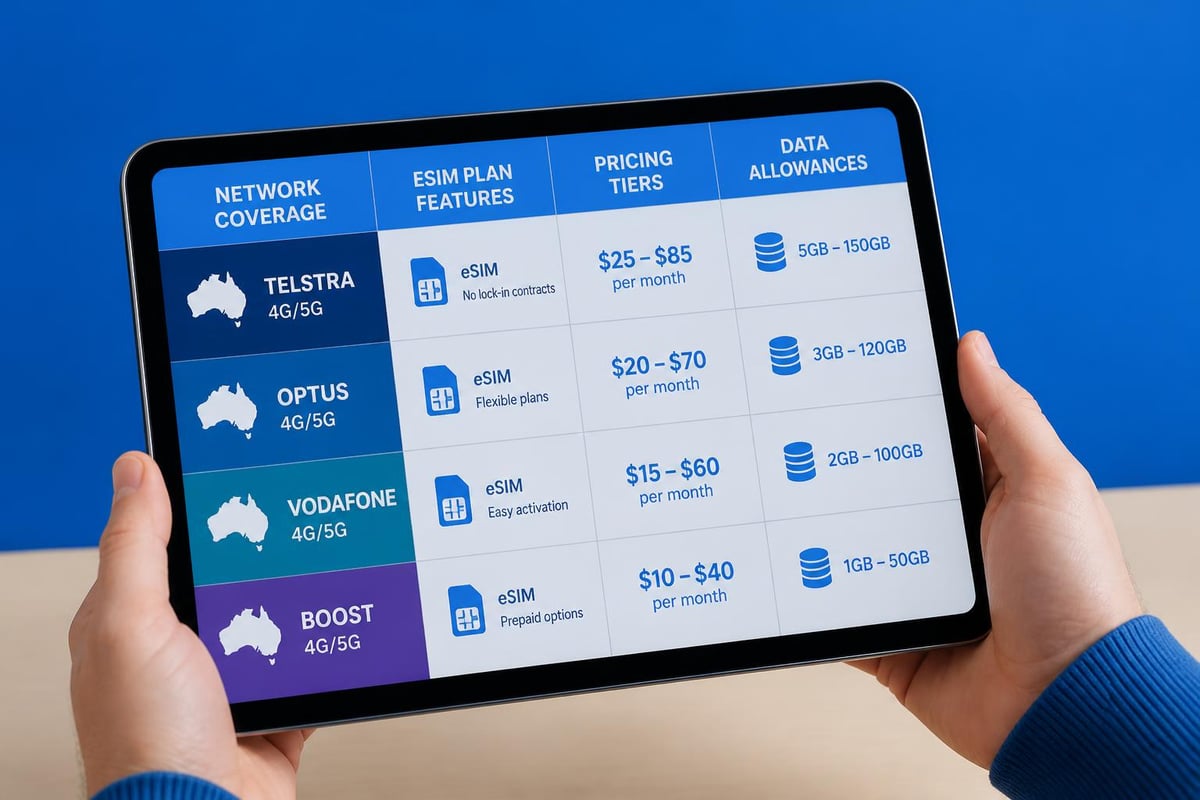
The australia e sim market has matured significantly, with most major carriers now offering eSIM options alongside traditional SIM cards. But they're not all created equal.
Telstra, Australia's largest network, has embraced eSIM technology fully. Their coverage is excellent, particularly in rural and regional areas where other networks might struggle. They've integrated eSIM activation into their app, making the process remarkably straightforward.
Optus and Vodafone have similarly robust eSIM offerings, though coverage varies depending on your location. Finder's comparison of eSIM plans breaks down the pricing structures, data allowances, and coverage maps for each provider, helping you make an informed decision.
iiNet, whilst smaller, offers competitive eSIM plans particularly for customers who bundle services. Their device compatibility list includes activation instructions specific to their network.
What About International Travellers?
Here's where things get particularly interesting. If you're visiting Australia or you're an Australian heading overseas, international eSIM providers offer compelling alternatives to traditional roaming charges.
Services focusing on travel connectivity provide Australia eSIM options that activate instantly without requiring an Australian address or local identification. This makes them ideal for tourists who need connectivity the moment they arrive.
Activating Your Australia E SIM: Step-by-Step
Right, let's get practical. You've chosen your provider, confirmed your device is compatible, and you're ready to activate. The process is refreshingly simple, but there are a few gotchas to watch out for.
The Activation Process
Step 1: Purchase Your Plan Choose your data allowance, validity period, and coverage area. Most providers offer plans ranging from 1GB for a few days up to unlimited data for monthly contracts.
Step 2: Receive Your QR Code This arrives via email, typically within minutes of purchase. Some providers display the QR code directly in their app or website dashboard.
Step 3: Prepare Your Device Ensure you're connected to Wi-Fi (crucial for downloading the eSIM profile) and that your device has sufficient battery. An interrupted installation can cause headaches.
Step 4: Scan and Install Navigate to your device's eSIM settings, select "Add eSIM" or "Add Mobile Plan", and scan the QR code. Your phone will download the profile and prompt you through the setup.
Step 5: Configure Your Settings Decide whether this eSIM will be your primary line, secondary line, or data-only. You can customise which profile handles calls, texts, and data separately.
For detailed guidance specific to various devices, the gosimless.app installation guide walks through the process for different phone models and operating systems.
Troubleshooting Common Issues
Sometimes things don't go smoothly. Here are the most frequent hiccups:
- QR code won't scan: Ensure proper lighting and try adjusting the distance. Alternatively, most providers offer manual entry using an activation code.
- Installation fails midway: Restart your device and ensure you have stable Wi-Fi. Delete the partially installed profile before trying again.
- No service after activation: Check that you've enabled the eSIM profile and selected it as your data source in settings. Some devices require a restart after installation.
- Can't receive calls: Verify that the eSIM is set as your default line for voice calls in your phone's dual SIM settings.
Community forums like Whirlpool contain extensive troubleshooting discussions where Australian users share solutions to specific carrier and device combinations.
Cost Comparison: eSIM vs Traditional SIM
Let's talk money. Are australia e sim plans cheaper than traditional options? The answer, as with most things, is "it depends".
For domestic use, pricing is generally comparable between eSIM and physical SIM plans from the same provider. The major carriers typically don't charge extra for eSIM activation, and monthly costs remain identical. The financial advantage comes from flexibility – you can switch plans without contract penalties or SIM card replacement fees.
For international travel, the cost difference becomes substantial. Traditional roaming charges from Australian carriers can be eye-watering. Daily roaming packs often cost £10-15 per day, which adds up frighteningly fast over a two-week holiday.
Price Breakdown
| Usage Scenario | Traditional SIM Cost | eSIM Cost | Savings |
|---|---|---|---|
| 2-week Australian holiday (10GB) | £150-200 (roaming) | £25-40 (travel eSIM) | 75-85% |
| Monthly domestic data (50GB) | £40-60 | £40-60 | Comparable |
| Business trip (5 days, 5GB) | £75-90 (roaming) | £15-25 (travel eSIM) | 70-80% |
These figures reflect 2026 pricing across various providers. TechRadar's evaluation of eSIM options for Australian travel includes updated pricing comparisons that can help you identify the best value.
Managing Multiple eSIM Profiles
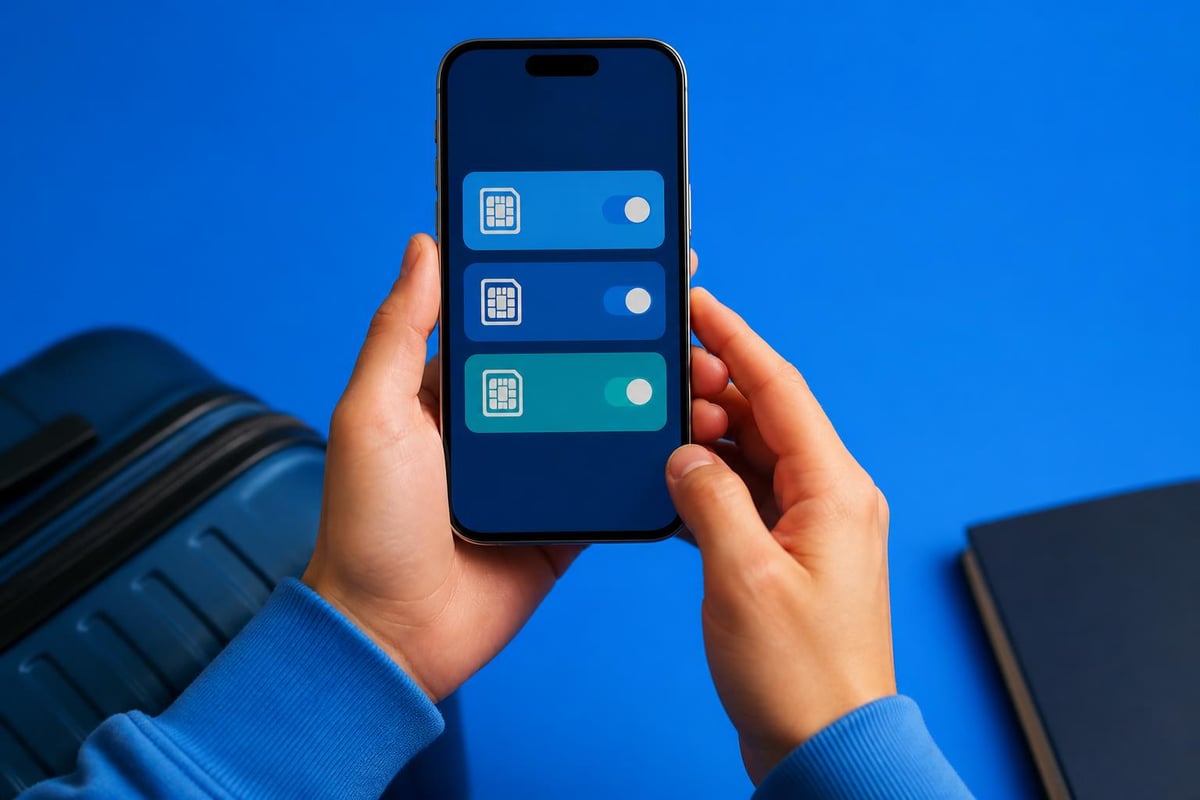
One of the most powerful features of australia e sim technology is the ability to maintain multiple profiles simultaneously. Your device can store several eSIM profiles (typically 5-10 depending on the model), though only one or two can be active at any given time.
This opens up fascinating possibilities:
Personal and Business Separation Keep work calls on one number and personal communications on another, all within a single device. You can even set different ringtones and notification styles for each.
Travel Without Disconnection Activate a local data plan whilst travelling but keep your Australian number active for important calls and two-factor authentication texts. This is genuinely transformative for frequent travellers.
Network Redundancy Maintain profiles from different carriers. If one network experiences outages or poor coverage in your area, simply switch to the backup.
Switching Between Profiles
Managing multiple profiles is straightforward:
- iPhone users: Settings > Cellular > Select the eSIM you want to use for calls, messages, or data
- Android users: Settings > Network & Internet > SIM cards > Toggle between active profiles
You can label each profile ("Work", "Travel", "Backup") to avoid confusion. Some users even assign different profiles to specific contacts, ensuring work colleagues can only reach you on your business number.
Security and Privacy Considerations
Now, let's address something important that doesn't always get enough attention: security. Is an australia e sim as secure as a traditional SIM card? Actually, in several ways, it's more secure.
Physical theft protection is the most obvious advantage. Someone can't simply remove your SIM card and pop it into another device to access your number. With eSIM, your profile is locked to your device and protected by your phone's security features.
SIM swapping attacks, where criminals transfer your number to a device they control, become more difficult. The academic analysis of Australian digital infrastructure security explores these vulnerabilities and how eSIM technology addresses certain attack vectors.
Privacy Best Practices
When using an australia e sim, consider these privacy measures:
- Use reputable providers with clear data policies
- Enable biometric authentication for eSIM profile changes
- Regularly audit which profiles are installed on your device
- Remove travel eSIMs after returning home if they're no longer needed
- Be cautious about where you scan QR codes (phishing attempts exist)
For questions about specific security features, the gosimless.app FAQ addresses common concerns about data protection and secure activation processes.
The Environmental Angle
Here's something that might surprise you: australia e sim technology represents a meaningful step towards reducing electronic waste. Traditional SIM cards and their packaging generate millions of tonnes of plastic waste globally each year.
Consider the lifecycle of a physical SIM card. It's manufactured using plastics and metals, shipped in packaging, distributed through retail chains, and ultimately ends up in landfill when you upgrade or switch providers. Multiply that by millions of users replacing SIMs every few years.
An eSIM eliminates almost all of this waste. There's no physical card, no packaging, no shipping, no disposal. For environmentally conscious Australians, this isn't a trivial consideration. If you're someone who travels frequently and previously would have purchased local SIMs in each country, switching to eSIM could prevent dozens of plastic cards from entering the waste stream over your lifetime.
Future of eSIM in Australia
Where's all this heading? The trajectory seems clear: australia e sim technology is rapidly becoming the standard rather than the exception.
5G integration is accelerating adoption. As Australia's 5G networks expand, eSIM's flexibility becomes increasingly valuable. Users can easily trial different carriers' 5G offerings without the commitment of ordering physical SIMs.
IoT expansion is another driver. Smart home devices, connected cars, and wearables increasingly rely on eSIM technology for connectivity. By 2026, we're seeing everything from home security systems to agricultural sensors using eSIMs for network access.
Regulatory developments may eventually phase out physical SIM cards entirely. European markets are already seeing some devices ship as eSIM-only, and Australia typically follows similar technology adoption patterns within a few years.
The gosimless.app blog regularly covers emerging trends and technological developments in the eSIM space, helping users stay informed about what's coming next.
Choosing the Right Australia E SIM Provider
With so many options available in 2026, how do you actually choose? Here are the key factors to weigh:
Coverage and Network Quality
This should be your primary consideration. The best data plan means nothing if you can't get signal where you need it. Check coverage maps for your specific locations, whether that's metropolitan Sydney, regional Queensland, or remote Western Australia.
Data Allowances and Validity
Match your plan to your actual usage patterns. Overestimating and paying for unused data is wasteful, but running out mid-trip is frustrating. Many providers now offer top-up options, which provides useful flexibility.
Customer Support
When things go wrong (and occasionally they do), responsive support becomes crucial. Look for providers offering multiple contact channels and reasonable response times. Reading reviews about support experiences can be revealing.
Price vs Value
The cheapest option isn't always the best value. Consider factors like network speed restrictions, whether calls and texts are included, and activation simplicity. A slightly more expensive plan that works flawlessly might save you stress and time.
Additional Features
Some providers differentiate through extras:
- Hotspot sharing capability
- Multiple device support on a single plan
- Rollover data that doesn't expire
- Easy plan changes without penalties
Comparing features across providers helps identify which aligns best with your priorities.
Understanding australia e sim technology empowers you to make smarter connectivity choices, whether you're exploring the Outback or managing business communications across multiple time zones. The shift from physical to digital SIM cards represents more than just convenience – it's about flexibility, cost savings, and environmental responsibility. Ready to experience instant activation and global coverage without the hassle of physical cards? Explore gosimless.app for secure eSIM plans that work across 200+ countries with no roaming fees, getting you connected in seconds rather than days.
gosimless Team
The gosimless editorial desk — testing eSIMs, carriers and travel connectivity so you don't have to. Updated continuously from the road.