The 2026 soccer world cup is shaping up to be the most ambitious football tournament in history. With matches spread across three countries and an expanded format welcoming 48 teams instead of the traditional 32, this event will redefine how we experience the beautiful game. Whether you're planning to attend matches in person or follow your team's journey from afar, understanding what makes this tournament unique will help you make the most of every moment. From cutting-edge stadiums to unprecedented logistical challenges, the tournament promises to be a spectacle unlike anything we've seen before.
The Revolutionary Three-Nation Format
For the first time ever, the 2026 soccer world cup will be jointly hosted by the United States, Mexico, and Canada. This tri-nation approach isn't just about sharing the workload-it's a bold statement about football's growth in North America.
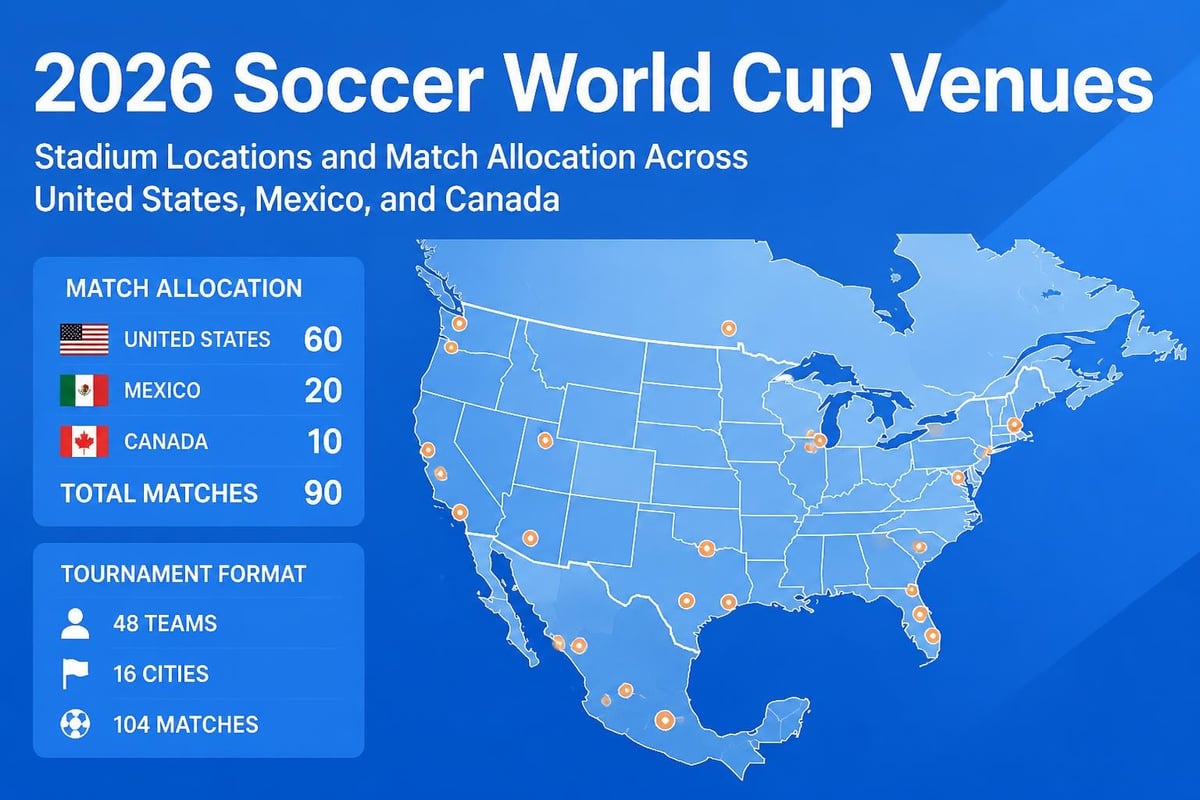
The official FIFA announcement confirmed 16 host cities across the three countries, with the United States hosting 60 matches, Mexico hosting 10, and Canada hosting 10. But what does this mean for you as a fan?
Host Cities You'll Want to Visit
The selection process was fierce, and the chosen cities represent diverse cultures and footballing traditions:
United States venues:
- MetLife Stadium (New York/New Jersey)
- AT&T Stadium (Dallas)
- Mercedes-Benz Stadium (Atlanta)
- SoFi Stadium (Los Angeles)
- Levi's Stadium (San Francisco Bay Area)
- Hard Rock Stadium (Miami)
- Lincoln Financial Field (Philadelphia)
- Arrowhead Stadium (Kansas City)
- Gillette Stadium (Boston)
- NRG Stadium (Houston)
- Lumen Field (Seattle)
Mexico venues:
- Estadio Azteca (Mexico City)
- Estadio BBVA (Monterrey)
- Estadio Akron (Guadalajara)
Canada venues:
- BC Place (Vancouver)
- BMO Field (Toronto)
Each city brings its own flavour to the tournament. Mexico City's iconic Estadio Azteca will host matches for the third time, having previously welcomed the world in 1970 and 1986.
The Expanded 48-Team Tournament Structure
Gone are the days of the familiar 32-team format. The 2026 soccer world cup introduces 48 nations competing for glory, which fundamentally changes the tournament's DNA.
How the New Format Works
The expanded structure means more matches, more drama, and more opportunities for underdog stories:
- Group Stage: 12 groups of four teams each
- Match Total: 104 matches (up from 64)
- Tournament Duration: Approximately 39 days
- Teams Advancing: Top two from each group plus eight best third-placed teams
This format creates fascinating mathematical scenarios. Research into bracket systems suggests that the expanded format could actually increase competitive balance, though it also introduces new complexities around draw procedures.
| Format Element | 2022 World Cup | 2026 World Cup | Change |
|---|---|---|---|
| Total Teams | 32 | 48 | +50% |
| Total Matches | 64 | 104 | +62.5% |
| Group Stage Matches | 48 | 72 | +50% |
| Knockout Round Teams | 16 | 32 | +100% |
The expansion isn't just about numbers. It represents FIFA's commitment to growing the game globally, giving more nations a taste of football's biggest stage.
Qualification: Who's Made the Cut?
With 48 spots available, qualification has taken on a different character. More teams from each confederation get their chance, which means we'll see nations at the 2026 soccer world cup that might never have qualified under the old system.
Continental Allocation Breakdown
FIFA has allocated spots across confederations to ensure global representation:
- UEFA (Europe): 16 spots
- CAF (Africa): 9 spots
- AFC (Asia): 8 spots
- CONMEBOL (South America): 6 spots
- CONCACAF (North/Central America & Caribbean): 6 spots (including 3 automatic host spots)
- OFC (Oceania): 1 spot
- Intercontinental Play-offs: 2 spots
The current qualification status shows fascinating battles across all confederations, with traditional powerhouses facing unexpected challenges and emerging nations seizing their opportunities.
Travel Planning Across Three Countries
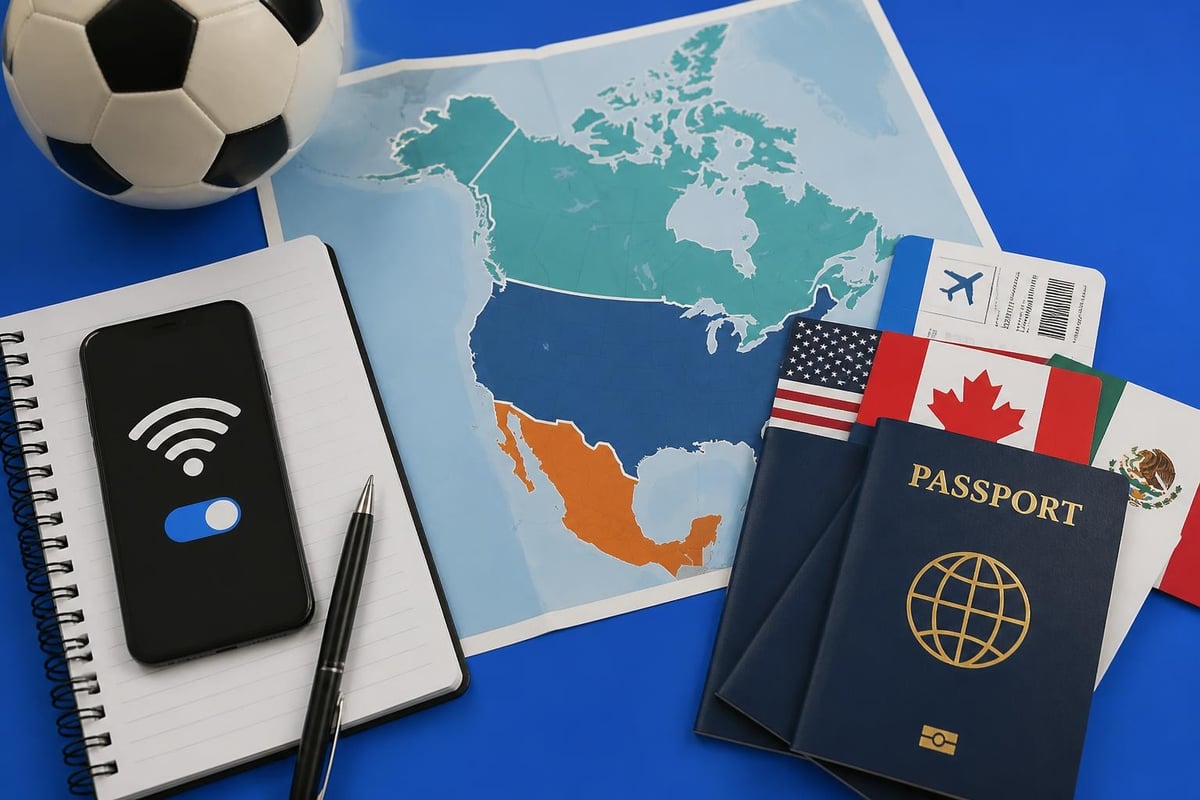
Here's where things get interesting for travelling fans. Following your team across the 2026 soccer world cup might mean crossing international borders multiple times. How do you stay connected whilst jumping between the USA, Mexico, and Canada?
Traditional roaming charges can absolutely cripple your budget. I've spoken to fans who spent more on data during previous tournaments than they did on match tickets. That's madness, isn't it?
The smart solution? Setting up your World Cup eSIM before you travel means seamless connectivity across all three host nations without the shock of roaming fees. You'll want to share those moments when your team scores-not worry about whether you can afford the data.
Border Crossing Essentials
Moving between host countries requires planning:
Documentation needed:
- Valid passport (check expiration dates-six months validity recommended)
- eTA for Canada (for eligible nationalities)
- ESTA or visa for USA (depending on nationality)
- FMM tourist card for Mexico (often provided on arrival)
Connectivity considerations:
- Different networks in each country
- Varying data costs and coverage
- Time zone changes (up to three hours difference)
- Currency fluctuations
If you're planning to attend matches in Mexico, Canada, and the USA, having a multi-country connectivity solution isn't just convenient-it's essential for coordinating travel, accessing digital tickets, and staying in touch with fellow supporters.
Technology and Innovation at the Tournament
The 2026 soccer world cup will showcase football technology at its finest. VAR (Video Assistant Referee) will be more sophisticated, stadium connectivity will be faster, and the fan experience will be increasingly digital.
The Trionda Match Ball
Adidas unveiled the "Trionda" as the official match ball, featuring connected ball technology that provides unprecedented data on every kick, spin, and trajectory. This isn't just kit-it's science in service of the beautiful game.
Cybersecurity Challenges
With expansion comes vulnerability. TechRadar's analysis highlights how the increased digital footprint creates security challenges that FIFA and host nations must address. From ticket systems to stadium networks, protecting fan data and tournament integrity requires constant vigilance.
For you, this means being smart about your own digital security:
- Use secure payment methods for tickets and accommodation
- Avoid public WiFi for sensitive transactions
- Keep your devices updated with latest security patches
- Use VPN services when accessing banking apps
Predicting the Unpredictable
Football fans love predictions, don't we? The 2026 soccer world cup has already spawned numerous forecasting models attempting to predict outcomes.
Academic research using Elo ratings provides probabilistic forecasts based on historical team performance. Whilst these models are fascinating, they can't account for the human drama that makes football special-the underdog victories, the penalty shootout heartbreak, the moments of individual brilliance that defy statistics.
Format Fairness Debates
The new format has sparked legitimate debates about competitive balance. Analysis of draw procedures suggests potential non-uniformity issues that could advantage certain teams. FIFA continues refining the format to ensure fairness whilst maintaining the tournament's excitement.
Some key considerations:
- Will the expanded knockout round dilute quality?
- Does the third-place advancement create perverse incentives?
- How will rest days between matches be allocated fairly?
- Can smaller nations compete physically across more matches?
The Cultural Impact Beyond Football
The 2026 soccer world cup isn't happening in isolation. It's intersecting with fashion, music, and broader cultural movements. Fashion collaborations are already emerging, with designers creating collections inspired by the tournament's tri-national identity.
Economic Ripple Effects
Host cities are preparing for massive economic impacts:
Expected benefits:
- Tourism revenue spikes during match days
- Infrastructure improvements (transport, telecommunications)
- Global exposure for host cities
- Long-term sporting legacy projects
Potential challenges:
- Traffic congestion in host cities
- Accommodation price inflation
- Service industry strain during peak periods
- Environmental concerns from increased travel
Local businesses are gearing up months in advance, training staff in multiple languages and upgrading facilities to handle the influx of international visitors.
Making the Most of Match Days
Attending a 2026 soccer world cup match requires more than just securing tickets. You'll want to immerse yourself in the full experience.
Fan Zones and Entertainment
Each host city will establish official fan zones where supporters can gather, watch matches on big screens, and soak up the atmosphere. These zones become melting pots of cultures, where rival fans share drinks and stories between matches.
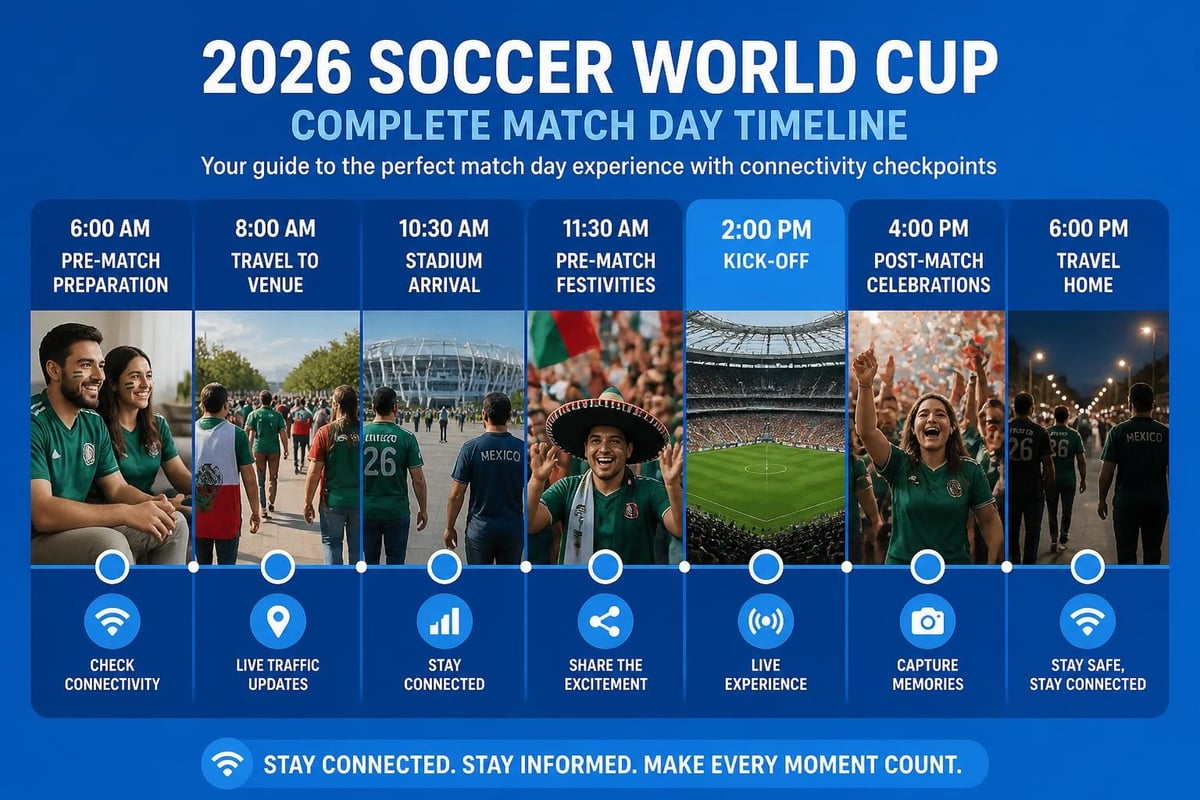
Planning your match day timeline:
- Pre-match (4-5 hours before): Arrive at fan zone, soak up atmosphere
- Travel to stadium (2-3 hours before): Allow extra time for security
- Stadium arrival (90 minutes before): Explore venue, grab refreshments
- Match time: Pure football magic
- Post-match: Return to fan zones or explore local nightlife
Remember to check the installation guide for your eSIM before travelling-you'll want your connectivity sorted before you leave home, not when you're trying to navigate an unfamiliar city.
Sustainable Tournament Initiatives
FIFA has committed to making the 2026 soccer world cup the most sustainable tournament yet. With matches spread across vast distances, the environmental challenge is significant.
Green Initiatives in Focus
Stadium sustainability:
- Solar panel installations at multiple venues
- Water conservation systems
- Waste reduction and recycling programmes
- Public transport incentives for match-goers
Carbon offset programmes:
- Tree planting initiatives across host nations
- Investment in renewable energy projects
- Partnerships with environmental organisations
- Digital-first ticketing to reduce paper waste
As fans, we can contribute by choosing sustainable travel options where possible, minimising waste at matches, and supporting the tournament's environmental initiatives.
The Legacy Question
What happens after the final whistle blows and the trophy is lifted? The 2026 soccer world cup will leave permanent marks on North American football culture.
Infrastructure That Lasts
Unlike some previous tournaments that built stadiums from scratch, the 2026 edition uses existing world-class venues. This means the legacy isn't about white elephant stadiums, but rather:
- Enhanced training facilities for youth development
- Improved public transport networks
- Stronger football culture in host regions
- Established international sporting event expertise
The tournament could accelerate football's growth in markets where it traditionally competed with American football, baseball, and basketball. We're already seeing increased youth participation in host countries as anticipation builds.
Ticket Strategies and Access
Securing tickets for the 2026 soccer world cup requires strategy, patience, and a bit of luck. FIFA typically releases tickets in phases, with priority given to supporters of participating nations.
Ticketing Phases Explained
| Phase | Who Can Apply | Typical Window | Price Range |
|---|---|---|---|
| First Phase | General public worldwide | 6-8 months before | Standard pricing |
| Second Phase | Confirmed team supporters | 4-6 months before | Standard pricing |
| Last-minute Sales | General public | Weeks before matches | Variable pricing |
| Resale Platform | Ticket holders | Ongoing | Original price |
Top tips for ticket success:
- Register early on FIFA's ticketing platform
- Have payment information ready before sales open
- Consider less popular group stage matches for better availability
- Build flexibility into your travel plans
- Use official resale platforms only-avoid scams
Preparing Your Devices for the Journey
Your smartphone becomes your lifeline during international travel. Digital tickets, navigation apps, translation tools, and staying connected with fellow fans all depend on reliable connectivity.
Before you depart:
- Check device compatibility: Ensure your phone supports eSIM technology
- Back up important data: Don't risk losing photos and information
- Download offline maps: Google Maps allows offline access
- Install essential apps: Translation apps, local transport apps, official FIFA app
- Set up eSIM in advance: Activate before leaving home
The compatible devices list helps you verify whether your phone supports eSIM technology-most modern smartphones do, but it's worth checking before you travel.
Creating Your Personal World Cup Experience
Every fan's tournament experience is unique. Some follow their national team religiously, attending every match. Others treat it as a cultural adventure, sampling different matches and exploring host cities.
Different Supporter Profiles
The Loyalist: Follows their team exclusively, travels to every match, knows the squad inside out.
The Collector: Aims to attend matches at multiple venues, collecting experiences and memorabilia.
The Local: Lives in or near a host city, attends various matches, embraces the festival atmosphere.
The Remote Fan: Watches from home but engages deeply through social media and fan communities.
Which type are you? There's no wrong answer-the 2026 soccer world cup offers something for everyone.
Beyond the Pitch: Cultural Experiences
The beauty of a tri-national tournament is experiencing three distinct cultures within one event. Each host nation brings unique flavours, traditions, and perspectives to the beautiful game.
In the United States: Experience the melding of traditional American sports culture with growing football passion. Tailgating meets tifos. Hot dogs alongside international cuisine.
In Mexico: Dive into one of football's most passionate cultures. The atmosphere at Mexican matches is legendary-expect colour, noise, and infectious energy.
In Canada: Discover a nation embracing football's growth. Canadian hospitality combined with increasing football sophistication creates a welcoming environment for international fans.
Taking time between matches to explore each country enriches your tournament experience beyond the football itself.
The 2026 soccer world cup represents a watershed moment for football in North America and beyond, bringing together 48 nations across three countries in the most expansive tournament yet. Whether you're planning to attend matches or follow from afar, staying connected throughout your journey makes all the difference. With gosimless.app, you can enjoy instant eSIM activation across all three host countries without roaming fees, ensuring you never miss a moment of the action whilst keeping your connectivity costs under control.
gosimless Team
The gosimless editorial desk — testing eSIMs, carriers and travel connectivity so you don't have to. Updated continuously from the road.